

Cereals ready-to-eat, WEETABIX whole grain cereal
Whole food · Breakfast Cereals

Photo: Wikipedia
Weetabix is a whole-grain wheat cereal biscuit, famously shaped like a small, dense pillow. It has a mild, slightly nutty flavor and a distinctive texture that softens into a satisfying, mushy porridge when milk is added. Its standout nutritional feature is its high fiber content, providing over 40% of the daily value in a typical serving.
Calorie split: 12% protein · 82% carbs · 6% fat
↓ Full nutrition💚 Why it's loved
People love Weetabix for its comforting, familiar taste and its incredible versatility—it's a blank canvas for sweet or savory toppings. It's also a cultural staple in the UK and Commonwealth countries, evoking nostalgia for a simple, wholesome breakfast.
⚠️ Watch-outs & how to enjoy it better
The plain biscuit can be perceived as bland or cardboard-like without toppings. Its high fiber content, if consumed without adequate water, can cause digestive discomfort. To counteract this, always drink a full glass of water with your bowl and consider starting with a single biscuit if you're not used to high-fiber foods.
Key benefits
- Excellent source of whole-grain fiber for digestive health.
- High in protein for a breakfast cereal.
- Very low in fat and sugar.
- Provides sustained energy release.
- Fortified with essential vitamins and minerals.
🍽️ Popular dishes
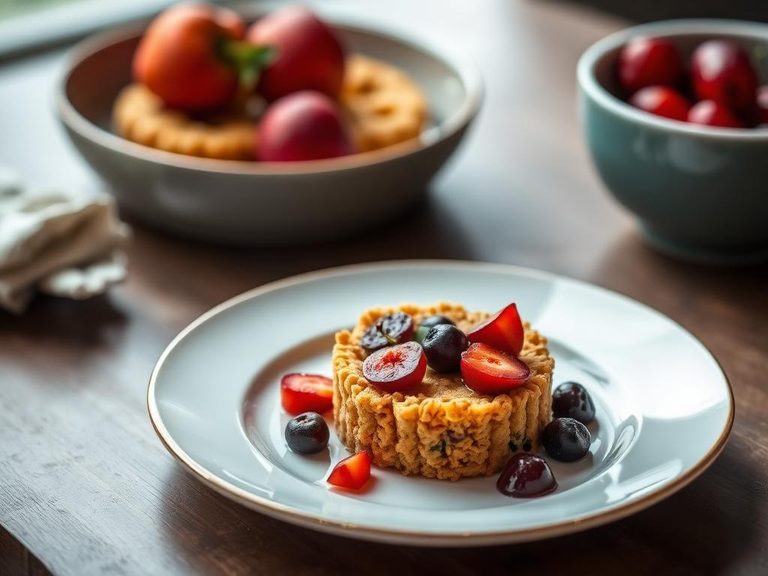

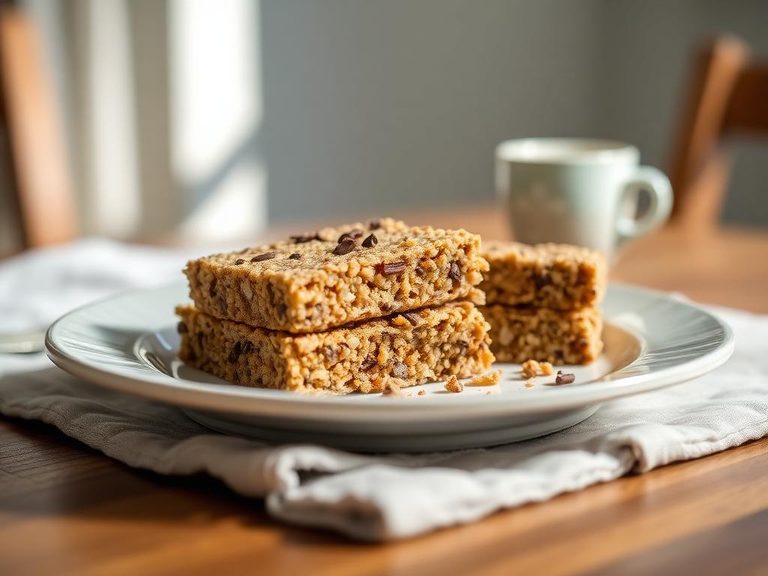
🌍 Where it's eaten
💡 Did you know?
The name 'Weetabix' is a portmanteau of 'wheat' and 'biscuit', and the cereal was first produced in 1932 in Stretford, England, using a recipe inspired by a similar American cereal called Shredded Wheat.
Full nutrition (USDA data · scales with serving)
| Water | 3.0 g |
| Energy | 371 kcal |
| Energy | 1554 kj |
| Protein | 11.4 g |
| Total lipid (fat) | 2.9 g |
| Ash | 1.2 g |
| Carbohydrate, by difference | 81.5 g |
| Fiber, total dietary | 11.4 g |
| Total Sugars | 5.7 g |
| Calcium, Ca | 57.0 mg |
| Iron, Fe | 12.9 mg |
| Magnesium, Mg | 92.0 mg |
| Phosphorus, P | 172 mg |
| Potassium, K | 429 mg |
| Sodium, Na | 371 mg |
| Zinc, Zn | 1.7 mg |
| Copper, Cu | 0.62 mg |
| Selenium, Se | 5.9 ug |
| Vitamin C, total ascorbic acid | 0.00 mg |
| Thiamin | 1.9 mg |
| Riboflavin | 0.98 mg |
| Niacin | 5.7 mg |
| Vitamin B-6 | 0.46 mg |
| Folate, total | 46.0 ug |
| Folic acid | 0.00 ug |
| Folate, food | 46.0 ug |
| Folate, DFE | 46.0 ug |
| Choline, total | 31.8 mg |
| Vitamin B-12 | 0.00 ug |
| Vitamin B-12, added | 0.00 ug |
| Vitamin A, RAE | 0.00 ug |
| Retinol | 0.00 ug |
| Carotene, beta | 5.0 ug |
| Carotene, alpha | 0.00 ug |
| Cryptoxanthin, beta | 0.00 ug |
| Vitamin A, IU | 9.0 iu |
| Lycopene | 0.00 ug |
| Lutein + zeaxanthin | 215 ug |
| Vitamin E (alpha-tocopherol) | 0.98 mg |
| Vitamin E, added | 0.00 mg |
| Vitamin D (D2 + D3), International Units | 0.00 iu |
| Vitamin D (D2 + D3) | 0.00 ug |
| Vitamin K (phylloquinone) | 1.8 ug |
| Alcohol, ethyl | 0.00 g |
| Caffeine | 0.00 mg |
| Theobromine | 0.00 mg |
Fat & fatty acid profile (per 100g)
| Fatty acids, total saturated | 0.48 g |
| SFA 4:0 | 0.00 g |
| SFA 6:0 | 0.00 g |
| SFA 8:0 | 0.00 g |
| SFA 10:0 | 0.00 g |
| SFA 12:0 | 0.00 g |
| SFA 14:0 | 0.00 g |
| SFA 16:0 | 0.41 g |
| SFA 18:0 | 0.02 g |
| Fatty acids, total monounsaturated | 0.35 g |
| MUFA 16:1 | 0.02 g |
| MUFA 18:1 | 0.33 g |
| MUFA 20:1 | 0.00 g |
| MUFA 22:1 | 0.00 g |
| Fatty acids, total polyunsaturated | 1.2 g |
| PUFA 18:2 | 1.1 g |
| PUFA 18:3 | 0.06 g |
| PUFA 18:4 | 0.00 g |
| PUFA 20:4 | 0.00 g |
| PUFA 20:5 n-3 (EPA) | 0.00 g |
| PUFA 22:5 n-3 (DPA) | 0.00 g |
| PUFA 22:6 n-3 (DHA) | 0.00 g |
| Fatty acids, total trans | 0.00 g |
| Cholesterol | 0.00 mg |
FAQ
Is Weetabix gluten-free?
No. Weetabix is made from whole-grain wheat and contains gluten. It is not suitable for people with celiac disease or gluten sensitivity.
Can I eat Weetabix on a low-carb diet?
Weetabix is high in carbohydrates (over 80g per 100g), so it is generally not recommended for strict low-carb or ketogenic diets. However, its high fiber content means the net carbs are lower than the total.
How can I make Weetabix less mushy?
To retain more texture, use less milk, let it sit for a shorter time, or try crumbling it over yogurt or fruit instead of soaking it fully. Some people also enjoy it dry as a crunchy snack.
Nutrient density (calculated · NRF9.3)
Nutrient Rich Foods index: beneficial nutrients (protein, fiber, vitamins, minerals) minus saturated fat, added sugar & sodium, per 100 kcal.
NRF9.3 index — Fulgoni, Keast & Drewnowski, 2009. Computed from USDA nutrients.
Weight-loss friendliness (composite index)
Energy density 3.71 kcal/g · 12% calories from protein · 11.4 g fiber · 5.7 g sugar per 100 g.
Composite of energy density (Rolls et al., 1999), protein & fiber satiety, minus sugar. A calculated heuristic — ranks satiety-per-calorie, not a clinical measure.
Dietary load (calculated from USDA values)
Potential renal acid load. Positive = acid-forming, negative = alkaline-forming.
Sodium-to-potassium ratio: 0.86 (lower is better — aim for ≤ 1)
Sodium:potassium per WHO potassium guidance. Computed from USDA nutrients.