

Cereals ready-to-eat, SUN COUNTRY, KRETSCHMER Honey Crunch Wheat Germ
Whole food · Breakfast Cereals

Photo: Wikipedia
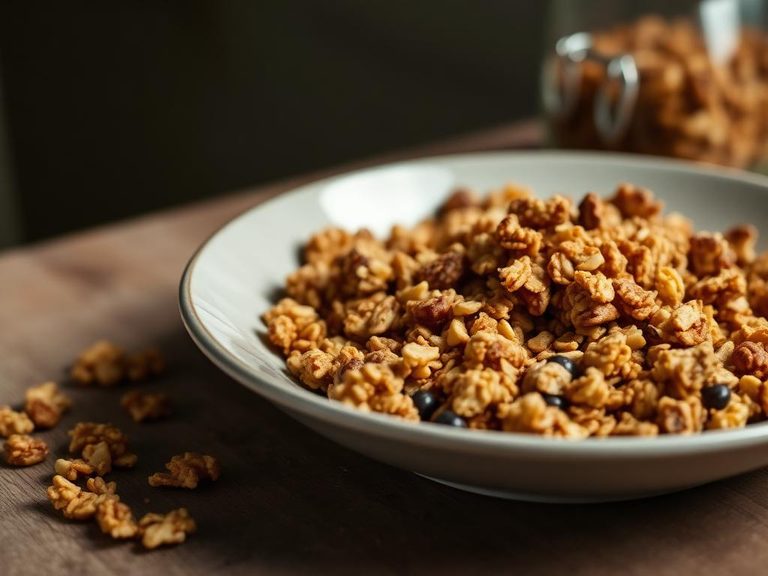
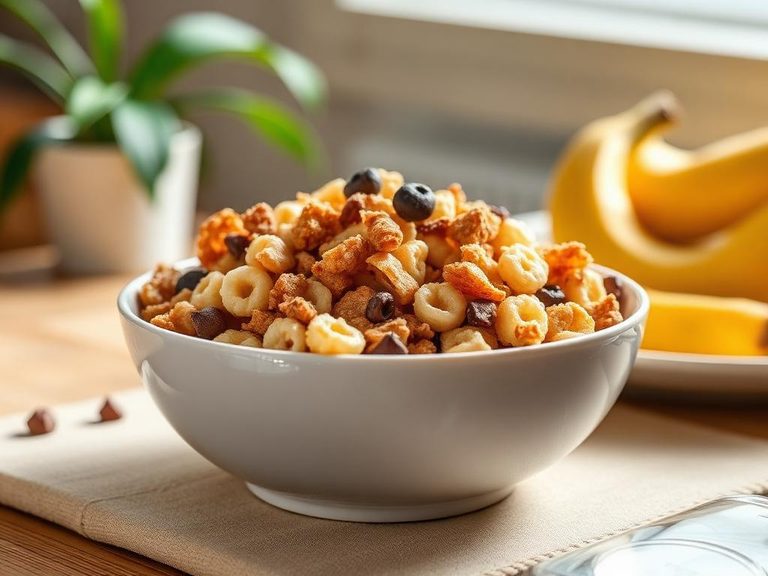
Sun Country Kretschmer Honey Crunch Wheat Germ is a toasted, honey-sweetened wheat germ, offering a satisfyingly crunchy texture and a nutty, sweet flavor. It's a nutritional powerhouse, packing an impressive 26.55g of protein and 10.2g of fiber per 100g, making it a dense source of plant-based nutrition.
Calorie split: 26% protein · 57% carbs · 17% fat
↓ Full nutrition💚 Why it's loved
People love it for its unique, toasty crunch and the subtle honey sweetness that elevates plain yogurt, oatmeal, or cereal. It's a beloved staple in health-conscious pantries for its ability to add both texture and a significant nutritional boost to everyday foods.
⚠️ Watch-outs & how to enjoy it better
The added honey increases the sugar content (21.43g per 100g), which could cause blood-sugar spikes if consumed in large quantities. To counteract this, practice portion control (1-2 tablespoons) and always pair it with protein or healthy fats, like Greek yogurt or nuts, to slow sugar absorption. Those with wheat or gluten allergies must avoid it entirely.
Key benefits
- Excellent source of plant-based protein
- High in dietary fiber for digestive health
- Rich in essential minerals like magnesium and zinc
- Provides a quick, sustained energy boost from complex carbs
- A versatile, crunchy topping for various meals
🍽️ Popular dishes



🌍 Where it's eaten
💡 Did you know?
Wheat germ is the embryo of the wheat kernel—the part that would sprout into a new plant—and it's so nutrient-dense that it's often separated from the flour during milling to extend shelf life.
Full nutrition (USDA data · scales with serving)
| Water | 3.4 g |
| Energy | 372 kcal |
| Energy | 1558 kj |
| Protein | 26.6 g |
| Total lipid (fat) | 7.8 g |
| Ash | 4.1 g |
| Carbohydrate, by difference | 58.1 g |
| Fiber, total dietary | 10.2 g |
| Total Sugars | 21.4 g |
| Calcium, Ca | 50.0 mg |
| Iron, Fe | 8.1 mg |
| Magnesium, Mg | 272 mg |
| Phosphorus, P | 1011 mg |
| Potassium, K | 964 mg |
| Sodium, Na | 11.0 mg |
| Zinc, Zn | 13.9 mg |
| Copper, Cu | 0.72 mg |
| Manganese, Mn | 15.9 mg |
| Selenium, Se | 59.3 ug |
| Vitamin C, total ascorbic acid | 5.5 mg |
| Thiamin | 1.3 mg |
| Riboflavin | 0.69 mg |
| Niacin | 4.7 mg |
| Pantothenic acid | 1.1 mg |
| Vitamin B-6 | 0.50 mg |
| Folate, total | 606 ug |
| Folic acid | 285 ug |
| Folate, food | 321 ug |
| Folate, DFE | 805 ug |
| Choline, total | 163 mg |
| Vitamin B-12 | 0.00 ug |
| Vitamin B-12, added | 0.00 ug |
| Vitamin A, RAE | 5.0 ug |
| Retinol | 0.00 ug |
| Carotene, beta | 57.0 ug |
| Carotene, alpha | 0.00 ug |
| Cryptoxanthin, beta | 0.00 ug |
| Vitamin A, IU | 96.0 iu |
| Lycopene | 0.00 ug |
| Lutein + zeaxanthin | 721 ug |
| Vitamin E (alpha-tocopherol) | 19.3 mg |
| Vitamin E, added | 4.7 mg |
| Vitamin D (D2 + D3), International Units | 0.00 iu |
| Vitamin D (D2 + D3) | 0.00 ug |
| Vitamin K (phylloquinone) | 3.6 ug |
| Alcohol, ethyl | 0.00 g |
| Caffeine | 0.00 mg |
| Theobromine | 0.00 mg |
Fat & fatty acid profile (per 100g)
| Fatty acids, total saturated | 1.4 g |
| SFA 4:0 | 0.00 g |
| SFA 6:0 | 0.00 g |
| SFA 8:0 | 0.00 g |
| SFA 10:0 | 0.00 g |
| SFA 12:0 | 0.00 g |
| SFA 14:0 | 0.01 g |
| SFA 16:0 | 1.3 g |
| SFA 18:0 | 0.04 g |
| Fatty acids, total monounsaturated | 1.0 g |
| MUFA 16:1 | 0.03 g |
| MUFA 18:1 | 1.0 g |
| MUFA 20:1 | 0.00 g |
| MUFA 22:1 | 0.00 g |
| Fatty acids, total polyunsaturated | 4.8 g |
| PUFA 18:2 | 4.3 g |
| PUFA 18:3 | 0.55 g |
| PUFA 18:4 | 0.00 g |
| PUFA 20:4 | 0.00 g |
| PUFA 20:5 n-3 (EPA) | 0.00 g |
| PUFA 22:5 n-3 (DPA) | 0.00 g |
| PUFA 22:6 n-3 (DHA) | 0.00 g |
| Cholesterol | 0.00 mg |
FAQ
How is this different from regular wheat bran?
Wheat germ is the nutrient-rich embryo of the kernel, high in protein, healthy fats, and vitamins. Wheat bran is the outer fiber-rich layer of the kernel. They have different textures and nutritional profiles.
Can I use this in baking?
Yes, it's a great addition to muffins, pancakes, breads, and cookies. It adds a nutty flavor, extra protein, and a pleasant texture. Start by substituting 1/4 to 1/3 of the flour with wheat germ.
How should I store it?
Because of its healthy oils, wheat germ can go rancid. Store the opened package in an airtight container in the refrigerator or freezer to maintain freshness for several months.
Nutrient density (calculated · NRF9.3)
Nutrient Rich Foods index: beneficial nutrients (protein, fiber, vitamins, minerals) minus saturated fat, added sugar & sodium, per 100 kcal.
NRF9.3 index — Fulgoni, Keast & Drewnowski, 2009. Computed from USDA nutrients.
Weight-loss friendliness (composite index)
Energy density 3.72 kcal/g · 29% calories from protein · 10.2 g fiber · 21.4 g sugar per 100 g.
Composite of energy density (Rolls et al., 1999), protein & fiber satiety, minus sugar. A calculated heuristic — ranks satiety-per-calorie, not a clinical measure.
Dietary load (calculated from USDA values)
Potential renal acid load. Positive = acid-forming, negative = alkaline-forming.
Sodium-to-potassium ratio: 0.01 (lower is better — aim for ≤ 1)
Sodium:potassium per WHO potassium guidance. Computed from USDA nutrients.