

Cereals ready-to-eat, QUAKER, QUAKER Puffed Wheat
Whole food · Breakfast Cereals

Photo: Wikipedia
Quaker Puffed Wheat is a light, airy cereal made by forcing whole wheat kernels to puff under heat and pressure. It has a delicate, crunchy texture that softens quickly in milk, offering a mild, toasty grain flavor. Nutritionally, it stands out for its high fiber content and very low fat and sugar levels.
Calorie split: 17% protein · 78% carbs · 5% fat
↓ Full nutrition💚 Why it's loved
People love it for its satisfying, light crunch and its versatility as a blank canvas that absorbs flavors from milk, fruit, or yogurt. It's also a nostalgic, budget-friendly staple that fits easily into a quick, wholesome breakfast.
⚠️ Watch-outs & how to enjoy it better
Its very low fat and protein content can lead to a rapid blood-sugar spike when eaten alone. To counteract this, pair it with a source of protein (like Greek yogurt or milk) or healthy fat (like nuts or seeds) to slow digestion and provide sustained energy. Those with gluten sensitivity or celiac disease must avoid it, as it is made from wheat.
Key benefits
- High in dietary fiber (9.4g per 100g)
- Very low in fat (2.15g per 100g)
- Good source of plant-based protein (16.26g per 100g)
- Low in sugar (1.37g per 100g)
- Provides a crunchy, low-calorie base for meals
🍽️ Popular dishes
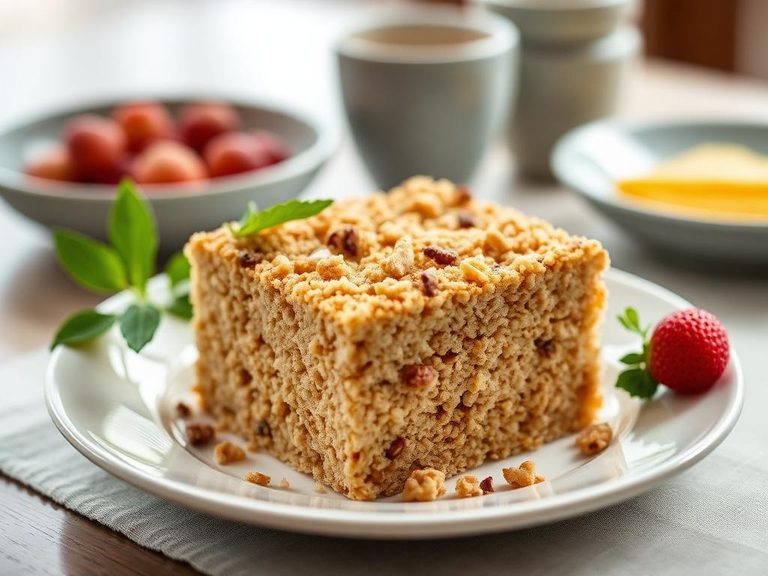
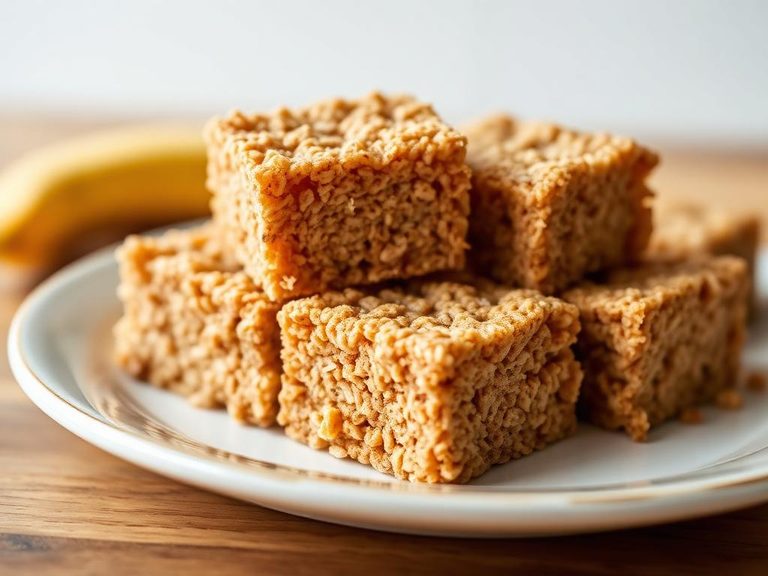
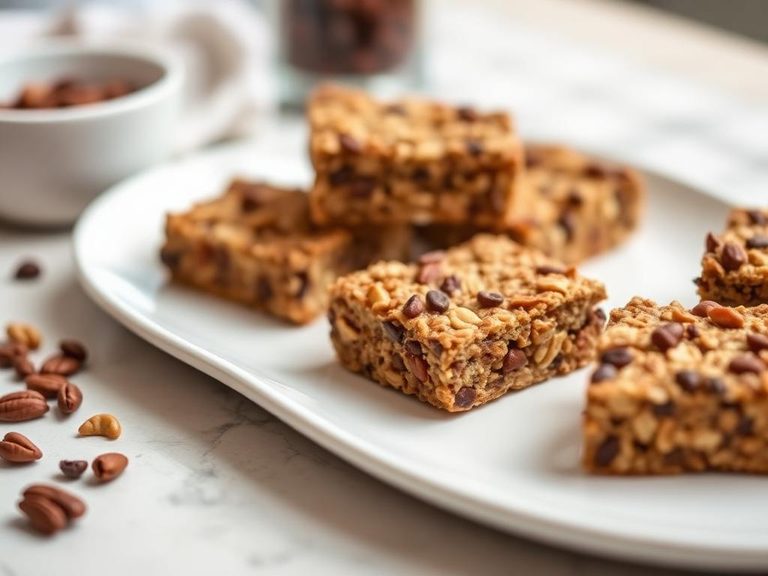
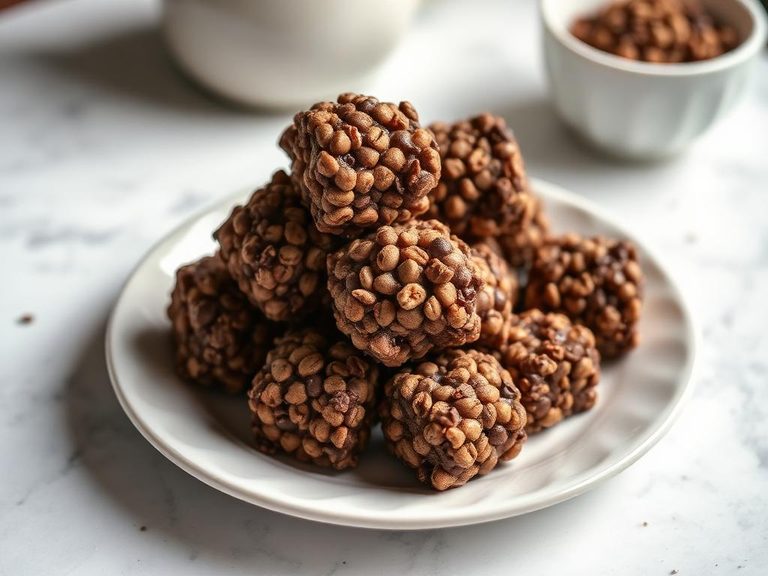
🌍 Where it's eaten
💡 Did you know?
The puffing process was patented in the early 1900s, and Quaker began mass-producing it in 1911, marketing it as a 'food of the future' for its digestibility.
Full nutrition (USDA data · scales with serving)
| Water | 3.7 g |
| Energy | 366 kcal |
| Energy | 1531 kj |
| Protein | 16.3 g |
| Total lipid (fat) | 2.1 g |
| Ash | 1.5 g |
| Carbohydrate, by difference | 76.4 g |
| Fiber, total dietary | 9.4 g |
| Total Sugars | 1.4 g |
| Calcium, Ca | 24.0 mg |
| Iron, Fe | 4.4 mg |
| Magnesium, Mg | 133 mg |
| Phosphorus, P | 331 mg |
| Potassium, K | 364 mg |
| Sodium, Na | 5.0 mg |
| Zinc, Zn | 3.1 mg |
| Copper, Cu | 0.45 mg |
| Selenium, Se | 123 ug |
| Vitamin C, total ascorbic acid | 0.00 mg |
| Thiamin | 0.64 mg |
| Riboflavin | 0.40 mg |
| Niacin | 5.3 mg |
| Vitamin B-6 | 0.13 mg |
| Folate, total | 154 ug |
| Folic acid | 122 ug |
| Folate, food | 32.0 ug |
| Folate, DFE | 240 ug |
| Choline, total | 32.7 mg |
| Vitamin B-12 | 0.42 ug |
| Vitamin B-12, added | 0.00 ug |
| Vitamin A, RAE | 0.00 ug |
| Retinol | 0.00 ug |
| Carotene, beta | 0.00 ug |
| Carotene, alpha | 0.00 ug |
| Cryptoxanthin, beta | 0.00 ug |
| Vitamin A, IU | 11.0 iu |
| Lycopene | 0.00 ug |
| Lutein + zeaxanthin | 0.00 ug |
| Vitamin E (alpha-tocopherol) | 0.00 mg |
| Vitamin E, added | 0.00 mg |
| Vitamin D (D2 + D3), International Units | 0.00 iu |
| Vitamin D (D2 + D3) | 0.00 ug |
| Vitamin K (phylloquinone) | 2.0 ug |
| Alcohol, ethyl | 0.00 g |
| Caffeine | 0.00 mg |
| Theobromine | 0.00 mg |
Fat & fatty acid profile (per 100g)
| Fatty acids, total saturated | 0.41 g |
| SFA 4:0 | 0.00 g |
| SFA 6:0 | 0.00 g |
| SFA 8:0 | 0.00 g |
| SFA 10:0 | 0.00 g |
| SFA 12:0 | 0.00 g |
| SFA 14:0 | 0.00 g |
| SFA 16:0 | 0.31 g |
| SFA 18:0 | 0.01 g |
| Fatty acids, total monounsaturated | 0.31 g |
| MUFA 16:1 | 0.07 g |
| MUFA 18:1 | 0.26 g |
| MUFA 20:1 | 0.00 g |
| MUFA 22:1 | 0.00 g |
| Fatty acids, total polyunsaturated | 1.1 g |
| PUFA 18:2 | 0.80 g |
| PUFA 18:3 | 0.04 g |
| PUFA 18:4 | 0.00 g |
| PUFA 20:4 | 0.00 g |
| PUFA 20:5 n-3 (EPA) | 0.00 g |
| PUFA 22:5 n-3 (DPA) | 0.00 g |
| PUFA 22:6 n-3 (DHA) | 0.00 g |
| Fatty acids, total trans | 0.00 g |
| Cholesterol | 0.00 mg |
FAQ
Is Puffed Wheat gluten-free?
No, it is made from whole wheat and contains gluten. Individuals with celiac disease or gluten intolerance should avoid it.
How does it compare to puffed rice?
Puffed wheat generally has more protein and fiber per serving than puffed rice, but both are low in fat. Puffed wheat has a slightly nuttier flavor.
Can I use it in baking?
Yes, it's a classic ingredient in no-bake treats like Puffed Wheat Squares, where it's mixed with a sweet, sticky binder like marshmallow or syrup.
Nutrient density (calculated · NRF9.3)
Nutrient Rich Foods index: beneficial nutrients (protein, fiber, vitamins, minerals) minus saturated fat, added sugar & sodium, per 100 kcal.
NRF9.3 index — Fulgoni, Keast & Drewnowski, 2009. Computed from USDA nutrients.
Weight-loss friendliness (composite index)
Energy density 3.66 kcal/g · 18% calories from protein · 9.4 g fiber · 1.4 g sugar per 100 g.
Composite of energy density (Rolls et al., 1999), protein & fiber satiety, minus sugar. A calculated heuristic — ranks satiety-per-calorie, not a clinical measure.
Dietary load (calculated from USDA values)
Potential renal acid load. Positive = acid-forming, negative = alkaline-forming.
Sodium-to-potassium ratio: 0.01 (lower is better — aim for ≤ 1)
Sodium:potassium per WHO potassium guidance. Computed from USDA nutrients.