

Cereals ready-to-eat, QUAKER, QUAKER OAT LIFE, plain
Whole food · Breakfast Cereals

Photo: Wikipedia
Quaker Life cereal is a classic, crunchy, sweetened whole-grain wheat and oat square, offering a mild, honey-kissed flavor with a satisfying, sturdy texture that holds up in milk. It's a fortified breakfast staple, delivering a notable 9.98g of protein and 6.6g of fiber per 100g, alongside a significant 19.43g of sugar.
Calorie split: 10% protein · 80% carbs · 10% fat
↓ Full nutrition💚 Why it's loved
People love it for its perfectly balanced, not-too-sweet honey flavor and its iconic, satisfying crunch that remains intact in the bowl. It's a nostalgic, comforting choice that's incredibly versatile—equally good with cold milk, sprinkled over yogurt, or eaten dry by the handful.
⚠️ Watch-outs & how to enjoy it better
The high sugar content (19.43g per 100g) can lead to a rapid blood-sugar spike, especially if eaten alone. To counteract this, pair it with a source of protein or healthy fat, like a handful of nuts, a dollop of Greek yogurt, or a splash of high-protein milk. Be mindful of portion size to manage sugar intake.
Key benefits
- Provides a good source of protein for a cereal
- Contains dietary fiber from whole grain wheat
- Fortified with essential vitamins and minerals
- Offers a quick, no-prep breakfast option
- Sturdy texture prevents sogginess in milk
🍽️ Popular dishes
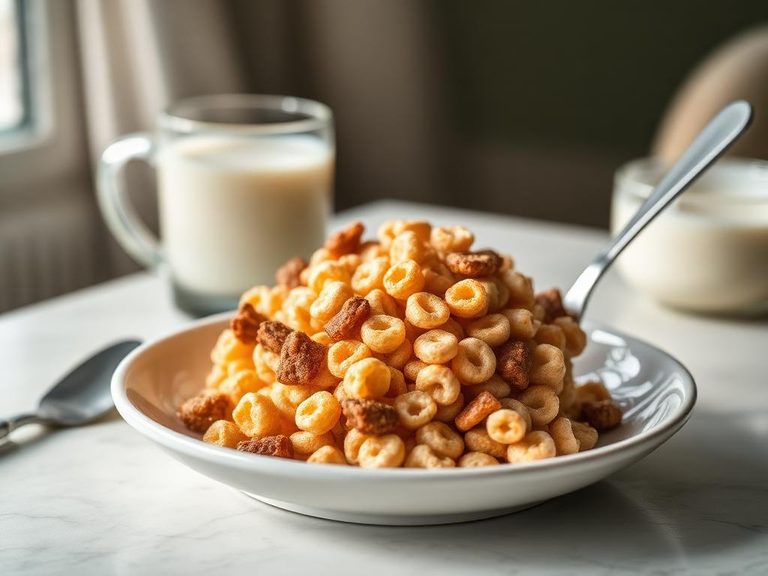
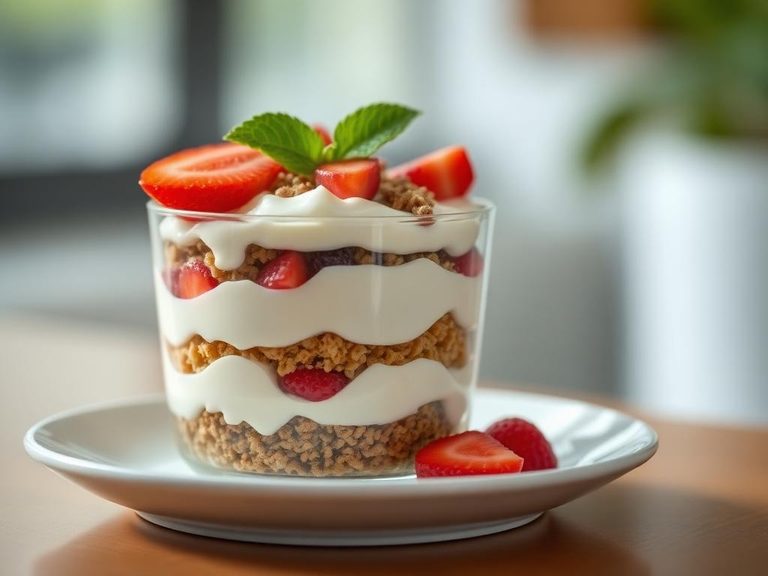
🌍 Where it's eaten
💡 Did you know?
Quaker Life cereal was introduced in 1961 and was one of the first cereals to be marketed with a specific nutritional benefit, originally promoted for its 'life-giving' whole-grain content.
Full nutrition (USDA data · scales with serving)
| Water | 4.3 g |
| Energy | 374 kcal |
| Energy | 1565 kj |
| Protein | 10.0 g |
| Total lipid (fat) | 4.4 g |
| Ash | 3.6 g |
| Carbohydrate, by difference | 77.7 g |
| Fiber, total dietary | 6.6 g |
| Total Sugars | 19.4 g |
| Calcium, Ca | 351 mg |
| Iron, Fe | 29.3 mg |
| Magnesium, Mg | 98.0 mg |
| Phosphorus, P | 423 mg |
| Potassium, K | 283 mg |
| Sodium, Na | 501 mg |
| Zinc, Zn | 13.8 mg |
| Copper, Cu | 0.28 mg |
| Manganese, Mn | 2.3 mg |
| Selenium, Se | 23.0 ug |
| Vitamin C, total ascorbic acid | 0.00 mg |
| Thiamin | 1.3 mg |
| Riboflavin | 1.5 mg |
| Niacin | 17.2 mg |
| Pantothenic acid | 0.72 mg |
| Vitamin B-6 | 1.8 mg |
| Folate, total | 1305 ug |
| Folic acid | 1286 ug |
| Folate, food | 19.0 ug |
| Folate, DFE | 2205 ug |
| Choline, total | 24.0 mg |
| Vitamin B-12 | 0.00 ug |
| Vitamin B-12, added | 0.00 ug |
| Vitamin A, RAE | 2.0 ug |
| Retinol | 0.00 ug |
| Carotene, beta | 18.0 ug |
| Carotene, alpha | 1.0 ug |
| Cryptoxanthin, beta | 11.0 ug |
| Vitamin A, IU | 40.0 iu |
| Lycopene | 0.00 ug |
| Lutein + zeaxanthin | 99.0 ug |
| Vitamin E (alpha-tocopherol) | 0.61 mg |
| Vitamin E, added | 0.00 mg |
| Vitamin D (D2 + D3), International Units | 0.00 iu |
| Vitamin D (D2 + D3) | 0.00 ug |
| Vitamin K (phylloquinone) | 1.2 ug |
| Alcohol, ethyl | 0.00 g |
| Caffeine | 0.00 mg |
| Theobromine | 0.00 mg |
Fat & fatty acid profile (per 100g)
| Fatty acids, total saturated | 0.83 g |
| SFA 4:0 | 0.00 g |
| SFA 6:0 | 0.00 g |
| SFA 8:0 | 0.00 g |
| SFA 10:0 | 0.00 g |
| SFA 12:0 | 0.01 g |
| SFA 14:0 | 0.01 g |
| SFA 16:0 | 0.76 g |
| SFA 18:0 | 0.06 g |
| Fatty acids, total monounsaturated | 1.5 g |
| MUFA 16:1 | 0.01 g |
| MUFA 18:1 | 1.5 g |
| MUFA 20:1 | 0.00 g |
| MUFA 22:1 | 0.00 g |
| Fatty acids, total polyunsaturated | 1.4 g |
| PUFA 18:2 | 1.4 g |
| PUFA 18:3 | 0.06 g |
| PUFA 18:4 | 0.00 g |
| PUFA 20:4 | 0.00 g |
| PUFA 20:5 n-3 (EPA) | 0.00 g |
| PUFA 22:5 n-3 (DPA) | 0.00 g |
| PUFA 22:6 n-3 (DHA) | 0.00 g |
| Fatty acids, total trans | 0.00 g |
| Cholesterol | 0.00 mg |
FAQ
Is Quaker Life cereal healthy?
It can be part of a balanced diet. It provides protein, fiber, and is fortified with vitamins, but it is also high in added sugar. Consider it an occasional breakfast or pair it with protein to mitigate blood sugar impact.
Is it gluten-free?
No. Quaker Life cereal is made primarily from whole grain wheat and oats, and is produced in a facility that handles wheat, making it unsuitable for those with celiac disease or gluten sensitivity.
How does it compare to other sweet cereals?
Compared to many sugary children's cereals, Life typically has more protein and fiber and less sugar per serving. However, it still falls into the 'sweetened cereal' category and should be consumed mindfully.
Nutrient density (calculated · NRF9.3)
Nutrient Rich Foods index: beneficial nutrients (protein, fiber, vitamins, minerals) minus saturated fat, added sugar & sodium, per 100 kcal.
NRF9.3 index — Fulgoni, Keast & Drewnowski, 2009. Computed from USDA nutrients.
Weight-loss friendliness (composite index)
Energy density 3.74 kcal/g · 11% calories from protein · 6.6 g fiber · 19.4 g sugar per 100 g.
Composite of energy density (Rolls et al., 1999), protein & fiber satiety, minus sugar. A calculated heuristic — ranks satiety-per-calorie, not a clinical measure.
Dietary load (calculated from USDA values)
Potential renal acid load. Positive = acid-forming, negative = alkaline-forming.
Sodium-to-potassium ratio: 1.77 (lower is better — aim for ≤ 1)
Sodium:potassium per WHO potassium guidance. Computed from USDA nutrients.