

Cereals ready-to-eat, QUAKER, CAP'N CRUNCH'S PEANUT BUTTER CRUNCH
Whole food · Breakfast Cereals

Photo: Wikipedia
This is a sweet, crunchy breakfast cereal made from corn and oat flour, shaped into small, golden-brown pieces and coated in a distinct peanut butter flavoring. It delivers a satisfying, honey-nut crunch with a prominent salty-sweet peanut butter taste. Nutritionally, it's a high-carbohydrate, high-sugar cereal with minimal protein and fiber.
Calorie split: 7% protein · 74% carbs · 19% fat
↓ Full nutrition💚 Why it's loved
People love it for its iconic, intensely sweet and salty peanut butter flavor combined with a uniquely sturdy crunch that holds up in milk. It's a nostalgic comfort food for many, evoking childhood memories and serving as a quick, satisfying snack or breakfast.
⚠️ Watch-outs & how to enjoy it better
The high sugar content (over 33g per 100g) can lead to blood-sugar spikes and is a concern for those managing diabetes or seeking low-sugar diets. To counteract this, practice strict portion control (e.g., a half-cup serving) and pair it with a source of protein and fat, like Greek yogurt or a handful of nuts, to slow sugar absorption. It also contains common allergens like wheat and peanuts.
Key benefits
- Provides quick energy from carbohydrates
- Fortified with essential vitamins and minerals
- Convenient and requires no preparation
- Popular and widely available comfort food
- Offers a distinct, nostalgic flavor profile
🍽️ Popular dishes
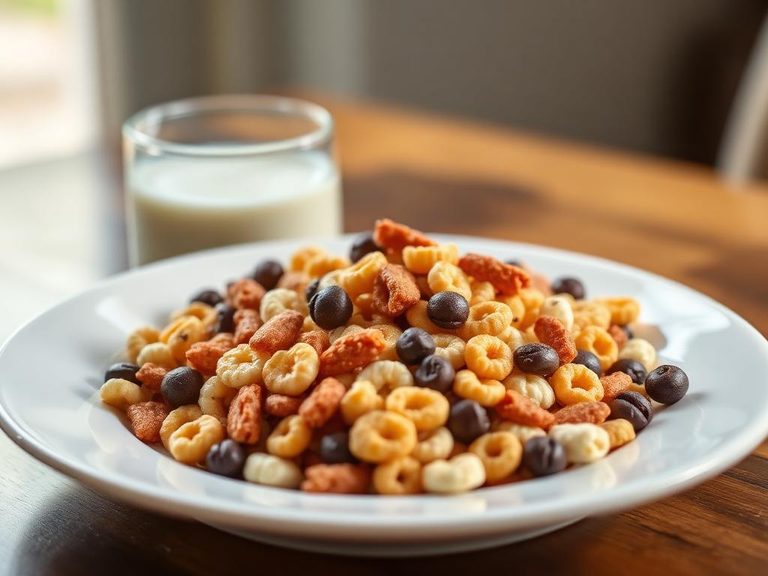
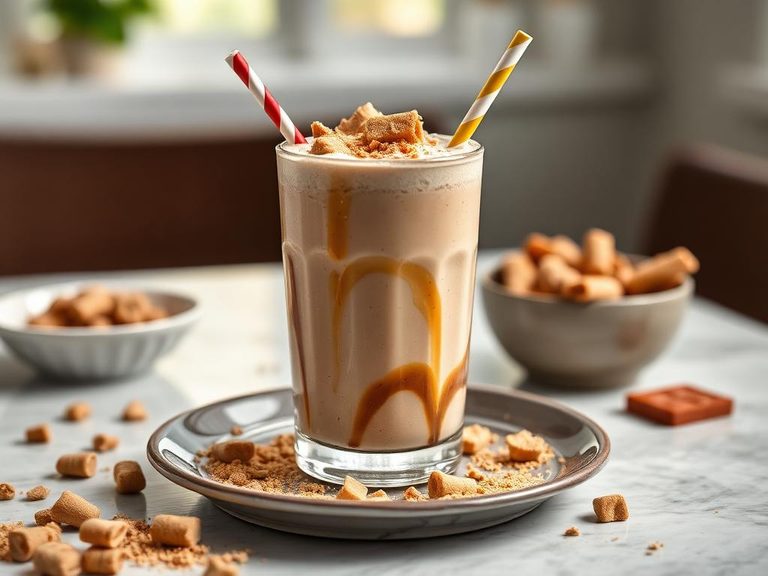
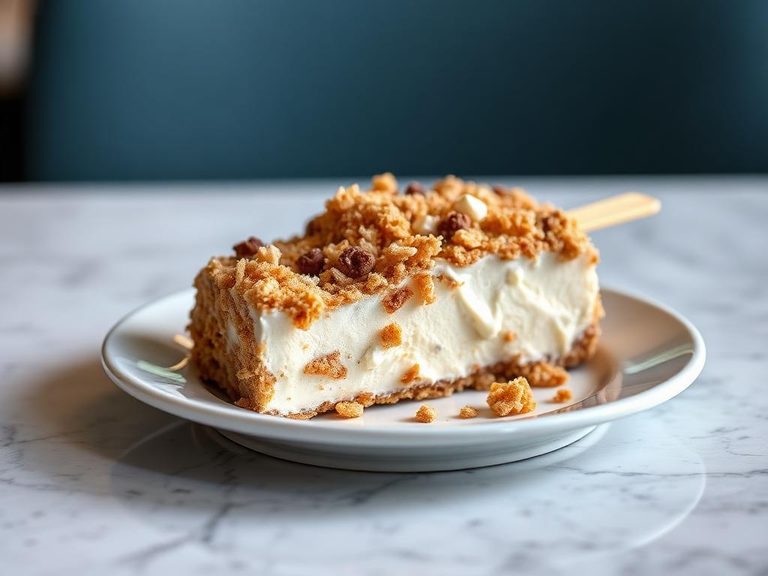
🌍 Where it's eaten
💡 Did you know?
The cereal's name and mascot, Captain Horatio Magellan Crunch, were inspired by the fictional sea captain from the children's book 'The Story of a Stuffed Elephant'.
Full nutrition (USDA data · scales with serving)
| Water | 2.5 g |
| Energy | 417 kcal |
| Energy | 1745 kj |
| Protein | 7.1 g |
| Total lipid (fat) | 9.2 g |
| Ash | 2.5 g |
| Carbohydrate, by difference | 78.7 g |
| Fiber, total dietary | 2.7 g |
| Total Sugars | 33.4 g |
| Calcium, Ca | 9.0 mg |
| Iron, Fe | 18.4 mg |
| Magnesium, Mg | 69.0 mg |
| Phosphorus, P | 194 mg |
| Potassium, K | 236 mg |
| Sodium, Na | 742 mg |
| Zinc, Zn | 15.3 mg |
| Copper, Cu | 0.11 mg |
| Selenium, Se | 7.5 ug |
| Vitamin C, total ascorbic acid | 0.00 mg |
| Thiamin | 1.5 mg |
| Riboflavin | 1.7 mg |
| Niacin | 20.4 mg |
| Vitamin B-6 | 2.0 mg |
| Folate, total | 1554 ug |
| Folic acid | 1535 ug |
| Folate, food | 19.0 ug |
| Folate, DFE | 2629 ug |
| Choline, total | 14.7 mg |
| Betaine | 1.8 mg |
| Vitamin B-12 | 0.00 ug |
| Vitamin B-12, added | 0.00 ug |
| Vitamin A, RAE | 8.0 ug |
| Retinol | 0.00 ug |
| Carotene, beta | 68.0 ug |
| Carotene, alpha | 44.0 ug |
| Cryptoxanthin, beta | 0.00 ug |
| Vitamin A, IU | 150 iu |
| Lycopene | 0.00 ug |
| Lutein + zeaxanthin | 850 ug |
| Vitamin E (alpha-tocopherol) | 0.61 mg |
| Vitamin E, added | 0.00 mg |
| Vitamin D (D2 + D3), International Units | 0.00 iu |
| Vitamin D (D2 + D3) | 0.00 ug |
| Vitamin K (phylloquinone) | 0.20 ug |
| Alcohol, ethyl | 0.00 g |
| Caffeine | 0.00 mg |
| Theobromine | 0.00 mg |
Fat & fatty acid profile (per 100g)
| Fatty acids, total saturated | 3.9 g |
| SFA 4:0 | 0.00 g |
| SFA 6:0 | 0.02 g |
| SFA 8:0 | 0.20 g |
| SFA 10:0 | 0.16 g |
| SFA 12:0 | 1.2 g |
| SFA 14:0 | 0.48 g |
| SFA 16:0 | 1.2 g |
| SFA 18:0 | 0.34 g |
| SFA 20:0 | 0.09 g |
| SFA 22:0 | 0.20 g |
| SFA 24:0 | 0.06 g |
| Fatty acids, total monounsaturated | 2.6 g |
| MUFA 16:1 | 0.00 g |
| MUFA 18:1 | 2.6 g |
| MUFA 20:1 | 0.06 g |
| MUFA 22:1 | 0.00 g |
| Fatty acids, total polyunsaturated | 2.1 g |
| PUFA 18:2 | 2.1 g |
| PUFA 18:3 | 0.02 g |
| PUFA 18:4 | 0.00 g |
| PUFA 20:4 | 0.00 g |
| PUFA 20:5 n-3 (EPA) | 0.00 g |
| PUFA 22:5 n-3 (DPA) | 0.00 g |
| PUFA 22:6 n-3 (DHA) | 0.00 g |
| Fatty acids, total trans | 0.02 g |
| Cholesterol | 0.00 mg |
FAQ
Is Cap'n Crunch's Peanut Butter Crunch a healthy breakfast option?
It is considered more of a treat than a health food. While it is fortified with vitamins, its high sugar and refined carbohydrate content make it a less balanced choice for a daily breakfast compared to options like oatmeal or whole-grain cereals with lower sugar.
What gives it its distinctive peanut butter flavor?
The flavor comes from a combination of natural and artificial flavorings, along with ingredients like peanut butter, sugar, and salt, which are applied as a coating to the corn and oat cereal pieces.
Why is the cereal so crunchy?
The cereal pieces are made from a baked corn and oat flour dough that is extruded into shape and then coated with a sugar-based glaze. This process creates a very rigid structure that resists becoming soggy quickly in milk.
Nutrient density (calculated · NRF9.3)
Nutrient Rich Foods index: beneficial nutrients (protein, fiber, vitamins, minerals) minus saturated fat, added sugar & sodium, per 100 kcal.
NRF9.3 index — Fulgoni, Keast & Drewnowski, 2009. Computed from USDA nutrients.
Weight-loss friendliness (composite index)
Energy density 4.17 kcal/g · 7% calories from protein · 2.7 g fiber · 33.4 g sugar per 100 g.
Composite of energy density (Rolls et al., 1999), protein & fiber satiety, minus sugar. A calculated heuristic — ranks satiety-per-calorie, not a clinical measure.
Dietary load (calculated from USDA values)
Potential renal acid load. Positive = acid-forming, negative = alkaline-forming.
Sodium-to-potassium ratio: 3.14 (lower is better — aim for ≤ 1)
Sodium:potassium per WHO potassium guidance. Computed from USDA nutrients.