

Cereals ready-to-eat, POST GREAT GRAINS Banana Nut Crunch
Whole food · Breakfast Cereals

Photo: Wikipedia
POST GREAT GRAINS Banana Nut Crunch is a hearty, crunchy ready-to-eat cereal featuring rolled oats, banana chips, and almond pieces. It delivers a satisfying, sweet, and nutty flavor with a robust texture that holds up well in milk. Nutritionally, it's a strong source of dietary fiber, providing over 11g per 100g.
Calorie split: 10% protein · 71% carbs · 20% fat
↓ Full nutrition💚 Why it's loved
People love it for the satisfying crunch and the nostalgic, comforting combination of banana and nut flavors. It's a versatile staple, enjoyed as a quick breakfast, a crunchy topping for yogurt, or a standalone snack.
⚠️ Watch-outs & how to enjoy it better
The cereal contains 17.5g of sugar per 100g, which can contribute to blood-sugar spikes if eaten in large portions alone. To counteract this, pair it with a source of protein or fat (like Greek yogurt or milk) and practice portion control by sticking to a single serving. It also contains common allergens like wheat, almonds, and may have traces of other tree nuts.
Key benefits
- High in dietary fiber (11.2g per 100g)
- Good source of plant-based protein (9.8g per 100g)
- Contains whole grain oats as a primary ingredient
- Provides essential minerals like iron and B vitamins from fortified cereal
🍽️ Popular dishes
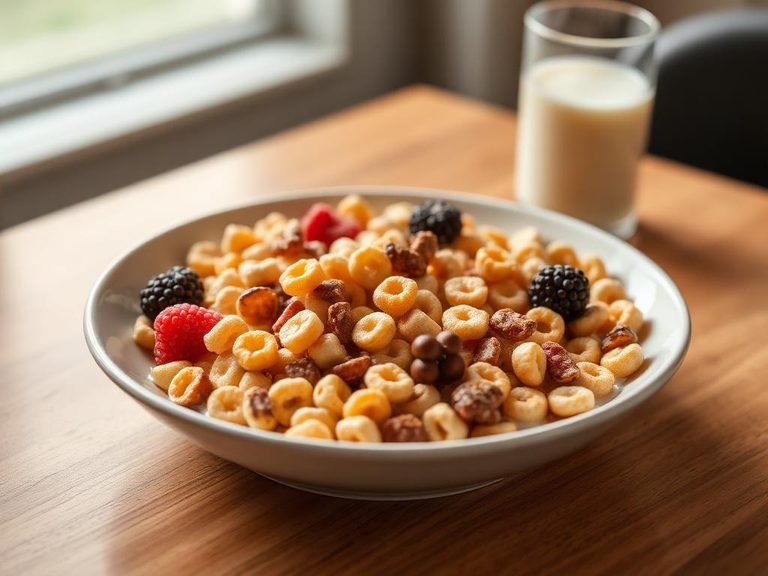
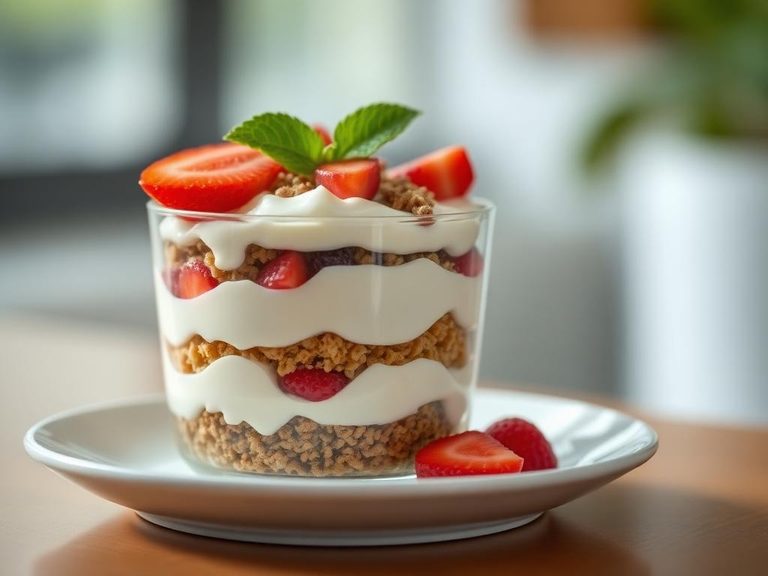
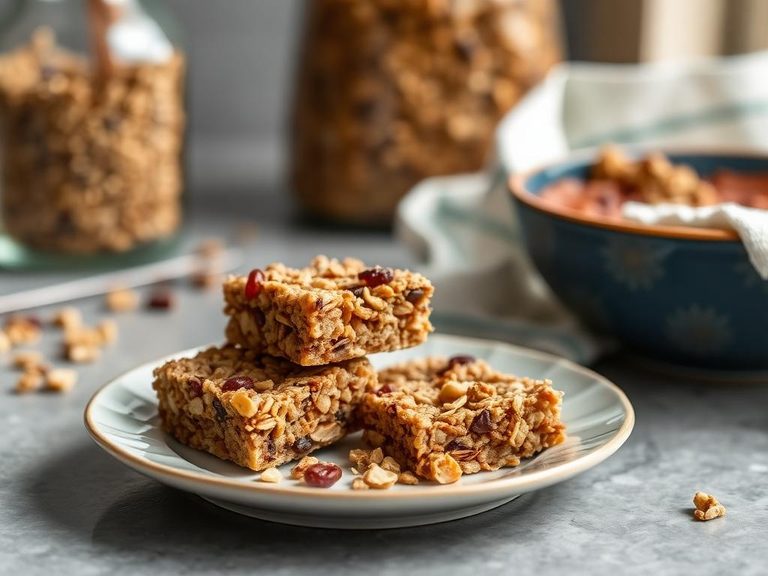
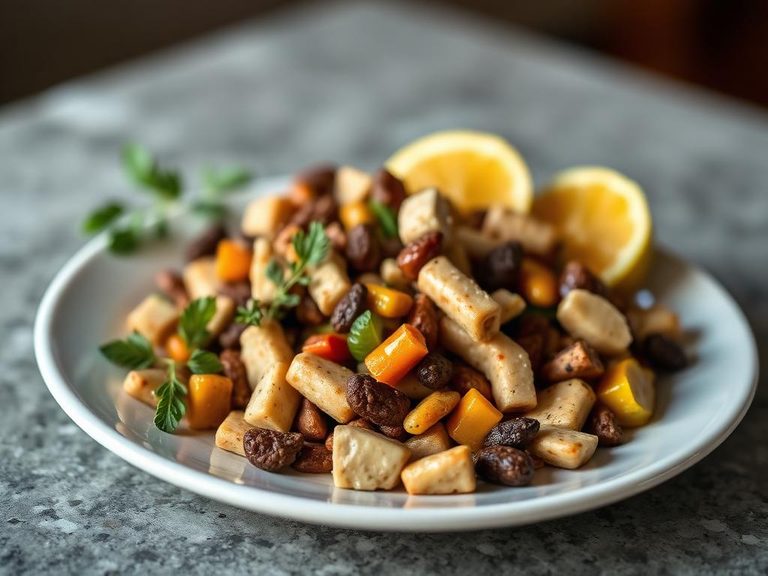
🌍 Where it's eaten
💡 Did you know?
The 'Banana Nut Crunch' name is a direct descriptor; the banana flavor primarily comes from dehydrated banana chips, which are often made from plantains fried in coconut oil.
Full nutrition (USDA data · scales with serving)
| Water | 5.6 g |
| Energy | 390 kcal |
| Energy | 1631 kj |
| Protein | 9.8 g |
| Total lipid (fat) | 8.8 g |
| Ash | 4.9 g |
| Carbohydrate, by difference | 70.9 g |
| Fiber, total dietary | 11.2 g |
| Total Sugars | 17.5 g |
| Calcium, Ca | 44.0 mg |
| Iron, Fe | 28.0 mg |
| Magnesium, Mg | 98.0 mg |
| Phosphorus, P | 279 mg |
| Potassium, K | 349 mg |
| Sodium, Na | 238 mg |
| Zinc, Zn | 2.5 mg |
| Copper, Cu | 0.36 mg |
| Selenium, Se | 32.0 ug |
| Vitamin C, total ascorbic acid | 0.10 mg |
| Thiamin | 0.60 mg |
| Riboflavin | 0.70 mg |
| Niacin | 8.5 mg |
| Vitamin B-6 | 0.80 mg |
| Folate, total | 339 ug |
| Folic acid | 320 ug |
| Folate, food | 19.0 ug |
| Folate, DFE | 563 ug |
| Choline, total | 20.3 mg |
| Vitamin B-12 | 2.5 ug |
| Vitamin B-12, added | 2.5 ug |
| Vitamin A, RAE | 378 ug |
| Retinol | 377 ug |
| Carotene, beta | 7.0 ug |
| Carotene, alpha | 3.0 ug |
| Cryptoxanthin, beta | 0.00 ug |
| Vitamin A, IU | 1271 iu |
| Lycopene | 0.00 ug |
| Lutein + zeaxanthin | 124 ug |
| Vitamin E (alpha-tocopherol) | 1.6 mg |
| Vitamin E, added | 0.00 mg |
| Vitamin D (D2 + D3), International Units | 68.0 iu |
| Vitamin D (D2 + D3) | 1.7 ug |
| Vitamin D3 (cholecalciferol) | 1.7 ug |
| Vitamin K (phylloquinone) | 3.6 ug |
| Alcohol, ethyl | 0.00 g |
| Caffeine | 0.00 mg |
| Theobromine | 0.00 mg |
Fat & fatty acid profile (per 100g)
| Fatty acids, total saturated | 1.1 g |
| SFA 4:0 | 0.00 g |
| SFA 6:0 | 0.00 g |
| SFA 8:0 | 0.00 g |
| SFA 10:0 | 0.00 g |
| SFA 12:0 | 0.01 g |
| SFA 14:0 | 0.01 g |
| SFA 16:0 | 0.85 g |
| SFA 18:0 | 0.16 g |
| Fatty acids, total monounsaturated | 3.8 g |
| MUFA 16:1 | 0.02 g |
| MUFA 18:1 | 3.7 g |
| MUFA 20:1 | 0.03 g |
| MUFA 22:1 | 0.00 g |
| Fatty acids, total polyunsaturated | 3.4 g |
| PUFA 18:2 | 3.0 g |
| PUFA 18:3 | 0.42 g |
| PUFA 18:4 | 0.00 g |
| PUFA 20:4 | 0.00 g |
| PUFA 20:5 n-3 (EPA) | 0.00 g |
| PUFA 22:5 n-3 (DPA) | 0.00 g |
| PUFA 22:6 n-3 (DHA) | 0.00 g |
| Fatty acids, total trans | 0.00 g |
| Cholesterol | 0.00 mg |
FAQ
Is this cereal gluten-free?
No. It contains whole grain oats and wheat flour, making it unsuitable for those with celiac disease or gluten sensitivity.
How does it compare nutritionally to a simple oatmeal?
Compared to plain oatmeal, this cereal is higher in sugar and fat (from nuts and banana chips) but also offers more texture and flavor complexity. Plain oatmeal is typically lower in sugar and higher in soluble fiber per calorie.
Can I eat this cereal on a low-sugar diet?
While not a zero-sugar food, its 17.5g of sugar per 100g is moderate for a sweetened cereal. A 55g serving contains about 9.6g of sugar, which can fit into a balanced diet, especially when paired with protein.
Nutrient density (calculated · NRF9.3)
Nutrient Rich Foods index: beneficial nutrients (protein, fiber, vitamins, minerals) minus saturated fat, added sugar & sodium, per 100 kcal.
NRF9.3 index — Fulgoni, Keast & Drewnowski, 2009. Computed from USDA nutrients.
Weight-loss friendliness (composite index)
Energy density 3.90 kcal/g · 10% calories from protein · 11.2 g fiber · 17.5 g sugar per 100 g.
Composite of energy density (Rolls et al., 1999), protein & fiber satiety, minus sugar. A calculated heuristic — ranks satiety-per-calorie, not a clinical measure.
Dietary load (calculated from USDA values)
Potential renal acid load. Positive = acid-forming, negative = alkaline-forming.
Sodium-to-potassium ratio: 0.68 (lower is better — aim for ≤ 1)
Sodium:potassium per WHO potassium guidance. Computed from USDA nutrients.