

Cabbage, chinese (pe-tsai), cooked, boiled, drained, with salt
Whole food · Vegetables and Vegetable Products

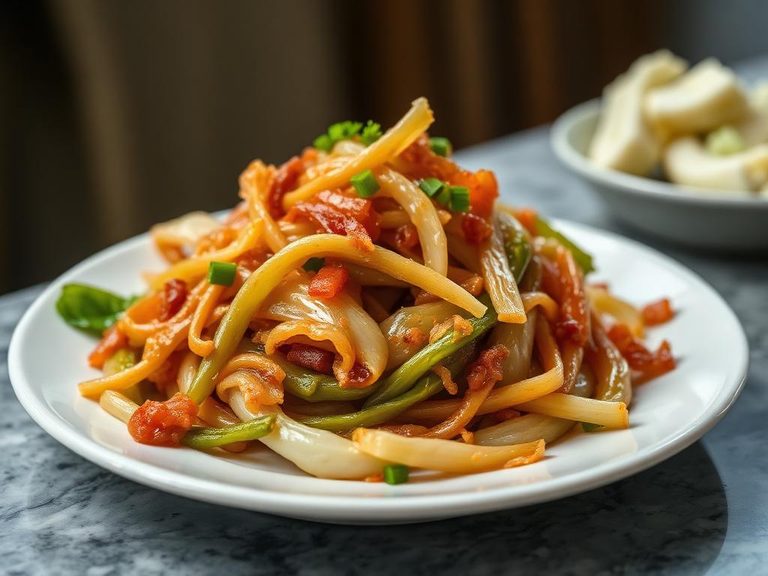
Photo: Wikipedia
Chinese cabbage, or pe-tsai, transforms into a tender, slightly sweet vegetable when boiled, with a delicate, watery crunch that readily absorbs flavors. Its mild, clean taste makes it a versatile canvas, while its remarkably low calorie count (just 14 kcal per 100g) and good fiber content make it a standout for volume eating and digestive health.
Calorie split: 35% protein · 56% carbs · 9% fat
↓ Full nutrition💚 Why it's loved
People love it for its mild, sweet flavor and satisfying crunch that doesn't overpower dishes, making it a perfect partner for bold sauces and spices. Its quick cooking time and ability to soak up flavors like a sponge make it a weeknight staple in many Asian cuisines.
⚠️ Watch-outs & how to enjoy it better
Boiling can leach water-soluble vitamins and make the texture overly soft if overcooked. Those monitoring sodium intake should be cautious, as it's often served in salty broths or stir-fries. To counteract nutrient loss, consider using the cooking liquid in soups or sauces, and season with herbs, spices, or a small amount of umami-rich ingredients like mushrooms instead of relying solely on salt.
Key benefits
- Extremely low in calories, ideal for weight management.
- Good source of dietary fiber (1.7g per 100g) for gut health.
- Provides vitamin C and vitamin K, essential for immunity and bone health.
- Contains glucosinolates, compounds studied for their antioxidant properties.
- Very low in fat and naturally sugar-free.
🍽️ Popular dishes
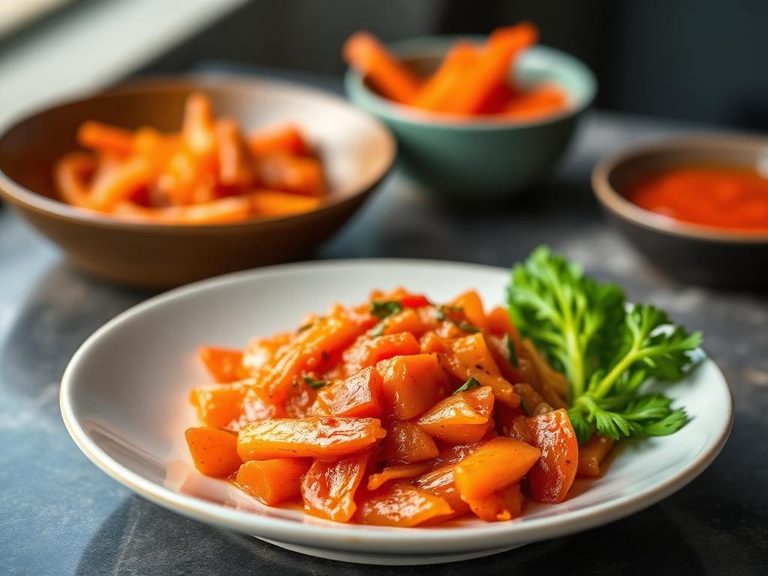
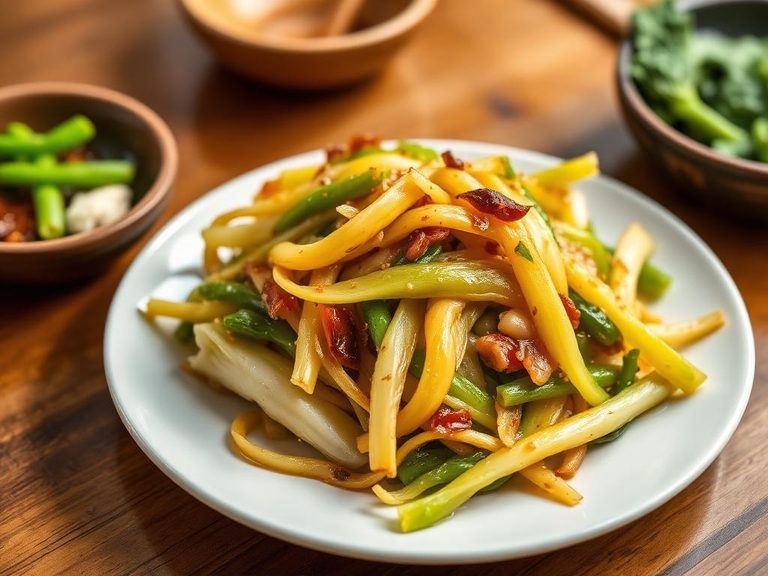
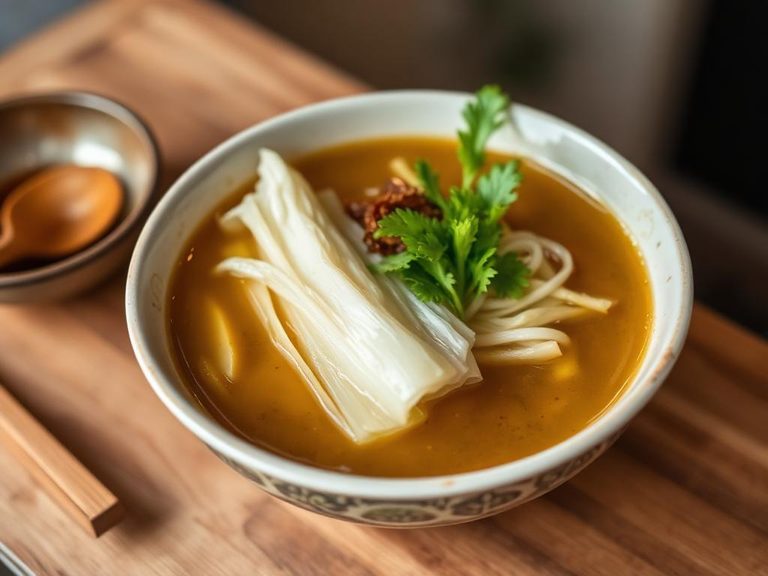
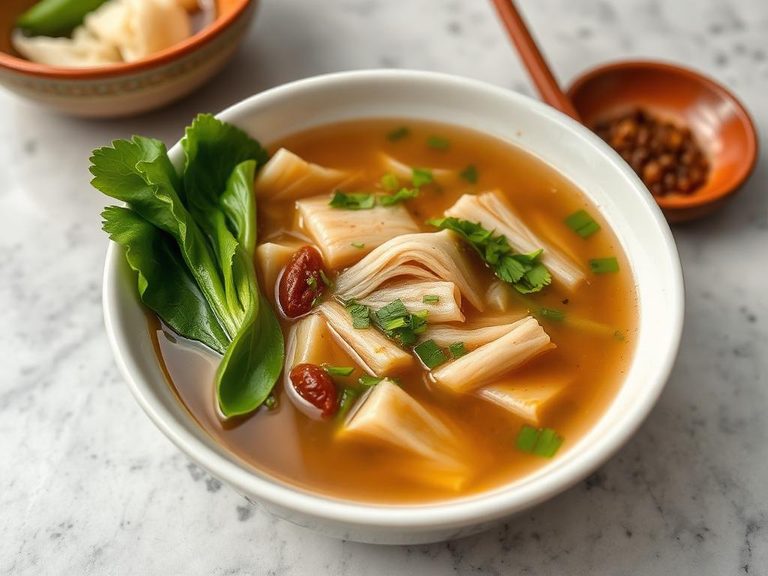
🌍 Where it's eaten
💡 Did you know?
The name 'pe-tsai' comes from the Mandarin 'báicài' (白菜), which literally means 'white vegetable,' referring to its pale, tightly packed inner leaves.
Full nutrition (USDA data · scales with serving)
| Water | 95.2 g |
| Energy | 14.0 kcal |
| Energy | 59.0 kj |
| Protein | 1.5 g |
| Total lipid (fat) | 0.17 g |
| Ash | 0.68 g |
| Carbohydrate, by difference | 2.4 g |
| Fiber, total dietary | 1.7 g |
| Calcium, Ca | 32.0 mg |
| Iron, Fe | 0.30 mg |
| Magnesium, Mg | 10.0 mg |
| Phosphorus, P | 39.0 mg |
| Potassium, K | 225 mg |
| Sodium, Na | 245 mg |
| Zinc, Zn | 0.18 mg |
| Copper, Cu | 0.03 mg |
| Manganese, Mn | 0.15 mg |
| Selenium, Se | 0.40 ug |
| Vitamin C, total ascorbic acid | 15.8 mg |
| Thiamin | 0.04 mg |
| Riboflavin | 0.04 mg |
| Niacin | 0.50 mg |
| Pantothenic acid | 0.08 mg |
| Vitamin B-6 | 0.18 mg |
| Folate, total | 53.0 ug |
| Folic acid | 0.00 ug |
| Folate, food | 53.0 ug |
| Folate, DFE | 53.0 ug |
| Vitamin B-12 | 0.00 ug |
| Vitamin A, RAE | 48.0 ug |
| Retinol | 0.00 ug |
| Vitamin A, IU | 967 iu |
| Vitamin D (D2 + D3), International Units | 0.00 iu |
| Vitamin D (D2 + D3) | 0.00 ug |
Fat & fatty acid profile (per 100g)
| Fatty acids, total saturated | 0.04 g |
| SFA 16:0 | 0.03 g |
| SFA 18:0 | 0.00 g |
| Fatty acids, total monounsaturated | 0.02 g |
| MUFA 16:1 | 0.00 g |
| MUFA 18:1 | 0.02 g |
| Fatty acids, total polyunsaturated | 0.06 g |
| PUFA 18:2 | 0.01 g |
| PUFA 18:3 | 0.05 g |
| Fatty acids, total trans | 0.00 g |
| Cholesterol | 0.00 mg |
Amino acid profile (per 100g)
| Tryptophan | 0.01 g |
| Threonine | 0.05 g |
| Isoleucine | 0.09 g |
| Leucine | 0.09 g |
| Lysine | 0.09 g |
| Methionine | 0.01 g |
| Cystine | 0.02 g |
| Phenylalanine | 0.04 g |
| Tyrosine | 0.03 g |
| Valine | 0.07 g |
| Arginine | 0.08 g |
| Histidine | 0.03 g |
| Alanine | 0.09 g |
| Aspartic acid | 0.11 g |
| Glutamic acid | 0.36 g |
| Glycine | 0.04 g |
| Proline | 0.03 g |
| Serine | 0.05 g |
FAQ
Is boiled Chinese cabbage the same as bok choy?
No. While both are in the cabbage family, Chinese cabbage (Napa cabbage) has a milder, sweeter flavor and a more crinkled, oblong shape. Bok choy has a more distinct, peppery taste and smooth, dark green leaves with thick white stems.
How do I prevent it from getting too mushy when boiling?
Use a large pot of well-salted, rapidly boiling water. Add the cabbage and cook for just 2-3 minutes until crisp-tender. Immediately drain and, if not using in a hot dish, plunge into ice water to stop the cooking process and preserve texture.
What's the best way to store leftover cooked cabbage?
Cool it quickly, store in an airtight container, and refrigerate for up to 3-4 days. It's excellent added to soups, fried rice, or omelets the next day.
Nutrient density (calculated · NRF9.3)
Nutrient Rich Foods index: beneficial nutrients (protein, fiber, vitamins, minerals) minus saturated fat, added sugar & sodium, per 100 kcal.
NRF9.3 index — Fulgoni, Keast & Drewnowski, 2009. Computed from USDA nutrients.
Weight-loss friendliness (composite index)
Energy density 0.14 kcal/g · 43% calories from protein · 1.7 g fiber · 0.0 g sugar per 100 g.
Composite of energy density (Rolls et al., 1999), protein & fiber satiety, minus sugar. A calculated heuristic — ranks satiety-per-calorie, not a clinical measure.
Dietary load (calculated from USDA values)
Potential renal acid load. Positive = acid-forming, negative = alkaline-forming.
Sodium-to-potassium ratio: 1.09 (lower is better — aim for ≤ 1)
Sodium:potassium per WHO potassium guidance. Computed from USDA nutrients.