

Buffalo sauce
Common food

Photo: Wikipedia
Buffalo sauce is a tangy, fiery condiment born from a simple marriage of cayenne pepper hot sauce and melted butter, creating a rich, emulsified orange-red liquid with a smooth, clingy texture. It delivers a sharp, acidic kick from vinegar, a deep, buttery richness, and a slow-building heat that lingers on the palate. Nutritionally, it is very low in calories and sugar, with its primary macronutrient being a small amount of fat from the butter.
Calorie split: 34% protein · 21% carbs · 45% fat
↓ Full nutrition💚 Why it's loved
People love it for its iconic, addictive balance of tangy heat and rich butteriness that elevates simple foods. It's a cultural staple, especially for game-day gatherings, where its bold, uncompromising flavor is a celebrated tradition.
⚠️ Watch-outs & how to enjoy it better
The high sodium content from the hot sauce base can be a concern for those monitoring salt intake, and the vinegar can be harsh on sensitive stomachs. To counteract this, pair it with a cooling side like blue cheese or ranch dressing, and use it as a dip or drizzle rather than a primary cooking liquid to control portions.
Key benefits
- Extremely low in calories and sugar, making it a low-impact flavor booster.
- Capsaicin from cayenne peppers may support a healthy metabolism.
- The vinegar base can add tang without added sugars.
- Adds significant flavor to lean proteins like chicken or cauliflower without needing high-calorie sauces.
🍽️ Popular dishes
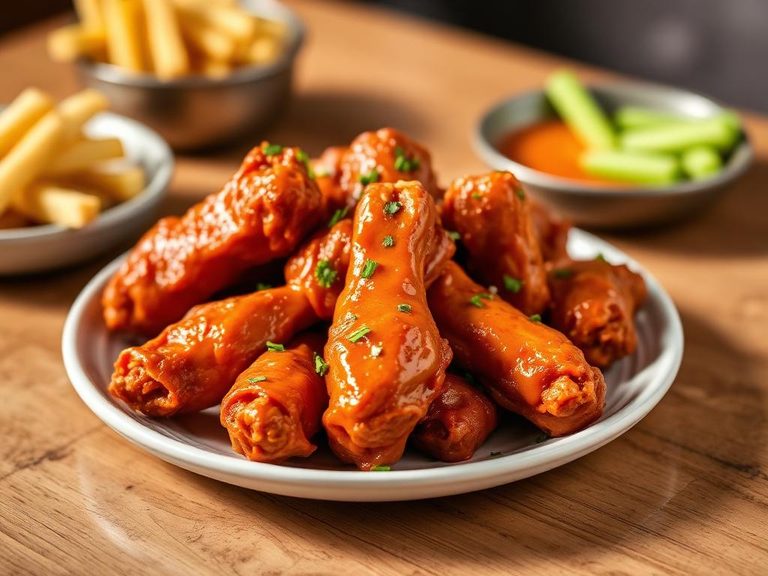
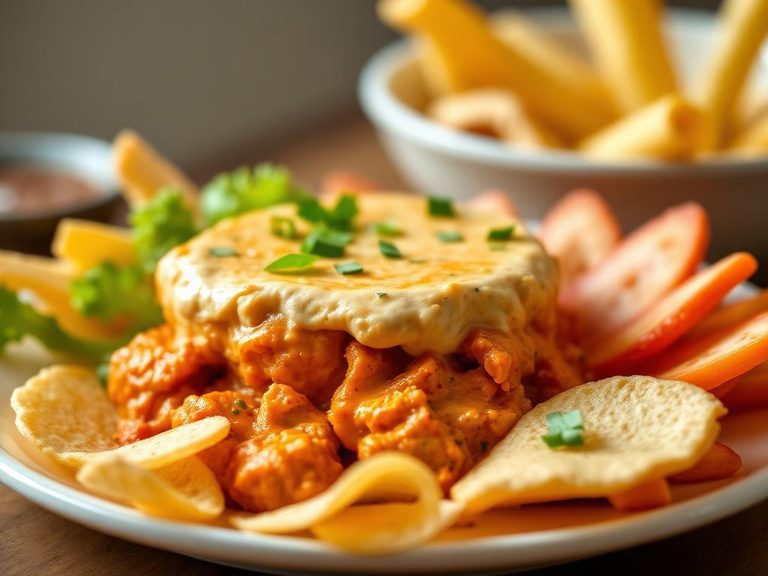
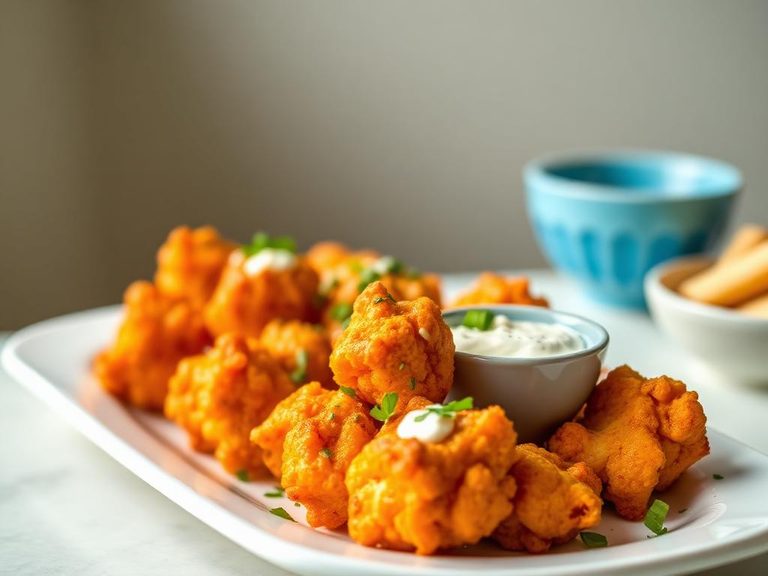


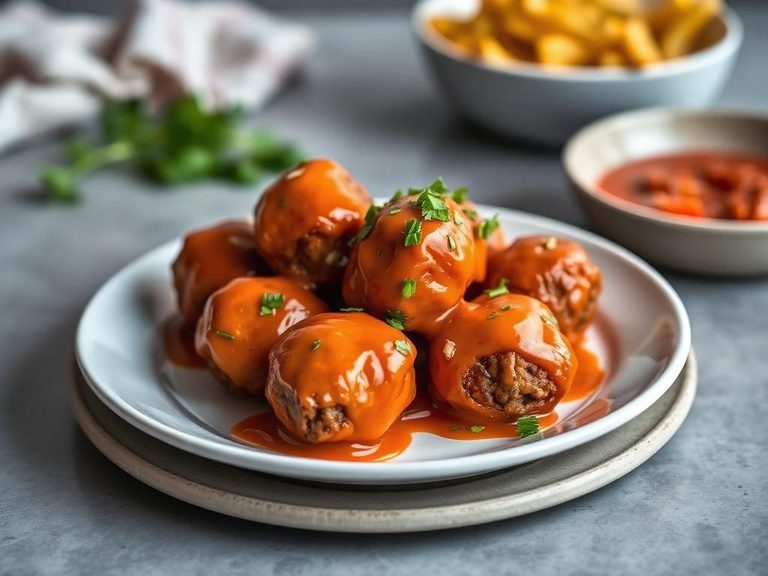
🌍 Where it's eaten
💡 Did you know?
The original Buffalo wing sauce was created in 1964 at the Anchor Bar in Buffalo, New York, when the owner's son and his friends craved a late-night snack, leading to the first batch of wings tossed in a cayenne, butter, and vinegar mixture.
Full nutrition (USDA data · scales with serving)
| Water | 89.5 g |
| Energy | 11.0 kcal |
| Protein | 1.2 g |
| Total lipid (fat) | 0.71 g |
| Carbohydrate, by difference | 0.75 g |
| Fiber, total dietary | 0.60 g |
| Total Sugars | 0.12 g |
| Calcium, Ca | 14.0 mg |
| Iron, Fe | 1.1 mg |
| Magnesium, Mg | 11.0 mg |
| Phosphorus, P | 22.0 mg |
| Potassium, K | 120 mg |
| Sodium, Na | 2917 mg |
| Zinc, Zn | 0.15 mg |
| Copper, Cu | 0.07 mg |
| Selenium, Se | 0.50 ug |
| Vitamin C, total ascorbic acid | 4.2 mg |
| Thiamin | 0.03 mg |
| Riboflavin | 0.08 mg |
| Niacin | 0.17 mg |
| Vitamin B-6 | 0.14 mg |
| Folate, total | 1.0 ug |
| Folic acid | 1.0 ug |
| Folate, food | 0.00 ug |
| Folate, DFE | 2.0 ug |
| Choline, total | 0.00 mg |
| Vitamin B-12 | 0.00 ug |
| Vitamin B-12, added | 0.00 ug |
| Vitamin A, RAE | 77.0 ug |
| Retinol | 0.00 ug |
| Carotene, beta | 864 ug |
| Carotene, alpha | 58.0 ug |
| Cryptoxanthin, beta | 64.0 ug |
| Lycopene | 0.00 ug |
| Lutein + zeaxanthin | 9.0 ug |
| Vitamin E (alpha-tocopherol) | 0.01 mg |
| Vitamin E, added | 0.00 mg |
| Vitamin D (D2 + D3) | 0.00 ug |
| Vitamin K (phylloquinone) | 0.20 ug |
| Alcohol, ethyl | 0.00 g |
| Caffeine | 0.00 mg |
| Theobromine | 0.00 mg |
Fat & fatty acid profile (per 100g)
| Fatty acids, total saturated | 0.10 g |
| SFA 4:0 | 0.00 g |
| SFA 6:0 | 0.00 g |
| SFA 8:0 | 0.00 g |
| SFA 10:0 | 0.00 g |
| SFA 12:0 | 0.00 g |
| SFA 14:0 | 0.00 g |
| SFA 16:0 | 0.09 g |
| SFA 18:0 | 0.01 g |
| Fatty acids, total monounsaturated | 0.06 g |
| MUFA 16:1 | 0.00 g |
| MUFA 18:1 | 0.06 g |
| MUFA 20:1 | 0.00 g |
| MUFA 22:1 | 0.00 g |
| Fatty acids, total polyunsaturated | 0.38 g |
| PUFA 18:2 | 0.37 g |
| PUFA 18:3 | 0.00 g |
| PUFA 18:4 | 0.00 g |
| PUFA 20:4 | 0.00 g |
| PUFA 20:5 n-3 (EPA) | 0.00 g |
| PUFA 22:5 n-3 (DPA) | 0.00 g |
| PUFA 22:6 n-3 (DHA) | 0.00 g |
| Cholesterol | 0.00 mg |
FAQ
What is the difference between Buffalo sauce and hot sauce?
Buffalo sauce is a mixture of hot sauce (typically cayenne-based) and melted butter, creating a richer, creamier, and less purely acidic flavor. Hot sauce is primarily vinegar and peppers without the fat.
Is Buffalo sauce gluten-free?
Most traditional Buffalo sauce recipes are naturally gluten-free, as they contain only hot sauce, butter, and sometimes vinegar or spices. However, always check labels for any added thickeners or additives in commercial brands.
Can I make Buffalo sauce without butter?
Yes, you can substitute butter with ghee, coconut oil, or a neutral oil for a dairy-free version, though the texture and richness will be slightly different. Some recipes use mayonnaise or Greek yogurt for a creamy, lower-fat alternative.
Nutrient density (calculated · NRF9.3)
Nutrient Rich Foods index: beneficial nutrients (protein, fiber, vitamins, minerals) minus saturated fat, added sugar & sodium, per 100 kcal.
NRF9.3 index — Fulgoni, Keast & Drewnowski, 2009. Computed from USDA nutrients.
Weight-loss friendliness (composite index)
Energy density 0.11 kcal/g · 44% calories from protein · 0.6 g fiber · 0.1 g sugar per 100 g.
Composite of energy density (Rolls et al., 1999), protein & fiber satiety, minus sugar. A calculated heuristic — ranks satiety-per-calorie, not a clinical measure.
Dietary load (calculated from USDA values)
Potential renal acid load. Positive = acid-forming, negative = alkaline-forming.
Sodium-to-potassium ratio: 24.31 (lower is better — aim for ≤ 1)
Sodium:potassium per WHO potassium guidance. Computed from USDA nutrients.