

Broccoli, leaves, raw
Whole food · Vegetables and Vegetable Products

Photo: Wikipedia
Broccoli leaves are the often-discarded, dark green foliage of the broccoli plant, offering a tender-crisp texture similar to kale but with a milder, sweeter flavor. They are a nutritional powerhouse, packing more vitamin C and calcium per calorie than the florets, making them a vibrant, zero-waste addition to meals.
Calorie split: 34% protein · 57% carbs · 9% fat
↓ Full nutrition💚 Why it's loved
People love broccoli leaves for their mild, earthy sweetness that lacks the strong bitterness of some other greens, making them incredibly versatile in both raw and cooked applications. They are celebrated in sustainable cooking for transforming a common kitchen scrap into a delicious, nutrient-dense ingredient.
⚠️ Watch-outs & how to enjoy it better
Broccoli leaves contain goitrogens, compounds that can interfere with thyroid function in very large amounts, especially when consumed raw. To counteract this, simply cook them (steaming or sautéing is best) and avoid eating excessive quantities in one sitting, especially if you have a pre-existing thyroid condition.
Key benefits
- Exceptionally low in calories (28 kcal per 100g)
- High in vitamin C for immune support
- Good source of plant-based protein (2.98g per 100g)
- Rich in dietary fiber (2.3g per 100g) for digestive health
- Contains calcium and iron for bone and blood health
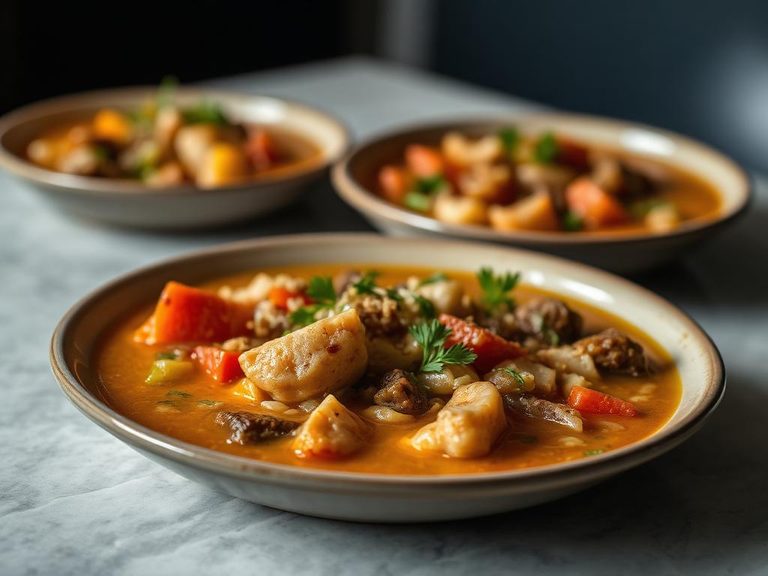
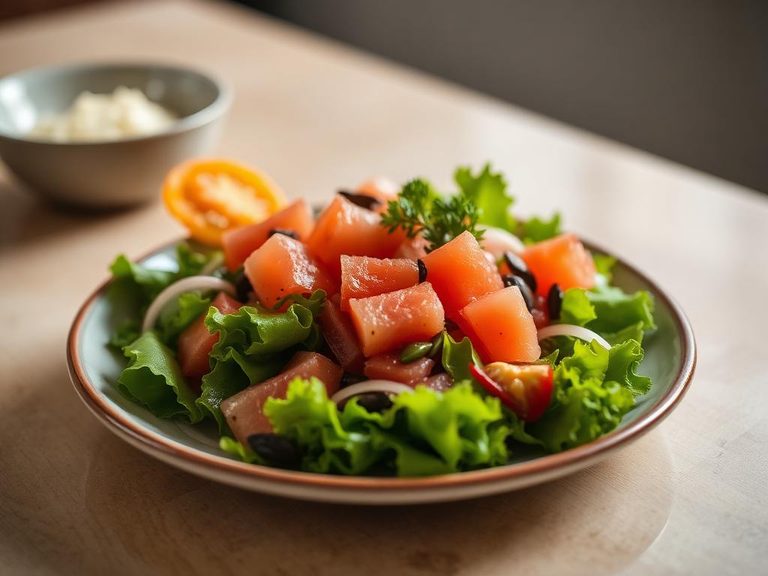
🍽️ Popular dishes
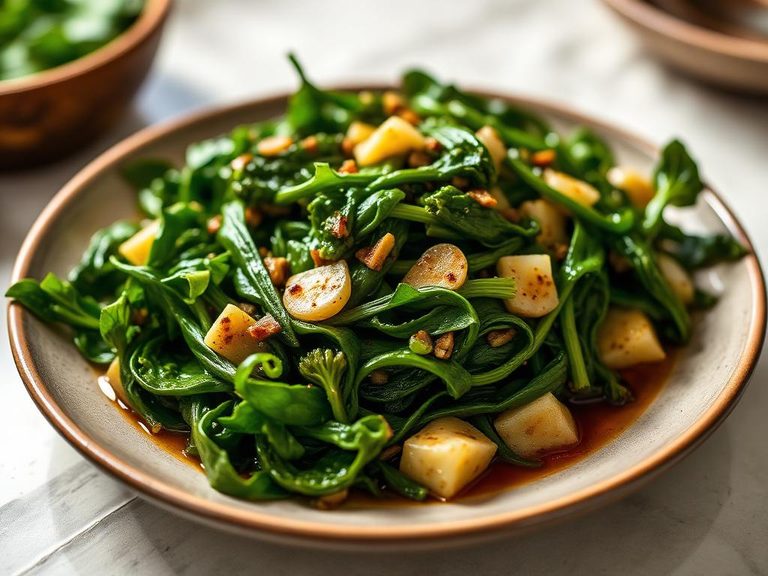
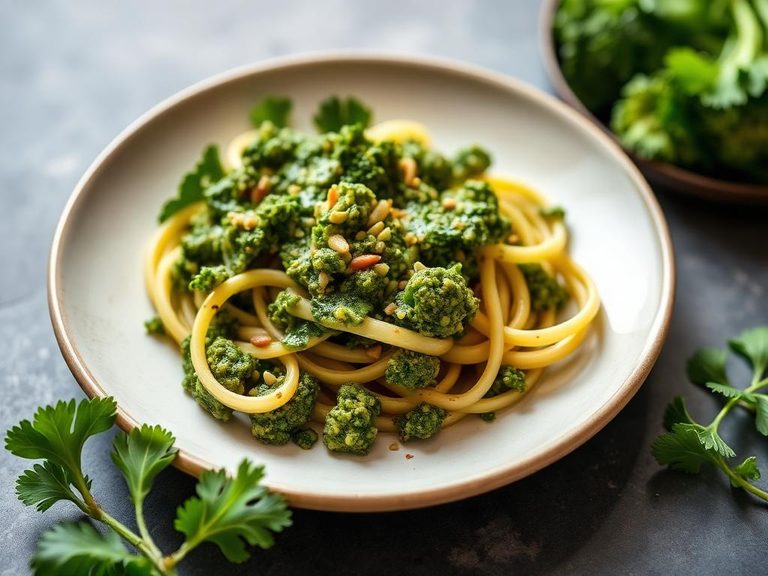
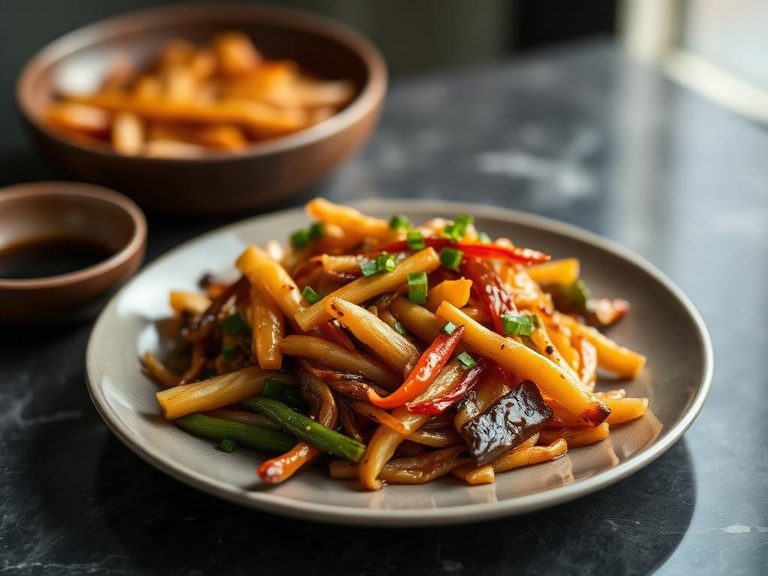
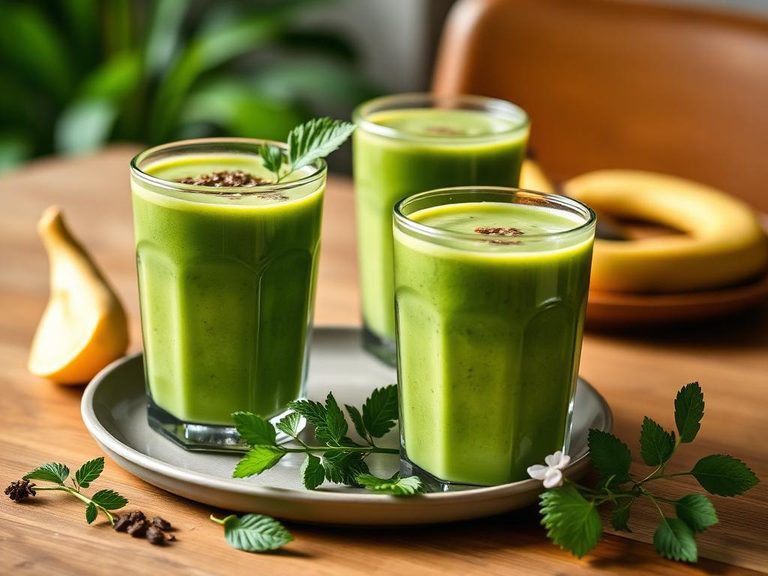
🌍 Where it's eaten
💡 Did you know?
Broccoli leaves are not just edible; they are often more nutrient-dense than the famous florets, containing up to 40% more vitamin C.
Full nutrition (USDA data · scales with serving)
| Water | 90.7 g |
| Energy | 28.0 kcal |
| Energy | 118 kj |
| Protein | 3.0 g |
| Total lipid (fat) | 0.35 g |
| Ash | 0.92 g |
| Carbohydrate, by difference | 5.1 g |
| Fiber, total dietary | 2.3 g |
| Total Sugars | 1.5 g |
| Calcium, Ca | 48.0 mg |
| Iron, Fe | 0.88 mg |
| Magnesium, Mg | 25.0 mg |
| Phosphorus, P | 66.0 mg |
| Potassium, K | 325 mg |
| Sodium, Na | 27.0 mg |
| Zinc, Zn | 0.40 mg |
| Copper, Cu | 0.04 mg |
| Manganese, Mn | 0.23 mg |
| Selenium, Se | 3.0 ug |
| Vitamin C, total ascorbic acid | 93.2 mg |
| Thiamin | 0.07 mg |
| Riboflavin | 0.12 mg |
| Niacin | 0.64 mg |
| Pantothenic acid | 0.54 mg |
| Vitamin B-6 | 0.16 mg |
| Folate, total | 71.0 ug |
| Folic acid | 0.00 ug |
| Folate, food | 71.0 ug |
| Folate, DFE | 71.0 ug |
| Vitamin B-12 | 0.00 ug |
| Vitamin B-12, added | 0.00 ug |
| Retinol | 0.00 ug |
| Vitamin A, IU | 16000 iu |
| Vitamin D (D2 + D3), International Units | 0.00 iu |
| Vitamin D (D2 + D3) | 0.00 ug |
| Alcohol, ethyl | 0.00 g |
| Caffeine | 0.00 mg |
| Theobromine | 0.00 mg |
Fat & fatty acid profile (per 100g)
| Fatty acids, total saturated | 0.05 g |
| SFA 16:0 | 0.05 g |
| SFA 18:0 | 0.01 g |
| Fatty acids, total monounsaturated | 0.02 g |
| MUFA 18:1 | 0.02 g |
| Fatty acids, total polyunsaturated | 0.17 g |
| PUFA 18:2 | 0.04 g |
| PUFA 18:3 | 0.13 g |
| Fatty acids, total trans | 0.00 g |
| Cholesterol | 0.00 mg |
Amino acid profile (per 100g)
| Tryptophan | 0.03 g |
| Threonine | 0.09 g |
| Isoleucine | 0.11 g |
| Leucine | 0.13 g |
| Lysine | 0.14 g |
| Methionine | 0.03 g |
| Cystine | 0.02 g |
| Phenylalanine | 0.08 g |
| Tyrosine | 0.06 g |
| Valine | 0.13 g |
| Arginine | 0.14 g |
| Histidine | 0.05 g |
| Alanine | 0.12 g |
| Aspartic acid | 0.21 g |
| Glutamic acid | 0.38 g |
| Glycine | 0.10 g |
| Proline | 0.11 g |
| Serine | 0.10 g |
FAQ
Are broccoli leaves the same as broccoli rabe (rapini)?
No, they are different. Broccoli leaves are the leaves of the common broccoli plant (Brassica oleracea var. italica), while broccoli rabe is a different vegetable (Brassica rapa) with smaller florets and a more bitter taste.
How do I prepare broccoli leaves?
Wash them thoroughly, remove the tough central stem, and then chop or tear them. They can be eaten raw in salads (massaged to soften), sautéed with garlic and oil, steamed, or blended into smoothies and pesto.
Why are broccoli leaves often thrown away?
Traditionally, broccoli is cultivated for its flower head (florets), and the leaves were considered a byproduct. However, there's a growing movement to use them fully to reduce food waste and enjoy their excellent nutrition.
Nutrient density (calculated · NRF9.3)
Nutrient Rich Foods index: beneficial nutrients (protein, fiber, vitamins, minerals) minus saturated fat, added sugar & sodium, per 100 kcal.
NRF9.3 index — Fulgoni, Keast & Drewnowski, 2009. Computed from USDA nutrients.
Weight-loss friendliness (composite index)
Energy density 0.28 kcal/g · 43% calories from protein · 2.3 g fiber · 1.5 g sugar per 100 g.
Composite of energy density (Rolls et al., 1999), protein & fiber satiety, minus sugar. A calculated heuristic — ranks satiety-per-calorie, not a clinical measure.
Dietary load (calculated from USDA values)
Potential renal acid load. Positive = acid-forming, negative = alkaline-forming.
Sodium-to-potassium ratio: 0.08 (lower is better — aim for ≤ 1)
Sodium:potassium per WHO potassium guidance. Computed from USDA nutrients.