

Raw in Salads
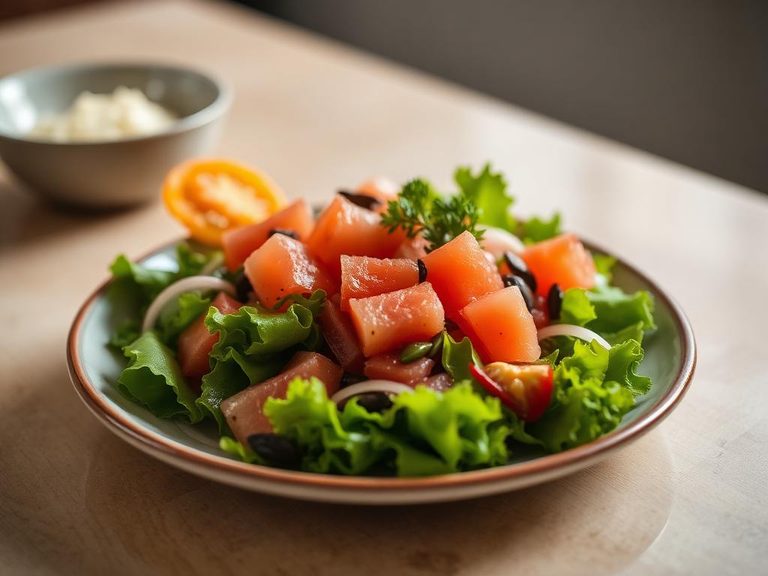
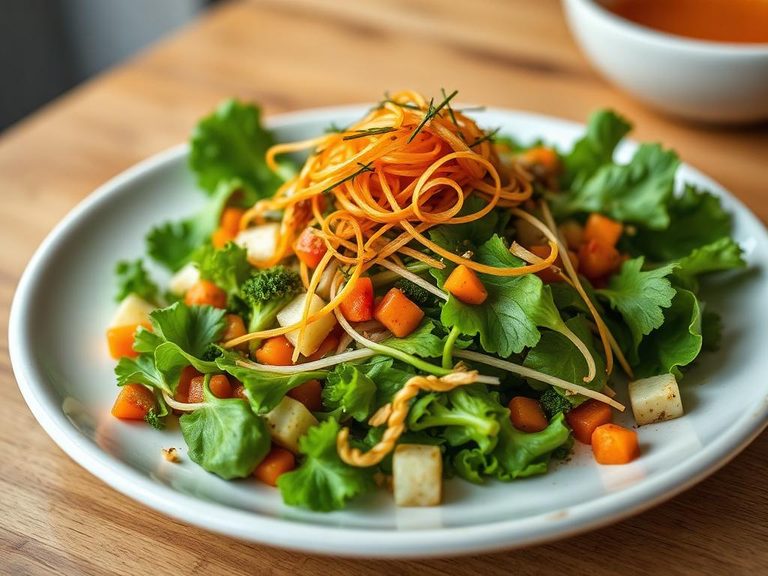
Raw in Salads refers to the practice of serving fresh, uncooked vegetables as the base of a salad, a concept central to culinary traditions worldwide. Common ingredients include leafy greens like lettuce or spinach, crunchy vegetables such as cucumbers and carrots, and often tomatoes, onions, and bell peppers. This preparation method is foundational in cuisines from the Mediterranean to East Asia, celebrated for its simplicity and freshness.
🍽️ Nutrition at a glance
This dish is typically low in calories and carbohydrates while providing a good source of dietary fiber and essential vitamins. A standard serving offers a nutrient-dense profile rich in vitamins A, C, and K, along with minerals like potassium, with a calorie count generally ranging from 50-150 kcal depending on added dressings or toppings.
Nutrition breakdown
| Calories | 45 kcal |
| Protein | 2.5 g |
| Carbs | 8 g |
| Fat | 0.5 g |
| Fiber | 3 g |
| Sugar | 4 g |
| Sodium | 25 mg |
| Vitamin A | 120 µg RAE |
| Vitamin C | 35 mg |
| Vitamin K | 60 µg |
| Potassium | 300 mg |
| Folate | 45 µg |
| Manganese | 0.2 mg |
| Magnesium | 15 mg |
| Iron | 0.8 mg |
Per 1 cup mixed raw vegetables (150 g) · estimated, varies by recipe
💡 What's interesting
Culturally, raw salads are a universal concept, adapting to local ingredients—from Greek horiatiki to Chinese liang cai. Nutritionally, consuming vegetables raw can preserve heat-sensitive nutrients like vitamin C and certain enzymes, though it may reduce the bioavailability of others like lycopene.
🍽️ Related dishes

AI estimate may be inaccurate · Terms