

Breakfast meat as ingredient in omelet
Common food
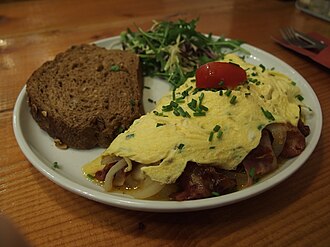
Photo: Wikipedia
Breakfast meat, often diced ham, sausage, or bacon, is a savory, salty, and protein-rich staple folded into fluffy omelets. Its texture ranges from tender and juicy to slightly crisp, depending on the cook's preference. Nutritionally, it delivers a potent protein punch with minimal carbs, making it a low-glycemic energy source for the morning.
Calorie split: 33% protein · 3% carbs · 64% fat
↓ Full nutrition💚 Why it's loved
People love it for its savory, umami depth that instantly elevates a simple egg dish. Its versatility allows it to pair with countless vegetables and cheeses, making it a customizable breakfast hero.
⚠️ Watch-outs & how to enjoy it better
Processed varieties can be high in sodium and saturated fat, which may concern those monitoring heart health or blood pressure. To counteract, choose low-sodium options, rinse diced ham, or balance the meal with potassium-rich sides like spinach or avocado.
Key benefits
- High-quality protein for muscle maintenance and satiety.
- Very low in carbohydrates, supporting stable blood sugar.
- Rich in B vitamins like B12 and niacin for energy metabolism.
- Provides essential minerals like iron and zinc.
- Concentrated flavor allows for impactful taste with small portions.
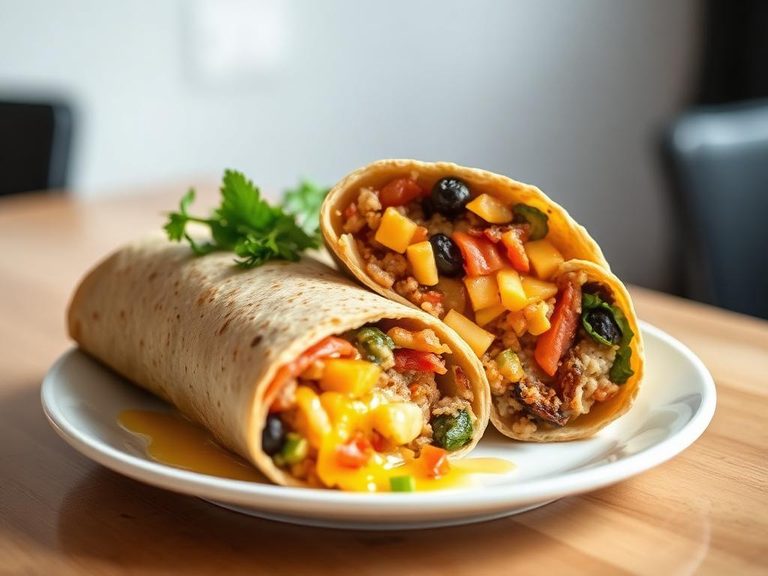
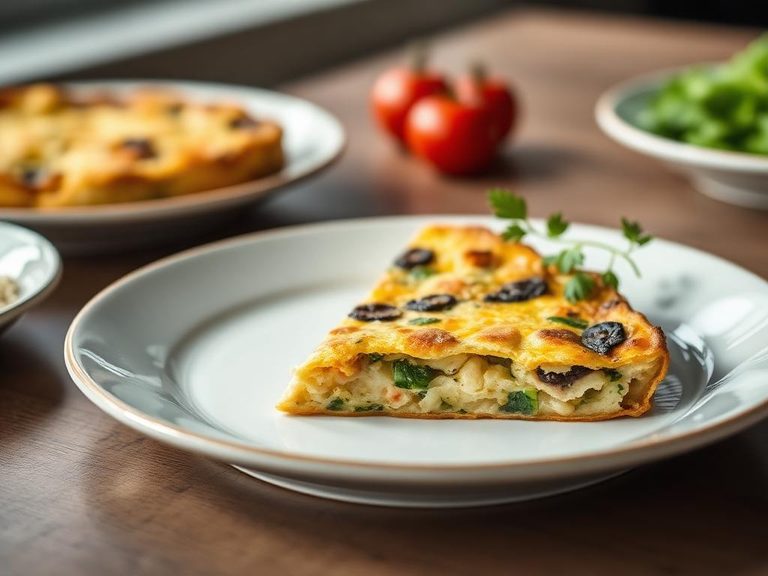
🍽️ Popular dishes




🌍 Where it's eaten
💡 Did you know?
The 'Denver Omelet' is a classic American diner invention, but it's largely unknown in Denver, Colorado, where it's more commonly called a 'Western Omelet'.
Full nutrition (USDA data · scales with serving)
| Water | 56.1 g |
| Energy | 252 kcal |
| Protein | 20.8 g |
| Total lipid (fat) | 17.9 g |
| Carbohydrate, by difference | 1.6 g |
| Fiber, total dietary | 0.00 g |
| Total Sugars | 0.90 g |
| Calcium, Ca | 15.0 mg |
| Iron, Fe | 1.1 mg |
| Magnesium, Mg | 21.0 mg |
| Phosphorus, P | 245 mg |
| Potassium, K | 367 mg |
| Sodium, Na | 1102 mg |
| Zinc, Zn | 2.3 mg |
| Copper, Cu | 0.09 mg |
| Selenium, Se | 30.5 ug |
| Vitamin C, total ascorbic acid | 0.00 mg |
| Thiamin | 0.32 mg |
| Riboflavin | 0.23 mg |
| Niacin | 6.7 mg |
| Vitamin B-6 | 0.36 mg |
| Folate, total | 2.0 ug |
| Folic acid | 0.00 ug |
| Folate, food | 2.0 ug |
| Folate, DFE | 2.0 ug |
| Choline, total | 74.6 mg |
| Vitamin B-12 | 0.79 ug |
| Vitamin B-12, added | 0.00 ug |
| Vitamin A, RAE | 14.0 ug |
| Retinol | 14.0 ug |
| Carotene, beta | 0.00 ug |
| Carotene, alpha | 0.00 ug |
| Cryptoxanthin, beta | 0.00 ug |
| Lycopene | 0.00 ug |
| Lutein + zeaxanthin | 0.00 ug |
| Vitamin E (alpha-tocopherol) | 0.55 mg |
| Vitamin E, added | 0.00 mg |
| Vitamin D (D2 + D3) | 0.90 ug |
| Vitamin K (phylloquinone) | 0.60 ug |
| Alcohol, ethyl | 0.00 g |
| Caffeine | 0.00 mg |
| Theobromine | 0.00 mg |
Fat & fatty acid profile (per 100g)
| Fatty acids, total saturated | 5.8 g |
| SFA 4:0 | 0.00 g |
| SFA 6:0 | 0.00 g |
| SFA 8:0 | 0.00 g |
| SFA 10:0 | 0.01 g |
| SFA 12:0 | 0.01 g |
| SFA 14:0 | 0.21 g |
| SFA 16:0 | 3.7 g |
| SFA 18:0 | 1.8 g |
| Fatty acids, total monounsaturated | 7.5 g |
| MUFA 16:1 | 0.39 g |
| MUFA 18:1 | 7.0 g |
| MUFA 20:1 | 0.17 g |
| MUFA 22:1 | 0.01 g |
| Fatty acids, total polyunsaturated | 3.3 g |
| PUFA 18:2 | 2.8 g |
| PUFA 18:3 | 0.12 g |
| PUFA 18:4 | 0.00 g |
| PUFA 20:4 | 0.10 g |
| PUFA 20:5 n-3 (EPA) | 0.00 g |
| PUFA 22:5 n-3 (DPA) | 0.01 g |
| PUFA 22:6 n-3 (DHA) | 0.00 g |
| Cholesterol | 77.0 mg |
FAQ
What's the best type of breakfast meat for an omelet?
It depends on your taste. Diced ham is mild and salty, sausage adds spice and fat, and crumbled bacon provides smoky crunch. For a leaner option, turkey bacon or chicken sausage are popular.
Should I cook the meat before adding it to the eggs?
Yes, always cook it first. This renders out excess fat, ensures food safety, and develops a better texture and flavor. Drain any excess grease before folding into the omelet.
How do I keep my omelet from getting watery from the meat?
Pat cooked meat like ham or sausage with a paper towel to absorb surface moisture. For very juicy meats, consider a quick sauté to evaporate liquid before adding eggs.
Nutrient density (calculated · NRF9.3)
Nutrient Rich Foods index: beneficial nutrients (protein, fiber, vitamins, minerals) minus saturated fat, added sugar & sodium, per 100 kcal.
NRF9.3 index — Fulgoni, Keast & Drewnowski, 2009. Computed from USDA nutrients.
Weight-loss friendliness (composite index)
Energy density 2.52 kcal/g · 33% calories from protein · 0.0 g fiber · 0.9 g sugar per 100 g.
Composite of energy density (Rolls et al., 1999), protein & fiber satiety, minus sugar. A calculated heuristic — ranks satiety-per-calorie, not a clinical measure.
Dietary load (calculated from USDA values)
Potential renal acid load. Positive = acid-forming, negative = alkaline-forming.
Sodium-to-potassium ratio: 3.00 (lower is better — aim for ≤ 1)
Sodium:potassium per WHO potassium guidance. Computed from USDA nutrients.