

Tomatoes as ingredient in omelet
Common food
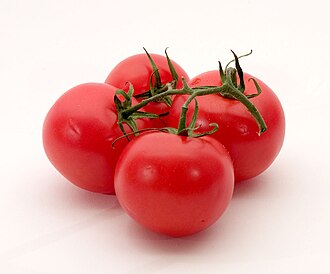
Photo: Wikipedia
Diced or sliced tomatoes bring a burst of juicy, bright acidity and a soft, yielding texture to the fluffy matrix of an omelet. Nutritionally, they are a low-calorie, high-fiber addition that contributes natural sweetness without significant fat. Their vibrant red color and fresh flavor contrast beautifully with the rich, savory egg.
Calorie split: 15% protein · 77% carbs · 7% fat
↓ Full nutrition💚 Why it's loved
People love tomatoes in omelets for their ability to cut through the richness of the eggs with a bright, tangy contrast and a satisfying, soft bite. They are a universally versatile ingredient that can be used fresh, roasted, or sun-dried, adapting to countless flavor profiles from Mediterranean to Mexican.
⚠️ Watch-outs & how to enjoy it better
Some individuals may find the acidity of tomatoes triggers heartburn or acid reflux, especially when combined with other acidic ingredients like peppers. To counteract this, pair the omelet with a side of starchy foods like toast or potatoes, which can help absorb excess acid, and consider using cooked (rather than raw) tomatoes to reduce their acidity. Those on low-potassium diets should also monitor portions, as tomatoes are a moderate source of potassium.
Key benefits
- Low-calorie volume enhancer (only 25 kcal/100g).
- Good source of dietary fiber (1.5g/100g) for digestive health.
- Rich in vitamin C and antioxidants like lycopene.
- Adds moisture and flavor without added fat or sodium.
- Provides natural sweetness to balance savory dishes.
🍽️ Popular dishes

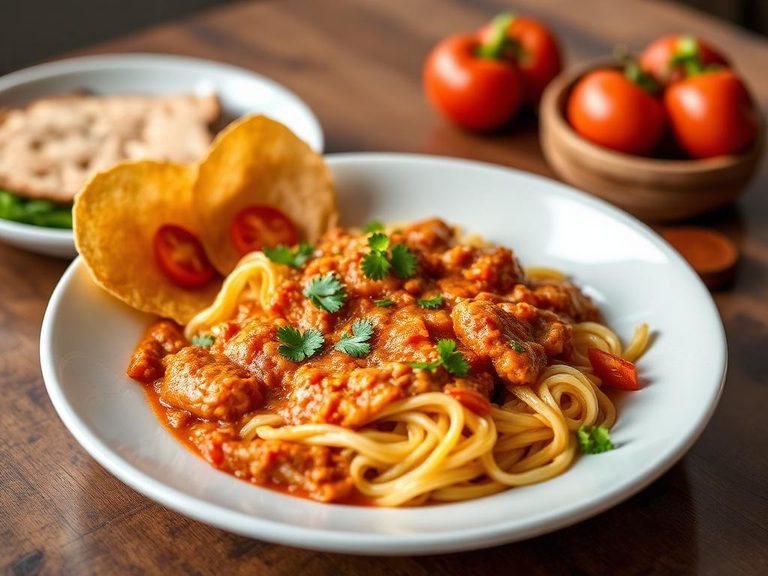
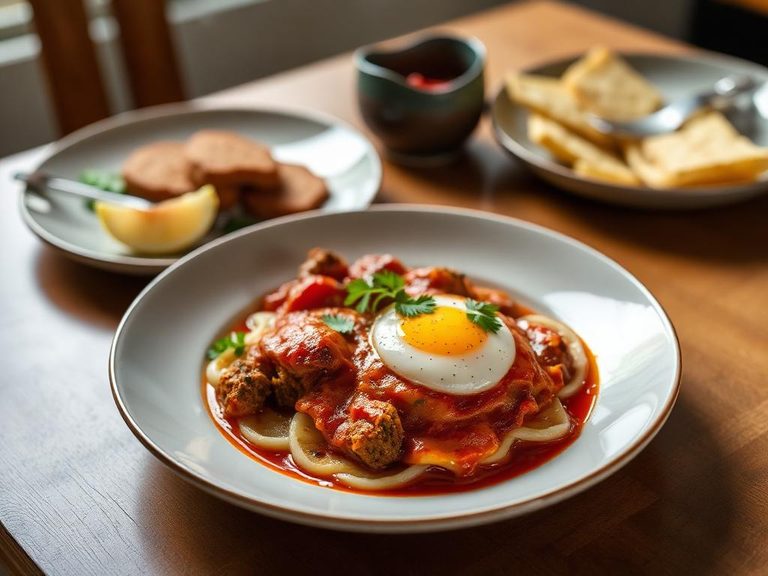

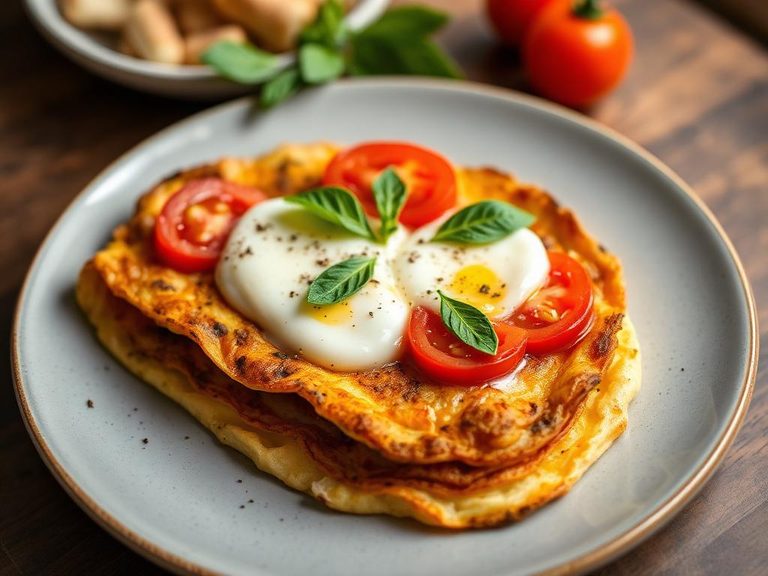

🌍 Where it's eaten
💡 Did you know?
Tomatoes were once thought to be poisonous in Europe, and their use in omelets became popular only after the 18th century when they were finally accepted as safe and delicious.
Full nutrition (USDA data · scales with serving)
| Water | 92.6 g |
| Energy | 25.0 kcal |
| Protein | 1.1 g |
| Total lipid (fat) | 0.23 g |
| Carbohydrate, by difference | 5.5 g |
| Fiber, total dietary | 1.5 g |
| Total Sugars | 3.4 g |
| Calcium, Ca | 14.0 mg |
| Iron, Fe | 0.32 mg |
| Magnesium, Mg | 13.0 mg |
| Phosphorus, P | 30.0 mg |
| Potassium, K | 278 mg |
| Sodium, Na | 6.0 mg |
| Zinc, Zn | 0.21 mg |
| Copper, Cu | 0.07 mg |
| Selenium, Se | 0.10 ug |
| Vitamin C, total ascorbic acid | 19.1 mg |
| Thiamin | 0.04 mg |
| Riboflavin | 0.03 mg |
| Niacin | 0.65 mg |
| Vitamin B-6 | 0.10 mg |
| Folate, total | 14.0 ug |
| Folic acid | 0.00 ug |
| Folate, food | 14.0 ug |
| Folate, DFE | 14.0 ug |
| Choline, total | 7.4 mg |
| Vitamin B-12 | 0.00 ug |
| Vitamin B-12, added | 0.00 ug |
| Vitamin A, RAE | 43.0 ug |
| Retinol | 0.00 ug |
| Carotene, beta | 464 ug |
| Carotene, alpha | 103 ug |
| Cryptoxanthin, beta | 0.00 ug |
| Lycopene | 2597 ug |
| Lutein + zeaxanthin | 142 ug |
| Vitamin E (alpha-tocopherol) | 0.60 mg |
| Vitamin E, added | 0.00 mg |
| Vitamin D (D2 + D3) | 0.00 ug |
| Vitamin K (phylloquinone) | 8.8 ug |
| Alcohol, ethyl | 0.00 g |
| Caffeine | 0.00 mg |
| Theobromine | 0.00 mg |
Fat & fatty acid profile (per 100g)
| Fatty acids, total saturated | 0.04 g |
| SFA 4:0 | 0.00 g |
| SFA 6:0 | 0.00 g |
| SFA 8:0 | 0.00 g |
| SFA 10:0 | 0.00 g |
| SFA 12:0 | 0.00 g |
| SFA 14:0 | 0.00 g |
| SFA 16:0 | 0.03 g |
| SFA 18:0 | 0.01 g |
| Fatty acids, total monounsaturated | 0.04 g |
| MUFA 16:1 | 0.00 g |
| MUFA 18:1 | 0.03 g |
| MUFA 20:1 | 0.00 g |
| MUFA 22:1 | 0.00 g |
| Fatty acids, total polyunsaturated | 0.09 g |
| PUFA 18:2 | 0.09 g |
| PUFA 18:3 | 0.00 g |
| PUFA 18:4 | 0.00 g |
| PUFA 20:4 | 0.00 g |
| PUFA 20:5 n-3 (EPA) | 0.00 g |
| PUFA 22:5 n-3 (DPA) | 0.00 g |
| PUFA 22:6 n-3 (DHA) | 0.00 g |
| Cholesterol | 0.00 mg |
FAQ
Can I use canned tomatoes in an omelet?
Yes, but drain them well to avoid a watery omelet. Canned tomatoes work best if you sauté them briefly to reduce moisture before adding the eggs.
Are tomatoes a good choice for a low-carb diet?
Yes, tomatoes are relatively low in carbs (5.49g per 100g), with a significant portion being fiber, making them a suitable addition to low-carb meals.
How do I prevent my omelet from becoming soggy with tomatoes?
Use firm, less-ripe tomatoes, dice them small, and pat them dry with a paper towel before adding to the omelet. You can also sauté them briefly to evaporate excess moisture.
Nutrient density (calculated · NRF9.3)
Nutrient Rich Foods index: beneficial nutrients (protein, fiber, vitamins, minerals) minus saturated fat, added sugar & sodium, per 100 kcal.
NRF9.3 index — Fulgoni, Keast & Drewnowski, 2009. Computed from USDA nutrients.
Weight-loss friendliness (composite index)
Energy density 0.25 kcal/g · 18% calories from protein · 1.5 g fiber · 3.4 g sugar per 100 g.
Composite of energy density (Rolls et al., 1999), protein & fiber satiety, minus sugar. A calculated heuristic — ranks satiety-per-calorie, not a clinical measure.
Dietary load (calculated from USDA values)
Potential renal acid load. Positive = acid-forming, negative = alkaline-forming.
Sodium-to-potassium ratio: 0.02 (lower is better — aim for ≤ 1)
Sodium:potassium per WHO potassium guidance. Computed from USDA nutrients.