

Biryani with meat
Common food

Photo: Wikipedia
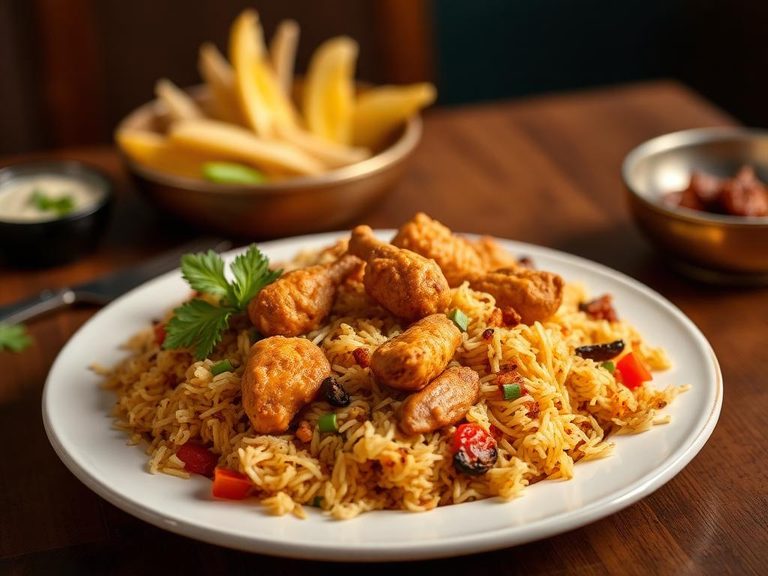
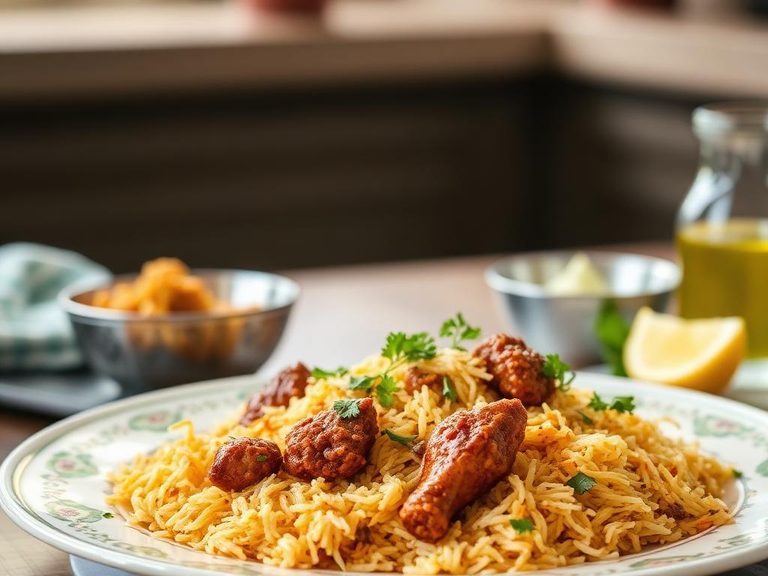
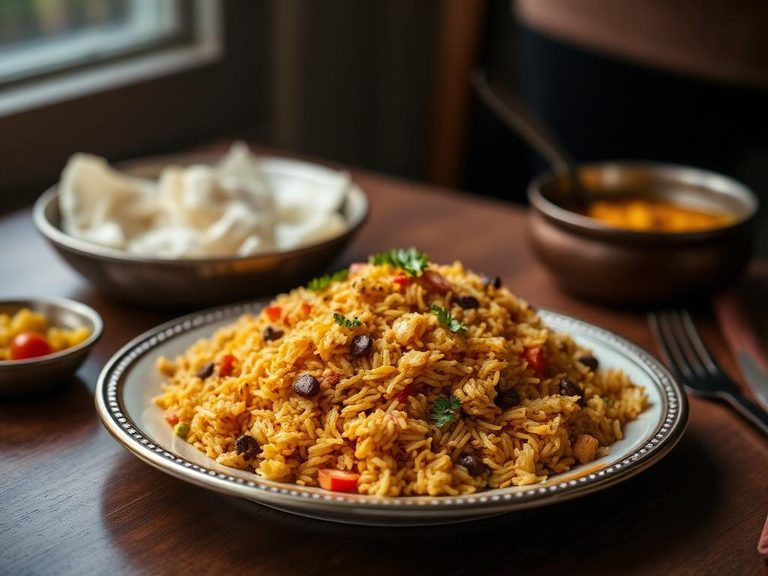
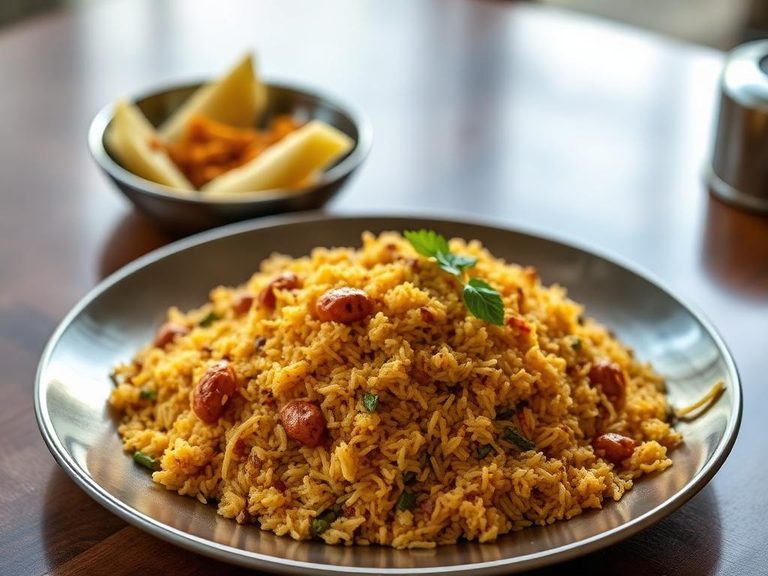
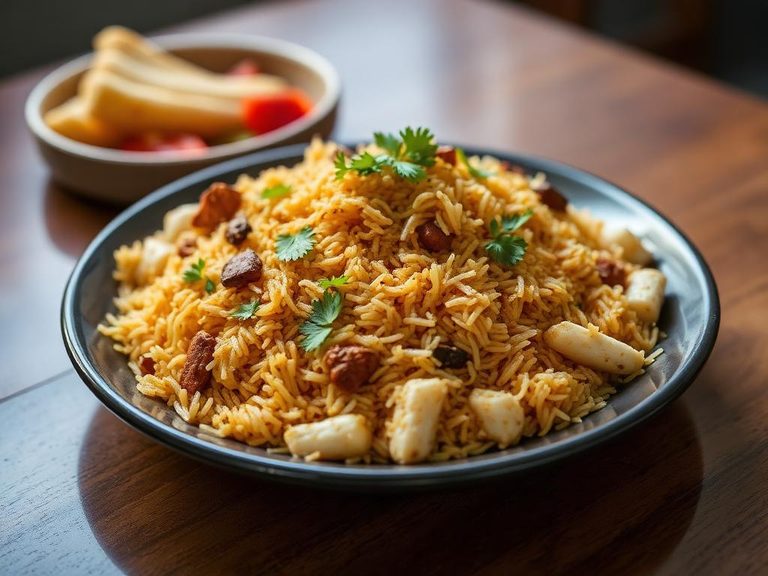
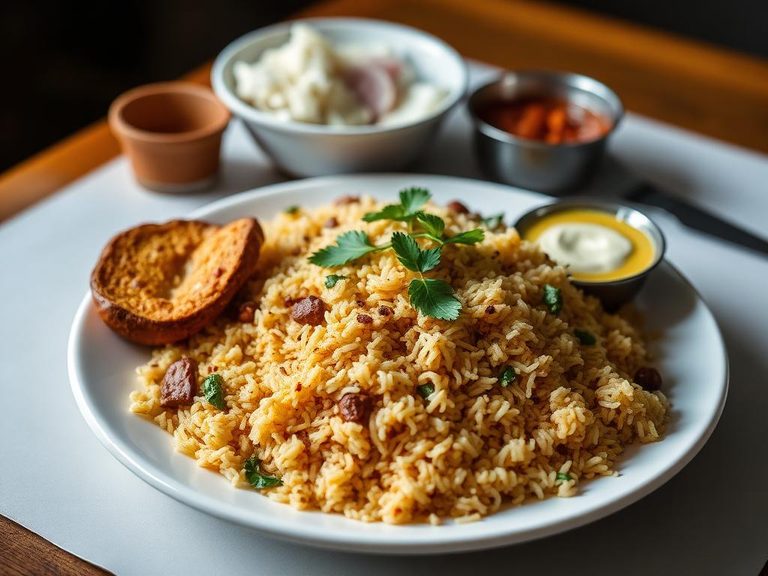
Biryani with meat is a fragrant, layered rice dish where long-grain basmati rice is cooked with tender pieces of meat (often chicken, lamb, or beef) and a blend of aromatic spices. Each grain is typically separate and fluffy, infused with flavors from saffron, cardamom, and caramelized onions, creating a rich, savory, and slightly sweet taste profile. Nutritionally, it provides a balanced mix of protein, carbohydrates, and fats, with a notable contribution of protein from the meat.
Calorie split: 24% protein · 34% carbs · 42% fat
↓ Full nutrition💚 Why it's loved
People love biryani for its complex, layered flavors where every bite can taste slightly different, and its status as a celebratory centerpiece dish. It's deeply tied to cultural and festive occasions across South Asia, making it a dish of both comfort and communal joy.
⚠️ Watch-outs & how to enjoy it better
The dish can be high in sodium and calories, especially with generous portions of oil or ghee, which may concern those monitoring blood pressure or weight. To counteract, practice portion control, opt for leaner meat cuts, and pair it with a fresh, vinegar-based salad or raita to add fiber and help manage blood sugar response.
Key benefits
- Provides complete protein from meat for muscle maintenance
- Rich in B-vitamins like niacin and B6 from both meat and rice
- Contains minerals such as iron and zinc from the meat component
- Carbohydrates from rice offer quick and sustained energy
- Spices like turmeric and cardamom have antioxidant properties
🍽️ Popular dishes
🌍 Where it's eaten
💡 Did you know?
The word 'biryani' is thought to derive from the Persian word 'birian', meaning 'fried before cooking', referring to the traditional method of searing the meat before layering and slow-cooking it with rice.
Full nutrition (USDA data · scales with serving)
| Water | 71.5 g |
| Energy | 145 kcal |
| Protein | 8.5 g |
| Total lipid (fat) | 6.8 g |
| Carbohydrate, by difference | 12.2 g |
| Fiber, total dietary | 1.0 g |
| Total Sugars | 1.7 g |
| Calcium, Ca | 33.0 mg |
| Iron, Fe | 1.1 mg |
| Magnesium, Mg | 17.0 mg |
| Phosphorus, P | 76.0 mg |
| Potassium, K | 229 mg |
| Sodium, Na | 98.0 mg |
| Zinc, Zn | 1.4 mg |
| Copper, Cu | 0.08 mg |
| Selenium, Se | 9.2 ug |
| Vitamin C, total ascorbic acid | 5.6 mg |
| Thiamin | 0.06 mg |
| Riboflavin | 0.08 mg |
| Niacin | 1.8 mg |
| Vitamin B-6 | 0.14 mg |
| Folate, total | 21.0 ug |
| Folic acid | 10.0 ug |
| Folate, food | 11.0 ug |
| Folate, DFE | 28.0 ug |
| Choline, total | 29.8 mg |
| Vitamin B-12 | 0.47 ug |
| Vitamin B-12, added | 0.00 ug |
| Vitamin A, RAE | 16.0 ug |
| Retinol | 10.0 ug |
| Carotene, beta | 66.0 ug |
| Carotene, alpha | 2.0 ug |
| Cryptoxanthin, beta | 5.0 ug |
| Lycopene | 279 ug |
| Lutein + zeaxanthin | 46.0 ug |
| Vitamin E (alpha-tocopherol) | 0.23 mg |
| Vitamin E, added | 0.00 mg |
| Vitamin D (D2 + D3) | 0.10 ug |
| Vitamin K (phylloquinone) | 6.2 ug |
| Alcohol, ethyl | 0.00 g |
| Caffeine | 0.00 mg |
| Theobromine | 0.00 mg |
Fat & fatty acid profile (per 100g)
| Fatty acids, total saturated | 3.0 g |
| SFA 4:0 | 0.02 g |
| SFA 6:0 | 0.02 g |
| SFA 8:0 | 0.01 g |
| SFA 10:0 | 0.04 g |
| SFA 12:0 | 0.05 g |
| SFA 14:0 | 0.31 g |
| SFA 16:0 | 1.5 g |
| SFA 18:0 | 0.87 g |
| Fatty acids, total monounsaturated | 2.6 g |
| MUFA 16:1 | 0.18 g |
| MUFA 18:1 | 2.4 g |
| MUFA 20:1 | 0.00 g |
| MUFA 22:1 | 0.00 g |
| Fatty acids, total polyunsaturated | 0.48 g |
| PUFA 18:2 | 0.37 g |
| PUFA 18:3 | 0.09 g |
| PUFA 18:4 | 0.00 g |
| PUFA 20:4 | 0.02 g |
| PUFA 20:5 n-3 (EPA) | 0.00 g |
| PUFA 22:5 n-3 (DPA) | 0.00 g |
| PUFA 22:6 n-3 (DHA) | 0.00 g |
| Cholesterol | 29.0 mg |
FAQ
What is the key difference between biryani and pulao?
Biryani is a layered dish where partially cooked rice and meat are layered and then slow-cooked together (dum), while pulao involves cooking rice and meat together in a seasoned broth from the start, resulting in a more uniform mixture.
Why is basmati rice specifically used for biryani?
Basmati rice grains are long, slender, and have a unique nutty aroma. They elongate significantly when cooked but remain separate and fluffy, which is essential for the distinct, non-sticky texture of a good biryani.
Can biryani be made without saffron?
Yes, while saffron provides a classic golden hue and distinct flavor, it's not strictly necessary. Many home-style versions use turmeric for color and rely on other spices like cardamom and cloves for the primary aroma.
Nutrient density (calculated · NRF9.3)
Nutrient Rich Foods index: beneficial nutrients (protein, fiber, vitamins, minerals) minus saturated fat, added sugar & sodium, per 100 kcal.
NRF9.3 index — Fulgoni, Keast & Drewnowski, 2009. Computed from USDA nutrients.
Weight-loss friendliness (composite index)
Energy density 1.45 kcal/g · 23% calories from protein · 1.0 g fiber · 1.7 g sugar per 100 g.
Composite of energy density (Rolls et al., 1999), protein & fiber satiety, minus sugar. A calculated heuristic — ranks satiety-per-calorie, not a clinical measure.
Dietary load (calculated from USDA values)
Potential renal acid load. Positive = acid-forming, negative = alkaline-forming.
Sodium-to-potassium ratio: 0.43 (lower is better — aim for ≤ 1)
Sodium:potassium per WHO potassium guidance. Computed from USDA nutrients.