

Biryani with chicken
Common food

Photo: Wikipedia
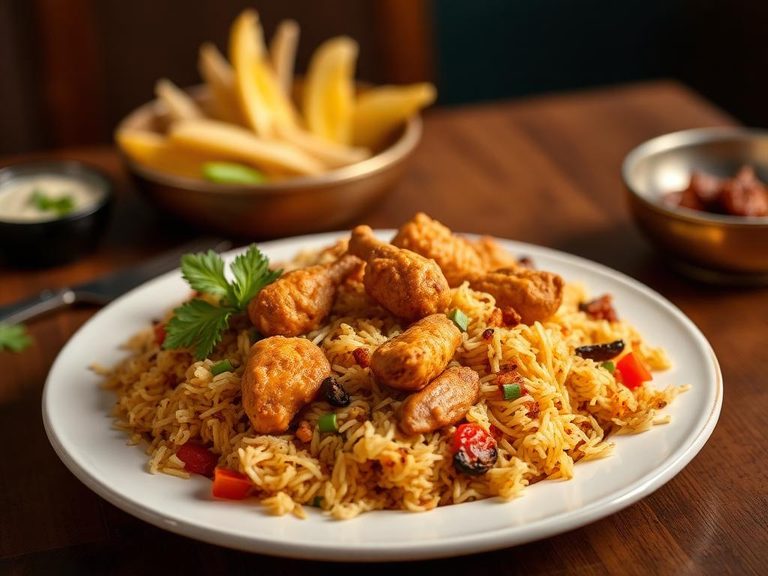
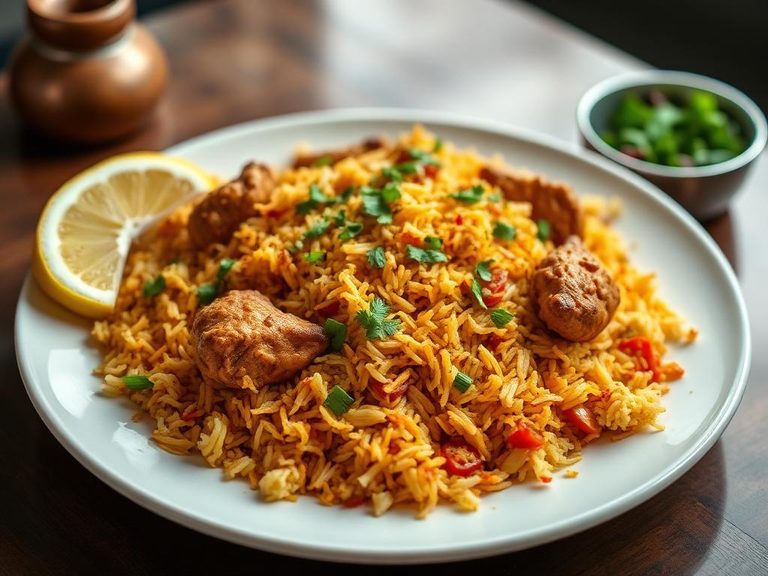
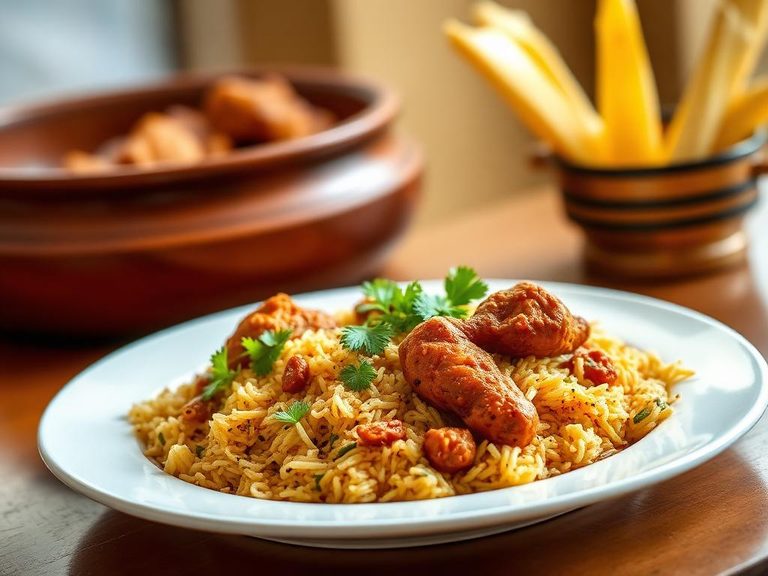
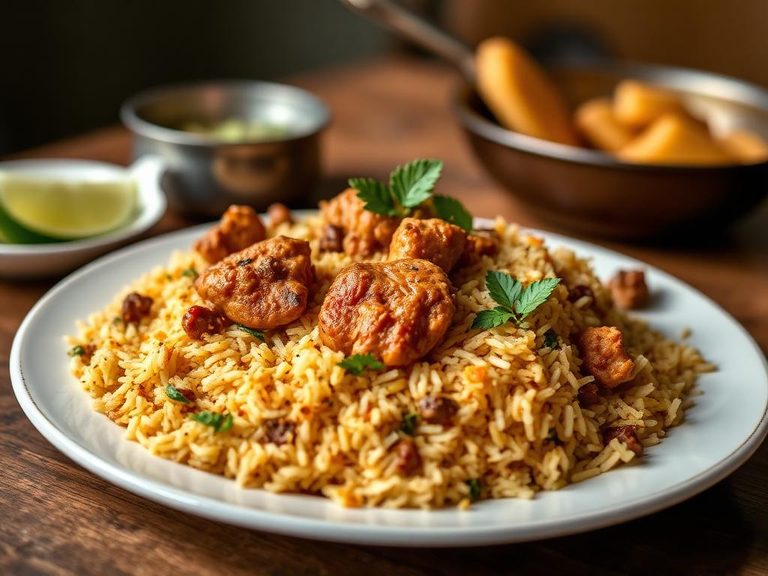
Biryani with chicken is a fragrant, layered rice dish where long-grain basmati rice is slow-cooked with tender chicken, aromatic spices like saffron and cardamom, and often yogurt or ghee. The texture is a delightful contrast of fluffy, separate rice grains and succulent, spiced meat, with each bite offering a complex blend of savory, sweet, and aromatic notes. Nutritionally, it provides a balanced mix of protein from the chicken and carbohydrates from the rice, making it a satisfying and energy-dense meal.
Calorie split: 27% protein · 52% carbs · 21% fat
↓ Full nutrition💚 Why it's loved
People adore biryani for its intoxicating aroma and the way each grain of rice absorbs the rich, layered flavors of spices, meat, and sometimes dried fruits or nuts. It's a celebratory dish that brings people together, often served at festivals, weddings, and family gatherings, making it deeply tied to cultural identity and shared joy.
⚠️ Watch-outs & how to enjoy it better
The dish can be high in sodium and fat, especially if prepared with generous amounts of ghee or oil, which may concern those managing blood pressure or cholesterol. To counteract this, opt for lean chicken cuts, use moderate oil, and pair the biryani with a side of raita (yogurt dip) or a fresh salad to add fiber and balance the meal.
Key benefits
- High-quality protein from chicken supports muscle maintenance and satiety.
- Complex carbohydrates from basmati rice provide sustained energy.
- Rich in aromatic spices like turmeric and cinnamon, which contain antioxidants.
- Contains essential vitamins and minerals such as B vitamins, iron, and zinc from the chicken and spices.
- Can be a source of probiotics if prepared with yogurt-based marinades.
🍽️ Popular dishes

🌍 Where it's eaten
💡 Did you know?
The word 'biryani' comes from the Persian word 'birian,' meaning 'fried before cooking,' which refers to the technique of sautéing the rice and meat separately before layering and slow-cooking them together.
Full nutrition (USDA data · scales with serving)
| Water | 75.9 g |
| Energy | 104 kcal |
| Protein | 7.2 g |
| Total lipid (fat) | 2.4 g |
| Carbohydrate, by difference | 13.6 g |
| Fiber, total dietary | 1.1 g |
| Total Sugars | 1.9 g |
| Calcium, Ca | 34.0 mg |
| Iron, Fe | 0.84 mg |
| Magnesium, Mg | 19.0 mg |
| Phosphorus, P | 93.0 mg |
| Potassium, K | 256 mg |
| Sodium, Na | 161 mg |
| Zinc, Zn | 0.63 mg |
| Copper, Cu | 0.07 mg |
| Selenium, Se | 6.8 ug |
| Vitamin C, total ascorbic acid | 6.2 mg |
| Thiamin | 0.07 mg |
| Riboflavin | 0.08 mg |
| Niacin | 2.2 mg |
| Vitamin B-6 | 0.18 mg |
| Folate, total | 23.0 ug |
| Folic acid | 11.0 ug |
| Folate, food | 11.0 ug |
| Folate, DFE | 30.0 ug |
| Choline, total | 20.2 mg |
| Vitamin B-12 | 0.12 ug |
| Vitamin B-12, added | 0.00 ug |
| Vitamin A, RAE | 19.0 ug |
| Retinol | 13.0 ug |
| Carotene, beta | 74.0 ug |
| Carotene, alpha | 3.0 ug |
| Cryptoxanthin, beta | 5.0 ug |
| Lycopene | 310 ug |
| Lutein + zeaxanthin | 51.0 ug |
| Vitamin E (alpha-tocopherol) | 0.30 mg |
| Vitamin E, added | 0.00 mg |
| Vitamin D (D2 + D3) | 0.10 ug |
| Vitamin K (phylloquinone) | 5.5 ug |
| Alcohol, ethyl | 0.00 g |
| Caffeine | 0.00 mg |
| Theobromine | 0.00 mg |
Fat & fatty acid profile (per 100g)
| Fatty acids, total saturated | 0.91 g |
| SFA 4:0 | 0.03 g |
| SFA 6:0 | 0.02 g |
| SFA 8:0 | 0.01 g |
| SFA 10:0 | 0.03 g |
| SFA 12:0 | 0.03 g |
| SFA 14:0 | 0.10 g |
| SFA 16:0 | 0.53 g |
| SFA 18:0 | 0.15 g |
| Fatty acids, total monounsaturated | 0.77 g |
| MUFA 16:1 | 0.10 g |
| MUFA 18:1 | 0.66 g |
| MUFA 20:1 | 0.01 g |
| MUFA 22:1 | 0.00 g |
| Fatty acids, total polyunsaturated | 0.25 g |
| PUFA 18:2 | 0.23 g |
| PUFA 18:3 | 0.02 g |
| PUFA 18:4 | 0.00 g |
| PUFA 20:4 | 0.01 g |
| PUFA 20:5 n-3 (EPA) | 0.00 g |
| PUFA 22:5 n-3 (DPA) | 0.00 g |
| PUFA 22:6 n-3 (DHA) | 0.00 g |
| Cholesterol | 25.0 mg |
FAQ
What makes biryani different from other rice dishes like pilaf?
Biryani is distinct because it involves layering partially cooked rice with marinated meat and spices, then slow-cooking (dum) to meld the flavors, whereas pilaf typically cooks rice and meat together in a single pot.
Is biryani gluten-free?
Yes, traditional biryani is gluten-free as it uses rice, chicken, and spices, but always check for added ingredients like soy sauce or thickeners in some variations.
How can I make biryani healthier at home?
Use less oil or ghee, choose lean chicken breast, add plenty of vegetables like carrots or peas, and serve with a side of yogurt or salad to increase fiber and reduce calorie density.
Nutrient density (calculated · NRF9.3)
Nutrient Rich Foods index: beneficial nutrients (protein, fiber, vitamins, minerals) minus saturated fat, added sugar & sodium, per 100 kcal.
NRF9.3 index — Fulgoni, Keast & Drewnowski, 2009. Computed from USDA nutrients.
Weight-loss friendliness (composite index)
Energy density 1.04 kcal/g · 28% calories from protein · 1.1 g fiber · 1.9 g sugar per 100 g.
Composite of energy density (Rolls et al., 1999), protein & fiber satiety, minus sugar. A calculated heuristic — ranks satiety-per-calorie, not a clinical measure.
Dietary load (calculated from USDA values)
Potential renal acid load. Positive = acid-forming, negative = alkaline-forming.
Sodium-to-potassium ratio: 0.63 (lower is better — aim for ≤ 1)
Sodium:potassium per WHO potassium guidance. Computed from USDA nutrients.