

Biryani with vegetables
Common food

Photo: Wikipedia
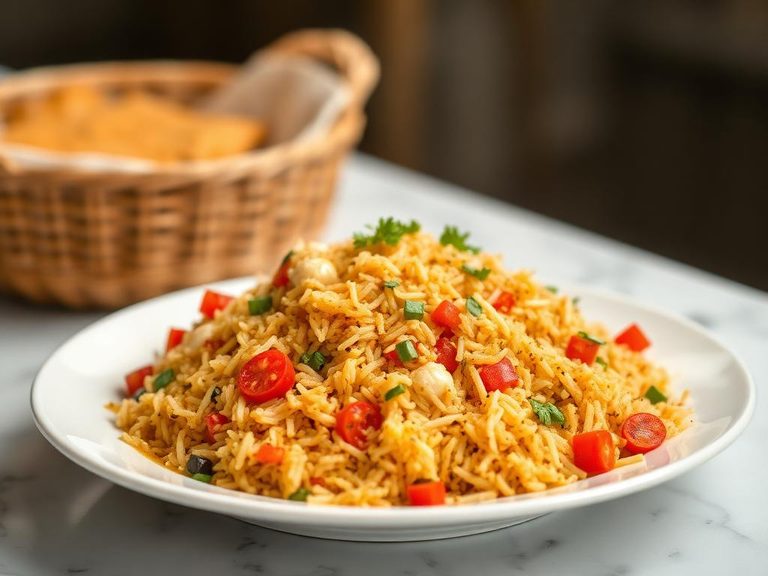
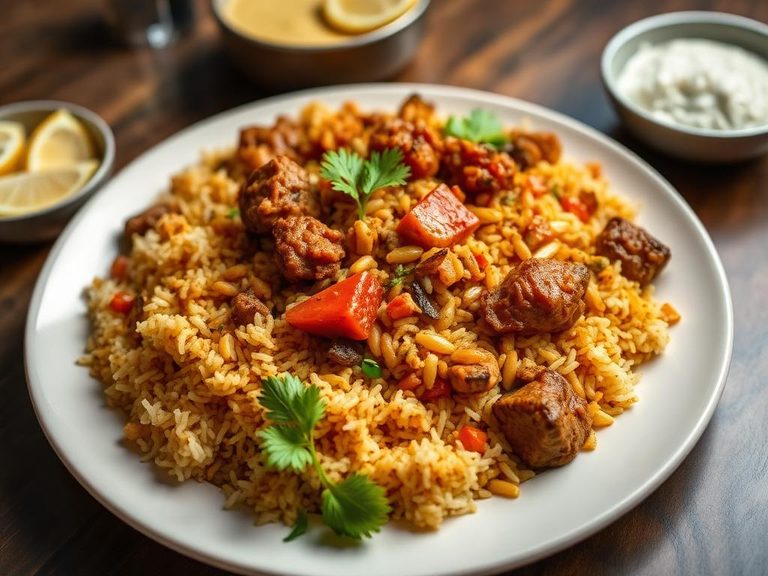
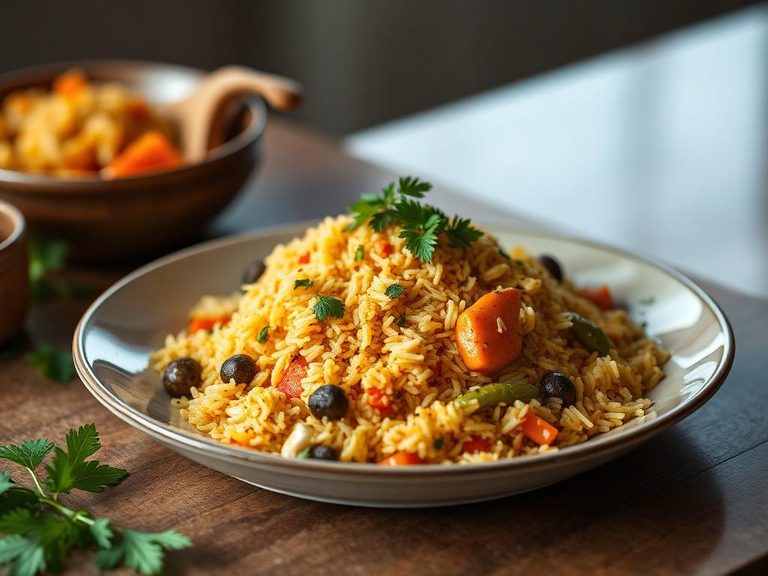
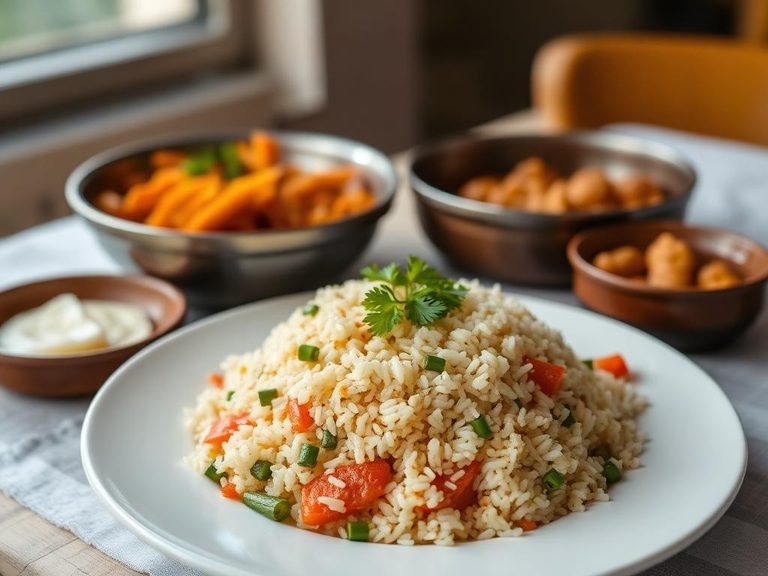
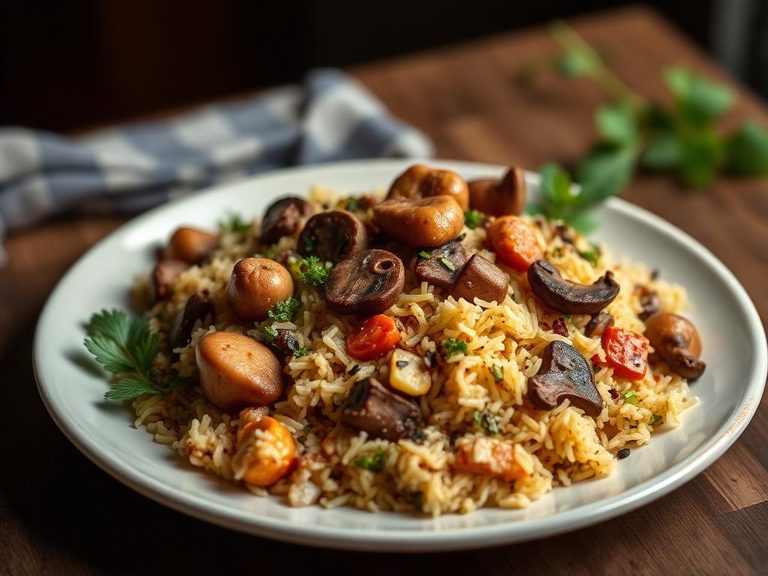
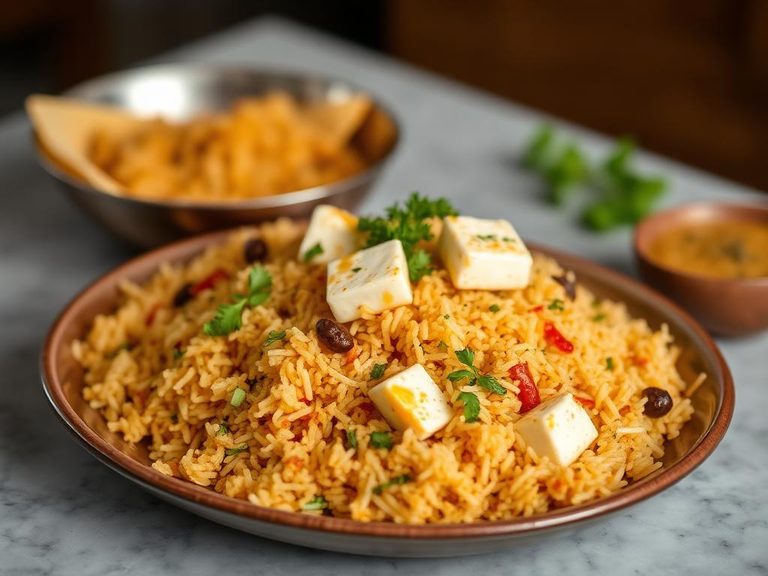
Biryani with vegetables is a fragrant, layered rice dish where long-grain basmati rice is slow-cooked with a medley of vegetables, aromatic spices, and herbs. It boasts a fluffy, distinct-grain texture with a complex flavor profile that balances savory, sweet, and spicy notes. Per 100g, it's a relatively light dish at 109 kcal, with a notable carbohydrate content of 17.91g and a modest 3.2g of fat.
Calorie split: 7% protein · 66% carbs · 27% fat
↓ Full nutrition💚 Why it's loved
People love it for its deep, layered flavors and the comforting, aromatic experience of each bite. It's a beloved staple that brings a taste of celebration and home cooking to the table, often served at gatherings and festivals.
⚠️ Watch-outs & how to enjoy it better
The high carbohydrate content can lead to blood-sugar spikes, especially if consumed in large portions. To counteract this, pair it with a side of protein like yogurt or a lentil dish, and practice portion control. Be mindful of sodium levels in pre-made spice mixes or restaurant versions.
Key benefits
- Provides a good source of complex carbohydrates for energy.
- Contains dietary fiber (1.2g per 100g) from vegetables and whole spices.
- Offers a variety of vitamins and minerals from the mixed vegetable component.
- Can be a satisfying, plant-based meal option when prepared without animal products.
- The aromatic spices used may have antioxidant properties.
🍽️ Popular dishes
🌍 Where it's eaten
💡 Did you know?
The word 'Biryani' is derived from the Persian word 'birian', which means 'fried before cooking', referring to the traditional method of searing the meat or vegetables before layering them with rice.
Full nutrition (USDA data · scales with serving)
| Water | 76.1 g |
| Energy | 109 kcal |
| Protein | 1.9 g |
| Total lipid (fat) | 3.2 g |
| Carbohydrate, by difference | 17.9 g |
| Fiber, total dietary | 1.2 g |
| Total Sugars | 1.2 g |
| Calcium, Ca | 17.0 mg |
| Iron, Fe | 1.0 mg |
| Magnesium, Mg | 11.0 mg |
| Phosphorus, P | 35.0 mg |
| Potassium, K | 102 mg |
| Sodium, Na | 177 mg |
| Zinc, Zn | 0.32 mg |
| Copper, Cu | 0.07 mg |
| Selenium, Se | 2.9 ug |
| Vitamin C, total ascorbic acid | 4.1 mg |
| Thiamin | 0.10 mg |
| Riboflavin | 0.02 mg |
| Niacin | 0.98 mg |
| Vitamin B-6 | 0.07 mg |
| Folate, total | 32.0 ug |
| Folic acid | 24.0 ug |
| Folate, food | 8.0 ug |
| Folate, DFE | 49.0 ug |
| Choline, total | 5.2 mg |
| Vitamin B-12 | 0.00 ug |
| Vitamin B-12, added | 0.00 ug |
| Vitamin A, RAE | 64.0 ug |
| Retinol | 27.0 ug |
| Carotene, beta | 371 ug |
| Carotene, alpha | 138 ug |
| Cryptoxanthin, beta | 1.0 ug |
| Lycopene | 195 ug |
| Lutein + zeaxanthin | 131 ug |
| Vitamin E (alpha-tocopherol) | 0.12 mg |
| Vitamin E, added | 0.00 mg |
| Vitamin D (D2 + D3) | 0.00 ug |
| Vitamin K (phylloquinone) | 2.9 ug |
| Alcohol, ethyl | 0.00 g |
| Caffeine | 0.00 mg |
| Theobromine | 0.00 mg |
Fat & fatty acid profile (per 100g)
| Fatty acids, total saturated | 1.7 g |
| SFA 4:0 | 0.07 g |
| SFA 6:0 | 0.05 g |
| SFA 8:0 | 0.03 g |
| SFA 10:0 | 0.07 g |
| SFA 12:0 | 0.08 g |
| SFA 14:0 | 0.26 g |
| SFA 16:0 | 0.81 g |
| SFA 18:0 | 0.27 g |
| Fatty acids, total monounsaturated | 0.68 g |
| MUFA 16:1 | 0.04 g |
| MUFA 18:1 | 0.60 g |
| MUFA 20:1 | 0.01 g |
| MUFA 22:1 | 0.00 g |
| Fatty acids, total polyunsaturated | 0.15 g |
| PUFA 18:2 | 0.13 g |
| PUFA 18:3 | 0.02 g |
| PUFA 18:4 | 0.00 g |
| PUFA 20:4 | 0.00 g |
| PUFA 20:5 n-3 (EPA) | 0.00 g |
| PUFA 22:5 n-3 (DPA) | 0.00 g |
| PUFA 22:6 n-3 (DHA) | 0.00 g |
| Cholesterol | 9.0 mg |
FAQ
Is vegetable biryani healthy?
It can be a healthy option, especially when made at home with minimal oil and a variety of vegetables. It provides carbohydrates for energy and some fiber, but it's best enjoyed in moderation due to its carb content.
How does it differ from pulao?
Biryani is typically a layered dish where rice and vegetables are cooked separately and then combined, while pulao is a one-pot dish where rice and vegetables are cooked together in a seasoned broth.
Can it be made gluten-free?
Yes, vegetable biryani is naturally gluten-free as it's primarily made from rice and vegetables. However, always check spice mixes for any added gluten or cross-contamination.
Nutrient density (calculated · NRF9.3)
Nutrient Rich Foods index: beneficial nutrients (protein, fiber, vitamins, minerals) minus saturated fat, added sugar & sodium, per 100 kcal.
NRF9.3 index — Fulgoni, Keast & Drewnowski, 2009. Computed from USDA nutrients.
Weight-loss friendliness (composite index)
Energy density 1.09 kcal/g · 7% calories from protein · 1.2 g fiber · 1.2 g sugar per 100 g.
Composite of energy density (Rolls et al., 1999), protein & fiber satiety, minus sugar. A calculated heuristic — ranks satiety-per-calorie, not a clinical measure.
Dietary load (calculated from USDA values)
Potential renal acid load. Positive = acid-forming, negative = alkaline-forming.
Sodium-to-potassium ratio: 1.74 (lower is better — aim for ≤ 1)
Sodium:potassium per WHO potassium guidance. Computed from USDA nutrients.