

Sindhi Biryani
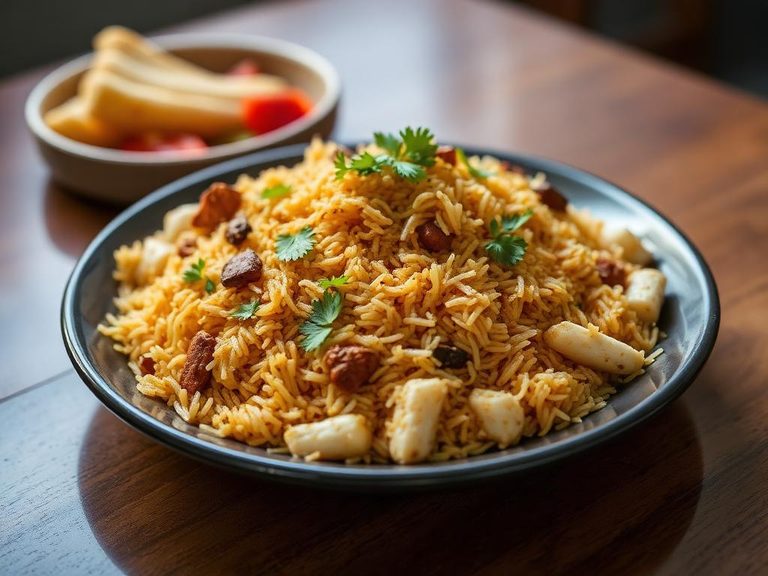
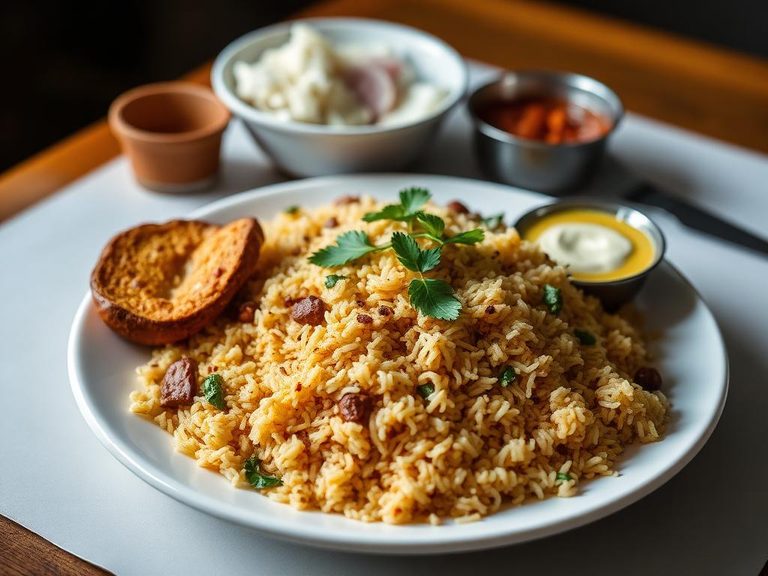
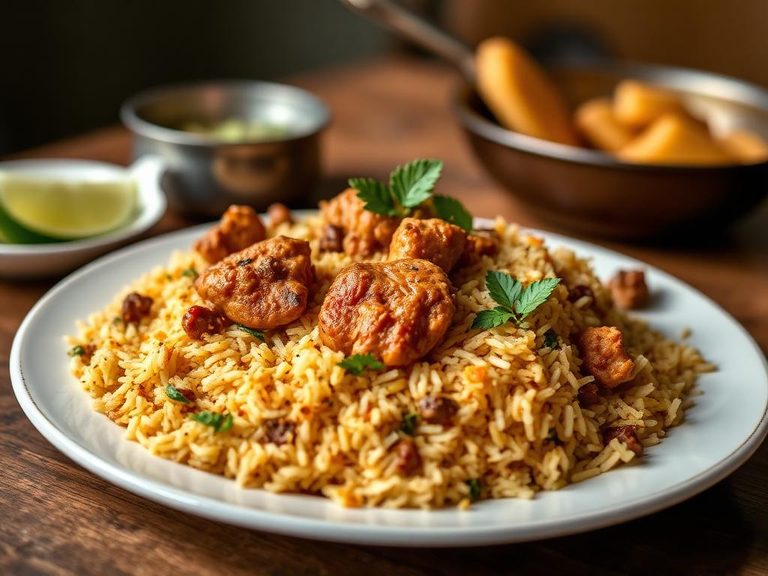
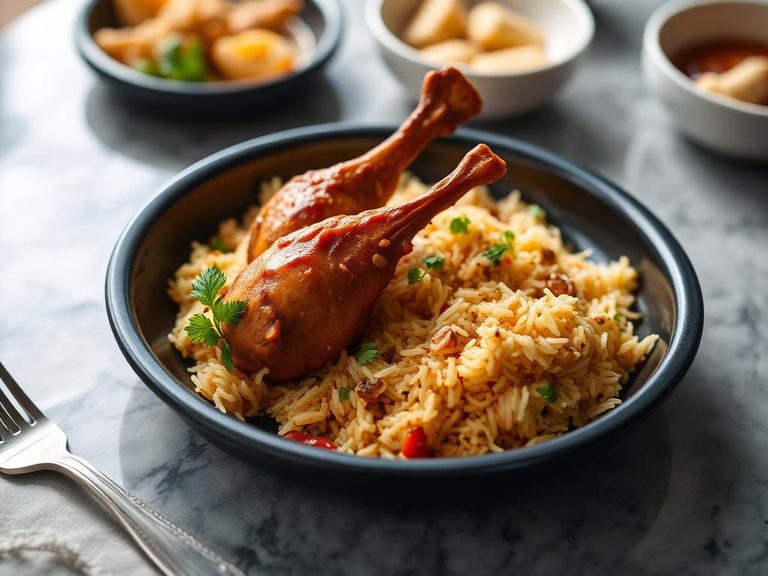
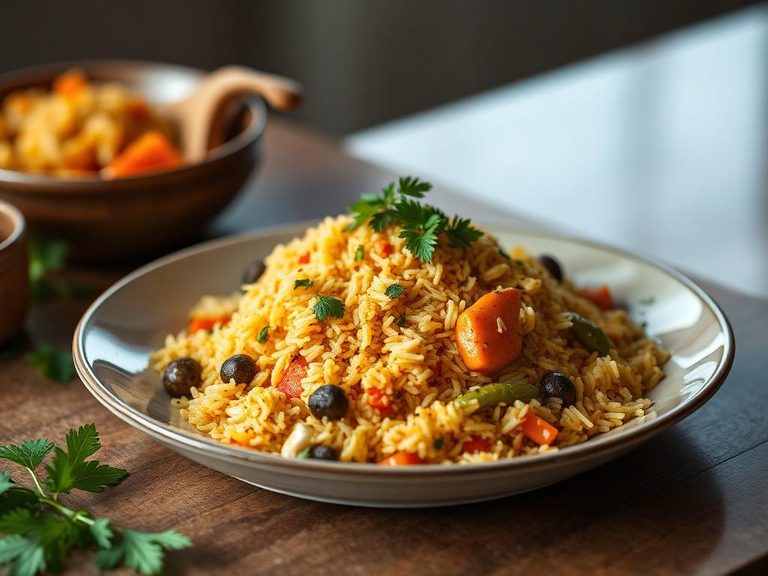
Sindhi Biryani is a vibrant and aromatic rice dish originating from the Sindh region, now part of Pakistan, known for its bold use of spices and tangy flavors. It typically features layers of basmati rice and meat (often chicken, beef, or mutton) cooked with a generous amount of potatoes, tomatoes, and a distinctive blend of spices including dried plums and green chilies.
🍽️ Nutrition at a glance
This dish is high in both carbohydrates from the rice and potatoes, and fat from the cooking oil or ghee, providing a substantial energy source. A typical serving offers a good amount of protein from the meat, along with key nutrients like iron, B vitamins, and potassium, with a rough calorie estimate of 400-600 per serving depending on portion size and preparation.
Nutrition breakdown
| Calories | 550 kcal |
| Protein | 25 g |
| Carbs | 65 g |
| Fat | 22 g |
| Fiber | 4 g |
| Sugar | 3 g |
| Sodium | 900 mg |
| Potassium | 450 mg |
| Phosphorus | 300 mg |
| Iron | 4 mg |
| Zinc | 3 mg |
| Vitamin B3 (Niacin) | 8 mg |
| Vitamin B6 | 0.5 mg |
| Folate | 60 µg |
| Magnesium | 50 mg |
Per 1 typical serving (350 g) · estimated, varies by recipe
💡 What's interesting
Culturally, Sindhi Biryani is celebrated for its unique 'tangy' profile, often achieved with dried plums (aloo bukhara) and tomatoes, setting it apart from other regional biryanis. Nutritionally, the inclusion of potatoes adds a comforting, starchy element that makes it a particularly hearty and filling one-pot meal.
🍽️ Related dishes

AI estimate may be inaccurate · Terms