Malabar Biryani
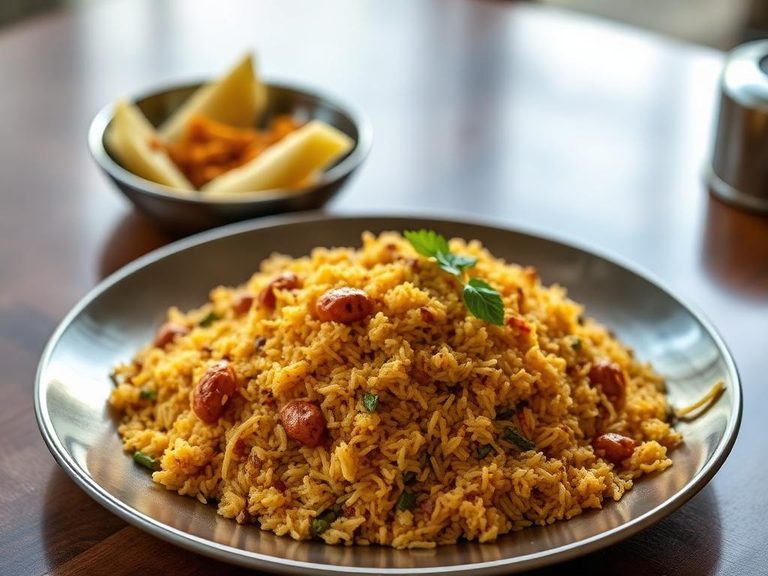
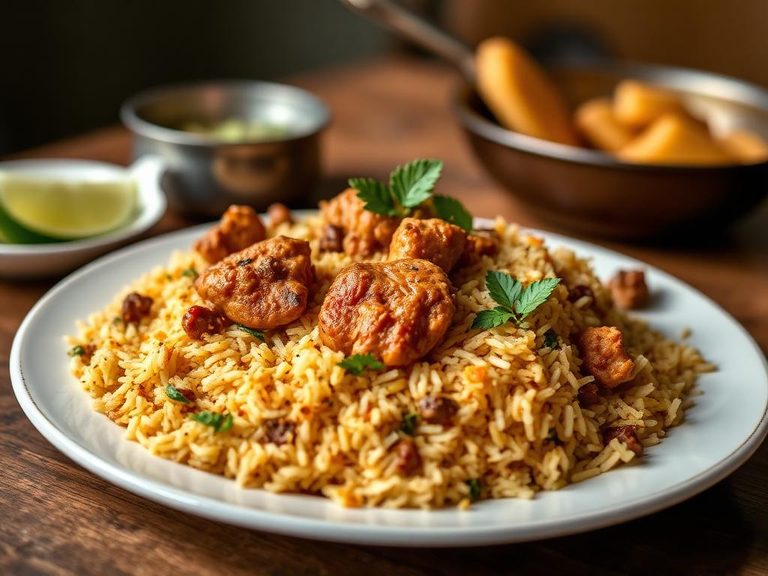
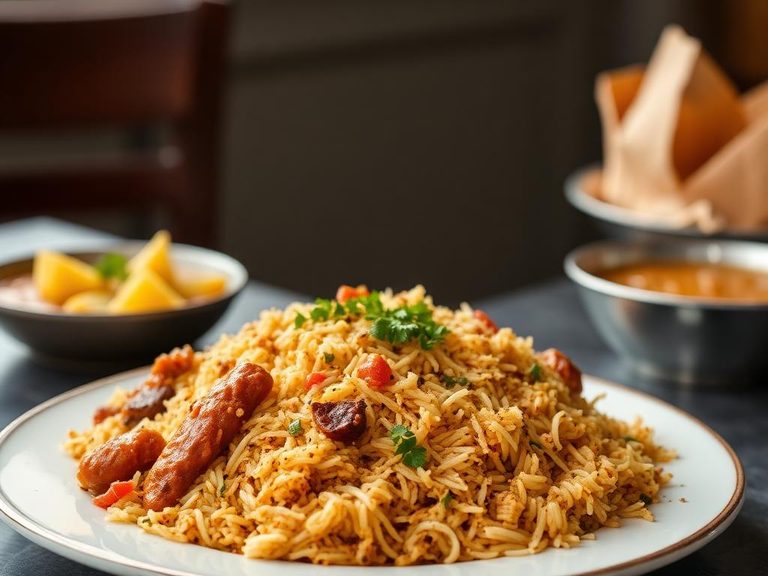
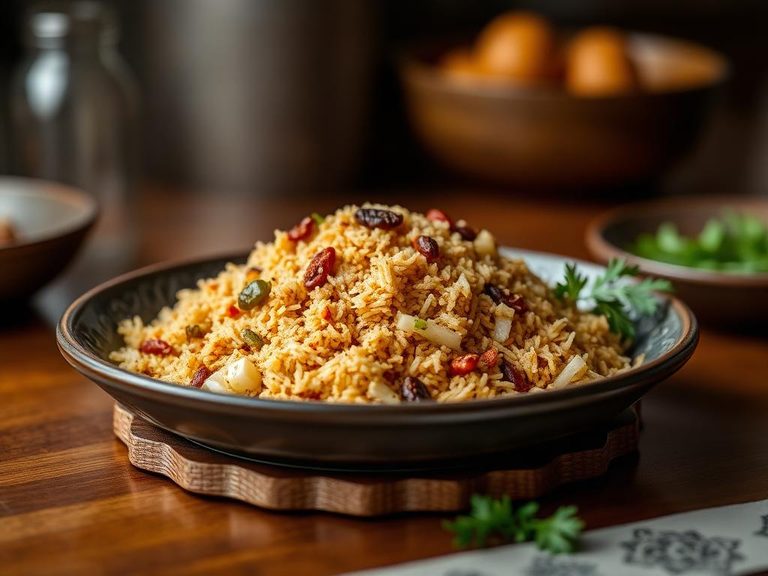
Malabar Biryani is a fragrant, layered rice dish from the Malabar coast of Kerala, India, celebrated for its unique use of short-grain Kaima rice, tender meat (often chicken, mutton, or fish), and a blend of local spices. It is traditionally cooked using the 'dum' method, where the pot is sealed to trap steam, allowing the flavors to meld beautifully. This version is distinct for its subtle sweetness from fried onions and raisins, and a rich, aromatic profile from spices like cardamom and cloves.
🍽️ Nutrition at a glance
This dish is a balanced source of carbohydrates from rice, protein from the meat, and fats from ghee or oil used in cooking. A typical serving provides a good amount of iron and B vitamins, with a calorie range of approximately 400-600 per portion, depending on the specific recipe and portion size.
Nutrition breakdown
| Calories | 450 kcal |
| Protein | 22 g |
| Carbs | 55 g |
| Fat | 16 g |
| Fiber | 3 g |
| Sugar | 4 g |
| Sodium | 680 mg |
| Potassium | 380 mg |
| Iron | 3.2 mg |
| Magnesium | 45 mg |
| Phosphorus | 250 mg |
| Zinc | 3.5 mg |
| Vitamin B3 (Niacin) | 6 mg |
| Vitamin B6 | 0.4 mg |
| Folate | 40 µg |
Per 1 cup (240 g) · estimated, varies by recipe
💡 What's interesting
Malabar Biryani is unique for its use of short-grain rice, which absorbs flavors differently than the long-grain basmati used in other biryanis, giving it a distinct texture. Culturally, it reflects the Malabar region's historical spice trade influences, blending Indian, Arab, and local Keralite culinary traditions into one iconic dish.