

Bacon bits, meatless
Whole food · Legumes and Legume Products

Photo: Wikipedia
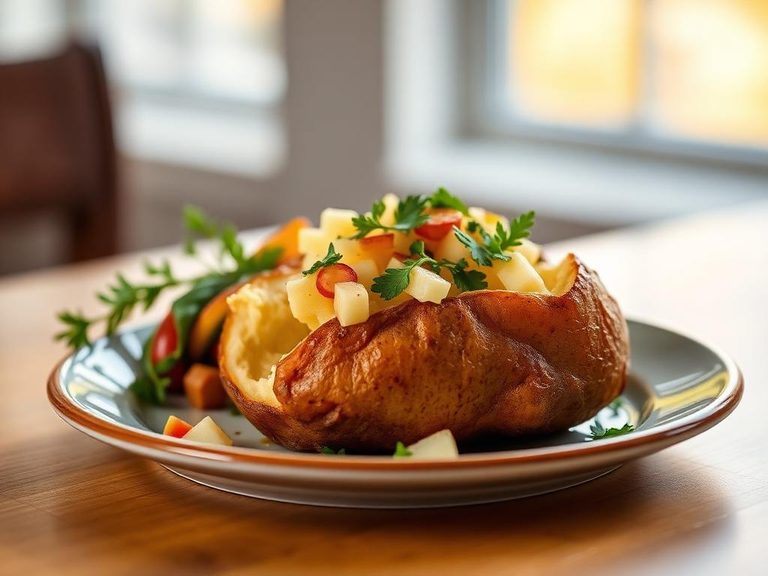
Meatless bacon bits are a crunchy, savory topping made from textured soy protein or wheat gluten, engineered to mimic the smoky, salty punch of real bacon. They deliver a satisfyingly crisp texture and a concentrated umami flavor that elevates salads, soups, and baked potatoes. Despite their small size, they pack a surprisingly high protein content (32g per 100g) and significant fiber (10.2g), making them a dense, plant-based protein source.
Calorie split: 27% protein · 24% carbs · 49% fat
↓ Full nutrition💚 Why it's loved
People love meatless bacon bits for their intense, smoky-salty flavor and satisfying crunch, which can transform a simple salad or baked potato into something indulgent. They are a staple in vegetarian and vegan cooking for adding a bacon-like punch without the animal products, and they are incredibly versatile as a topping or mix-in.
⚠️ Watch-outs & how to enjoy it better
The primary downside is their very high sodium content, which can be a concern for those watching blood pressure, and they are often highly processed with added oils and flavorings. To counteract this, use them sparingly as a garnish rather than a main ingredient, and pair them with low-sodium foods like fresh vegetables or unsalted grains. Those with soy or gluten sensitivities should check labels carefully, as most are made from soy protein or wheat gluten.
Key benefits
- High in plant-based protein (32g per 100g)
- Significant dietary fiber (10.2g per 100g)
- Zero cholesterol and animal fat
- Long shelf life and shelf-stable
- Adds smoky flavor without cooking meat
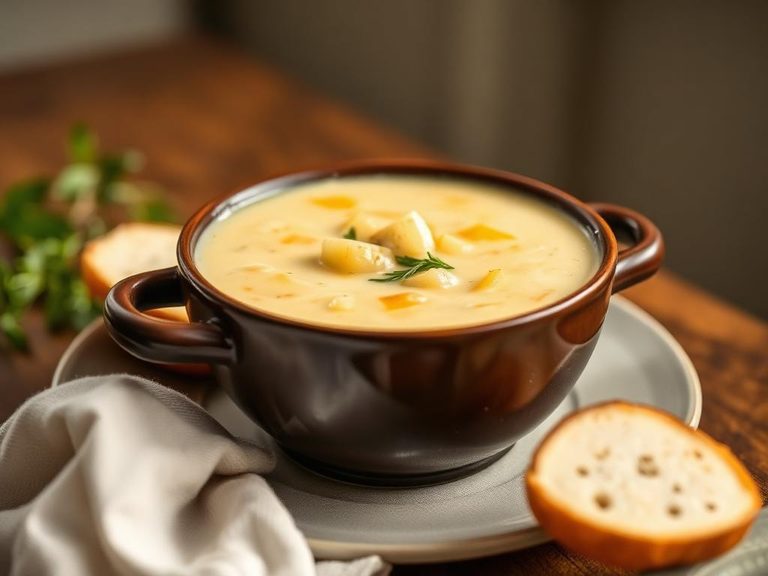
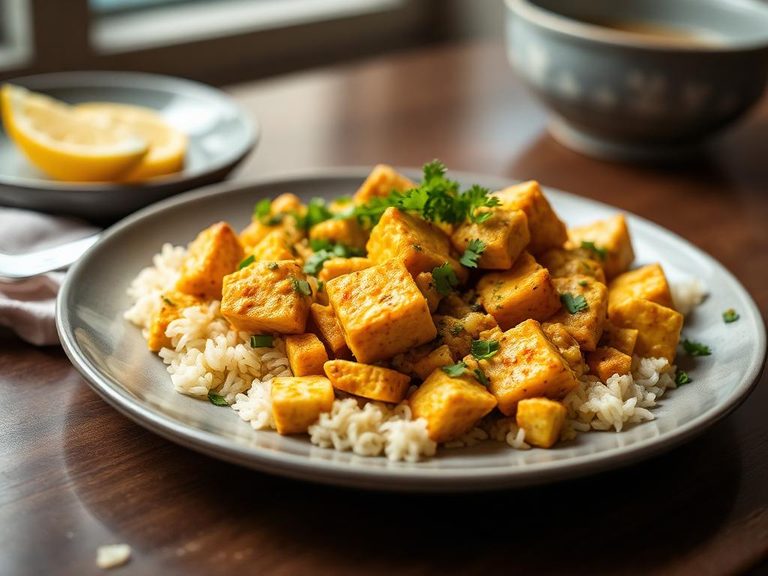
🍽️ Popular dishes
🌍 Where it's eaten
💡 Did you know?
The first commercial meatless bacon bits, made from soy protein, were introduced in the 1970s by Loma Linda Foods, a Seventh-day Adventist company that pioneered many early vegetarian meat analogs.
Full nutrition (USDA data · scales with serving)
| Water | 8.0 g |
| Energy | 476 kcal |
| Energy | 1989 kj |
| Protein | 32.0 g |
| Total lipid (fat) | 25.9 g |
| Ash | 5.5 g |
| Carbohydrate, by difference | 28.6 g |
| Fiber, total dietary | 10.2 g |
| Total Sugars | 0.00 g |
| Calcium, Ca | 101 mg |
| Iron, Fe | 0.72 mg |
| Magnesium, Mg | 95.0 mg |
| Phosphorus, P | 217 mg |
| Potassium, K | 145 mg |
| Sodium, Na | 1770 mg |
| Zinc, Zn | 1.9 mg |
| Copper, Cu | 0.54 mg |
| Selenium, Se | 7.4 ug |
| Vitamin C, total ascorbic acid | 1.9 mg |
| Thiamin | 0.60 mg |
| Riboflavin | 0.07 mg |
| Niacin | 1.6 mg |
| Vitamin B-6 | 0.08 mg |
| Folate, total | 127 ug |
| Folic acid | 0.00 ug |
| Folate, food | 127 ug |
| Folate, DFE | 127 ug |
| Choline, total | 135 mg |
| Vitamin B-12 | 1.2 ug |
| Vitamin B-12, added | 1.2 ug |
| Vitamin A, RAE | 0.00 ug |
| Retinol | 0.00 ug |
| Carotene, beta | 0.00 ug |
| Carotene, alpha | 0.00 ug |
| Cryptoxanthin, beta | 0.00 ug |
| Vitamin A, IU | 0.00 iu |
| Lycopene | 0.00 ug |
| Lutein + zeaxanthin | 0.00 ug |
| Vitamin E (alpha-tocopherol) | 6.9 mg |
| Vitamin E, added | 0.00 mg |
| Vitamin D (D2 + D3), International Units | 0.00 iu |
| Vitamin D (D2 + D3) | 0.00 ug |
| Vitamin K (phylloquinone) | 0.00 ug |
| Alcohol, ethyl | 0.00 g |
| Caffeine | 0.00 mg |
| Theobromine | 0.00 mg |
Fat & fatty acid profile (per 100g)
| Fatty acids, total saturated | 4.1 g |
| SFA 4:0 | 0.00 g |
| SFA 6:0 | 0.00 g |
| SFA 8:0 | 0.00 g |
| SFA 10:0 | 0.00 g |
| SFA 12:0 | 0.21 g |
| SFA 14:0 | 0.14 g |
| SFA 16:0 | 2.7 g |
| SFA 18:0 | 1.0 g |
| Fatty acids, total monounsaturated | 6.2 g |
| MUFA 16:1 | 0.00 g |
| MUFA 18:1 | 6.2 g |
| MUFA 20:1 | 0.00 g |
| MUFA 22:1 | 0.00 g |
| Fatty acids, total polyunsaturated | 13.5 g |
| PUFA 18:2 | 12.1 g |
| PUFA 18:3 | 1.5 g |
| PUFA 18:4 | 0.00 g |
| PUFA 20:4 | 0.00 g |
| PUFA 20:5 n-3 (EPA) | 0.00 g |
| PUFA 22:5 n-3 (DPA) | 0.00 g |
| PUFA 22:6 n-3 (DHA) | 0.00 g |
| Cholesterol | 0.00 mg |
FAQ
Are meatless bacon bits actually healthy?
They are a good source of plant-based protein and fiber but are often high in sodium and processed ingredients. They can be part of a healthy diet when used in moderation as a flavor enhancer rather than a primary protein source.
Can I eat meatless bacon bits if I'm gluten-free?
Not all meatless bacon bits are gluten-free. Many are made from wheat gluten (seitan) or contain soy sauce with wheat. Always check the label for gluten-containing ingredients if you have celiac disease or gluten sensitivity.
How do I store opened meatless bacon bits?
Once opened, keep them in an airtight container in a cool, dry place. They are shelf-stable and will last for several months, but for maximum crunch, you can also refrigerate them.
Nutrient density (calculated · NRF9.3)
Nutrient Rich Foods index: beneficial nutrients (protein, fiber, vitamins, minerals) minus saturated fat, added sugar & sodium, per 100 kcal.
NRF9.3 index — Fulgoni, Keast & Drewnowski, 2009. Computed from USDA nutrients.
Weight-loss friendliness (composite index)
Energy density 4.76 kcal/g · 27% calories from protein · 10.2 g fiber · 0.0 g sugar per 100 g.
Composite of energy density (Rolls et al., 1999), protein & fiber satiety, minus sugar. A calculated heuristic — ranks satiety-per-calorie, not a clinical measure.
Dietary load (calculated from USDA values)
Potential renal acid load. Positive = acid-forming, negative = alkaline-forming.
Sodium-to-potassium ratio: 12.21 (lower is better — aim for ≤ 1)
Sodium:potassium per WHO potassium guidance. Computed from USDA nutrients.