

Vegetarian stew
Common food
Vegetarian stew is a hearty, slow-simmered medley of vegetables, legumes, and aromatic herbs, resulting in a tender, comforting texture with a rich, savory broth. It is remarkably low in calories, with just 33 kcal per 100g, making it an exceptionally light yet satisfying meal option. The dish offers a balanced profile of complex carbohydrates and healthy fats, providing sustained energy without heaviness.
Calorie split: 8% protein · 36% carbs · 56% fat
↓ Full nutrition💚 Why it's loved
People love vegetarian stew for its deep, layered flavors that develop through slow cooking, allowing herbs and spices to meld beautifully. Its versatility makes it a beloved comfort food across cultures, easily adapted to seasonal produce and personal taste preferences.
⚠️ Watch-outs & how to enjoy it better
The stew's low protein content (0.67g per 100g) may leave some feeling less satiated, and its sodium levels can vary widely depending on preparation. To counteract this, pair it with a protein source like beans, tofu, or a side of whole-grain bread, and use low-sodium broth or herbs for flavor instead of salt.
Key benefits
- Low-calorie, nutrient-dense meal option
- High fiber content aids digestion and satiety
- Rich in complex carbohydrates for steady energy
- Naturally low in protein, suitable for specific dietary needs
- Versatile base for adding diverse vegetables and legumes
🍽️ Popular dishes
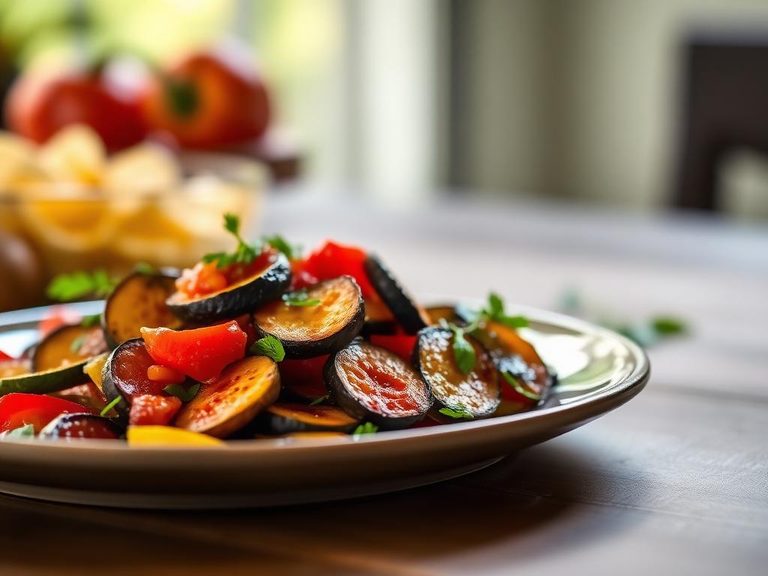
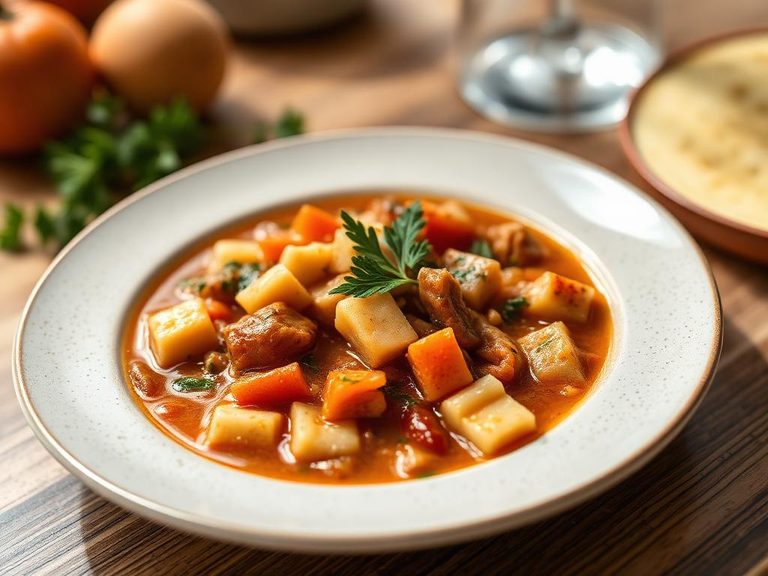
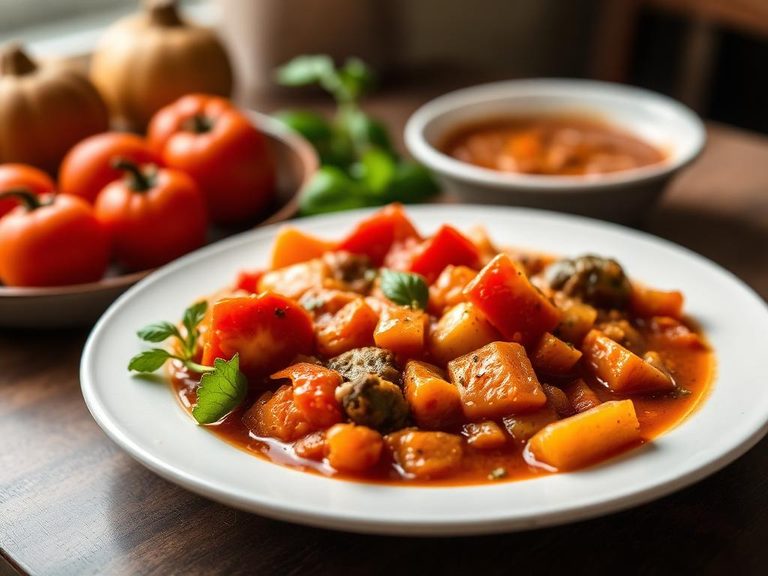
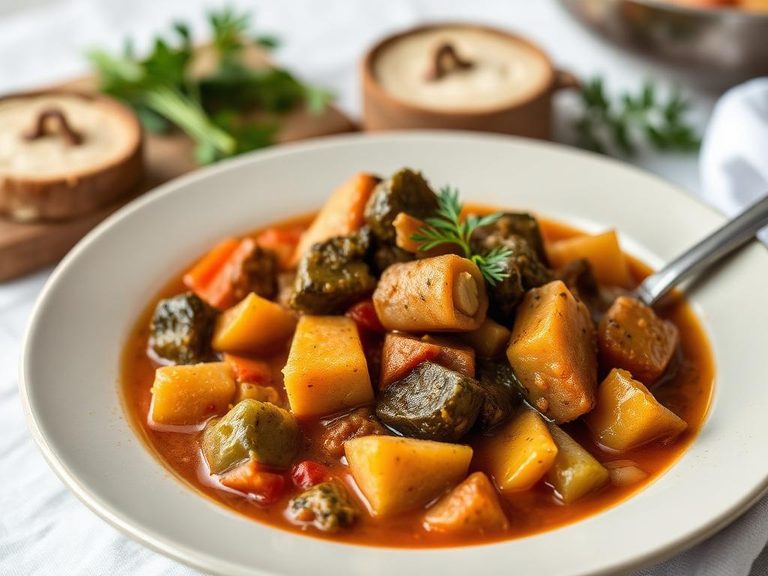
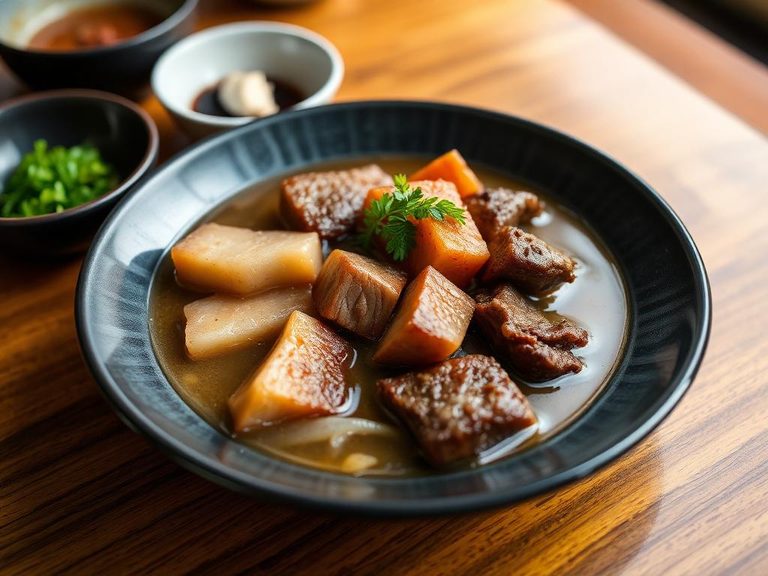
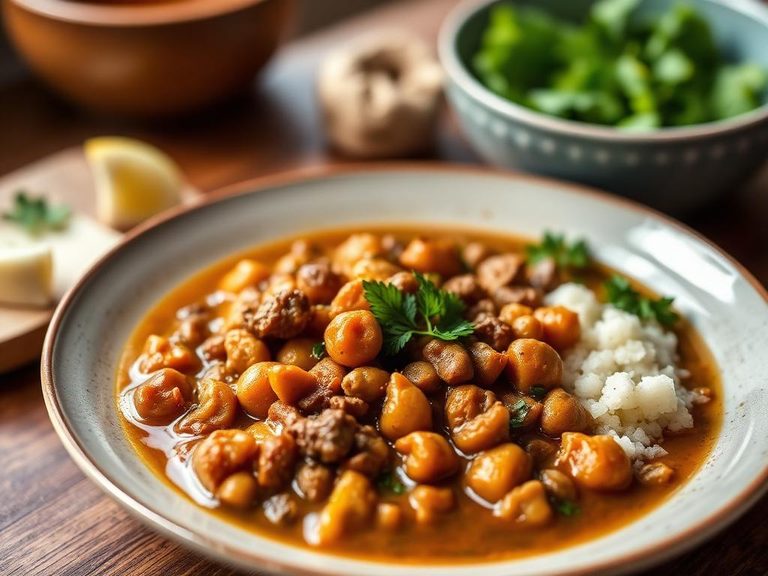
🌍 Where it's eaten
💡 Did you know?
The slow-cooking method used in vegetarian stew can actually increase the bioavailability of certain nutrients, like lycopene in tomatoes and beta-carotene in carrots, by breaking down cell walls during the simmering process.
Full nutrition (USDA data · scales with serving)
| Water | 93.3 g |
| Energy | 33.0 kcal |
| Protein | 0.67 g |
| Total lipid (fat) | 2.1 g |
| Carbohydrate, by difference | 3.1 g |
| Fiber, total dietary | 1.1 g |
| Total Sugars | 1.6 g |
| Calcium, Ca | 33.0 mg |
| Iron, Fe | 0.22 mg |
| Magnesium, Mg | 15.0 mg |
| Phosphorus, P | 17.0 mg |
| Potassium, K | 114 mg |
| Sodium, Na | 144 mg |
| Zinc, Zn | 0.18 mg |
| Copper, Cu | 0.03 mg |
| Selenium, Se | 0.30 ug |
| Vitamin C, total ascorbic acid | 4.7 mg |
| Thiamin | 0.09 mg |
| Riboflavin | 0.04 mg |
| Niacin | 0.30 mg |
| Vitamin B-6 | 0.03 mg |
| Folate, total | 34.0 ug |
| Folic acid | 0.00 ug |
| Folate, food | 34.0 ug |
| Folate, DFE | 34.0 ug |
| Choline, total | 5.3 mg |
| Vitamin B-12 | 0.00 ug |
| Vitamin B-12, added | 0.00 ug |
| Vitamin A, RAE | 29.0 ug |
| Retinol | 18.0 ug |
| Carotene, beta | 126 ug |
| Carotene, alpha | 0.00 ug |
| Cryptoxanthin, beta | 2.0 ug |
| Lycopene | 285 ug |
| Lutein + zeaxanthin | 169 ug |
| Vitamin E (alpha-tocopherol) | 0.20 mg |
| Vitamin E, added | 0.00 mg |
| Vitamin D (D2 + D3) | 0.00 ug |
| Vitamin K (phylloquinone) | 17.8 ug |
| Alcohol, ethyl | 0.00 g |
| Caffeine | 0.00 mg |
| Theobromine | 0.00 mg |
Fat & fatty acid profile (per 100g)
| Fatty acids, total saturated | 1.2 g |
| SFA 4:0 | 0.05 g |
| SFA 6:0 | 0.04 g |
| SFA 8:0 | 0.02 g |
| SFA 10:0 | 0.05 g |
| SFA 12:0 | 0.05 g |
| SFA 14:0 | 0.18 g |
| SFA 16:0 | 0.55 g |
| SFA 18:0 | 0.19 g |
| Fatty acids, total monounsaturated | 0.44 g |
| MUFA 16:1 | 0.03 g |
| MUFA 18:1 | 0.39 g |
| MUFA 20:1 | 0.00 g |
| MUFA 22:1 | 0.00 g |
| Fatty acids, total polyunsaturated | 0.11 g |
| PUFA 18:2 | 0.10 g |
| PUFA 18:3 | 0.01 g |
| PUFA 18:4 | 0.00 g |
| PUFA 20:4 | 0.00 g |
| PUFA 20:5 n-3 (EPA) | 0.00 g |
| PUFA 22:5 n-3 (DPA) | 0.00 g |
| PUFA 22:6 n-3 (DHA) | 0.00 g |
| Cholesterol | 6.0 mg |
FAQ
Is vegetarian stew suitable for a low-carb diet?
While vegetarian stew is relatively low in carbs (3.12g per 100g), it may not be ideal for strict low-carb diets due to the presence of starchy vegetables like potatoes or beans. Opt for a version with non-starchy vegetables like zucchini, spinach, and bell peppers to reduce carb content.
Can vegetarian stew be frozen for later use?
Yes, vegetarian stew freezes exceptionally well. Allow it to cool completely, then store in airtight containers or freezer bags for up to 3 months. Reheat gently on the stovetop or in the microwave, adding a splash of water or broth if needed to restore consistency.
How can I increase the protein content of vegetarian stew?
To boost protein, add legumes like lentils, chickpeas, or kidney beans, or include tofu, tempeh, or seitan. You can also stir in a handful of nuts or seeds, such as almonds or pumpkin seeds, for added protein and texture.
Nutrient density (calculated · NRF9.3)
Nutrient Rich Foods index: beneficial nutrients (protein, fiber, vitamins, minerals) minus saturated fat, added sugar & sodium, per 100 kcal.
NRF9.3 index — Fulgoni, Keast & Drewnowski, 2009. Computed from USDA nutrients.
Weight-loss friendliness (composite index)
Energy density 0.33 kcal/g · 8% calories from protein · 1.1 g fiber · 1.6 g sugar per 100 g.
Composite of energy density (Rolls et al., 1999), protein & fiber satiety, minus sugar. A calculated heuristic — ranks satiety-per-calorie, not a clinical measure.
Dietary load (calculated from USDA values)
Potential renal acid load. Positive = acid-forming, negative = alkaline-forming.
Sodium-to-potassium ratio: 1.26 (lower is better — aim for ≤ 1)
Sodium:potassium per WHO potassium guidance. Computed from USDA nutrients.