

Ramen bowl, vegetarian
Common food
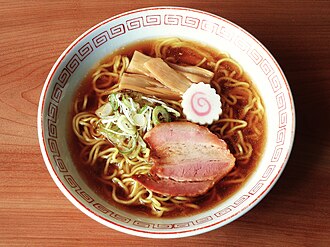
Photo: Wikipedia
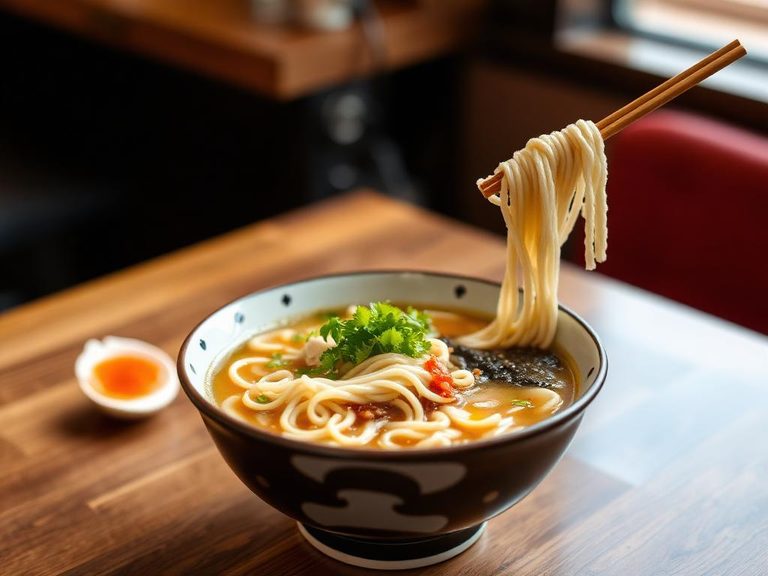
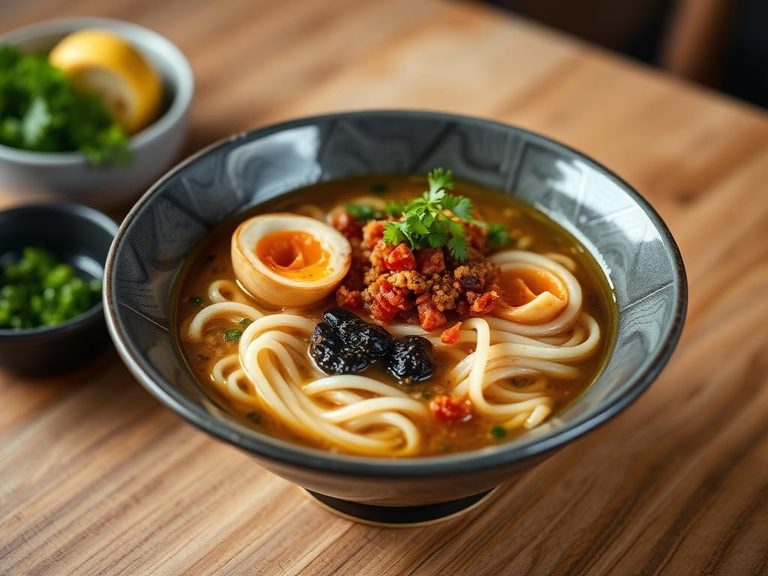
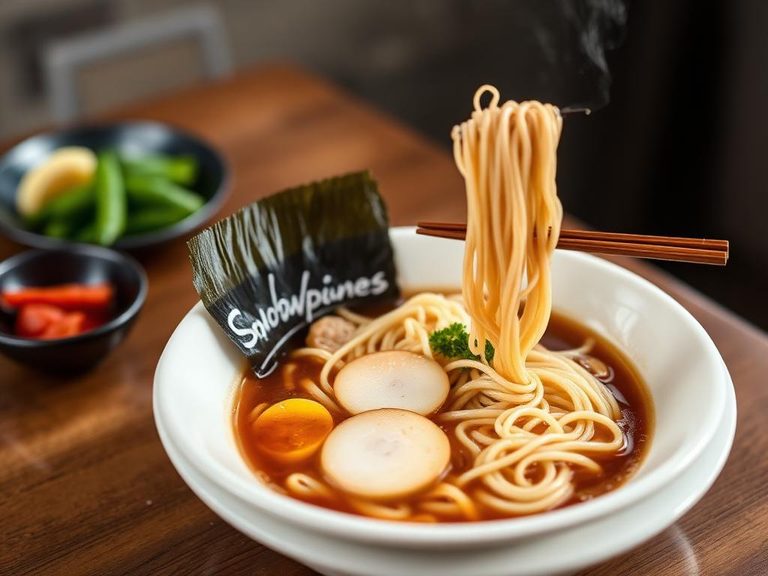
A vegetarian ramen bowl is a steaming, savory broth-based dish featuring wheat noodles, umami-rich vegetable or miso broth, and toppings like tofu, soft-boiled eggs, and seasonal vegetables. Its texture is a satisfying contrast of silky noodles, tender vegetables, and a rich, aromatic broth. Nutritionally, it is relatively light at 108 kcal per 100g, with a moderate protein content from plant-based sources.
Calorie split: 15% protein · 58% carbs · 28% fat
↓ Full nutrition💚 Why it's loved
People love vegetarian ramen for its deep, umami-rich flavor profile and the comforting warmth of the broth, especially in colder weather. Its versatility allows for endless customization with toppings like mushrooms, seaweed, and pickled ginger, making it a beloved staple in both casual and gourmet settings.
⚠️ Watch-outs & how to enjoy it better
The sodium content in ramen broth can be high, which may be a concern for those monitoring blood pressure. To counteract this, opt for low-sodium broth or reduce portion sizes, and pair with fresh vegetables to balance the meal. Additionally, the wheat noodles may contain gluten, so those with celiac disease should choose gluten-free alternatives.
Key benefits
- Low in calories per 100g, suitable for calorie-conscious meals
- Provides plant-based protein from tofu or legumes
- Rich in complex carbohydrates for sustained energy
- Contains dietary fiber from vegetables and noodles
- Versatile and customizable with various toppings
🍽️ Popular dishes
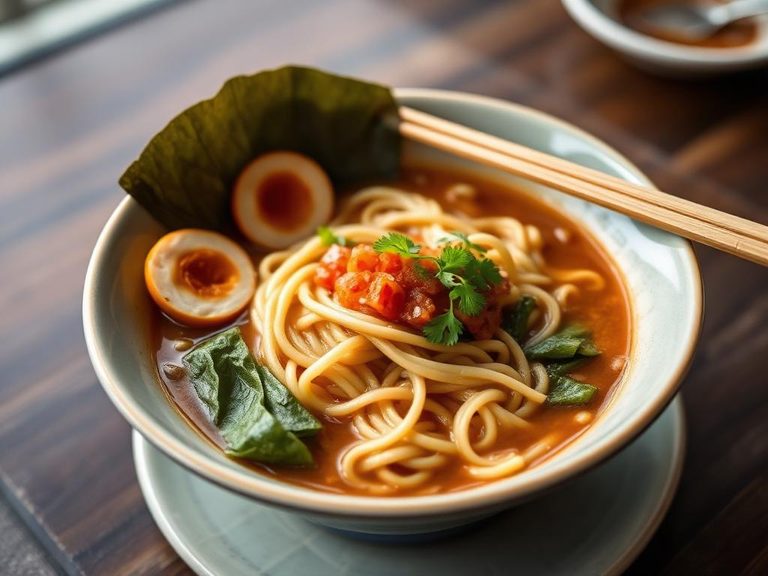
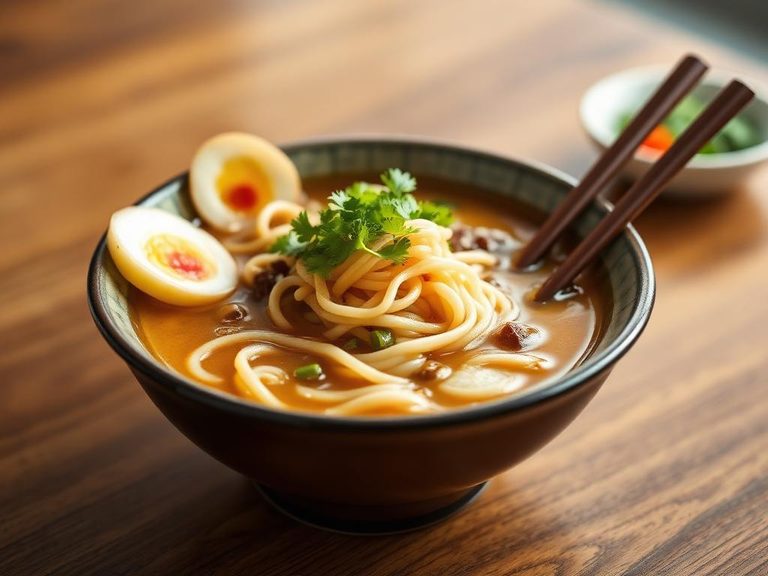
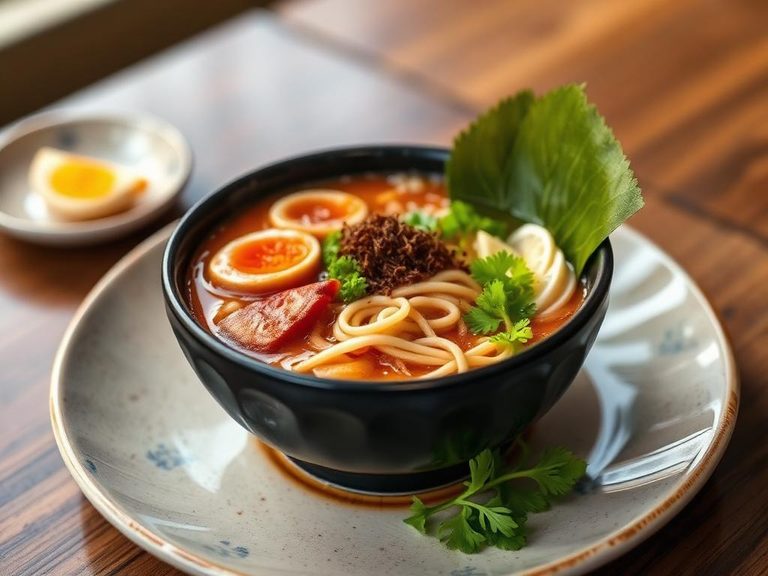
🌍 Where it's eaten
💡 Did you know?
Ramen was originally introduced to Japan from China in the late 19th century and was initially called 'shina soba' (Chinese soba) before the term 'ramen' became popular in the 1950s.
Full nutrition (USDA data · scales with serving)
| Water | 75.9 g |
| Energy | 108 kcal |
| Protein | 4.0 g |
| Total lipid (fat) | 3.3 g |
| Carbohydrate, by difference | 15.6 g |
| Fiber, total dietary | 1.1 g |
| Total Sugars | 0.54 g |
| Calcium, Ca | 29.0 mg |
| Iron, Fe | 0.90 mg |
| Magnesium, Mg | 15.0 mg |
| Phosphorus, P | 45.0 mg |
| Potassium, K | 64.0 mg |
| Sodium, Na | 344 mg |
| Zinc, Zn | 0.37 mg |
| Copper, Cu | 0.08 mg |
| Selenium, Se | 14.1 ug |
| Vitamin C, total ascorbic acid | 3.1 mg |
| Thiamin | 0.14 mg |
| Riboflavin | 0.08 mg |
| Niacin | 0.94 mg |
| Vitamin B-6 | 0.04 mg |
| Folate, total | 48.0 ug |
| Folic acid | 32.0 ug |
| Folate, food | 16.0 ug |
| Folate, DFE | 70.0 ug |
| Choline, total | 7.7 mg |
| Vitamin B-12 | 0.00 ug |
| Vitamin B-12, added | 0.00 ug |
| Vitamin A, RAE | 13.0 ug |
| Retinol | 0.00 ug |
| Carotene, beta | 159 ug |
| Carotene, alpha | 0.00 ug |
| Cryptoxanthin, beta | 0.00 ug |
| Lycopene | 0.00 ug |
| Lutein + zeaxanthin | 60.0 ug |
| Vitamin E (alpha-tocopherol) | 0.50 mg |
| Vitamin E, added | 0.00 mg |
| Vitamin D (D2 + D3) | 0.00 ug |
| Vitamin K (phylloquinone) | 14.8 ug |
| Alcohol, ethyl | 0.00 g |
| Caffeine | 0.00 mg |
| Theobromine | 0.00 mg |
Fat & fatty acid profile (per 100g)
| Fatty acids, total saturated | 0.48 g |
| SFA 4:0 | 0.00 g |
| SFA 6:0 | 0.00 g |
| SFA 8:0 | 0.00 g |
| SFA 10:0 | 0.00 g |
| SFA 12:0 | 0.00 g |
| SFA 14:0 | 0.01 g |
| SFA 16:0 | 0.35 g |
| SFA 18:0 | 0.09 g |
| Fatty acids, total monounsaturated | 1.2 g |
| MUFA 16:1 | 0.01 g |
| MUFA 18:1 | 1.1 g |
| MUFA 20:1 | 0.02 g |
| MUFA 22:1 | 0.00 g |
| Fatty acids, total polyunsaturated | 1.4 g |
| PUFA 18:2 | 1.2 g |
| PUFA 18:3 | 0.15 g |
| PUFA 18:4 | 0.00 g |
| PUFA 20:4 | 0.00 g |
| PUFA 20:5 n-3 (EPA) | 0.00 g |
| PUFA 22:5 n-3 (DPA) | 0.00 g |
| PUFA 22:6 n-3 (DHA) | 0.00 g |
| Cholesterol | 0.00 mg |
FAQ
Is vegetarian ramen healthy?
Vegetarian ramen can be healthy, especially if made with low-sodium broth, plenty of vegetables, and lean protein sources like tofu. However, it's important to watch portion sizes and sodium content.
Can I make vegetarian ramen gluten-free?
Yes, you can use gluten-free noodles such as rice noodles or buckwheat noodles and ensure the broth and other ingredients are gluten-free.
What are common toppings for vegetarian ramen?
Common toppings include soft-boiled eggs, tofu, mushrooms, seaweed, corn, green onions, and pickled ginger. You can also add spinach, bamboo shoots, or bean sprouts for extra texture and flavor.
Nutrient density (calculated · NRF9.3)
Nutrient Rich Foods index: beneficial nutrients (protein, fiber, vitamins, minerals) minus saturated fat, added sugar & sodium, per 100 kcal.
NRF9.3 index — Fulgoni, Keast & Drewnowski, 2009. Computed from USDA nutrients.
Weight-loss friendliness (composite index)
Energy density 1.08 kcal/g · 15% calories from protein · 1.1 g fiber · 0.5 g sugar per 100 g.
Composite of energy density (Rolls et al., 1999), protein & fiber satiety, minus sugar. A calculated heuristic — ranks satiety-per-calorie, not a clinical measure.
Dietary load (calculated from USDA values)
Potential renal acid load. Positive = acid-forming, negative = alkaline-forming.
Sodium-to-potassium ratio: 5.38 (lower is better — aim for ≤ 1)
Sodium:potassium per WHO potassium guidance. Computed from USDA nutrients.