

Tsukemen Ramen
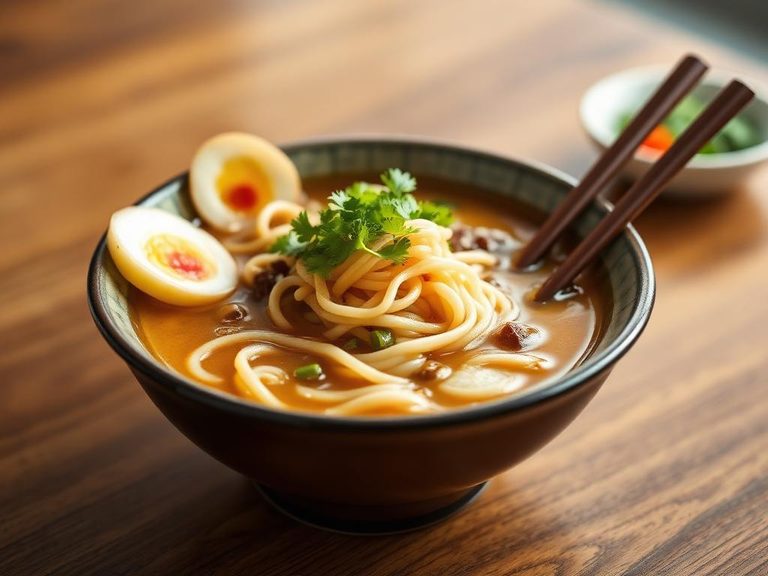
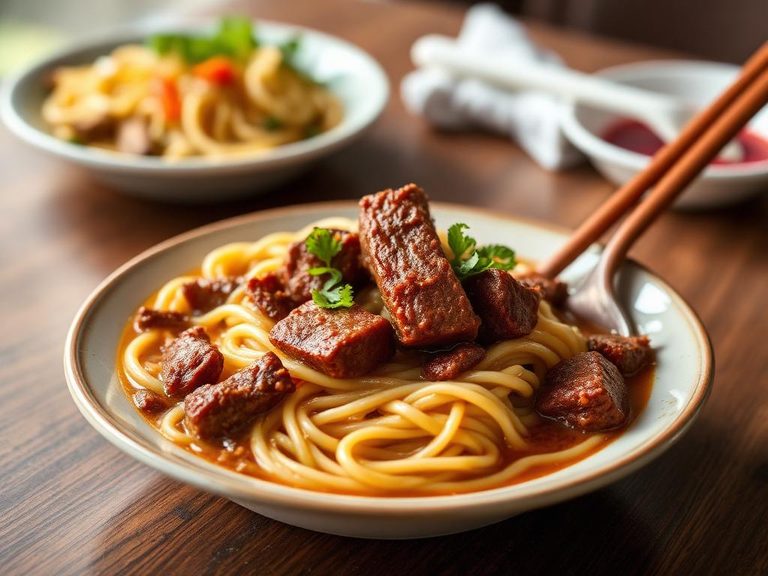
Tsukemen is a style of Japanese ramen where the noodles are served cold and separate from a hot, intensely flavored dipping broth. Diners dip the chewy, thick noodles into the rich soup—often made from pork, fish, or a combination—before eating, allowing them to control the flavor intensity. It originated in Tokyo in the 1960s as a creative twist on traditional ramen.
🍽️ Nutrition at a glance
This dish is high in both carbohydrates from the substantial noodles and protein from the broth and any added toppings like chashu pork or eggs. It provides significant calories, typically ranging from 600 to over 1,000 per serving, along with sodium and fats from the concentrated dipping soup.
Nutrition breakdown
| Calories | 750 kcal |
| Protein | 35 g |
| Carbs | 85 g |
| Fat | 30 g |
| Fiber | 4 g |
| Sugar | 8 g |
| Sodium | 2200 mg |
| Potassium | 600 mg |
| Phosphorus | 350 mg |
| Iron | 4.5 mg |
| Niacin (B3) | 12 mg |
| Vitamin B6 | 0.8 mg |
| Folate | 150 mcg |
| Vitamin B12 | 1.5 mcg |
| Selenium | 25 mcg |
Per 1 bowl (approx. 700-800 g) · estimated, varies by recipe
💡 What's interesting
Culturally, tsukemen is celebrated for its interactive eating experience and the textural contrast between the cold, springy noodles and the hot, savory broth. Nutritionally, the separate serving method allows for a more controlled intake of the rich, calorie-dense soup compared to traditional ramen where everything is combined.
🍽️ Related dishes
AI estimate may be inaccurate · Terms