

Vegetarian fillets
Whole food · Legumes and Legume Products

Photo: Wikipedia
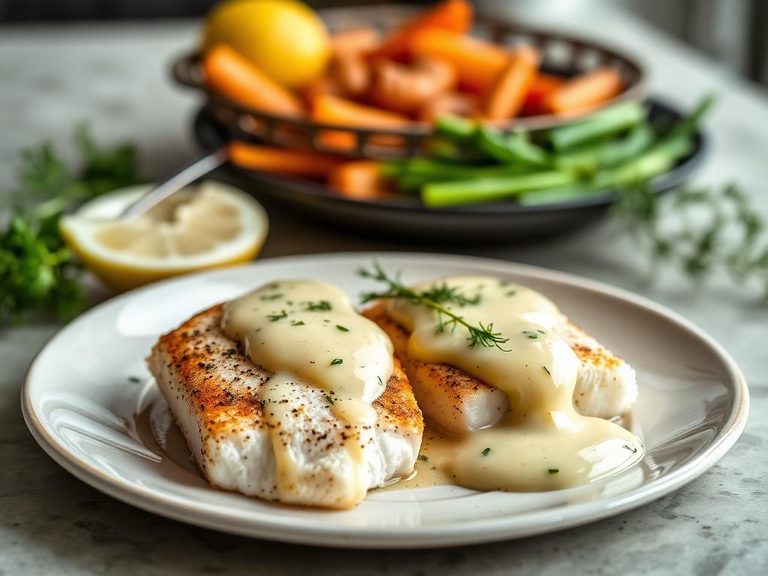
Vegetarian fillets are savory, plant-based patties designed to mimic the texture and satisfaction of meat-based fish or chicken fillets. They typically offer a firm, flaky, or chewy bite with a seasoned, umami-rich flavor profile. Nutritionally, they are a standout for their high protein-to-calorie ratio, making them a powerful option for muscle maintenance on a plant-based diet.
Calorie split: 32% protein · 12% carbs · 56% fat
↓ Full nutrition💚 Why it's loved
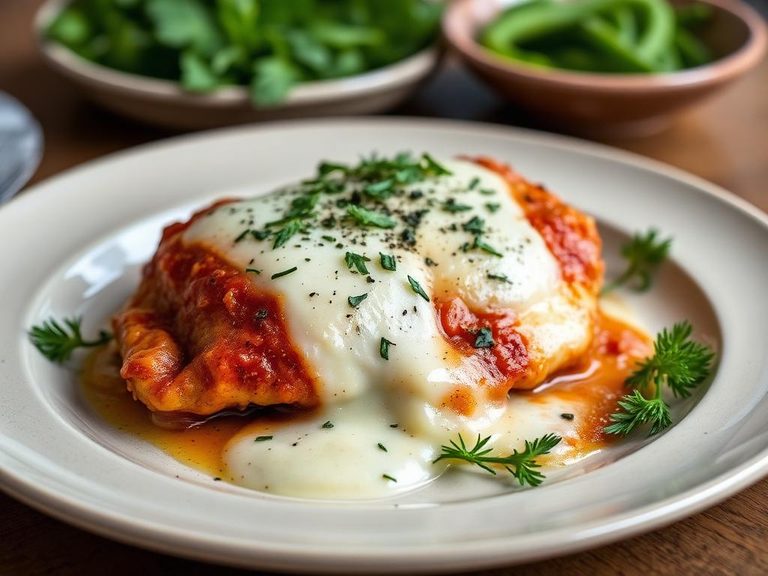
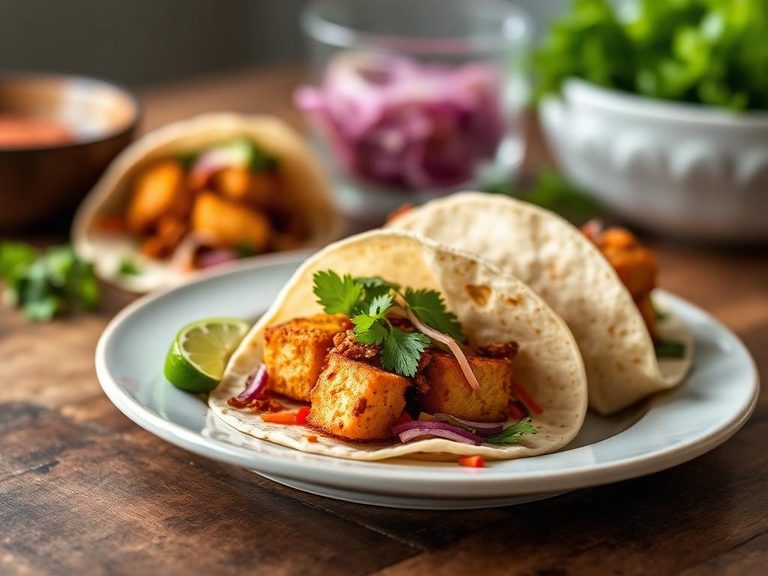
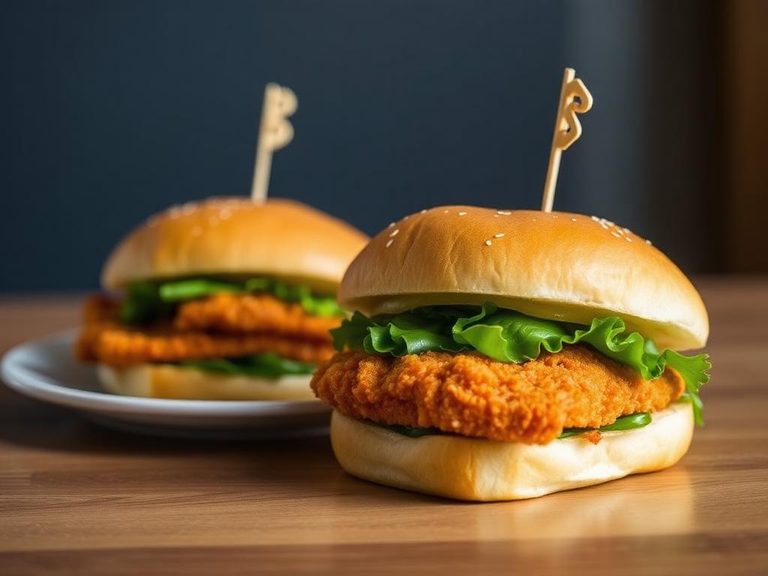
People love vegetarian fillets for their remarkable ability to replicate the comforting, hearty experience of a traditional fish or chicken fillet, making plant-based eating more accessible and satisfying. Their versatility allows them to be the centerpiece of countless dishes, from classic 'fish' tacos to crispy 'chicken' sandwiches.
⚠️ Watch-outs & how to enjoy it better
Some commercial versions can be high in sodium or contain processed ingredients like methylcellulose as binders. Those monitoring sodium intake should check labels and opt for low-sodium varieties or rinse them lightly. To counteract any potential blood sugar impact from added starches, pair the fillet with non-starchy vegetables and a healthy fat like avocado or olive oil.
Key benefits
- Excellent source of complete or complementary plant proteins.
- High in dietary fiber for digestive health and satiety.
- Low in sugar, making it suitable for low-sugar diets.
- Provides a meat-like texture without animal products.
- Often fortified with B12 and iron, key nutrients in vegetarian diets.
🍽️ Popular dishes

🌍 Where it's eaten
💡 Did you know?
The concept of a 'vegetarian fillet' has ancient roots in Buddhist cuisine, where tofu and wheat gluten (seitan) were shaped and seasoned centuries ago to mimic the texture of fish and meat for temple meals.
Full nutrition (USDA data · scales with serving)
| Water | 45.0 g |
| Energy | 290 kcal |
| Energy | 1213 kj |
| Protein | 23.0 g |
| Total lipid (fat) | 18.0 g |
| Ash | 5.0 g |
| Carbohydrate, by difference | 9.0 g |
| Fiber, total dietary | 6.1 g |
| Total Sugars | 0.80 g |
| Calcium, Ca | 95.0 mg |
| Iron, Fe | 2.0 mg |
| Magnesium, Mg | 23.0 mg |
| Phosphorus, P | 450 mg |
| Potassium, K | 600 mg |
| Sodium, Na | 490 mg |
| Zinc, Zn | 1.4 mg |
| Copper, Cu | 0.93 mg |
| Selenium, Se | 1.0 ug |
| Vitamin C, total ascorbic acid | 0.00 mg |
| Thiamin | 1.1 mg |
| Riboflavin | 0.90 mg |
| Niacin | 12.0 mg |
| Vitamin B-6 | 1.5 mg |
| Folate, total | 102 ug |
| Folic acid | 0.00 ug |
| Folate, food | 102 ug |
| Folate, DFE | 102 ug |
| Choline, total | 82.0 mg |
| Vitamin B-12 | 4.2 ug |
| Vitamin B-12, added | 4.2 ug |
| Vitamin A, RAE | 0.00 ug |
| Retinol | 0.00 ug |
| Carotene, beta | 0.00 ug |
| Carotene, alpha | 0.00 ug |
| Cryptoxanthin, beta | 0.00 ug |
| Vitamin A, IU | 0.00 iu |
| Lycopene | 0.00 ug |
| Lutein + zeaxanthin | 0.00 ug |
| Vitamin E (alpha-tocopherol) | 3.5 mg |
| Vitamin E, added | 0.00 mg |
| Vitamin D (D2 + D3), International Units | 0.00 iu |
| Vitamin D (D2 + D3) | 0.00 ug |
| Vitamin K (phylloquinone) | 0.00 ug |
| Alcohol, ethyl | 0.00 g |
| Caffeine | 0.00 mg |
| Theobromine | 0.00 mg |
Fat & fatty acid profile (per 100g)
| Fatty acids, total saturated | 2.8 g |
| SFA 4:0 | 0.00 g |
| SFA 6:0 | 0.00 g |
| SFA 8:0 | 0.00 g |
| SFA 10:0 | 0.00 g |
| SFA 12:0 | 0.17 g |
| SFA 14:0 | 0.09 g |
| SFA 16:0 | 1.9 g |
| SFA 18:0 | 0.74 g |
| Fatty acids, total monounsaturated | 4.4 g |
| MUFA 16:1 | 0.00 g |
| MUFA 18:1 | 4.4 g |
| MUFA 20:1 | 0.00 g |
| MUFA 22:1 | 0.00 g |
| Fatty acids, total polyunsaturated | 9.3 g |
| PUFA 18:2 | 8.3 g |
| PUFA 18:3 | 1.0 g |
| PUFA 18:4 | 0.00 g |
| PUFA 20:4 | 0.00 g |
| PUFA 20:5 n-3 (EPA) | 0.00 g |
| PUFA 22:5 n-3 (DPA) | 0.00 g |
| PUFA 22:6 n-3 (DHA) | 0.00 g |
| Fatty acids, total trans | 0.00 g |
| Cholesterol | 0.00 mg |
FAQ
Are vegetarian fillets a complete protein?
It depends on the base ingredient. Soy-based fillets are typically complete proteins. Those made from pea protein, wheat gluten (seitan), or mycoprotein are also often complete, but those based on a single grain or legume (like rice or bean) may need to be paired with other foods throughout the day for all essential amino acids.
How do I get the best crispy texture when cooking?
For maximum crispiness, pat the fillet dry before cooking. Pan-fry in a thin layer of oil over medium-high heat, or bake/air-fry at a high temperature (around 200°C/400°F) on a preheated sheet or basket. Avoid overcrowding the pan to prevent steaming.
Can I freeze uncooked vegetarian fillets?
Yes, most store-bought or homemade vegetarian fillets freeze well. Place them on a baking sheet to flash-freeze individually before transferring to a freezer bag. This prevents them from sticking together. Cook from frozen, adding a few extra minutes to the cooking time.
Nutrient density (calculated · NRF9.3)
Nutrient Rich Foods index: beneficial nutrients (protein, fiber, vitamins, minerals) minus saturated fat, added sugar & sodium, per 100 kcal.
NRF9.3 index — Fulgoni, Keast & Drewnowski, 2009. Computed from USDA nutrients.
Weight-loss friendliness (composite index)
Energy density 2.90 kcal/g · 32% calories from protein · 6.1 g fiber · 0.8 g sugar per 100 g.
Composite of energy density (Rolls et al., 1999), protein & fiber satiety, minus sugar. A calculated heuristic — ranks satiety-per-calorie, not a clinical measure.
Dietary load (calculated from USDA values)
Potential renal acid load. Positive = acid-forming, negative = alkaline-forming.
Sodium-to-potassium ratio: 0.82 (lower is better — aim for ≤ 1)
Sodium:potassium per WHO potassium guidance. Computed from USDA nutrients.