

Vegetables as ingredient in stews
Common food
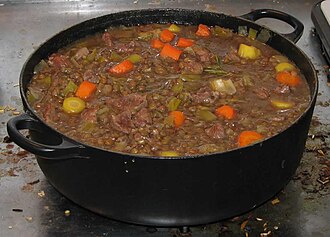
Photo: Wikipedia
This is a vibrant medley of vegetables—like carrots, celery, onions, and potatoes—slow-simmered until tender in a savory broth. They absorb the rich flavors of the stew while contributing a comforting, earthy sweetness and a soft, yielding texture. Nutritionally, they are a low-calorie, high-fiber base that delivers essential vitamins and minerals without adding significant fat.
Calorie split: 12% protein · 84% carbs · 4% fat
↓ Full nutrition💚 Why it's loved
People love how these vegetables become flavor sponges, melding with herbs and meats to create a deeply satisfying, one-pot comfort meal. Their versatility allows them to be the hearty foundation of countless global cuisines, from French bouillabaisse to Korean jjigae.
⚠️ Watch-outs & how to enjoy it better
The vegetables can become mushy if overcooked, losing their distinct texture. For those monitoring blood sugar, the starchy carbs (like potatoes) can cause a spike if not balanced. Tip: Pair with a source of protein (beans, meat) or healthy fat (a drizzle of olive oil) to slow glucose absorption and enhance satiety.
Key benefits
- Excellent source of dietary fiber for digestive health.
- Low in calories and fat, supporting weight management.
- Provides essential vitamins like A, C, and K from varied vegetables.
- High in water content, contributing to hydration.
- Contains antioxidants that combat oxidative stress.
🍽️ Popular dishes
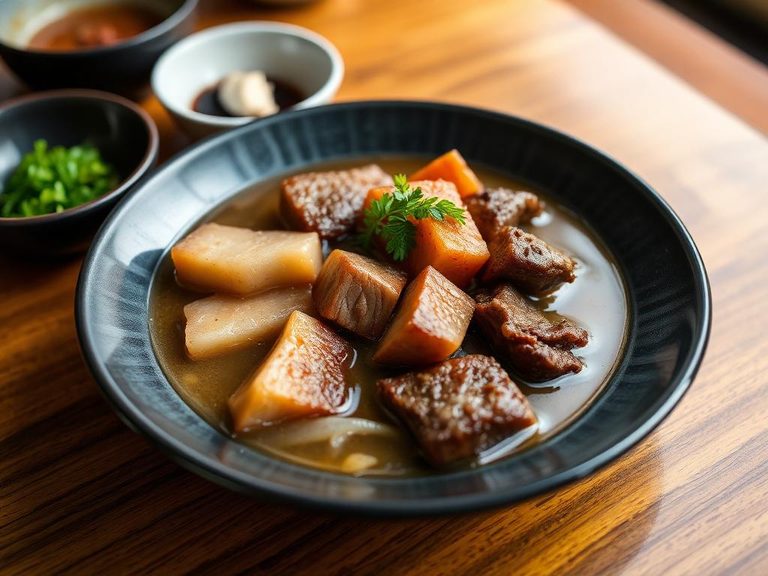
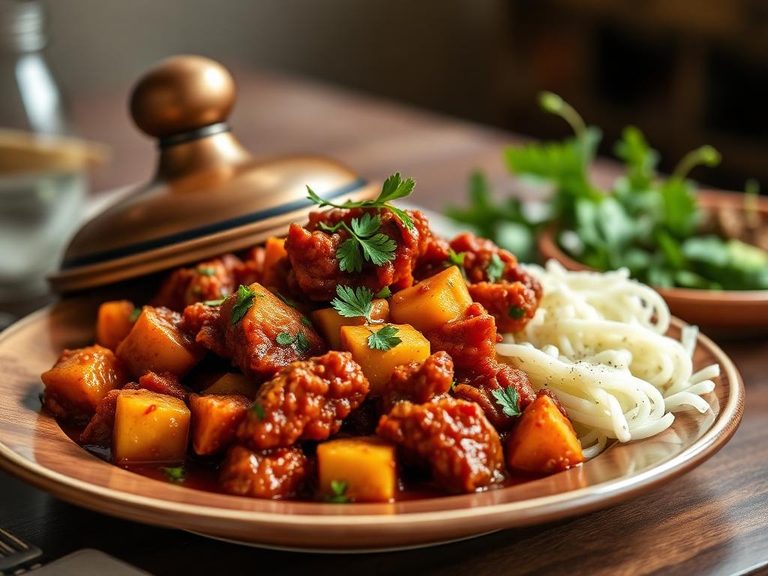
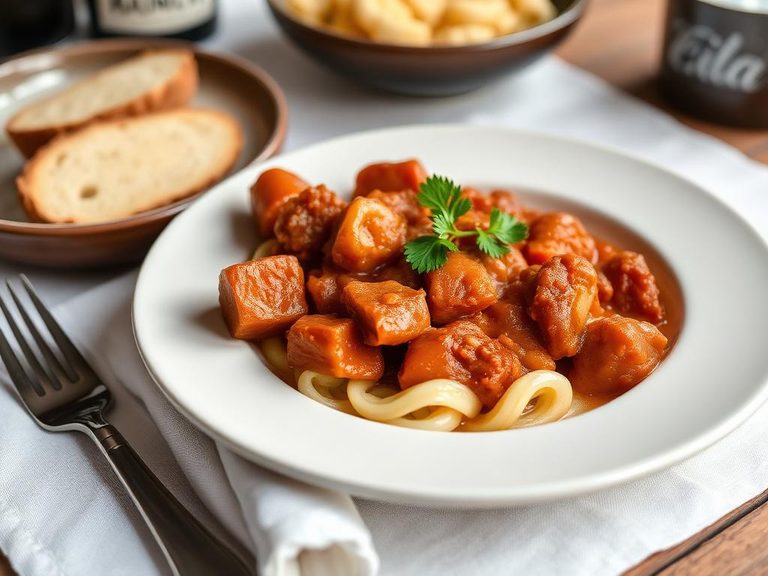
🌍 Where it's eaten
💡 Did you know?
The classic French mirepoix (onion, carrot, celery) and the Italian soffritto are the foundational flavor bases for countless stews, and their specific ratio is a closely guarded secret in many professional kitchens.
Full nutrition (USDA data · scales with serving)
| Water | 84.5 g |
| Energy | 59.0 kcal |
| Protein | 1.8 g |
| Total lipid (fat) | 0.30 g |
| Carbohydrate, by difference | 12.7 g |
| Fiber, total dietary | 2.6 g |
| Total Sugars | 3.2 g |
| Calcium, Ca | 21.0 mg |
| Iron, Fe | 0.46 mg |
| Magnesium, Mg | 19.0 mg |
| Phosphorus, P | 48.0 mg |
| Potassium, K | 325 mg |
| Sodium, Na | 34.0 mg |
| Zinc, Zn | 0.34 mg |
| Copper, Cu | 0.09 mg |
| Selenium, Se | 0.20 ug |
| Vitamin C, total ascorbic acid | 14.0 mg |
| Thiamin | 0.07 mg |
| Riboflavin | 0.07 mg |
| Niacin | 1.2 mg |
| Vitamin B-6 | 0.14 mg |
| Folate, total | 25.0 ug |
| Folic acid | 0.00 ug |
| Folate, food | 25.0 ug |
| Folate, DFE | 25.0 ug |
| Choline, total | 12.5 mg |
| Vitamin B-12 | 0.00 ug |
| Vitamin B-12, added | 0.00 ug |
| Vitamin A, RAE | 259 ug |
| Retinol | 0.00 ug |
| Carotene, beta | 2588 ug |
| Carotene, alpha | 1042 ug |
| Cryptoxanthin, beta | 6.0 ug |
| Lycopene | 1088 ug |
| Lutein + zeaxanthin | 314 ug |
| Vitamin E (alpha-tocopherol) | 0.38 mg |
| Vitamin E, added | 0.00 mg |
| Vitamin D (D2 + D3) | 0.00 ug |
| Vitamin K (phylloquinone) | 10.9 ug |
| Alcohol, ethyl | 0.00 g |
| Caffeine | 0.00 mg |
| Theobromine | 0.00 mg |
Fat & fatty acid profile (per 100g)
| Fatty acids, total saturated | 0.04 g |
| SFA 4:0 | 0.00 g |
| SFA 6:0 | 0.00 g |
| SFA 8:0 | 0.00 g |
| SFA 10:0 | 0.00 g |
| SFA 12:0 | 0.00 g |
| SFA 14:0 | 0.00 g |
| SFA 16:0 | 0.03 g |
| SFA 18:0 | 0.00 g |
| Fatty acids, total monounsaturated | 0.02 g |
| MUFA 16:1 | 0.00 g |
| MUFA 18:1 | 0.02 g |
| MUFA 20:1 | 0.00 g |
| MUFA 22:1 | 0.00 g |
| Fatty acids, total polyunsaturated | 0.09 g |
| PUFA 18:2 | 0.07 g |
| PUFA 18:3 | 0.01 g |
| PUFA 18:4 | 0.00 g |
| PUFA 20:4 | 0.00 g |
| PUFA 20:5 n-3 (EPA) | 0.00 g |
| PUFA 22:5 n-3 (DPA) | 0.00 g |
| PUFA 22:6 n-3 (DHA) | 0.00 g |
| Cholesterol | 0.00 mg |
FAQ
Can I use frozen vegetables for stews?
Yes, frozen vegetables are a convenient and nutritious option. They are often flash-frozen at peak ripeness, preserving vitamins. Add them directly to the stew; no need to thaw first, but they may release more water.
How do I keep vegetables from getting too soft?
Add denser root vegetables (potatoes, carrots) earlier in cooking, and quicker-cooking vegetables (zucchini, peas) in the last 10-15 minutes. Cut all pieces to a similar size for even cooking.
Are stewed vegetables nutritious if cooked for a long time?
Long cooking can reduce heat-sensitive vitamins like vitamin C, but it makes other nutrients like lycopene (in tomatoes) and beta-carotene (in carrots) more bioavailable. The broth also retains water-soluble nutrients, so consuming the liquid is key.
Nutrient density (calculated · NRF9.3)
Nutrient Rich Foods index: beneficial nutrients (protein, fiber, vitamins, minerals) minus saturated fat, added sugar & sodium, per 100 kcal.
NRF9.3 index — Fulgoni, Keast & Drewnowski, 2009. Computed from USDA nutrients.
Weight-loss friendliness (composite index)
Energy density 0.59 kcal/g · 12% calories from protein · 2.6 g fiber · 3.2 g sugar per 100 g.
Composite of energy density (Rolls et al., 1999), protein & fiber satiety, minus sugar. A calculated heuristic — ranks satiety-per-calorie, not a clinical measure.
Dietary load (calculated from USDA values)
Potential renal acid load. Positive = acid-forming, negative = alkaline-forming.
Sodium-to-potassium ratio: 0.10 (lower is better — aim for ≤ 1)
Sodium:potassium per WHO potassium guidance. Computed from USDA nutrients.