

Vegetables as ingredient in soups
Common food
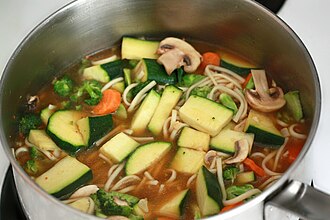
Photo: Wikipedia
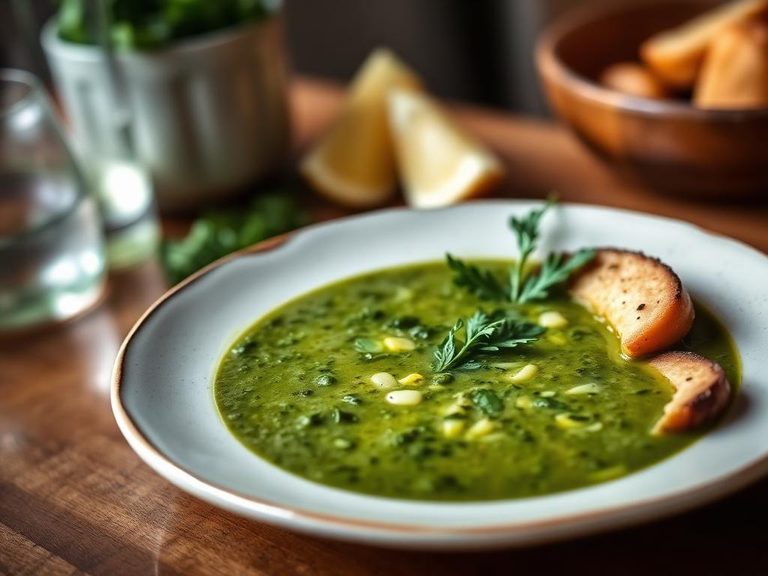
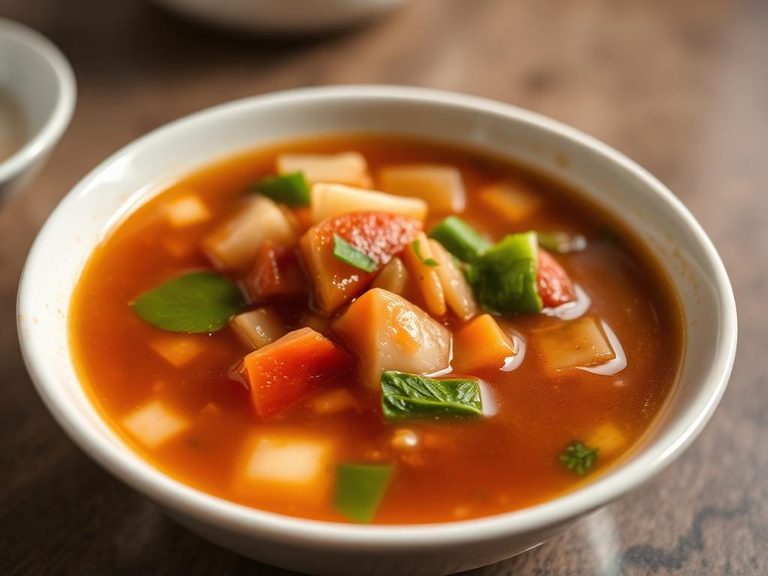
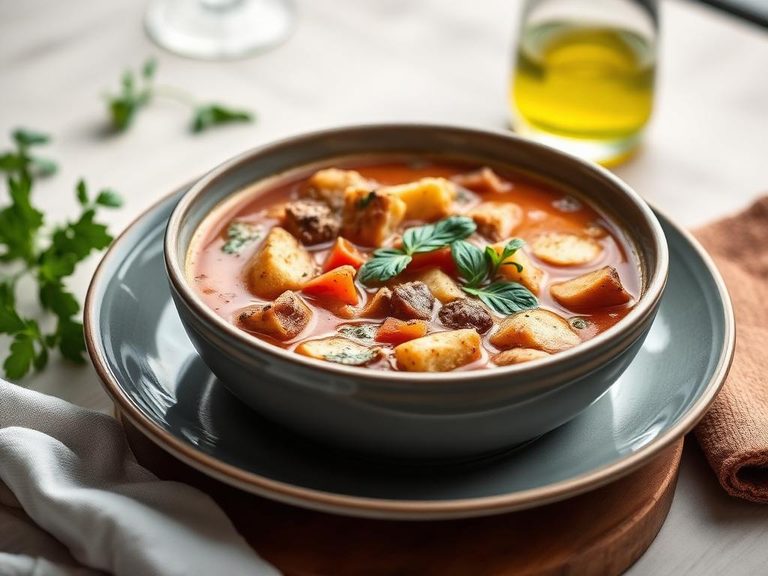
A vibrant medley of chopped vegetables simmered into a flavorful broth, offering a tender yet slightly crisp texture that absorbs the surrounding flavors. At just 50 calories per 100g, it's a nutrient-dense powerhouse, providing a satisfying blend of fiber and vitamins without the heaviness of a standalone meal. Its mild, earthy sweetness from the vegetables' natural sugars makes it a universally comforting base for countless soups.
Calorie split: 14% protein · 80% carbs · 6% fat
↓ Full nutrition💚 Why it's loved
People love it for its incredible versatility—it can be the humble backbone of a rustic peasant soup or the refined foundation for a clear consommé. It's a comforting, customizable canvas that transforms simple broth into a hearty, nutritious meal.
⚠️ Watch-outs & how to enjoy it better
Some may find the texture too soft if overcooked, or the flavor too mild if not seasoned well. For those monitoring blood sugar, the natural sugars (2.34g) and carbs (10.56g) can add up in large portions. To counteract this, pair the soup with a source of protein (like beans, lentils, or chicken) or healthy fat (like a drizzle of olive oil) to slow absorption and increase satiety.
Key benefits
- Low-calorie volume for meal satisfaction
- Excellent source of dietary fiber for digestion
- Provides essential vitamins and minerals
- Hydrating due to high water content
- Adds texture and bulk to soups and stews
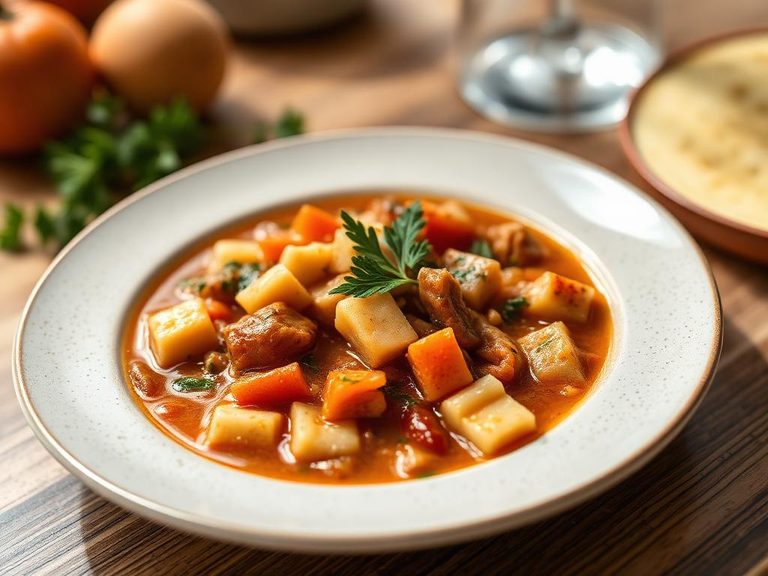
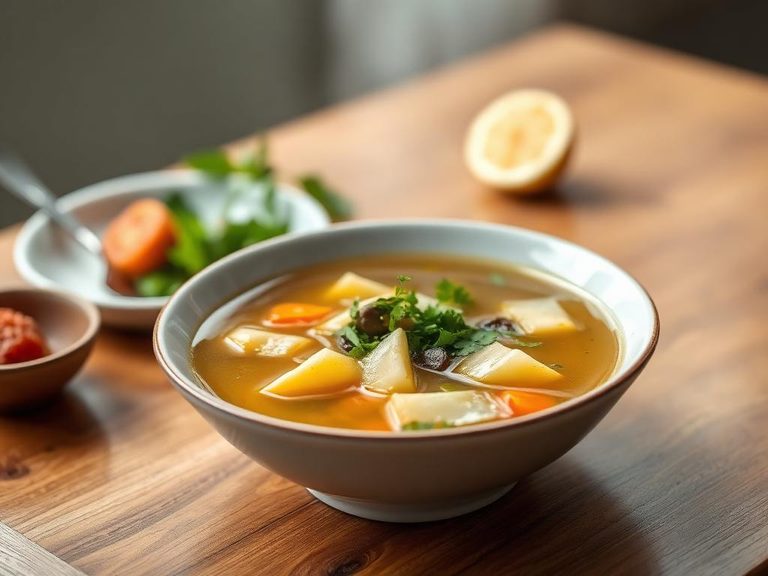
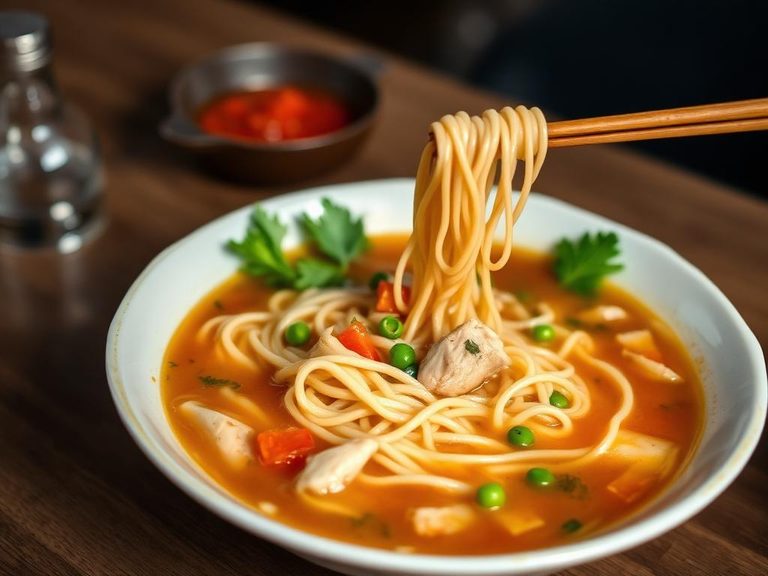
🍽️ Popular dishes
🌍 Where it's eaten
💡 Did you know?
The technique of sautéing vegetables in fat before adding liquid to build a soup's flavor base is called making a 'soffritto' in Italian, a 'mirepoix' in French, or a 'holy trinity' in Cajun cooking.
Full nutrition (USDA data · scales with serving)
| Water | 86.5 g |
| Energy | 50.0 kcal |
| Protein | 1.9 g |
| Total lipid (fat) | 0.33 g |
| Carbohydrate, by difference | 10.6 g |
| Fiber, total dietary | 2.0 g |
| Total Sugars | 2.3 g |
| Calcium, Ca | 17.0 mg |
| Iron, Fe | 0.45 mg |
| Magnesium, Mg | 24.0 mg |
| Phosphorus, P | 47.0 mg |
| Potassium, K | 331 mg |
| Sodium, Na | 15.0 mg |
| Zinc, Zn | 0.36 mg |
| Copper, Cu | 0.08 mg |
| Selenium, Se | 0.20 ug |
| Vitamin C, total ascorbic acid | 21.0 mg |
| Thiamin | 0.06 mg |
| Riboflavin | 0.05 mg |
| Niacin | 0.97 mg |
| Vitamin B-6 | 0.13 mg |
| Folate, total | 26.0 ug |
| Folic acid | 0.00 ug |
| Folate, food | 26.0 ug |
| Folate, DFE | 26.0 ug |
| Choline, total | 12.8 mg |
| Vitamin B-12 | 0.00 ug |
| Vitamin B-12, added | 0.00 ug |
| Vitamin A, RAE | 38.0 ug |
| Retinol | 0.00 ug |
| Carotene, beta | 433 ug |
| Carotene, alpha | 37.0 ug |
| Cryptoxanthin, beta | 13.0 ug |
| Lycopene | 764 ug |
| Lutein + zeaxanthin | 825 ug |
| Vitamin E (alpha-tocopherol) | 0.35 mg |
| Vitamin E, added | 0.00 mg |
| Vitamin D (D2 + D3) | 0.00 ug |
| Vitamin K (phylloquinone) | 39.5 ug |
| Alcohol, ethyl | 0.00 g |
| Caffeine | 0.00 mg |
| Theobromine | 0.00 mg |
Fat & fatty acid profile (per 100g)
| Fatty acids, total saturated | 0.05 g |
| SFA 4:0 | 0.00 g |
| SFA 6:0 | 0.00 g |
| SFA 8:0 | 0.00 g |
| SFA 10:0 | 0.00 g |
| SFA 12:0 | 0.00 g |
| SFA 14:0 | 0.00 g |
| SFA 16:0 | 0.04 g |
| SFA 18:0 | 0.01 g |
| Fatty acids, total monounsaturated | 0.04 g |
| MUFA 16:1 | 0.00 g |
| MUFA 18:1 | 0.03 g |
| MUFA 20:1 | 0.00 g |
| MUFA 22:1 | 0.00 g |
| Fatty acids, total polyunsaturated | 0.10 g |
| PUFA 18:2 | 0.08 g |
| PUFA 18:3 | 0.02 g |
| PUFA 18:4 | 0.00 g |
| PUFA 20:4 | 0.00 g |
| PUFA 20:5 n-3 (EPA) | 0.00 g |
| PUFA 22:5 n-3 (DPA) | 0.00 g |
| PUFA 22:6 n-3 (DHA) | 0.00 g |
| Cholesterol | 0.00 mg |
FAQ
Does cooking vegetables for soup destroy their nutrients?
Some heat-sensitive vitamins like Vitamin C can leach into the cooking liquid, but since you consume the broth in soup, those nutrients are retained in the meal. Cooking also makes certain antioxidants more bioavailable.
How do I prevent my soup vegetables from getting mushy?
Add vegetables in stages based on their cooking time. Start with hard root vegetables (carrots, potatoes), then add softer ones (zucchini, tomatoes) later, and delicate greens (spinach, peas) in the last few minutes.
Can I use frozen vegetables for soup?
Absolutely. Frozen vegetables are often flash-frozen at peak ripeness, preserving nutrients and flavor. They are a convenient and economical choice for soups, especially when fresh options are out of season.
Nutrient density (calculated · NRF9.3)
Nutrient Rich Foods index: beneficial nutrients (protein, fiber, vitamins, minerals) minus saturated fat, added sugar & sodium, per 100 kcal.
NRF9.3 index — Fulgoni, Keast & Drewnowski, 2009. Computed from USDA nutrients.
Weight-loss friendliness (composite index)
Energy density 0.50 kcal/g · 15% calories from protein · 2.0 g fiber · 2.3 g sugar per 100 g.
Composite of energy density (Rolls et al., 1999), protein & fiber satiety, minus sugar. A calculated heuristic — ranks satiety-per-calorie, not a clinical measure.
Dietary load (calculated from USDA values)
Potential renal acid load. Positive = acid-forming, negative = alkaline-forming.
Sodium-to-potassium ratio: 0.05 (lower is better — aim for ≤ 1)
Sodium:potassium per WHO potassium guidance. Computed from USDA nutrients.