

Vegetables as ingredient in curry
Common food
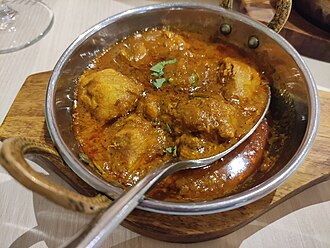
Photo: Wikipedia
Vegetables in curry are a vibrant medley of tender, sauce-infused chunks, often featuring potatoes, carrots, peas, and cauliflower that absorb the rich, aromatic spices. The texture ranges from soft and melting to pleasantly firm, while the flavor profile is a complex balance of earthy, sweet, and savory notes from the curry base. Nutritionally, they offer a low-calorie, high-fiber boost with minimal fat, making them a wholesome addition to the dish.
Calorie split: 13% protein · 84% carbs · 3% fat
↓ Full nutrition💚 Why it's loved
People love vegetables in curry for their ability to soak up complex spices like turmeric, cumin, and coriander, creating a deeply flavorful and aromatic experience. Their versatility allows them to be adapted to various cuisines and dietary preferences, making them a beloved staple in comfort food worldwide.
⚠️ Watch-outs & how to enjoy it better
Some may find the high fiber content in certain vegetables like potatoes or cauliflower can cause bloating or digestive discomfort if consumed in large portions. To counteract this, pair with protein-rich foods like lentils or chicken to slow digestion, and ensure vegetables are cooked thoroughly to soften fibers and reduce potential irritants.
Key benefits
- High in dietary fiber for digestive health
- Low in calories and fat, supporting weight management
- Rich in vitamins and antioxidants from diverse vegetables
- Provides complex carbohydrates for sustained energy
- Enhances meal volume without adding excessive calories
🍽️ Popular dishes
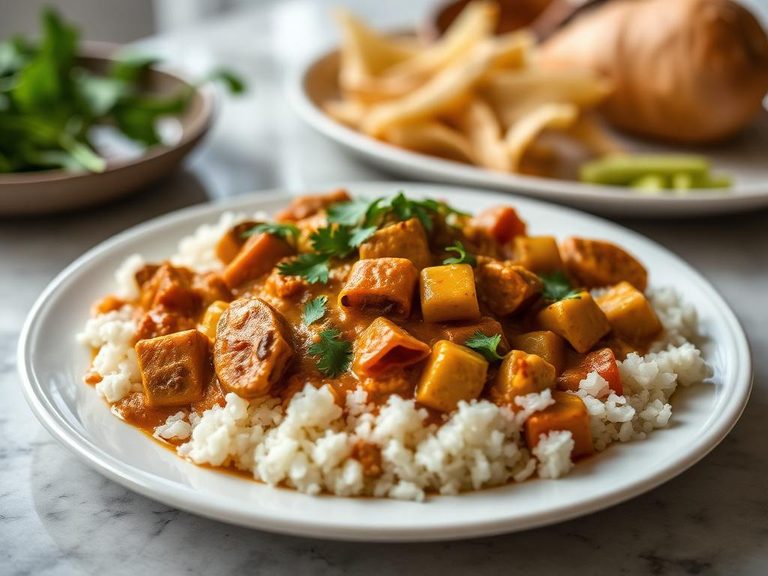
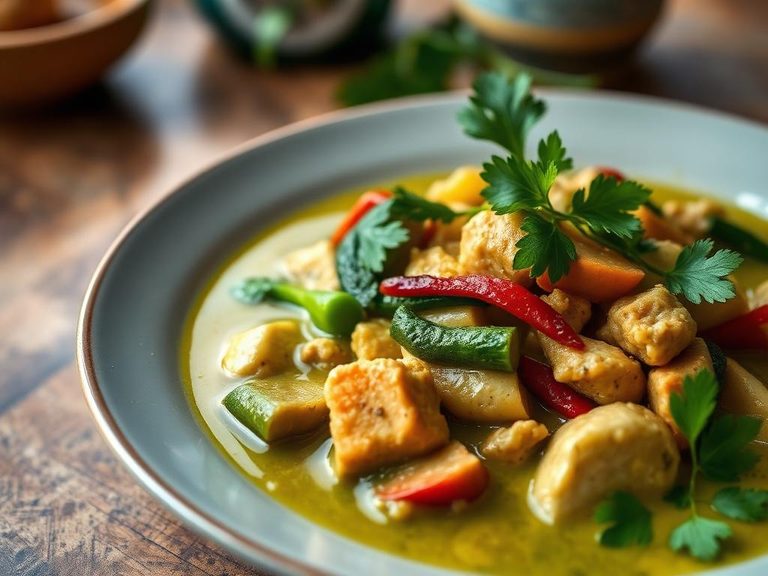
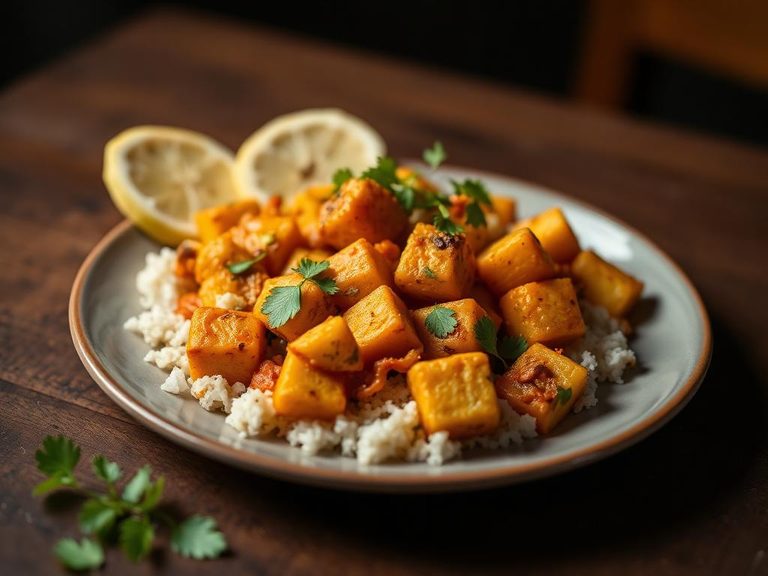
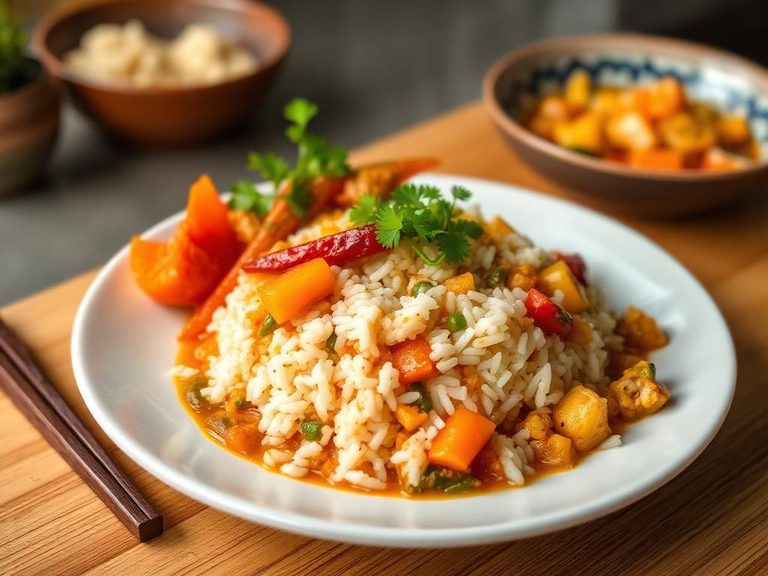
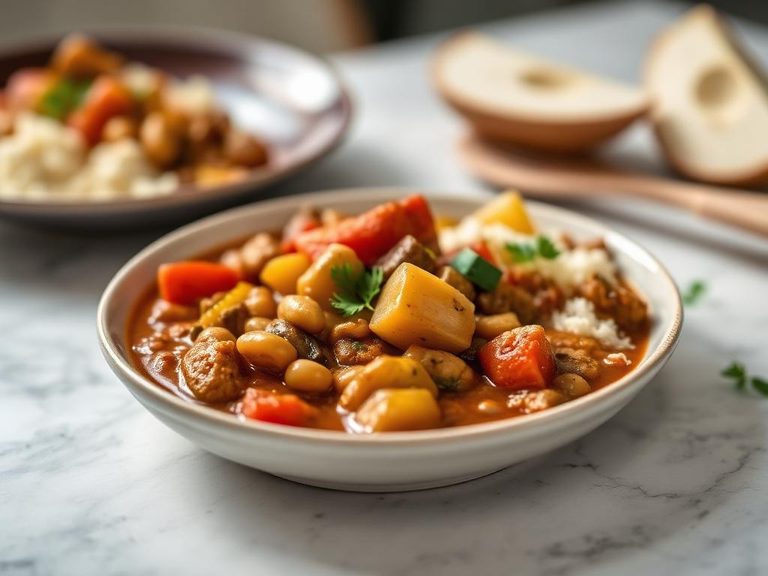
🌍 Where it's eaten
💡 Did you know?
Curry powder, a key ingredient in many vegetable curries, was actually popularized by the British in the 18th century as a convenient blend of Indian spices, rather than being a traditional Indian invention.
Full nutrition (USDA data · scales with serving)
| Water | 85.5 g |
| Energy | 53.0 kcal |
| Protein | 1.8 g |
| Total lipid (fat) | 0.20 g |
| Carbohydrate, by difference | 11.7 g |
| Fiber, total dietary | 2.2 g |
| Total Sugars | 3.2 g |
| Calcium, Ca | 21.0 mg |
| Iron, Fe | 0.56 mg |
| Magnesium, Mg | 18.0 mg |
| Phosphorus, P | 46.0 mg |
| Potassium, K | 311 mg |
| Sodium, Na | 20.0 mg |
| Zinc, Zn | 0.28 mg |
| Copper, Cu | 0.08 mg |
| Selenium, Se | 0.40 ug |
| Vitamin C, total ascorbic acid | 17.1 mg |
| Thiamin | 0.06 mg |
| Riboflavin | 0.05 mg |
| Niacin | 0.82 mg |
| Vitamin B-6 | 0.18 mg |
| Folate, total | 27.0 ug |
| Folic acid | 0.00 ug |
| Folate, food | 27.0 ug |
| Folate, DFE | 27.0 ug |
| Choline, total | 14.6 mg |
| Vitamin B-12 | 0.00 ug |
| Vitamin B-12, added | 0.00 ug |
| Vitamin A, RAE | 98.0 ug |
| Retinol | 0.00 ug |
| Carotene, beta | 994 ug |
| Carotene, alpha | 368 ug |
| Cryptoxanthin, beta | 0.00 ug |
| Lycopene | 458 ug |
| Lutein + zeaxanthin | 225 ug |
| Vitamin E (alpha-tocopherol) | 0.24 mg |
| Vitamin E, added | 0.00 mg |
| Vitamin D (D2 + D3) | 0.00 ug |
| Vitamin K (phylloquinone) | 9.0 ug |
| Alcohol, ethyl | 0.00 g |
| Caffeine | 0.00 mg |
| Theobromine | 0.00 mg |
Fat & fatty acid profile (per 100g)
| Fatty acids, total saturated | 0.05 g |
| SFA 4:0 | 0.00 g |
| SFA 6:0 | 0.00 g |
| SFA 8:0 | 0.00 g |
| SFA 10:0 | 0.00 g |
| SFA 12:0 | 0.00 g |
| SFA 14:0 | 0.00 g |
| SFA 16:0 | 0.04 g |
| SFA 18:0 | 0.01 g |
| Fatty acids, total monounsaturated | 0.02 g |
| MUFA 16:1 | 0.00 g |
| MUFA 18:1 | 0.02 g |
| MUFA 20:1 | 0.00 g |
| MUFA 22:1 | 0.00 g |
| Fatty acids, total polyunsaturated | 0.06 g |
| PUFA 18:2 | 0.05 g |
| PUFA 18:3 | 0.01 g |
| PUFA 18:4 | 0.00 g |
| PUFA 20:4 | 0.00 g |
| PUFA 20:5 n-3 (EPA) | 0.00 g |
| PUFA 22:5 n-3 (DPA) | 0.00 g |
| PUFA 22:6 n-3 (DHA) | 0.00 g |
| Cholesterol | 0.00 mg |
FAQ
Are vegetables in curry healthy?
Yes, they are low in calories and fat, high in fiber, and provide essential vitamins and antioxidants, making them a nutritious component of a balanced diet.
How do vegetables in curry affect blood sugar?
Vegetables like potatoes and carrots have moderate glycemic indices, but the fiber and protein in the curry can help moderate blood sugar spikes. Pairing with protein or healthy fats can further stabilize blood sugar levels.
Can I make curry vegetables without oil?
Yes, you can use water or broth for sautéing and rely on the natural moisture of vegetables and spices to create a flavorful dish without added oil.
Nutrient density (calculated · NRF9.3)
Nutrient Rich Foods index: beneficial nutrients (protein, fiber, vitamins, minerals) minus saturated fat, added sugar & sodium, per 100 kcal.
NRF9.3 index — Fulgoni, Keast & Drewnowski, 2009. Computed from USDA nutrients.
Weight-loss friendliness (composite index)
Energy density 0.53 kcal/g · 14% calories from protein · 2.2 g fiber · 3.2 g sugar per 100 g.
Composite of energy density (Rolls et al., 1999), protein & fiber satiety, minus sugar. A calculated heuristic — ranks satiety-per-calorie, not a clinical measure.
Dietary load (calculated from USDA values)
Potential renal acid load. Positive = acid-forming, negative = alkaline-forming.
Sodium-to-potassium ratio: 0.06 (lower is better — aim for ≤ 1)
Sodium:potassium per WHO potassium guidance. Computed from USDA nutrients.