

Fish curry
Common food
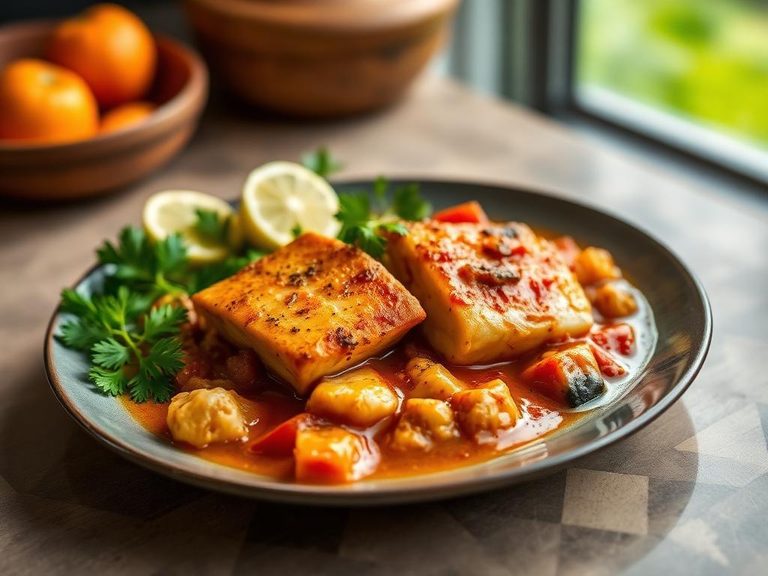
Fish curry is a vibrant, aromatic dish where tender pieces of fish simmer in a rich, spiced gravy, often built on a base of coconut milk, tomatoes, or tamarind. The texture is typically soft and flaky, with the sauce offering a complex balance of savory, spicy, and sometimes tangy notes. Nutritionally, it's a lean protein source, with the provided data showing a relatively low-calorie profile per 100g, making it a satisfying yet light meal option.
Calorie split: 21% protein · 28% carbs · 51% fat
↓ Full nutrition💚 Why it's loved
People love fish curry for its profound depth of flavor, where the delicate sweetness of the fish beautifully absorbs the complex, warm spices of the gravy. It's a beloved comfort food across many cultures, offering a versatile canvas that can be fiery, creamy, or tangy depending on regional tradition.
⚠️ Watch-outs & how to enjoy it better
Some may find certain fish curries high in sodium from added salts or pastes, or experience digestive discomfort from very spicy versions. Those watching blood sugar should be mindful of sweetened coconut milk or added sugars. To counteract, opt for homemade versions with controlled salt, pair with fiber-rich sides like brown rice, and choose milder spice levels if sensitive.
Key benefits
- Excellent source of high-quality, lean protein for muscle maintenance.
- Often contains anti-inflammatory spices like turmeric and ginger.
- Coconut milk base can provide medium-chain triglycerides (MCTs) for energy.
- Typically lower in saturated fat than red meat curries.
- Can be a good source of omega-3 fatty acids if using fatty fish like mackerel.
🍽️ Popular dishes
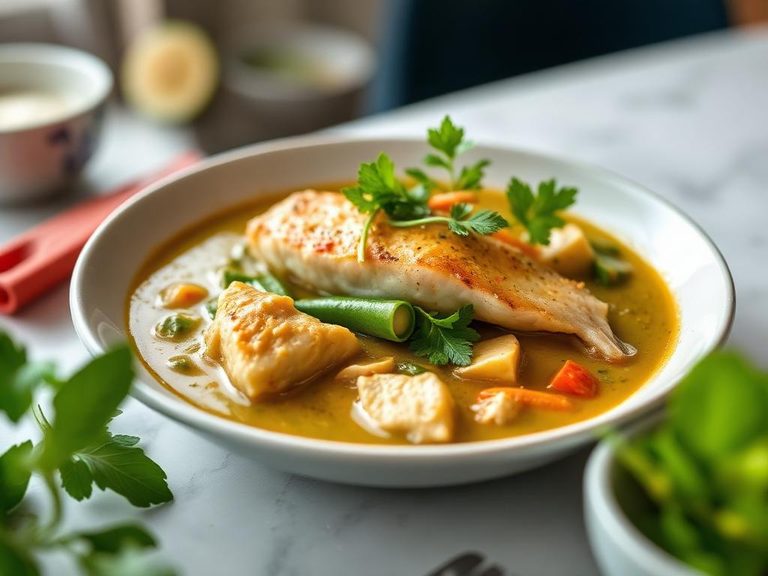
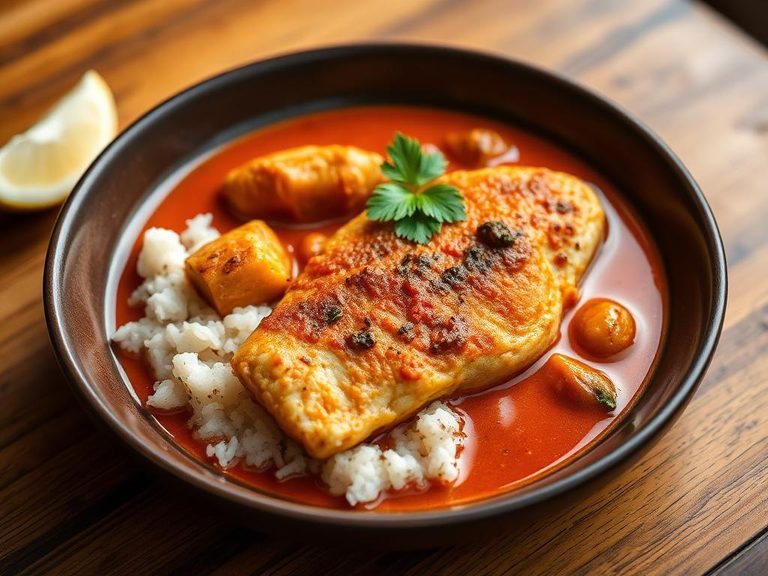
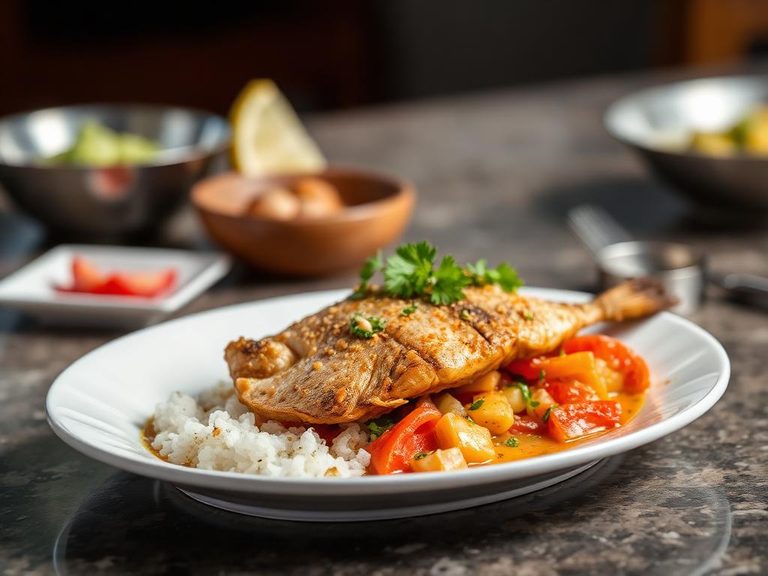
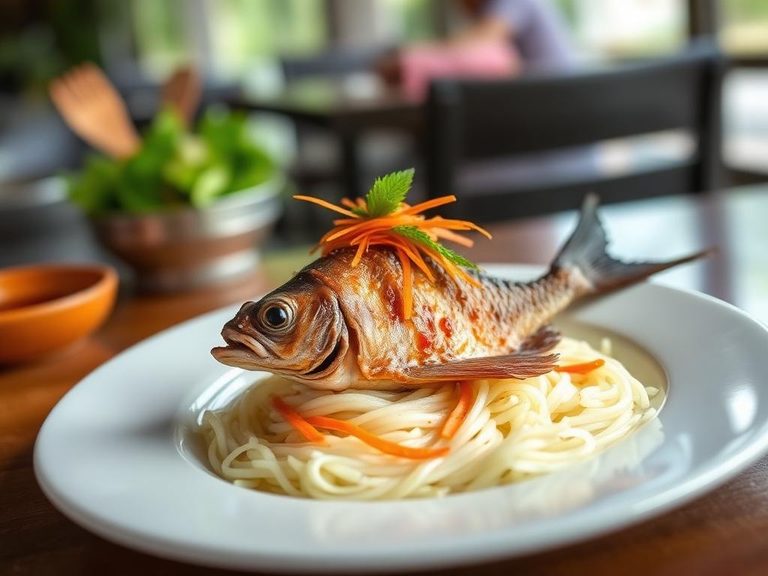
🌍 Where it's eaten
💡 Did you know?
In coastal regions of Kerala, India, a traditional fish curry is often cooked and stored in an earthenware pot (a 'manchatti'), and the flavor is said to improve and mature over the next day as the clay pot continues to infuse the dish.
Full nutrition (USDA data · scales with serving)
| Water | 81.5 g |
| Energy | 93.0 kcal |
| Protein | 4.9 g |
| Total lipid (fat) | 5.4 g |
| Carbohydrate, by difference | 6.7 g |
| Fiber, total dietary | 1.4 g |
| Total Sugars | 2.6 g |
| Calcium, Ca | 25.0 mg |
| Iron, Fe | 0.62 mg |
| Magnesium, Mg | 18.0 mg |
| Phosphorus, P | 90.0 mg |
| Potassium, K | 275 mg |
| Sodium, Na | 351 mg |
| Zinc, Zn | 0.37 mg |
| Copper, Cu | 0.10 mg |
| Selenium, Se | 7.4 ug |
| Vitamin C, total ascorbic acid | 8.9 mg |
| Thiamin | 0.04 mg |
| Riboflavin | 0.06 mg |
| Niacin | 1.3 mg |
| Vitamin B-6 | 0.15 mg |
| Folate, total | 17.0 ug |
| Folic acid | 0.00 ug |
| Folate, food | 17.0 ug |
| Folate, DFE | 17.0 ug |
| Choline, total | 27.5 mg |
| Vitamin B-12 | 0.33 ug |
| Vitamin B-12, added | 0.00 ug |
| Vitamin A, RAE | 55.0 ug |
| Retinol | 9.0 ug |
| Carotene, beta | 469 ug |
| Carotene, alpha | 144 ug |
| Cryptoxanthin, beta | 1.0 ug |
| Lycopene | 4521 ug |
| Lutein + zeaxanthin | 95.0 ug |
| Vitamin E (alpha-tocopherol) | 1.6 mg |
| Vitamin E, added | 0.00 mg |
| Vitamin D (D2 + D3) | 0.10 ug |
| Vitamin K (phylloquinone) | 8.8 ug |
| Alcohol, ethyl | 0.00 g |
| Caffeine | 0.00 mg |
| Theobromine | 0.00 mg |
Fat & fatty acid profile (per 100g)
| Fatty acids, total saturated | 1.3 g |
| SFA 4:0 | 0.00 g |
| SFA 6:0 | 0.01 g |
| SFA 8:0 | 0.05 g |
| SFA 10:0 | 0.04 g |
| SFA 12:0 | 0.29 g |
| SFA 14:0 | 0.13 g |
| SFA 16:0 | 0.55 g |
| SFA 18:0 | 0.19 g |
| Fatty acids, total monounsaturated | 1.9 g |
| MUFA 16:1 | 0.02 g |
| MUFA 18:1 | 1.9 g |
| MUFA 20:1 | 0.03 g |
| MUFA 22:1 | 0.00 g |
| Fatty acids, total polyunsaturated | 1.8 g |
| PUFA 18:2 | 1.5 g |
| PUFA 18:3 | 0.20 g |
| PUFA 18:4 | 0.00 g |
| PUFA 20:4 | 0.01 g |
| PUFA 20:5 n-3 (EPA) | 0.01 g |
| PUFA 22:5 n-3 (DPA) | 0.00 g |
| PUFA 22:6 n-3 (DHA) | 0.02 g |
| Cholesterol | 23.0 mg |
FAQ
What type of fish is best for curry?
Firm-fleshed white fish like cod, halibut, or sea bass hold their shape well. For richer flavor, use oilier fish like mackerel or salmon. Delicate fish like sole can break apart easily.
Can I make fish curry ahead of time?
Yes, but it's best consumed within 1-2 days. The fish can become overcooked and mushy if reheated too aggressively. Gently reheat on the stovetop just until warmed through.
How can I reduce the 'fishy' smell when cooking?
Marinating the fish briefly in lemon juice, vinegar, or a bit of yogurt before cooking can help neutralize strong odors. Using fresh, high-quality fish and ensuring good ventilation while cooking are also key.
Nutrient density (calculated · NRF9.3)
Nutrient Rich Foods index: beneficial nutrients (protein, fiber, vitamins, minerals) minus saturated fat, added sugar & sodium, per 100 kcal.
NRF9.3 index — Fulgoni, Keast & Drewnowski, 2009. Computed from USDA nutrients.
Weight-loss friendliness (composite index)
Energy density 0.93 kcal/g · 21% calories from protein · 1.4 g fiber · 2.6 g sugar per 100 g.
Composite of energy density (Rolls et al., 1999), protein & fiber satiety, minus sugar. A calculated heuristic — ranks satiety-per-calorie, not a clinical measure.
Dietary load (calculated from USDA values)
Potential renal acid load. Positive = acid-forming, negative = alkaline-forming.
Sodium-to-potassium ratio: 1.28 (lower is better — aim for ≤ 1)
Sodium:potassium per WHO potassium guidance. Computed from USDA nutrients.