

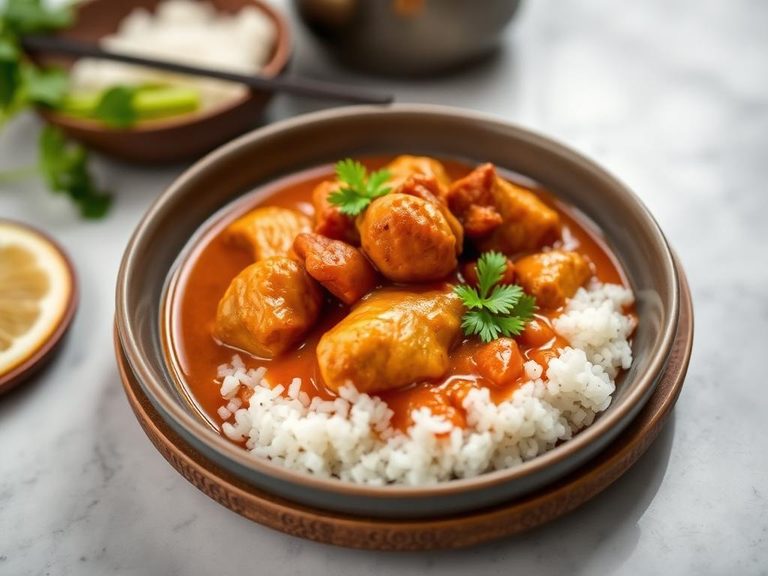
Japanese Curry Rice with Vegetables
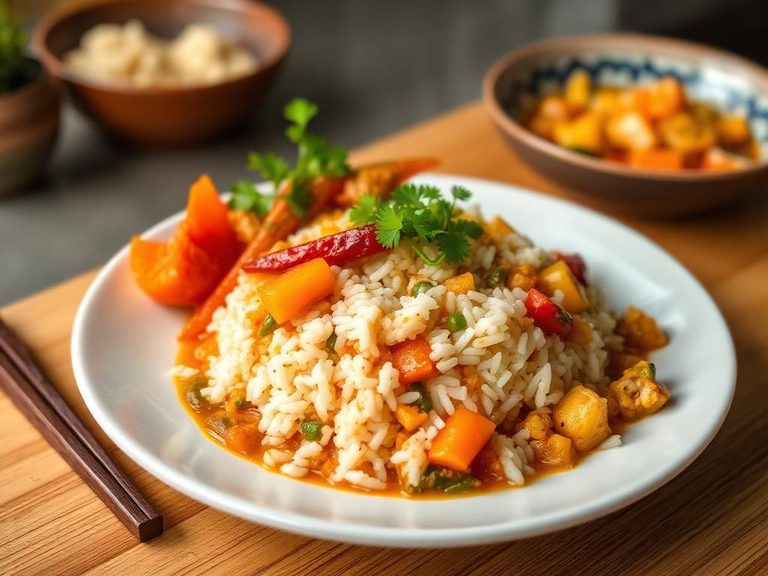
Japanese Curry Rice with Vegetables is a comforting and popular home-style dish featuring a thick, savory-sweet curry sauce simmered with a variety of vegetables like potatoes, carrots, and onions, served over steamed rice. It's a staple of Japanese 'yoshoku' (Western-influenced cuisine) and is often enjoyed as a hearty, all-in-one meal. The curry sauce is typically milder and sweeter than many Indian or Thai curries, often using a roux-based thickener.
🍳 View the full Japanese Curry Rice with Vegetables recipe →
🍽️ Nutrition at a glance
This dish is generally high in carbohydrates from the rice and starchy vegetables, with a moderate amount of fat from the curry roux and any added oil or meat. It provides a good source of energy, dietary fiber, and vitamins like vitamin A (from carrots) and potassium. A typical serving can range from 500 to 800 calories, depending on portion size and specific ingredients used.
Nutrition breakdown
| Calories | 350 kcal |
| Protein | 8 g |
| Carbs | 55 g |
| Fat | 12 g |
| Fiber | 4 g |
| Sugar | 8 g |
| Sodium | 850 mg |
| Potassium | 350 mg |
| Vitamin A | 120 mcg RAE |
| Vitamin C | 15 mg |
| Calcium | 40 mg |
| Iron | 2.5 mg |
| Vitamin B6 | 0.3 mg |
| Folate | 60 mcg DFE |
| Manganese | 1.2 mg |
Per 1 cup (240 g) · estimated, varies by recipe
💡 What's interesting
Culturally, Japanese curry was introduced via the British Navy in the late 19th century and has since evolved into a beloved national comfort food, with its own unique 'curry rice' culture including chain restaurants and instant roux blocks. Nutritionally, the inclusion of a wide variety of vegetables in the stew makes it a more balanced meal compared to many other curry styles, offering a mix of complex carbs and micronutrients.
🍽️ Related dishes
AI estimate may be inaccurate · Terms