

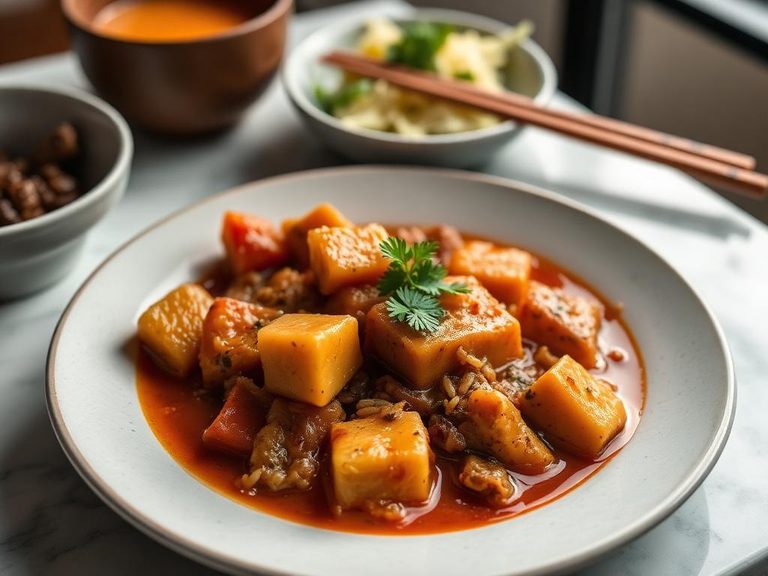
Japanese Chicken Curry
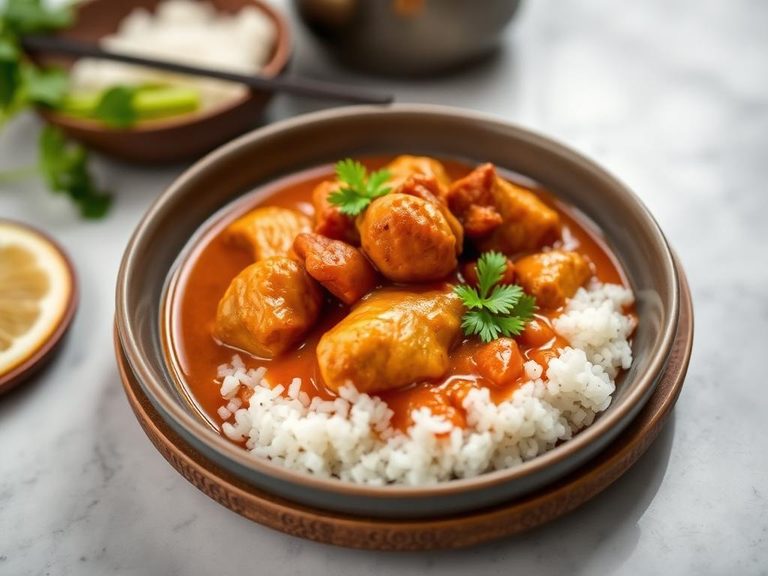
Japanese Chicken Curry is a popular comfort food featuring tender chicken pieces simmered in a thick, sweet, and savory curry sauce, typically served over steamed rice. It's a staple in Japanese home cooking and casual restaurants, with ingredients like potatoes, carrots, and onions commonly added. The dish originated in Japan in the 19th century, adapting British naval curry into a uniquely milder, sweeter version.
🍽️ Nutrition at a glance
This dish is a balanced meal with a good mix of carbohydrates from rice and vegetables, protein from the chicken, and fats from the curry roux. A typical serving provides around 500-700 calories, along with key nutrients like vitamin A from carrots, potassium from potatoes, and B vitamins from the chicken.
Nutrition breakdown
| Calories | 450 kcal |
| Protein | 25 g |
| Carbs | 55 g |
| Fat | 15 g |
| Fiber | 4 g |
| Sugar | 8 g |
| Sodium | 900 mg |
| Potassium | 450 mg |
| Vitamin C | 15 mg |
| Vitamin A | 80 mcg RAE |
| Iron | 2.5 mg |
| Calcium | 40 mg |
| Vitamin B6 | 0.4 mg |
| Niacin (B3) | 8 mg |
| Phosphorus | 200 mg |
Per 1 cup (240 g) · estimated, varies by recipe
💡 What's interesting
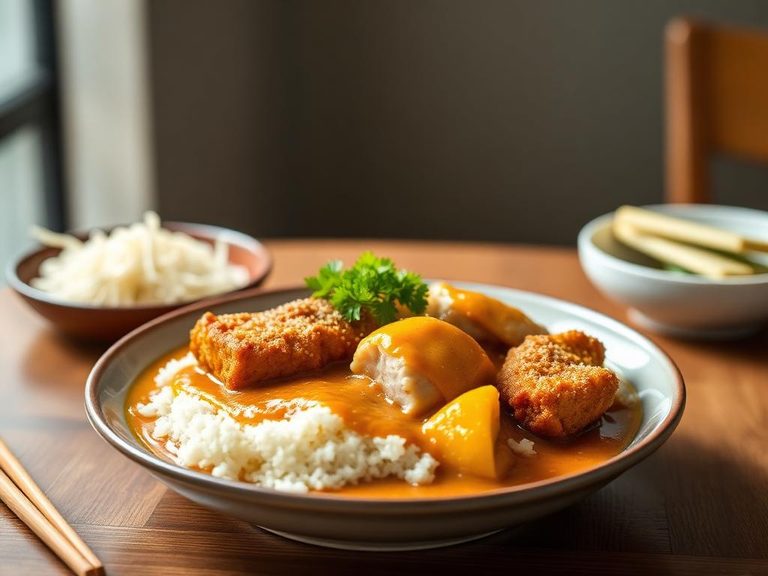
Japanese curry is distinct from Indian or Thai curries for its thick, gravy-like consistency and sweeter profile, often using a pre-made roux block. It's a cultural hybrid, reflecting Japan's history of adapting Western influences into its own culinary traditions, and is frequently enjoyed as a family meal or in 'curry rice' shops.
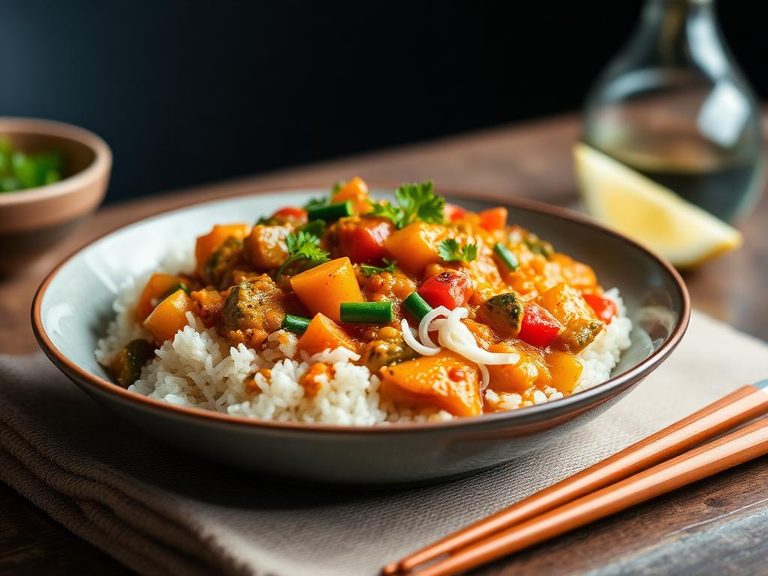
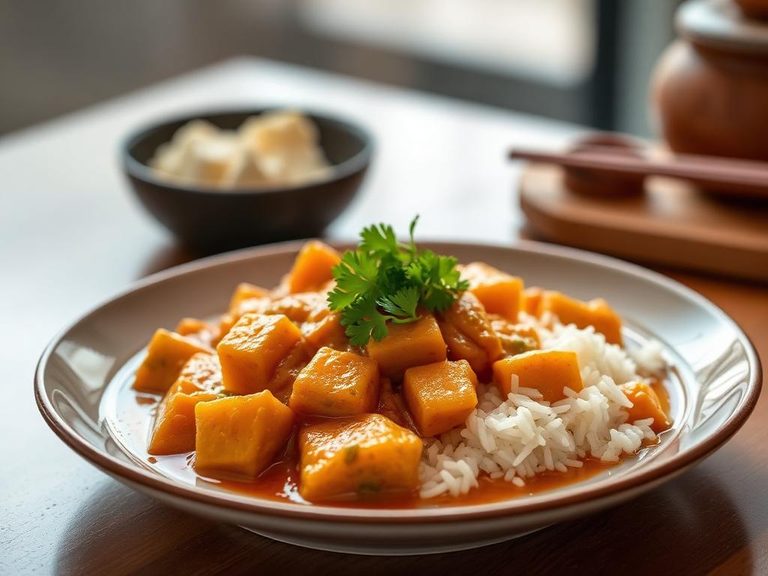
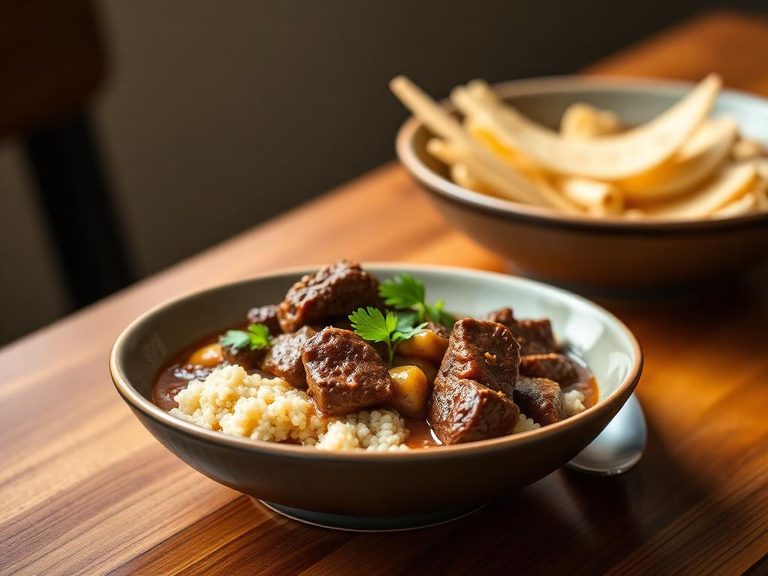
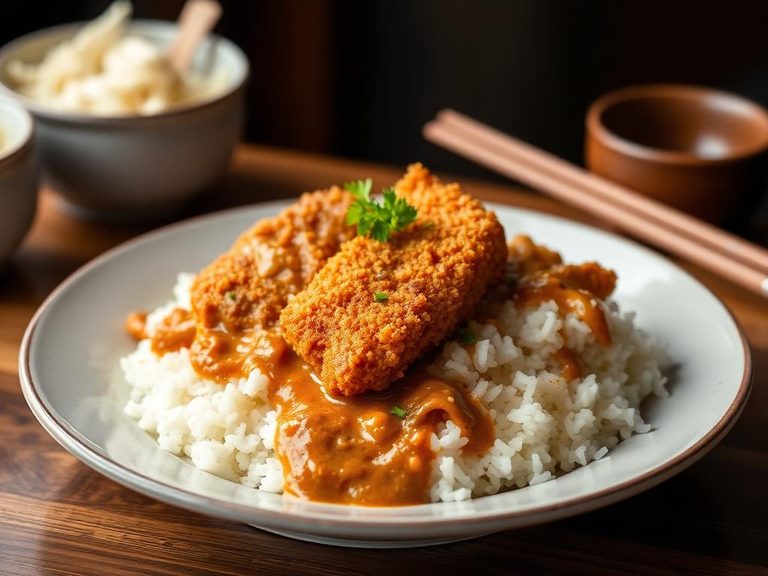
🍽️ Related dishes
AI estimate may be inaccurate · Terms