

Chicken curry
Common food
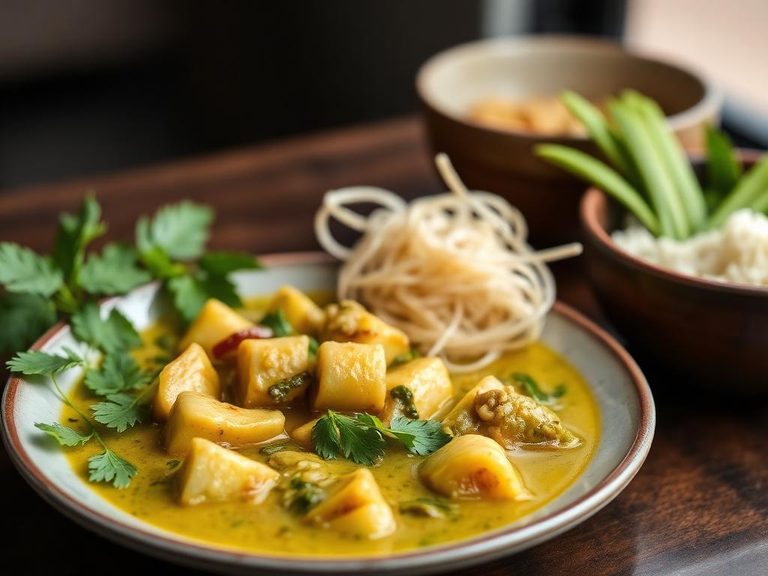
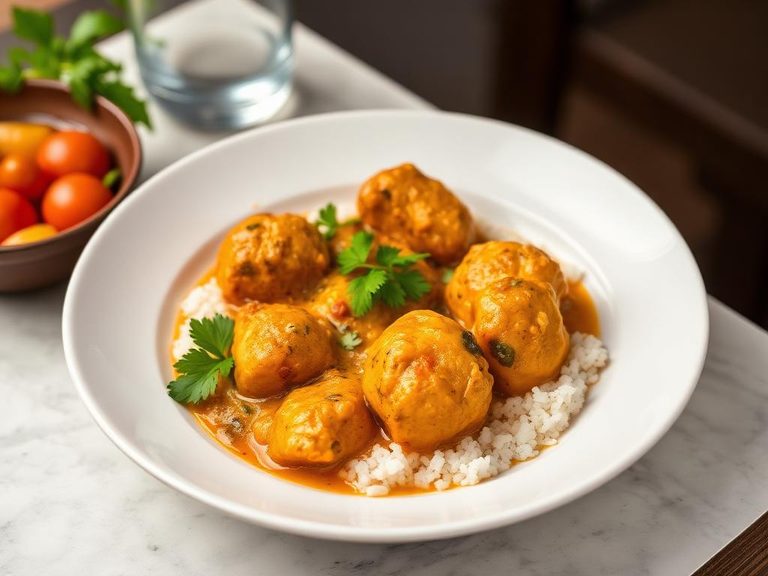
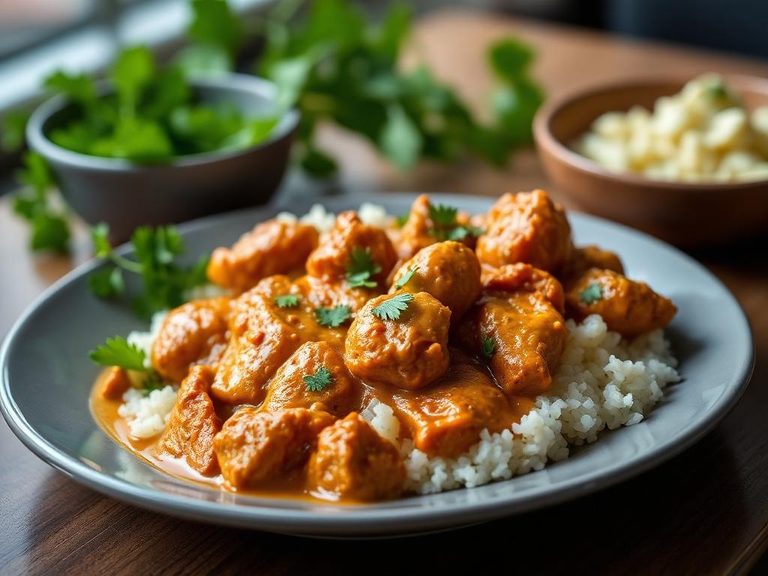
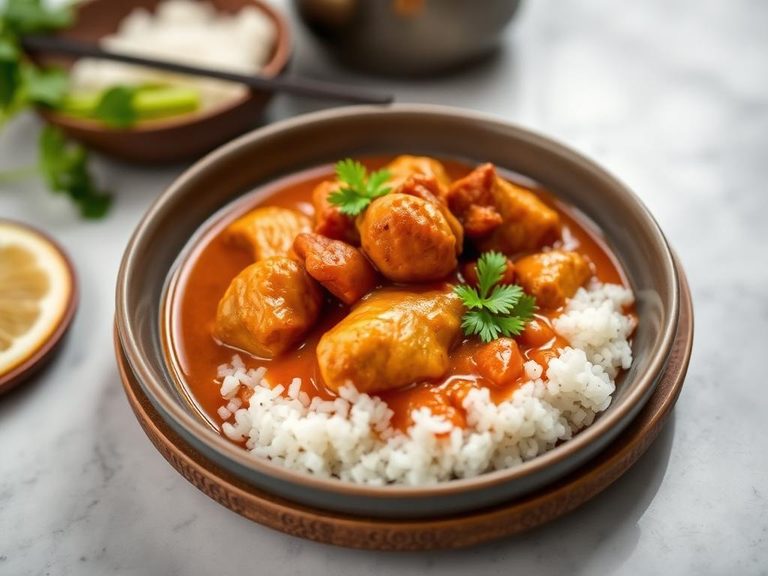
Chicken curry is a rich, aromatic dish where tender chicken pieces are simmered in a spiced, often creamy sauce. Its taste is a complex harmony of warm spices like turmeric, cumin, and coriander, balanced by the savory depth of the meat. Nutritionally, it provides a good source of protein while being relatively moderate in calories per 100g, especially in lighter preparations.
Calorie split: 23% protein · 24% carbs · 53% fat
↓ Full nutrition💚 Why it's loved
People love chicken curry for its deeply comforting and complex flavor profile, which can range from mild and creamy to fiery and robust. It is also cherished for its incredible versatility, serving as a staple in countless cultural cuisines and easily adapted to personal taste and dietary needs.
⚠️ Watch-outs & how to enjoy it better
Some versions, particularly those with heavy coconut cream or fried elements, can be high in saturated fat and calories. Additionally, many restaurant or pre-made curries contain high levels of sodium, which can be a concern for those monitoring blood pressure. To mitigate this, opt for homemade versions with controlled salt, use light coconut milk, and pair the curry with a large side of steamed vegetables or a fresh salad to increase fiber and balance the meal.
Key benefits
- Good source of lean protein for muscle maintenance
- Contains anti-inflammatory spices like turmeric and ginger
- Can be a balanced meal with protein, carbs, and fats
- Versatile base that can incorporate vegetables for added fiber
🍽️ Popular dishes

🌍 Where it's eaten
💡 Did you know?
The word 'curry' likely derives from the Tamil word 'kari,' meaning 'sauce' or 'gravy,' and was popularized by the British during their rule in India.
Full nutrition (USDA data · scales with serving)
| Water | 79.0 g |
| Energy | 107 kcal |
| Protein | 6.5 g |
| Total lipid (fat) | 6.5 g |
| Carbohydrate, by difference | 6.5 g |
| Fiber, total dietary | 1.4 g |
| Total Sugars | 2.6 g |
| Calcium, Ca | 20.0 mg |
| Iron, Fe | 0.71 mg |
| Magnesium, Mg | 18.0 mg |
| Phosphorus, P | 78.0 mg |
| Potassium, K | 280 mg |
| Sodium, Na | 376 mg |
| Zinc, Zn | 0.52 mg |
| Copper, Cu | 0.09 mg |
| Selenium, Se | 5.2 ug |
| Vitamin C, total ascorbic acid | 8.9 mg |
| Thiamin | 0.05 mg |
| Riboflavin | 0.08 mg |
| Niacin | 2.1 mg |
| Vitamin B-6 | 0.15 mg |
| Folate, total | 16.0 ug |
| Folic acid | 0.00 ug |
| Folate, food | 16.0 ug |
| Folate, DFE | 16.0 ug |
| Choline, total | 22.4 mg |
| Vitamin B-12 | 0.08 ug |
| Vitamin B-12, added | 0.00 ug |
| Vitamin A, RAE | 48.0 ug |
| Retinol | 3.0 ug |
| Carotene, beta | 469 ug |
| Carotene, alpha | 144 ug |
| Cryptoxanthin, beta | 1.0 ug |
| Lycopene | 4521 ug |
| Lutein + zeaxanthin | 95.0 ug |
| Vitamin E (alpha-tocopherol) | 1.4 mg |
| Vitamin E, added | 0.00 mg |
| Vitamin D (D2 + D3) | 0.00 ug |
| Vitamin K (phylloquinone) | 8.7 ug |
| Alcohol, ethyl | 0.00 g |
| Caffeine | 0.00 mg |
| Theobromine | 0.00 mg |
Fat & fatty acid profile (per 100g)
| Fatty acids, total saturated | 1.6 g |
| SFA 4:0 | 0.00 g |
| SFA 6:0 | 0.01 g |
| SFA 8:0 | 0.05 g |
| SFA 10:0 | 0.04 g |
| SFA 12:0 | 0.29 g |
| SFA 14:0 | 0.13 g |
| SFA 16:0 | 0.77 g |
| SFA 18:0 | 0.23 g |
| Fatty acids, total monounsaturated | 2.4 g |
| MUFA 16:1 | 0.11 g |
| MUFA 18:1 | 2.3 g |
| MUFA 20:1 | 0.03 g |
| MUFA 22:1 | 0.00 g |
| Fatty acids, total polyunsaturated | 1.9 g |
| PUFA 18:2 | 1.7 g |
| PUFA 18:3 | 0.20 g |
| PUFA 18:4 | 0.00 g |
| PUFA 20:4 | 0.00 g |
| PUFA 20:5 n-3 (EPA) | 0.00 g |
| PUFA 22:5 n-3 (DPA) | 0.00 g |
| PUFA 22:6 n-3 (DHA) | 0.00 g |
| Cholesterol | 22.0 mg |
FAQ
Is chicken curry healthy?
It can be, especially when made with lean chicken breast, a moderate amount of healthy fats (like coconut milk or yogurt), and plenty of vegetables. The spices also offer anti-inflammatory benefits. The key is to control added fats and sodium.
How can I make chicken curry lower in calories?
Use chicken breast instead of thigh, opt for light coconut milk or Greek yogurt instead of cream, and bulk up the sauce with extra vegetables like spinach, bell peppers, or zucchini to reduce the portion of the richer sauce.
Does chicken curry contain common allergens?
Yes, common allergens can include dairy (if cream or yogurt is used), nuts (like cashews or almonds in the sauce), and sometimes soy or gluten if using pre-made curry pastes or sauces. Always check ingredients if you have allergies.
Nutrient density (calculated · NRF9.3)
Nutrient Rich Foods index: beneficial nutrients (protein, fiber, vitamins, minerals) minus saturated fat, added sugar & sodium, per 100 kcal.
NRF9.3 index — Fulgoni, Keast & Drewnowski, 2009. Computed from USDA nutrients.
Weight-loss friendliness (composite index)
Energy density 1.07 kcal/g · 24% calories from protein · 1.4 g fiber · 2.6 g sugar per 100 g.
Composite of energy density (Rolls et al., 1999), protein & fiber satiety, minus sugar. A calculated heuristic — ranks satiety-per-calorie, not a clinical measure.
Dietary load (calculated from USDA values)
Potential renal acid load. Positive = acid-forming, negative = alkaline-forming.
Sodium-to-potassium ratio: 1.34 (lower is better — aim for ≤ 1)
Sodium:potassium per WHO potassium guidance. Computed from USDA nutrients.