

Chicken curry with rice
Common food
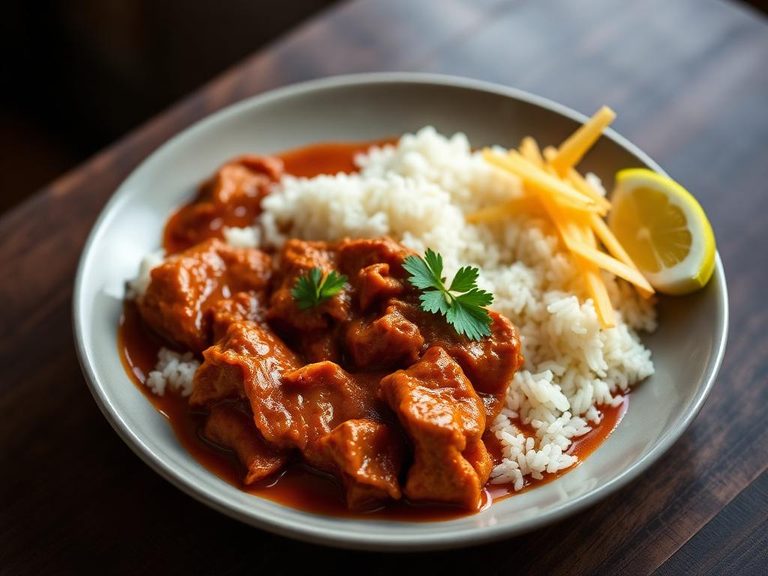
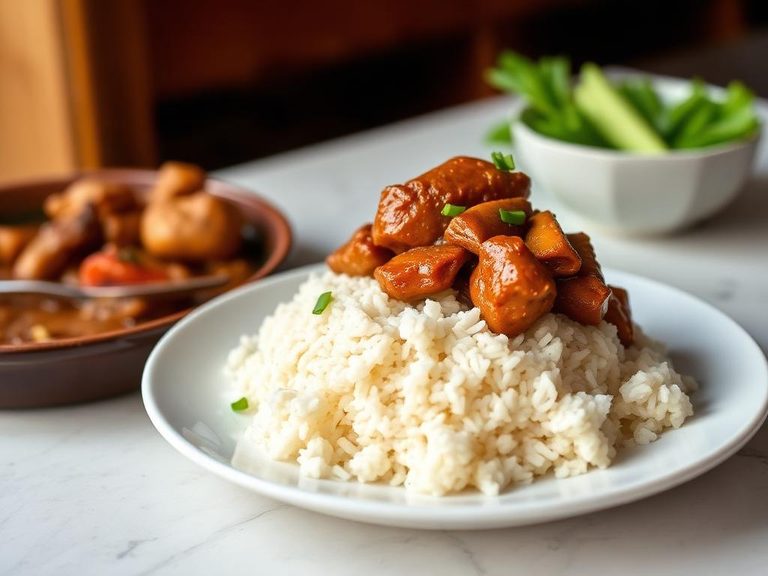
A fragrant, simmered dish where tender chicken pieces are bathed in a rich, spiced coconut or yogurt-based sauce, served alongside fluffy white rice. The sauce is typically a warm blend of turmeric, cumin, and coriander, offering a creamy texture with a gentle heat. Nutritionally, it provides a solid protein base from the chicken, balanced by the carbohydrate energy of the rice.
Calorie split: 17% protein · 52% carbs · 31% fat
↓ Full nutrition💚 Why it's loved
People adore it for the deep, layered comfort of its spiced gravy, which perfectly soaks into the rice. It's a universally adaptable dish that feels both exotic and homely, making it a staple in family kitchens and restaurants worldwide.
⚠️ Watch-outs & how to enjoy it better
The calorie and fat content can be high, especially with generous coconut cream or oil, which may concern those managing weight or heart health. The white rice can cause a quicker blood sugar rise for some. To counteract this, use brown rice for more fiber, load the plate with extra vegetables like spinach or broccoli, and practice portion control with the sauce.
Key benefits
- High-quality protein from chicken supports muscle maintenance.
- Turmeric and other spices contain anti-inflammatory compounds.
- Coconut milk or yogurt in the sauce provides healthy fats and calcium.
- A complete, balanced meal in one bowl for sustained energy.
- The rice component is easily digestible and gluten-free.
🍽️ Popular dishes
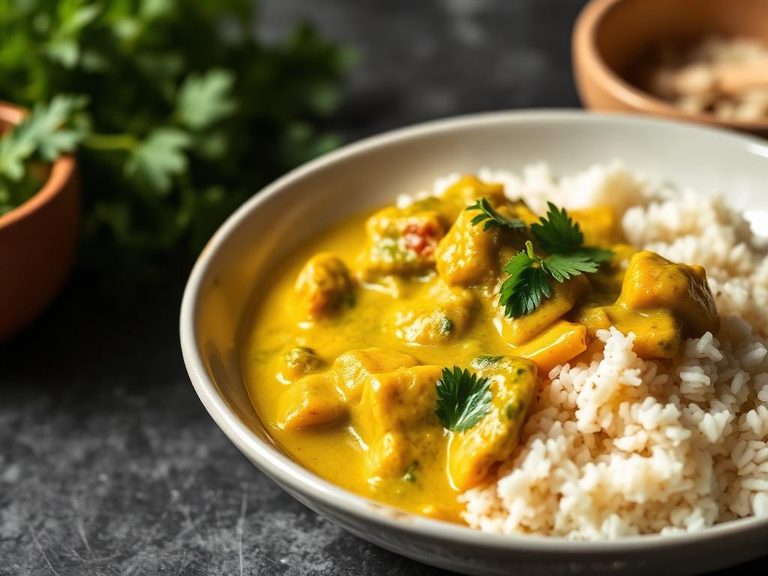
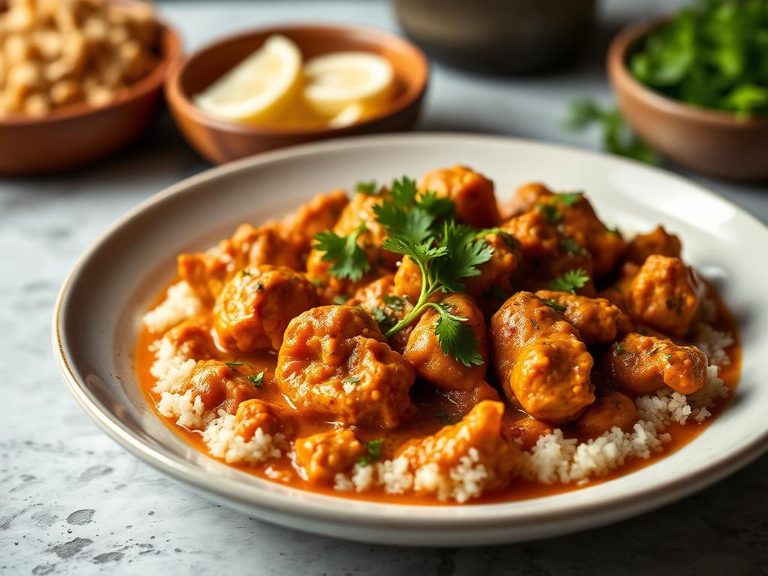
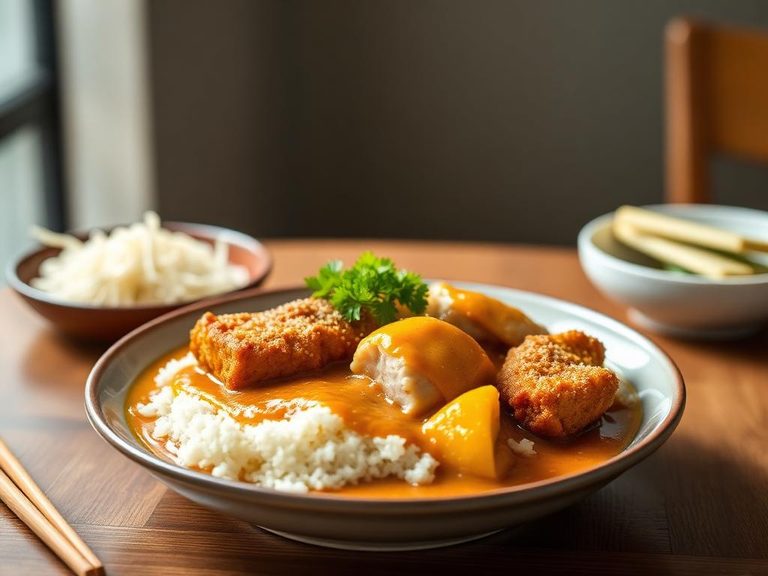
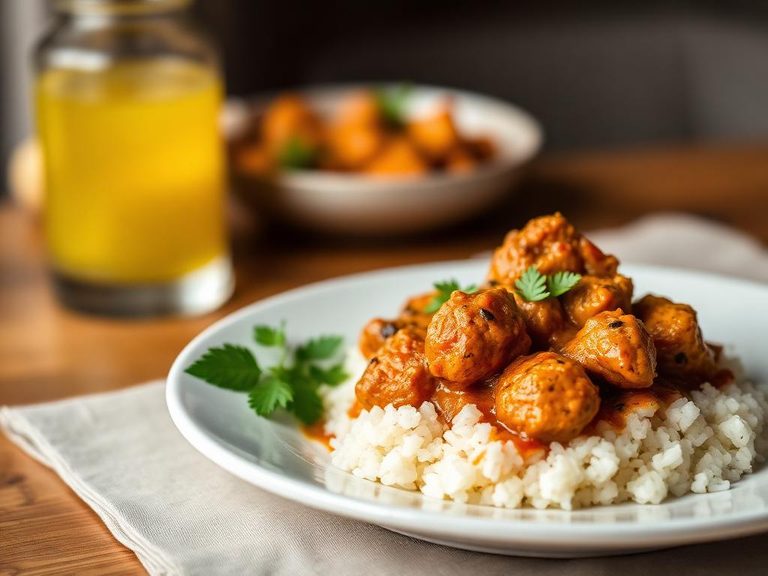
🌍 Where it's eaten
💡 Did you know?
The word 'curry' likely derives from the Tamil word 'kari,' meaning sauce or gravy, but the British popularized it as a blanket term for various Indian spiced dishes during the colonial era.
Full nutrition (USDA data · scales with serving)
| Water | 74.6 g |
| Energy | 116 kcal |
| Protein | 5.0 g |
| Total lipid (fat) | 4.0 g |
| Carbohydrate, by difference | 15.1 g |
| Fiber, total dietary | 1.0 g |
| Total Sugars | 1.6 g |
| Calcium, Ca | 16.0 mg |
| Iron, Fe | 0.90 mg |
| Magnesium, Mg | 15.0 mg |
| Phosphorus, P | 64.0 mg |
| Potassium, K | 182 mg |
| Sodium, Na | 324 mg |
| Zinc, Zn | 0.51 mg |
| Copper, Cu | 0.08 mg |
| Selenium, Se | 6.1 ug |
| Vitamin C, total ascorbic acid | 5.4 mg |
| Thiamin | 0.09 mg |
| Riboflavin | 0.06 mg |
| Niacin | 1.9 mg |
| Vitamin B-6 | 0.13 mg |
| Folate, total | 33.0 ug |
| Folic acid | 22.0 ug |
| Folate, food | 11.0 ug |
| Folate, DFE | 48.0 ug |
| Choline, total | 14.3 mg |
| Vitamin B-12 | 0.05 ug |
| Vitamin B-12, added | 0.00 ug |
| Vitamin A, RAE | 29.0 ug |
| Retinol | 2.0 ug |
| Carotene, beta | 281 ug |
| Carotene, alpha | 86.0 ug |
| Cryptoxanthin, beta | 1.0 ug |
| Lycopene | 2713 ug |
| Lutein + zeaxanthin | 57.0 ug |
| Vitamin E (alpha-tocopherol) | 0.88 mg |
| Vitamin E, added | 0.00 mg |
| Vitamin D (D2 + D3) | 0.00 ug |
| Vitamin K (phylloquinone) | 5.2 ug |
| Alcohol, ethyl | 0.00 g |
| Caffeine | 0.00 mg |
| Theobromine | 0.00 mg |
Fat & fatty acid profile (per 100g)
| Fatty acids, total saturated | 0.96 g |
| SFA 4:0 | 0.00 g |
| SFA 6:0 | 0.00 g |
| SFA 8:0 | 0.03 g |
| SFA 10:0 | 0.02 g |
| SFA 12:0 | 0.18 g |
| SFA 14:0 | 0.08 g |
| SFA 16:0 | 0.49 g |
| SFA 18:0 | 0.14 g |
| Fatty acids, total monounsaturated | 1.5 g |
| MUFA 16:1 | 0.07 g |
| MUFA 18:1 | 1.4 g |
| MUFA 20:1 | 0.02 g |
| MUFA 22:1 | 0.00 g |
| Fatty acids, total polyunsaturated | 1.2 g |
| PUFA 18:2 | 1.0 g |
| PUFA 18:3 | 0.13 g |
| PUFA 18:4 | 0.00 g |
| PUFA 20:4 | 0.00 g |
| PUFA 20:5 n-3 (EPA) | 0.00 g |
| PUFA 22:5 n-3 (DPA) | 0.00 g |
| PUFA 22:6 n-3 (DHA) | 0.00 g |
| Cholesterol | 13.0 mg |
FAQ
Is chicken curry with rice healthy?
It can be a balanced meal, offering protein, carbs, and fats. Its healthiness depends on the recipe—opting for lean chicken, less oil, and more vegetables increases its nutritional value. Using brown rice adds fiber.
How many calories are in a typical serving?
A standard 300g serving (a medium bowl with rice) typically ranges from 400 to 600 calories, varying widely based on the amount of coconut milk, oil, and meat used.
Can I make it dairy-free?
Yes, many traditional recipes are naturally dairy-free, using coconut milk or yogurt. For a dairy-free version, ensure your curry paste doesn't contain dairy and use a plant-based yogurt if needed.
Nutrient density (calculated · NRF9.3)
Nutrient Rich Foods index: beneficial nutrients (protein, fiber, vitamins, minerals) minus saturated fat, added sugar & sodium, per 100 kcal.
NRF9.3 index — Fulgoni, Keast & Drewnowski, 2009. Computed from USDA nutrients.
Weight-loss friendliness (composite index)
Energy density 1.16 kcal/g · 17% calories from protein · 1.0 g fiber · 1.6 g sugar per 100 g.
Composite of energy density (Rolls et al., 1999), protein & fiber satiety, minus sugar. A calculated heuristic — ranks satiety-per-calorie, not a clinical measure.
Dietary load (calculated from USDA values)
Potential renal acid load. Positive = acid-forming, negative = alkaline-forming.
Sodium-to-potassium ratio: 1.78 (lower is better — aim for ≤ 1)
Sodium:potassium per WHO potassium guidance. Computed from USDA nutrients.