

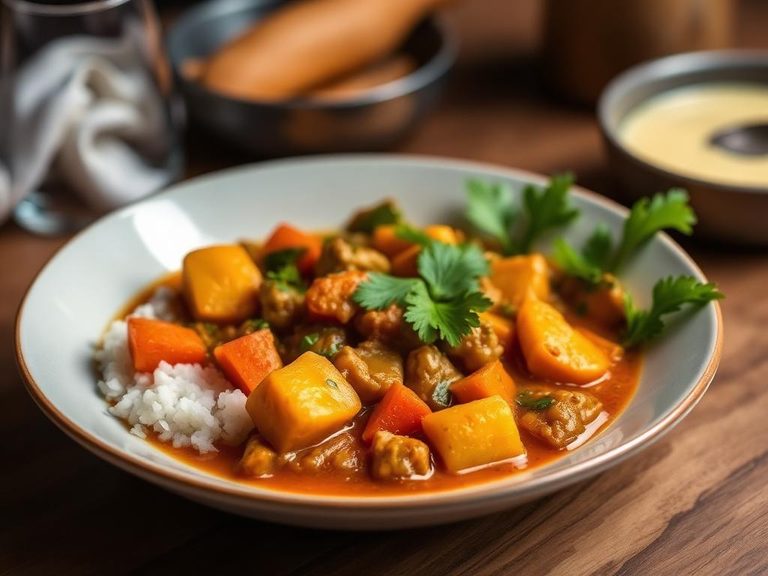
Vegetable curry with rice
Common food

Photo: Wikipedia
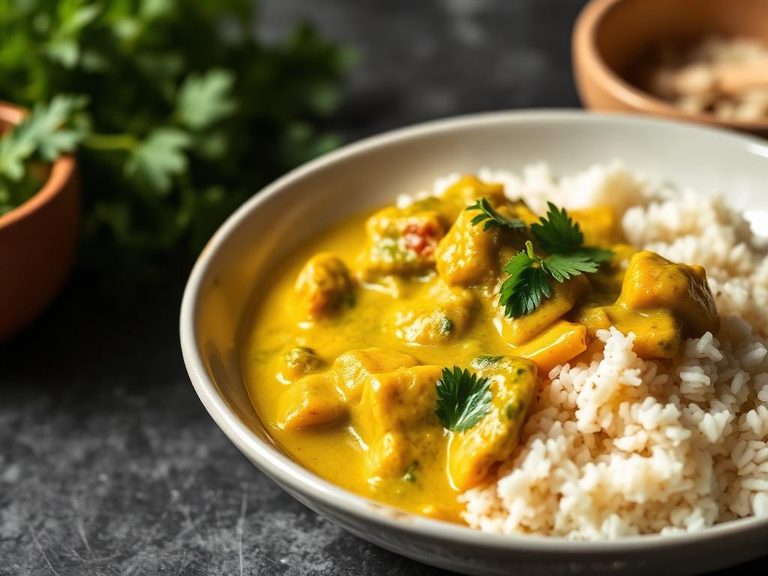
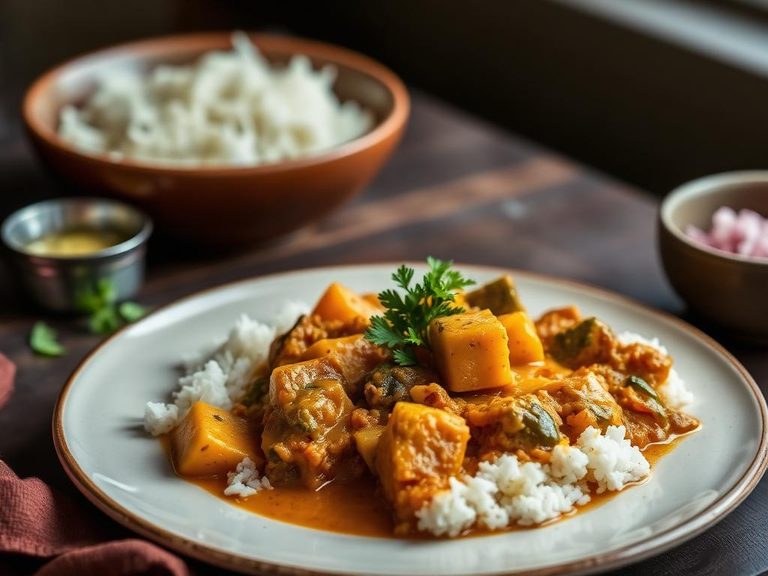
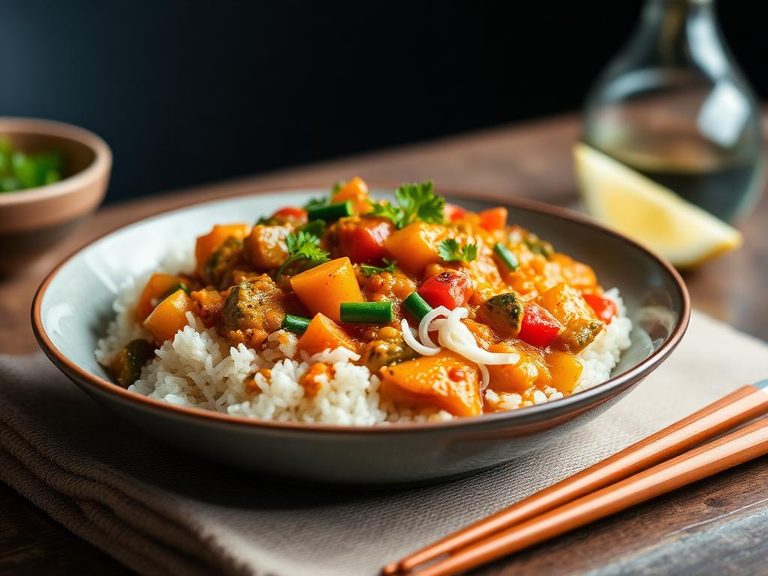
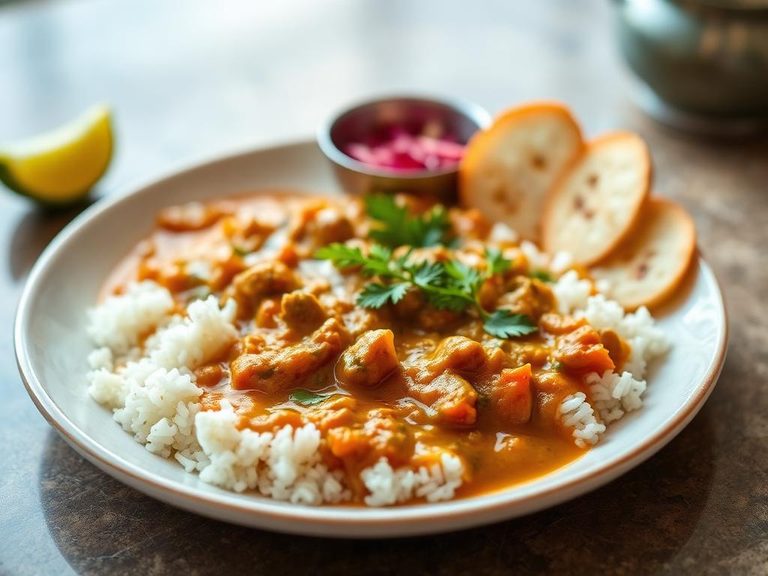
A fragrant, simmered dish where tender vegetables are enveloped in a rich, spiced coconut or tomato-based sauce, served alongside fluffy rice. The taste is a warm, aromatic blend of spices like turmeric, cumin, and coriander, with a creamy or tangy texture depending on the base. Nutritionally, it's a light yet satisfying meal, offering a good source of carbohydrates for energy with a modest amount of fat and fiber.
Calorie split: 8% protein · 64% carbs · 28% fat
↓ Full nutrition💚 Why it's loved
People love it for its deep, customizable flavors that can range from mild and creamy to fiery and bold. It's a comforting, one-pot meal that's perfect for batch cooking and represents a staple of communal eating in many cultures.
⚠️ Watch-outs & how to enjoy it better
The calorie and fat content can vary widely, especially with coconut milk-based curries, which may not suit strict low-fat diets. The sodium level in pre-made sauces or restaurant versions can be high, and some curries contain common allergens like coconut or peanuts. To counteract, opt for a tomato-based curry, use light coconut milk or yogurt, and pair with extra steamed vegetables to increase volume without excess calories.
Key benefits
- Provides a balanced mix of complex carbs and plant-based fiber.
- Often rich in antioxidants and anti-inflammatory compounds from spices.
- Can be a low-calorie, high-volume meal for satiety.
- Versatile for incorporating a wide variety of seasonal vegetables.
- Naturally gluten-free if served with rice or gluten-free flatbreads.
🍽️ Popular dishes
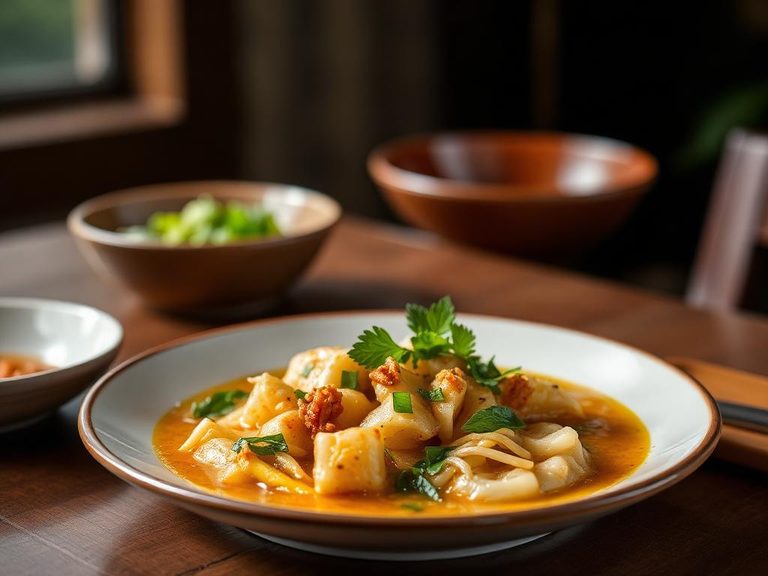
🌍 Where it's eaten
💡 Did you know?
The word 'curry' likely derives from the Tamil word 'kari,' meaning sauce or gravy, but the concept of a spiced stew with rice is a culinary tradition that spans from West Africa to East Asia.
Full nutrition (USDA data · scales with serving)
| Water | 76.8 g |
| Energy | 103 kcal |
| Protein | 2.0 g |
| Total lipid (fat) | 3.3 g |
| Carbohydrate, by difference | 16.5 g |
| Fiber, total dietary | 1.3 g |
| Total Sugars | 1.9 g |
| Calcium, Ca | 17.0 mg |
| Iron, Fe | 0.88 mg |
| Magnesium, Mg | 15.0 mg |
| Phosphorus, P | 42.0 mg |
| Potassium, K | 186 mg |
| Sodium, Na | 331 mg |
| Zinc, Zn | 0.35 mg |
| Copper, Cu | 0.08 mg |
| Selenium, Se | 3.4 ug |
| Vitamin C, total ascorbic acid | 7.4 mg |
| Thiamin | 0.09 mg |
| Riboflavin | 0.04 mg |
| Niacin | 1.1 mg |
| Vitamin B-6 | 0.12 mg |
| Folate, total | 35.0 ug |
| Folic acid | 22.0 ug |
| Folate, food | 13.0 ug |
| Folate, DFE | 50.0 ug |
| Choline, total | 8.2 mg |
| Vitamin B-12 | 0.01 ug |
| Vitamin B-12, added | 0.00 ug |
| Vitamin A, RAE | 39.0 ug |
| Retinol | 1.0 ug |
| Carotene, beta | 397 ug |
| Carotene, alpha | 129 ug |
| Cryptoxanthin, beta | 1.0 ug |
| Lycopene | 2761 ug |
| Lutein + zeaxanthin | 83.0 ug |
| Vitamin E (alpha-tocopherol) | 0.86 mg |
| Vitamin E, added | 0.00 mg |
| Vitamin D (D2 + D3) | 0.00 ug |
| Vitamin K (phylloquinone) | 6.3 ug |
| Alcohol, ethyl | 0.00 g |
| Caffeine | 0.00 mg |
| Theobromine | 0.00 mg |
Fat & fatty acid profile (per 100g)
| Fatty acids, total saturated | 0.78 g |
| SFA 4:0 | 0.00 g |
| SFA 6:0 | 0.00 g |
| SFA 8:0 | 0.03 g |
| SFA 10:0 | 0.02 g |
| SFA 12:0 | 0.17 g |
| SFA 14:0 | 0.08 g |
| SFA 16:0 | 0.34 g |
| SFA 18:0 | 0.11 g |
| Fatty acids, total monounsaturated | 1.2 g |
| MUFA 16:1 | 0.01 g |
| MUFA 18:1 | 1.1 g |
| MUFA 20:1 | 0.02 g |
| MUFA 22:1 | 0.00 g |
| Fatty acids, total polyunsaturated | 1.1 g |
| PUFA 18:2 | 0.94 g |
| PUFA 18:3 | 0.12 g |
| PUFA 18:4 | 0.00 g |
| PUFA 20:4 | 0.00 g |
| PUFA 20:5 n-3 (EPA) | 0.00 g |
| PUFA 22:5 n-3 (DPA) | 0.00 g |
| PUFA 22:6 n-3 (DHA) | 0.00 g |
| Cholesterol | 0.00 mg |
FAQ
Is vegetable curry with rice healthy?
It can be a very healthy meal, packed with vegetables, fiber, and spices. The healthiness largely depends on the sauce base (coconut milk vs. tomato) and the amount of oil and salt used. Opting for a tomato or broth-based curry with plenty of vegetables makes it a nutritious choice.
How can I make vegetable curry lower in calories?
Use a base of diced tomatoes, onions, and vegetable broth instead of full-fat coconut milk. Load it with non-starchy vegetables like spinach, bell peppers, and cauliflower to add volume and nutrients without many calories. Serve a smaller portion of rice or use cauliflower rice as a substitute.
What is the best rice to serve with vegetable curry?
Long-grain white rice like Basmati is traditional and its fluffy texture soaks up the sauce well. For a healthier option, brown rice adds more fiber and nutrients. Jasmine rice is also popular for its fragrant quality, especially with Thai curries.
Nutrient density (calculated · NRF9.3)
Nutrient Rich Foods index: beneficial nutrients (protein, fiber, vitamins, minerals) minus saturated fat, added sugar & sodium, per 100 kcal.
NRF9.3 index — Fulgoni, Keast & Drewnowski, 2009. Computed from USDA nutrients.
Weight-loss friendliness (composite index)
Energy density 1.03 kcal/g · 8% calories from protein · 1.3 g fiber · 1.9 g sugar per 100 g.
Composite of energy density (Rolls et al., 1999), protein & fiber satiety, minus sugar. A calculated heuristic — ranks satiety-per-calorie, not a clinical measure.
Dietary load (calculated from USDA values)
Potential renal acid load. Positive = acid-forming, negative = alkaline-forming.
Sodium-to-potassium ratio: 1.78 (lower is better — aim for ≤ 1)
Sodium:potassium per WHO potassium guidance. Computed from USDA nutrients.