

Vegetable and fruit juice drink, with high vitamin C, light
Common food
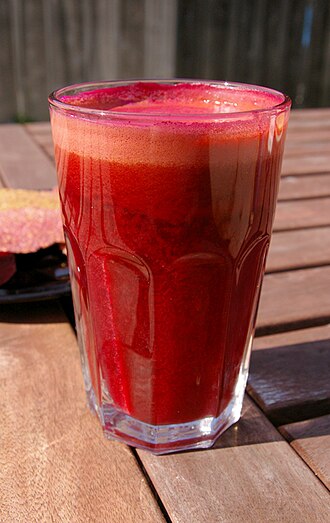
Photo: Wikipedia
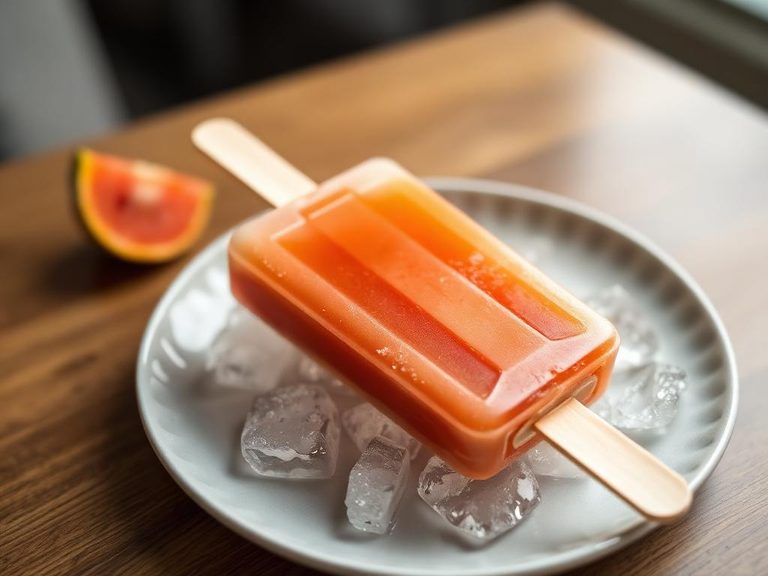
A clear, light, and refreshing beverage made from a blend of vegetable and fruit juices, specifically formulated to be a low-calorie source of Vitamin C. Its taste is typically a crisp, mildly sweet, and slightly tart profile with a watery, non-pulpy texture. Nutritionally, it's a near-zero calorie drink that delivers a significant boost of Vitamin C with minimal sugar and no fat.
Calorie split: 0% protein · 100% carbs · 0% fat
↓ Full nutrition💚 Why it's loved
People love it for its convenient, thirst-quenching refreshment and its reputation as a 'guilt-free' sweet treat that supports immune health. It's a popular, easy way to increase daily fruit and vegetable intake, especially for those who struggle to eat whole produce.
⚠️ Watch-outs & how to enjoy it better
The primary caution is for individuals monitoring blood sugar, as the natural sugars, though low, can cause a spike if consumed in large quantities on an empty stomach. It lacks the fiber of whole produce, which normally moderates sugar absorption. To counteract this, pair it with a source of protein or healthy fat (like a handful of nuts or a yogurt dip) to slow digestion and stabilize blood sugar response.
Key benefits
- Excellent source of Vitamin C (ascorbic acid)
- Extremely low in calories (4 kcal per 100g)
- Contains virtually no fat or protein
- Hydrating due to high water content
- Provides a quick, light energy boost from natural sugars
🍽️ Popular dishes
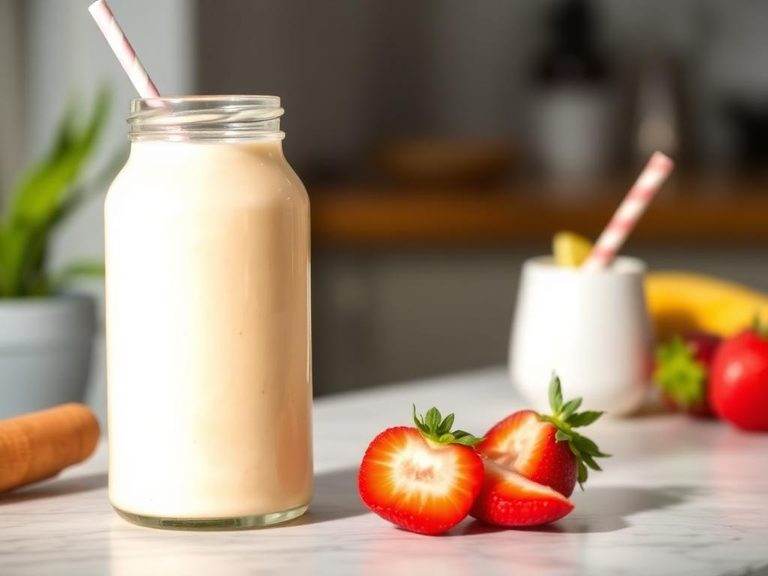
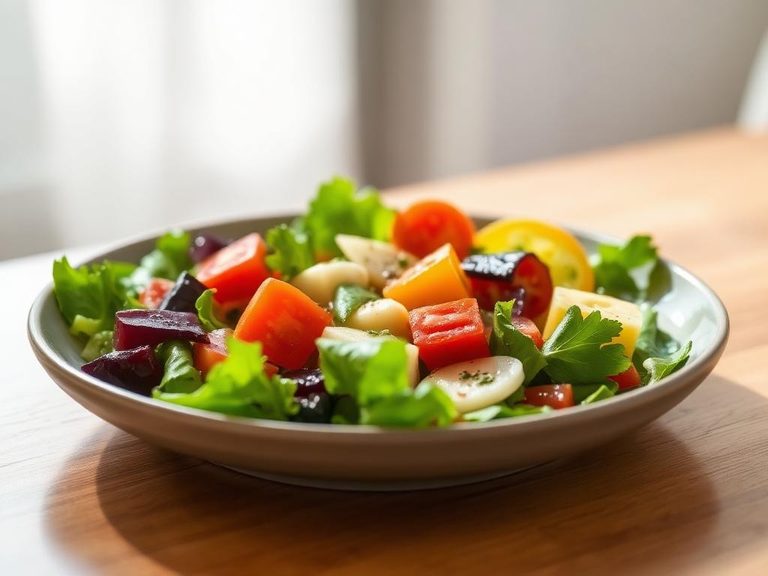
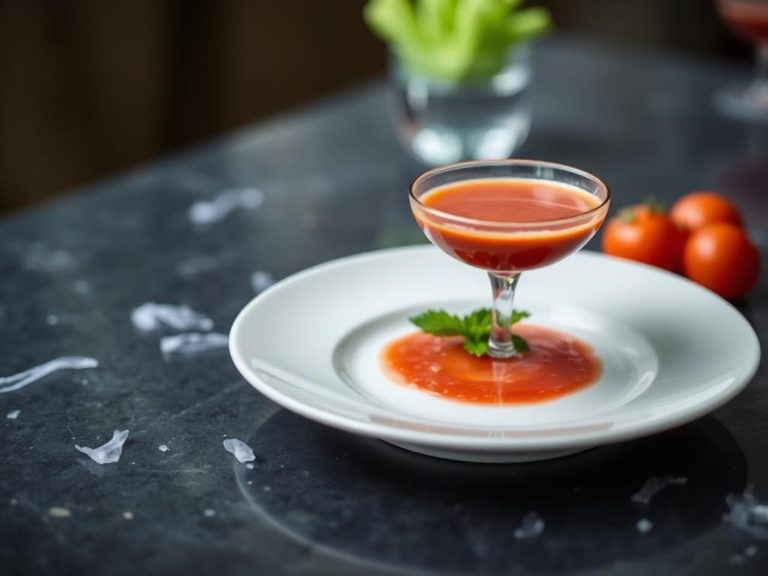


🌍 Where it's eaten
💡 Did you know?
The light, clear appearance is often achieved through a process called 'flash pasteurization' followed by filtration, which removes pulp and cloudiness while preserving heat-sensitive Vitamin C.
Full nutrition (USDA data · scales with serving)
| Water | 98.8 g |
| Energy | 4.0 kcal |
| Protein | 0.00 g |
| Total lipid (fat) | 0.00 g |
| Carbohydrate, by difference | 1.1 g |
| Fiber, total dietary | 0.00 g |
| Total Sugars | 0.63 g |
| Calcium, Ca | 8.0 mg |
| Iron, Fe | 0.30 mg |
| Magnesium, Mg | 1.0 mg |
| Phosphorus, P | 1.0 mg |
| Potassium, K | 24.0 mg |
| Sodium, Na | 14.0 mg |
| Zinc, Zn | 0.01 mg |
| Copper, Cu | 0.01 mg |
| Selenium, Se | 0.00 ug |
| Vitamin C, total ascorbic acid | 25.1 mg |
| Thiamin | 0.00 mg |
| Riboflavin | 0.00 mg |
| Niacin | 0.01 mg |
| Vitamin B-6 | 0.00 mg |
| Folate, total | 0.00 ug |
| Folic acid | 0.00 ug |
| Folate, food | 0.00 ug |
| Folate, DFE | 0.00 ug |
| Choline, total | 0.20 mg |
| Vitamin B-12 | 0.00 ug |
| Vitamin B-12, added | 0.00 ug |
| Vitamin A, RAE | 105 ug |
| Retinol | 0.00 ug |
| Carotene, beta | 1253 ug |
| Carotene, alpha | 3.0 ug |
| Cryptoxanthin, beta | 0.00 ug |
| Lycopene | 144 ug |
| Lutein + zeaxanthin | 2.0 ug |
| Vitamin E (alpha-tocopherol) | 1.1 mg |
| Vitamin E, added | 1.1 mg |
| Vitamin D (D2 + D3) | 0.00 ug |
| Vitamin K (phylloquinone) | 0.10 ug |
| Alcohol, ethyl | 0.00 g |
| Caffeine | 0.00 mg |
| Theobromine | 0.00 mg |
Fat & fatty acid profile (per 100g)
| Fatty acids, total saturated | 0.00 g |
| SFA 4:0 | 0.00 g |
| SFA 6:0 | 0.00 g |
| SFA 8:0 | 0.00 g |
| SFA 10:0 | 0.00 g |
| SFA 12:0 | 0.00 g |
| SFA 14:0 | 0.00 g |
| SFA 16:0 | 0.00 g |
| SFA 18:0 | 0.00 g |
| Fatty acids, total monounsaturated | 0.00 g |
| MUFA 16:1 | 0.00 g |
| MUFA 18:1 | 0.00 g |
| MUFA 20:1 | 0.00 g |
| MUFA 22:1 | 0.00 g |
| Fatty acids, total polyunsaturated | 0.00 g |
| PUFA 18:2 | 0.00 g |
| PUFA 18:3 | 0.00 g |
| PUFA 18:4 | 0.00 g |
| PUFA 20:4 | 0.00 g |
| PUFA 20:5 n-3 (EPA) | 0.00 g |
| PUFA 22:5 n-3 (DPA) | 0.00 g |
| PUFA 22:6 n-3 (DHA) | 0.00 g |
| Cholesterol | 0.00 mg |
FAQ
Is this the same as eating whole fruits and vegetables?
No. While it provides vitamins like Vitamin C, it lacks the dietary fiber found in whole produce, which is crucial for digestion, gut health, and feeling full. It should be seen as a supplement to, not a replacement for, whole fruits and vegetables.
Why is it so low in calories compared to fruit juice?
The calorie count is kept low by diluting the juice concentrate with water and often using lower-sugar vegetables (like cucumber or celery) as a base. The 'light' designation typically indicates reduced sugar and calories compared to standard 100% juice.
Can I drink this on an empty stomach?
While generally safe, the natural sugars may be absorbed more quickly without other foods, potentially causing a mild energy spike and crash for some. For sustained energy, it's best consumed with or after a meal.
Nutrient density (calculated · NRF9.3)
Nutrient Rich Foods index: beneficial nutrients (protein, fiber, vitamins, minerals) minus saturated fat, added sugar & sodium, per 100 kcal.
NRF9.3 index — Fulgoni, Keast & Drewnowski, 2009. Computed from USDA nutrients.
Weight-loss friendliness (composite index)
Energy density 0.04 kcal/g · 0% calories from protein · 0.0 g fiber · 0.6 g sugar per 100 g.
Composite of energy density (Rolls et al., 1999), protein & fiber satiety, minus sugar. A calculated heuristic — ranks satiety-per-calorie, not a clinical measure.
Dietary load (calculated from USDA values)
Potential renal acid load. Positive = acid-forming, negative = alkaline-forming.
Sodium-to-potassium ratio: 0.58 (lower is better — aim for ≤ 1)
Sodium:potassium per WHO potassium guidance. Computed from USDA nutrients.