

Veal, shank (fore and hind), separable lean and fat, raw
Whole food · Lamb, Veal, and Game Products
This is the raw, meaty portion of the veal leg, prized for its deep flavor and rich gelatin content. When cooked, the lean meat becomes tender while the surrounding fat and connective tissue melt into a luscious, velvety sauce. Nutritionally, it's a powerhouse of high-quality protein with a very low carbohydrate profile.
Calorie split: 71% protein · 0% carbs · 29% fat
↓ Full nutrition💚 Why it's loved
People love it for its profound, beefy flavor that intensifies with slow cooking, and its incredible versatility in hearty, comforting dishes. It's a cornerstone of rustic, slow-food traditions where patience transforms a tough cut into something sublime.
⚠️ Watch-outs & how to enjoy it better
The raw cut is tough and requires long, slow cooking to become tender, which can be a deterrent for quick meals. Those watching their saturated fat intake should be mindful of the separable fat, and it can be high in sodium in pre-made dishes. To counteract this, trim excess visible fat before cooking and use low-sodium broth or seasonings.
Key benefits
- Excellent source of complete protein for muscle maintenance
- Very low in carbohydrates, suitable for ketogenic diets
- Rich in collagen and gelatin from connective tissue
- Provides essential minerals like zinc and iron
- Leaner than many beef cuts with a lower fat content
🍽️ Popular dishes
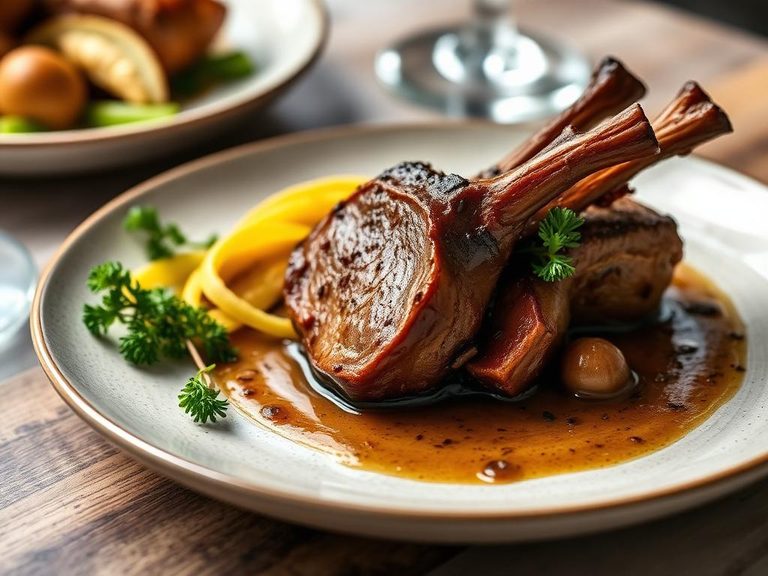
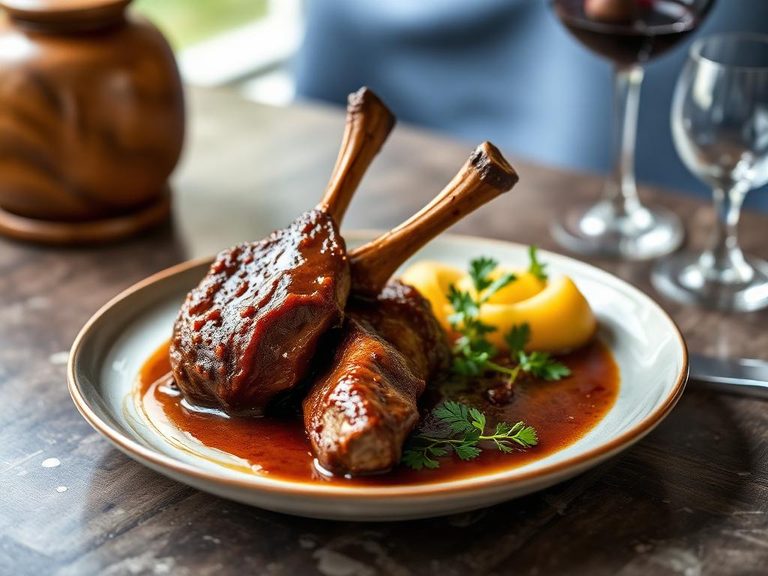
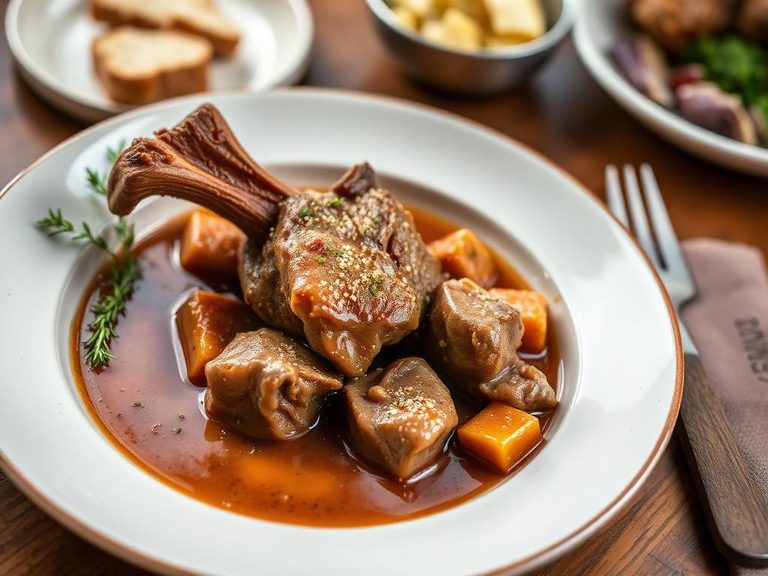
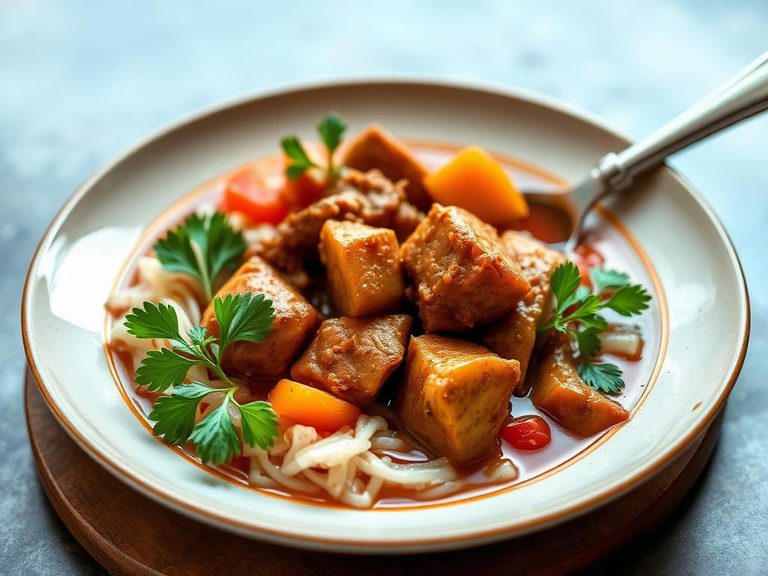
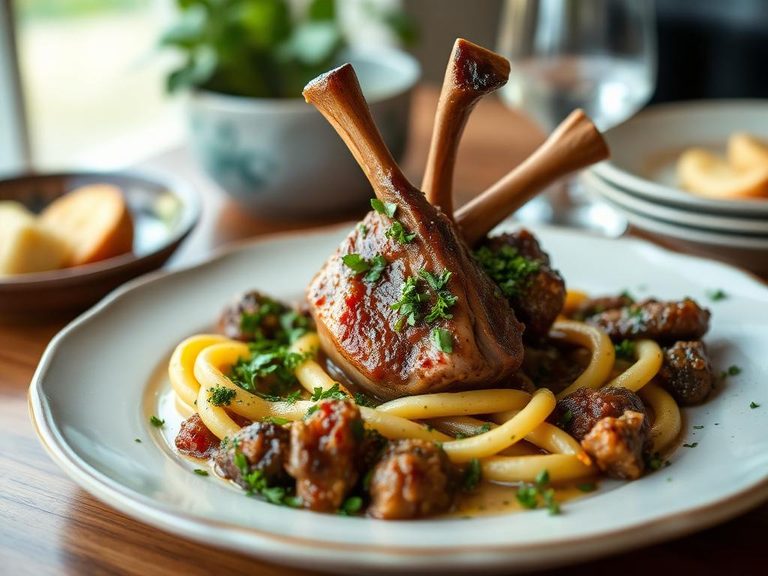
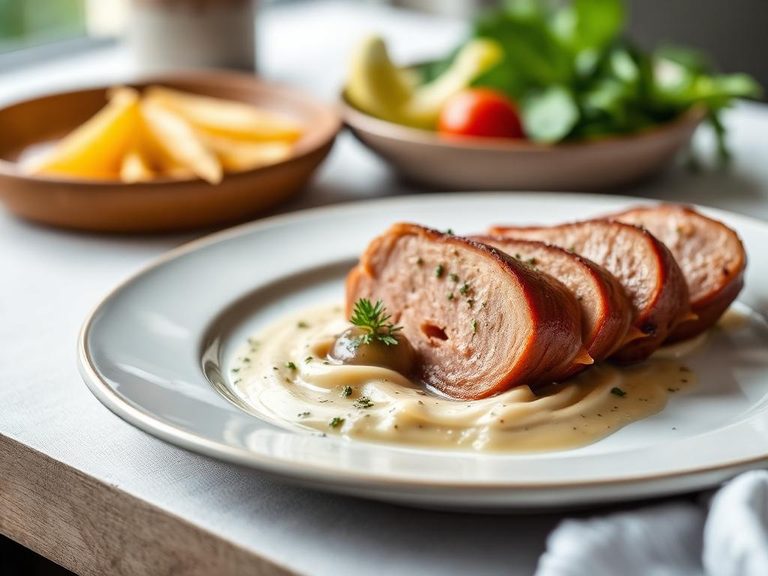
🌍 Where it's eaten
💡 Did you know?
The cross-cut shank is famous for the 'ossobuco' (bone with a hole) at its center, which contains prized marrow that is scooped out and eaten as a delicacy.
Full nutrition (USDA data · scales with serving)
| Water | 76.9 g |
| Energy | 113 kcal |
| Energy | 473 kj |
| Protein | 19.1 g |
| Total lipid (fat) | 3.5 g |
| Ash | 1.0 g |
| Carbohydrate, by difference | 0.00 g |
| Calcium, Ca | 20.0 mg |
| Iron, Fe | 0.76 mg |
| Magnesium, Mg | 21.0 mg |
| Phosphorus, P | 191 mg |
| Potassium, K | 314 mg |
| Sodium, Na | 84.0 mg |
| Zinc, Zn | 4.0 mg |
| Copper, Cu | 0.07 mg |
| Manganese, Mn | 0.01 mg |
| Selenium, Se | 7.9 ug |
| Thiamin | 0.08 mg |
| Riboflavin | 0.27 mg |
| Niacin | 7.5 mg |
| Pantothenic acid | 1.3 mg |
| Vitamin B-6 | 0.44 mg |
| Folate, total | 15.0 ug |
| Folic acid | 0.00 ug |
| Folate, food | 15.0 ug |
| Folate, DFE | 15.0 ug |
| Vitamin B-12 | 1.4 ug |
Fat & fatty acid profile (per 100g)
| Fatty acids, total saturated | 1.1 g |
| SFA 10:0 | 0.00 g |
| SFA 12:0 | 0.01 g |
| SFA 14:0 | 0.12 g |
| SFA 16:0 | 0.58 g |
| SFA 18:0 | 0.32 g |
| Fatty acids, total monounsaturated | 1.3 g |
| MUFA 16:1 | 0.12 g |
| MUFA 18:1 | 1.1 g |
| MUFA 20:1 | 0.01 g |
| Fatty acids, total polyunsaturated | 0.36 g |
| PUFA 18:2 | 0.27 g |
| PUFA 18:3 | 0.01 g |
| PUFA 20:4 | 0.07 g |
| Cholesterol | 75.0 mg |
Amino acid profile (per 100g)
| Tryptophan | 0.19 g |
| Threonine | 0.84 g |
| Isoleucine | 0.94 g |
| Leucine | 1.5 g |
| Lysine | 1.6 g |
| Methionine | 0.45 g |
| Cystine | 0.22 g |
| Phenylalanine | 0.77 g |
| Tyrosine | 0.61 g |
| Valine | 1.1 g |
| Arginine | 1.1 g |
| Histidine | 0.69 g |
| Alanine | 1.1 g |
| Aspartic acid | 1.6 g |
| Glutamic acid | 3.0 g |
| Glycine | 0.98 g |
| Proline | 0.80 g |
| Serine | 0.72 g |
FAQ
What's the best way to cook veal shank to make it tender?
The key is low-and-slow moist-heat cooking. Braising, stewing, or slow-cooking in liquid for 2-3 hours breaks down the tough collagen into gelatin, resulting in fork-tender meat.
Is veal shank the same as beef shank?
They are analogous cuts from different animals. Veal shank is from a young calf, so it's generally more tender, milder in flavor, and lighter in color than beef shank from an adult cow.
What does 'separable lean and fat' mean?
It refers to the edible portion of the meat after removing large, inedible bones and gristle. The 'lean' is the muscle meat, and the 'fat' is the attached adipose tissue you can choose to trim or cook with for flavor.
Nutrient density (calculated · NRF9.3)
Nutrient Rich Foods index: beneficial nutrients (protein, fiber, vitamins, minerals) minus saturated fat, added sugar & sodium, per 100 kcal.
NRF9.3 index — Fulgoni, Keast & Drewnowski, 2009. Computed from USDA nutrients.
Weight-loss friendliness (composite index)
Energy density 1.13 kcal/g · 68% calories from protein · 0.0 g fiber · 0.0 g sugar per 100 g.
Composite of energy density (Rolls et al., 1999), protein & fiber satiety, minus sugar. A calculated heuristic — ranks satiety-per-calorie, not a clinical measure.
Dietary load (calculated from USDA values)
Potential renal acid load. Positive = acid-forming, negative = alkaline-forming.
Sodium-to-potassium ratio: 0.27 (lower is better — aim for ≤ 1)
Sodium:potassium per WHO potassium guidance. Computed from USDA nutrients.