

Toddler formula, MEAD JOHNSON, ENFAGROW, Toddler Transitions, with ARA and DHA, powder
Whole food · Baby Foods

Photo: Wikipedia
Enfagrow Toddler Transitions is a finely milled, off-white powder that dissolves into a smooth, creamy, and slightly sweet milk-like drink. It's specifically engineered to bridge the nutritional gap between infant formula and regular milk, delivering a potent dose of brain-building DHA and ARA in every serving.
Calorie split: 10% protein · 42% carbs · 48% fat
↓ Full nutrition💚 Why it's loved
Parents love the peace of mind it offers, knowing their child gets essential nutrients in a familiar, accepted flavor. The powder format is incredibly versatile, easily mixed into oatmeal, smoothies, or baked goods for a hidden nutritional boost.
⚠️ Watch-outs & how to enjoy it better
The high sugar content (33g per 100g powder) can contribute to a preference for overly sweet tastes and potential blood-sugar spikes if consumed in large, undiluted amounts. As a dairy-based product, it contains common allergens like milk and soy. **Tip:** Always mix as directed with water, not juice or extra powder, and serve as part of a meal with fiber-rich foods like fruit or whole-grain toast to blunt sugar absorption.
Key benefits
- Fortified with DHA and ARA for brain and eye development
- Provides complete protein for growing muscles and tissues
- Enriched with iron, calcium, and vitamin D for bone and blood health
- Offers a familiar, easy-to-digest transition from infant formula
- Serves as a consistent nutritional safety net during picky eating phases
🍽️ Popular dishes

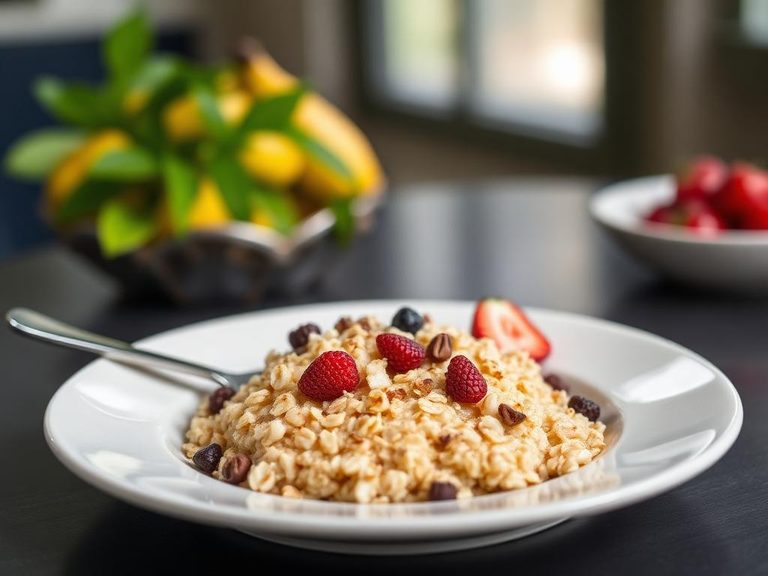



🌍 Where it's eaten
💡 Did you know?
The 'transitions' in its name refers to a specific developmental stage, typically around 9-18 months, when a child's nutritional needs evolve but their eating habits may still be erratic.
Full nutrition (USDA data · scales with serving)
| Water | 2.4 g |
| Energy | 505 kcal |
| Energy | 2113 kj |
| Protein | 12.9 g |
| Total lipid (fat) | 26.9 g |
| Ash | 5.0 g |
| Carbohydrate, by difference | 52.8 g |
| Fiber, total dietary | 0.00 g |
| Total Sugars | 33.0 g |
| Calcium, Ca | 970 mg |
| Iron, Fe | 7.4 mg |
| Magnesium, Mg | 40.0 mg |
| Phosphorus, P | 650 mg |
| Potassium, K | 650 mg |
| Sodium, Na | 179 mg |
| Zinc, Zn | 5.0 mg |
| Copper, Cu | 0.37 mg |
| Manganese, Mn | 0.07 mg |
| Selenium, Se | 13.9 ug |
| Vitamin C, total ascorbic acid | 60.0 mg |
| Thiamin | 0.40 mg |
| Riboflavin | 0.70 mg |
| Niacin | 5.0 mg |
| Vitamin B-6 | 0.30 mg |
| Folate, total | 79.0 ug |
| Folic acid | 79.0 ug |
| Folate, food | 0.00 ug |
| Folate, DFE | 134 ug |
| Choline, total | 119 mg |
| Vitamin B-12 | 1.5 ug |
| Vitamin B-12, added | 1.5 ug |
| Vitamin A, RAE | 450 ug |
| Retinol | 450 ug |
| Carotene, beta | 0.00 ug |
| Carotene, alpha | 0.00 ug |
| Cryptoxanthin, beta | 0.00 ug |
| Vitamin A, IU | 1500 iu |
| Lycopene | 0.00 ug |
| Lutein + zeaxanthin | 0.00 ug |
| Vitamin E (alpha-tocopherol) | 4.5 mg |
| Vitamin E, added | 4.5 mg |
| Vitamin D (D2 + D3), International Units | 300 iu |
| Vitamin D (D2 + D3) | 7.5 ug |
| Vitamin K (phylloquinone) | 45.0 ug |
| Alcohol, ethyl | 0.00 g |
| Caffeine | 0.00 mg |
| Theobromine | 0.00 mg |
Fat & fatty acid profile (per 100g)
| Fatty acids, total saturated | 10.9 g |
| SFA 4:0 | 0.00 g |
| SFA 6:0 | 0.04 g |
| SFA 8:0 | 0.42 g |
| SFA 10:0 | 0.31 g |
| SFA 12:0 | 2.3 g |
| SFA 14:0 | 1.0 g |
| SFA 16:0 | 5.7 g |
| SFA 18:0 | 0.96 g |
| SFA 20:0 | 0.07 g |
| SFA 22:0 | 0.07 g |
| Fatty acids, total monounsaturated | 8.9 g |
| MUFA 16:1 | 0.04 g |
| MUFA 18:1 | 8.8 g |
| MUFA 20:1 | 0.04 g |
| MUFA 22:1 | 0.00 g |
| Fatty acids, total polyunsaturated | 4.9 g |
| PUFA 18:2 | 4.0 g |
| PUFA 18:3 | 0.38 g |
| PUFA 18:4 | 0.14 g |
| PUFA 20:4 | 0.17 g |
| PUFA 20:5 n-3 (EPA) | 0.00 g |
| PUFA 22:5 n-3 (DPA) | 0.00 g |
| PUFA 22:6 n-3 (DHA) | 0.08 g |
| Cholesterol | 7.0 mg |
FAQ
How is this different from infant formula or regular milk?
It's designed for toddlers (9+ months) with a nutrient profile between infant formula and cow's milk. It has more protein, iron, and DHA than whole milk, but less than infant formula, and is fortified for the specific needs of transitioning toddlers.
Can I mix it with something other than water?
For primary nutrition, it should be mixed with water as directed to ensure correct nutrient balance. However, a prepared serving can be added to foods like cereal or smoothies for extra nutrition.
Is the sugar added or naturally occurring?
The sugar content comes from lactose (milk sugar) and added sugars like corn syrup solids, which are common in formulas to provide energy and improve taste.
Nutrient density (calculated · NRF9.3)
Nutrient Rich Foods index: beneficial nutrients (protein, fiber, vitamins, minerals) minus saturated fat, added sugar & sodium, per 100 kcal.
NRF9.3 index — Fulgoni, Keast & Drewnowski, 2009. Computed from USDA nutrients.
Weight-loss friendliness (composite index)
Energy density 5.05 kcal/g · 10% calories from protein · 0.0 g fiber · 33.0 g sugar per 100 g.
Composite of energy density (Rolls et al., 1999), protein & fiber satiety, minus sugar. A calculated heuristic — ranks satiety-per-calorie, not a clinical measure.
Dietary load (calculated from USDA values)
Potential renal acid load. Positive = acid-forming, negative = alkaline-forming.
Sodium-to-potassium ratio: 0.28 (lower is better — aim for ≤ 1)
Sodium:potassium per WHO potassium guidance. Computed from USDA nutrients.