

Strawberry-flavor beverage mix, powder
Whole food · Beverages

Photo: Wikipedia
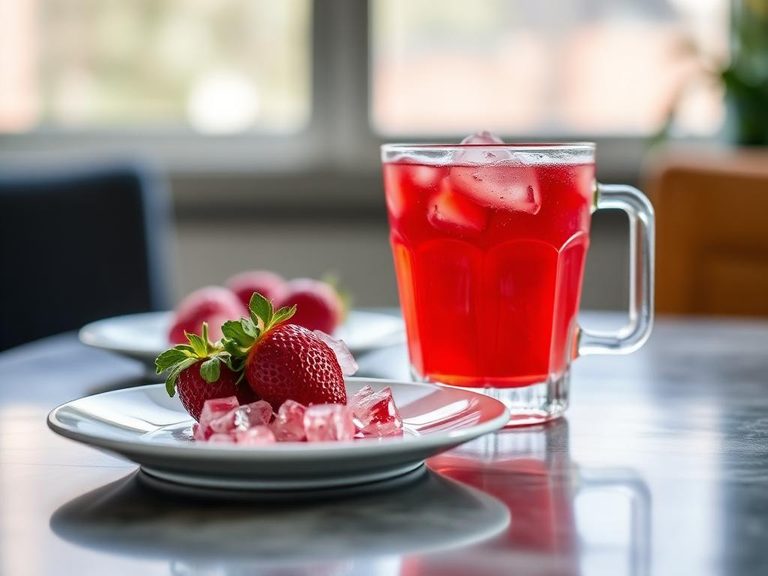
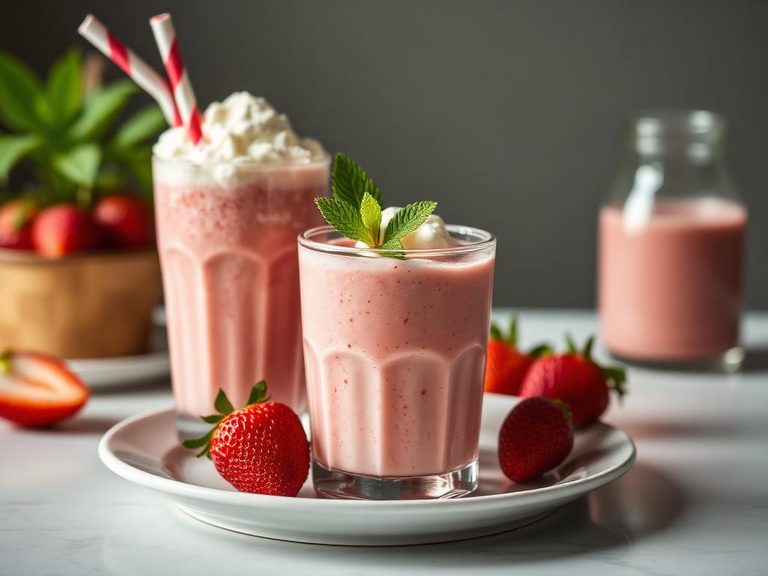
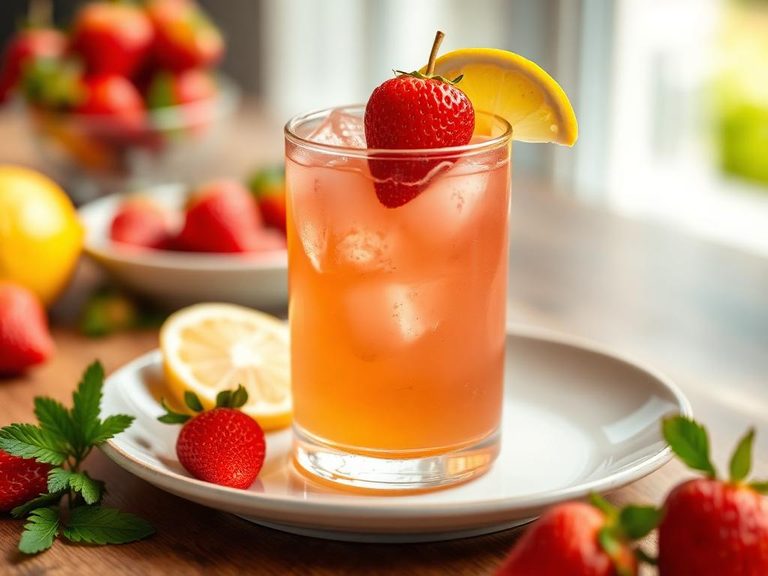
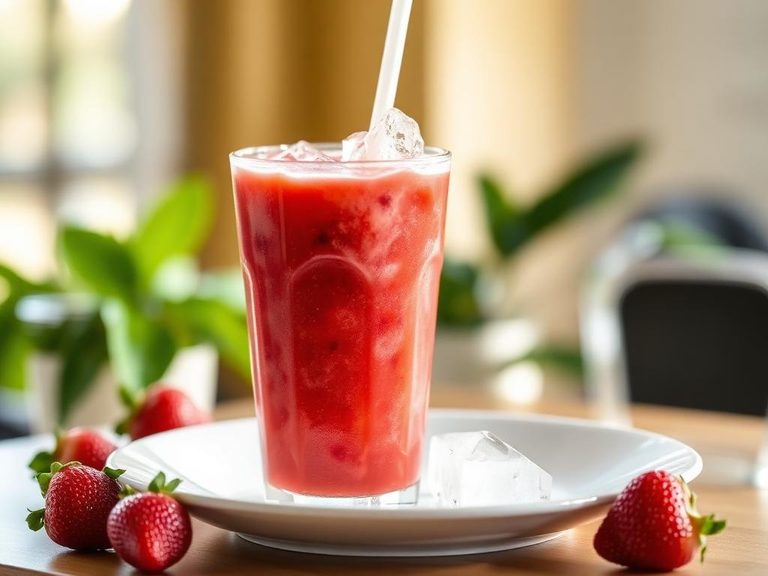
A vibrant, instantly soluble powder designed to transform plain water into a sweet, ruby-pink strawberry-flavored drink. It delivers an intense, candy-like strawberry punch with a smooth, watery texture, lacking any real fruit pulp or fiber. Nutritionally, it is essentially pure carbohydrate energy, composed almost entirely of sugar and starches with negligible protein, fat, or vitamins.
Calorie split: 0% protein · 99% carbs · 0% fat
↓ Full nutrition💚 Why it's loved
People love it for its nostalgic, intensely sweet strawberry flavor that evokes childhood summer days and school cafeterias. It is cherished for its sheer convenience, allowing anyone to whip up a refreshing, brightly colored beverage in seconds with just water and a scoop.
⚠️ Watch-outs & how to enjoy it better
The primary downside is its extremely high sugar content (over 95g per 100g), which can cause rapid blood-sugar spikes and energy crashes, making it unsuitable for diabetics or those managing sugar intake. To counteract this, strictly limit portions to one serving (about 15g), dilute it heavily with water, and always pair it with a source of protein or healthy fat (like nuts or cheese) to slow sugar absorption.
Key benefits
- Provides rapid, easily accessible carbohydrate energy
- Extremely lightweight and shelf-stable for long-term storage
- Instantly dissolves in cold water for quick preparation
- Offers a highly consistent, predictable flavor profile
- Cost-effective way to flavor large volumes of liquid
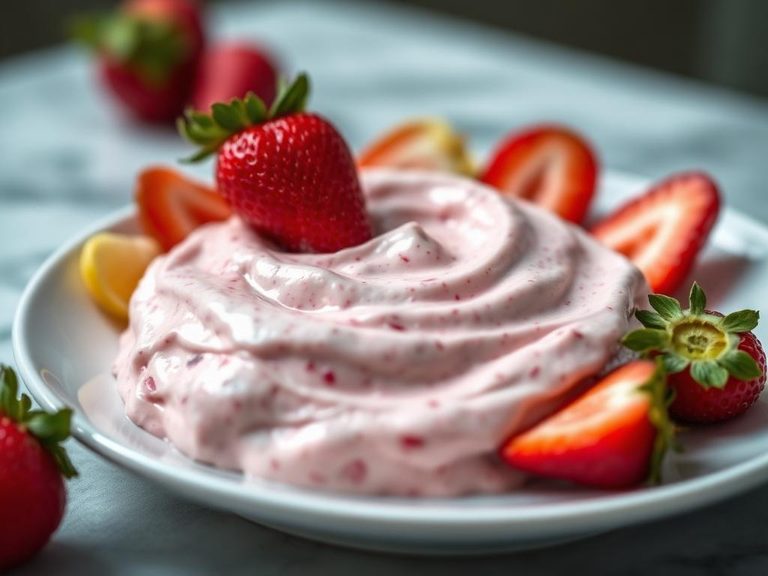
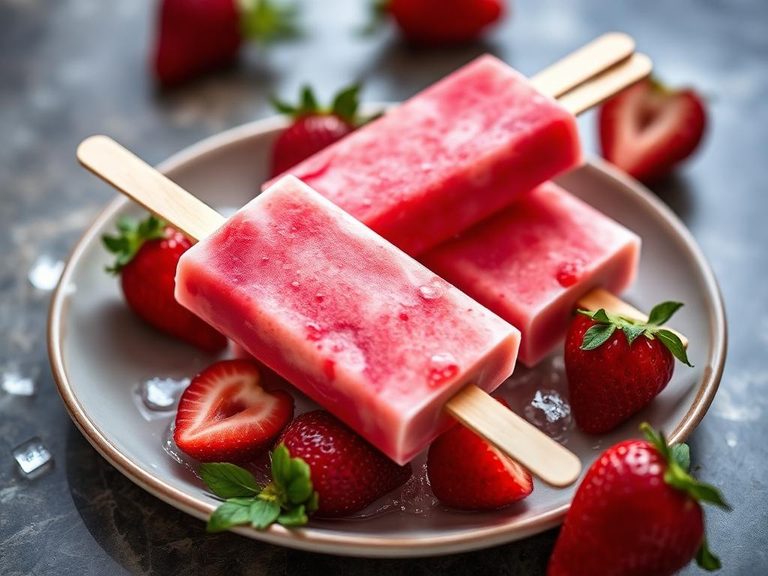
🍽️ Popular dishes
🌍 Where it's eaten
💡 Did you know?
The most famous strawberry-flavored drink mix, Kool-Aid, was originally invented in 1927 as a liquid concentrate called 'Fruit Smack' before being powdered and rebranded, and its iconic 'Kool-Aid Man' mascot was introduced in 1954.
Full nutrition (USDA data · scales with serving)
| Water | 0.40 g |
| Energy | 389 kcal |
| Energy | 1626 kj |
| Protein | 0.10 g |
| Total lipid (fat) | 0.20 g |
| Ash | 0.20 g |
| Carbohydrate, by difference | 99.1 g |
| Fiber, total dietary | 0.00 g |
| Total Sugars | 95.5 g |
| Calcium, Ca | 4.0 mg |
| Iron, Fe | 0.44 mg |
| Magnesium, Mg | 1.0 mg |
| Phosphorus, P | 5.0 mg |
| Potassium, K | 6.0 mg |
| Sodium, Na | 38.0 mg |
| Zinc, Zn | 0.00 mg |
| Copper, Cu | 0.00 mg |
| Manganese, Mn | 0.00 mg |
| Selenium, Se | 0.50 ug |
| Vitamin C, total ascorbic acid | 0.30 mg |
| Thiamin | 0.00 mg |
| Riboflavin | 0.11 mg |
| Niacin | 0.07 mg |
| Pantothenic acid | 0.00 mg |
| Vitamin B-6 | 0.00 mg |
| Folate, total | 0.00 ug |
| Folic acid | 0.00 ug |
| Folate, food | 0.00 ug |
| Folate, DFE | 0.00 ug |
| Choline, total | 0.10 mg |
| Vitamin B-12 | 0.00 ug |
| Vitamin B-12, added | 0.00 ug |
| Vitamin A, RAE | 0.00 ug |
| Retinol | 0.00 ug |
| Carotene, beta | 0.00 ug |
| Carotene, alpha | 0.00 ug |
| Cryptoxanthin, beta | 0.00 ug |
| Vitamin A, IU | 0.00 iu |
| Lycopene | 0.00 ug |
| Lutein + zeaxanthin | 0.00 ug |
| Vitamin E (alpha-tocopherol) | 0.00 mg |
| Vitamin E, added | 0.00 mg |
| Vitamin D (D2 + D3), International Units | 0.00 iu |
| Vitamin D (D2 + D3) | 0.00 ug |
| Vitamin K (phylloquinone) | 0.00 ug |
| Alcohol, ethyl | 0.00 g |
| Caffeine | 0.00 mg |
| Theobromine | 0.00 mg |
Fat & fatty acid profile (per 100g)
| Fatty acids, total saturated | 0.00 g |
| SFA 4:0 | 0.00 g |
| SFA 6:0 | 0.00 g |
| SFA 8:0 | 0.00 g |
| SFA 10:0 | 0.00 g |
| SFA 12:0 | 0.00 g |
| SFA 14:0 | 0.00 g |
| SFA 16:0 | 0.00 g |
| SFA 18:0 | 0.00 g |
| Fatty acids, total monounsaturated | 0.00 g |
| MUFA 16:1 | 0.00 g |
| MUFA 18:1 | 0.00 g |
| MUFA 20:1 | 0.00 g |
| MUFA 22:1 | 0.00 g |
| Fatty acids, total polyunsaturated | 0.00 g |
| PUFA 18:2 | 0.00 g |
| PUFA 18:3 | 0.00 g |
| PUFA 18:4 | 0.00 g |
| PUFA 20:4 | 0.00 g |
| PUFA 20:5 n-3 (EPA) | 0.00 g |
| PUFA 22:5 n-3 (DPA) | 0.00 g |
| PUFA 22:6 n-3 (DHA) | 0.00 g |
| Cholesterol | 0.00 mg |
FAQ
Is strawberry-flavored beverage mix the same as strawberry juice?
No, it is not juice. It is a powder made primarily of sugar, citric acid, artificial flavoring, and colorants, with no real strawberry juice or fruit solids.
How much sugar is in a typical serving?
A standard 15g serving (mixed into 8 oz water) contains about 14g of sugar, which is roughly 3.5 teaspoons.
Can I use this powder in baking?
Yes, it can be used to add strawberry flavor and color to cakes, frostings, or cookies, but it will add significant sugar, so adjust other sweeteners accordingly.
Is it gluten-free?
Most commercial mixes are gluten-free, but always check the label for cross-contamination warnings if you have celiac disease.
Nutrient density (calculated · NRF9.3)
Nutrient Rich Foods index: beneficial nutrients (protein, fiber, vitamins, minerals) minus saturated fat, added sugar & sodium, per 100 kcal.
NRF9.3 index — Fulgoni, Keast & Drewnowski, 2009. Computed from USDA nutrients.
Weight-loss friendliness (composite index)
Energy density 3.89 kcal/g · 0% calories from protein · 0.0 g fiber · 95.5 g sugar per 100 g.
Composite of energy density (Rolls et al., 1999), protein & fiber satiety, minus sugar. A calculated heuristic — ranks satiety-per-calorie, not a clinical measure.
Dietary load (calculated from USDA values)
Potential renal acid load. Positive = acid-forming, negative = alkaline-forming.
Sodium-to-potassium ratio: 6.33 (lower is better — aim for ≤ 1)
Sodium:potassium per WHO potassium guidance. Computed from USDA nutrients.