

Soybeans, mature seeds, dry roasted
Whole food · Legumes and Legume Products

Photo: Wikipedia
Dry-roasted mature soybeans are crunchy, golden-brown nuggets with a deep, nutty, and slightly beany flavor. Their texture is satisfyingly crisp, making them a popular high-protein snack. With over 43 grams of protein per 100 grams, they are a plant-based powerhouse.
Calorie split: 36% protein · 24% carbs · 40% fat
↓ Full nutrition💚 Why it's loved
People love them for their robust, savory flavor and addictive crunch, which makes them a superior alternative to less nutritious snacks. They are a versatile ingredient, enjoyed on their own or as a protein-rich addition to salads and trail mixes.
⚠️ Watch-outs & how to enjoy it better
As a common allergen, soy is a major concern for some individuals. The high fiber and oligosaccharide content can cause digestive discomfort like bloating in sensitive people. To mitigate this, start with small portions, chew thoroughly, and ensure you drink plenty of water.
Key benefits
- Excellent source of complete plant protein
- Rich in dietary fiber for digestive health
- Contains essential minerals like iron and magnesium
- Provides heart-healthy unsaturated fats
- Naturally low in sugar
🍽️ Popular dishes
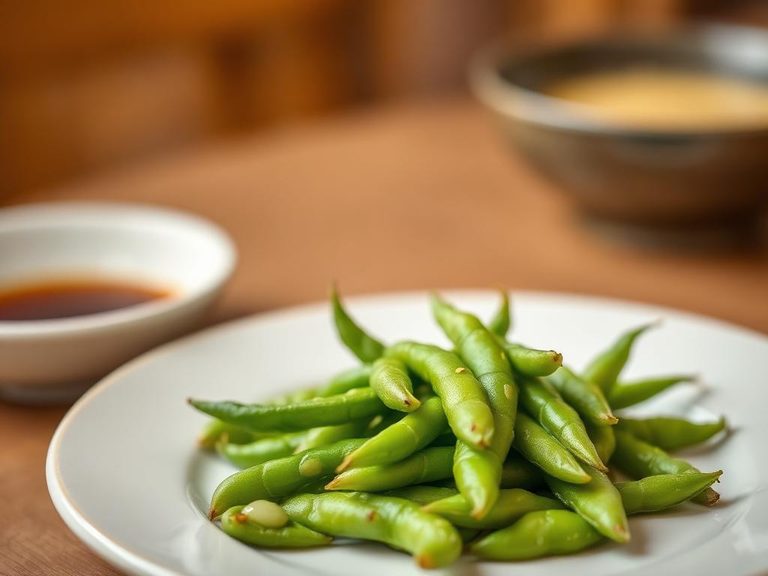
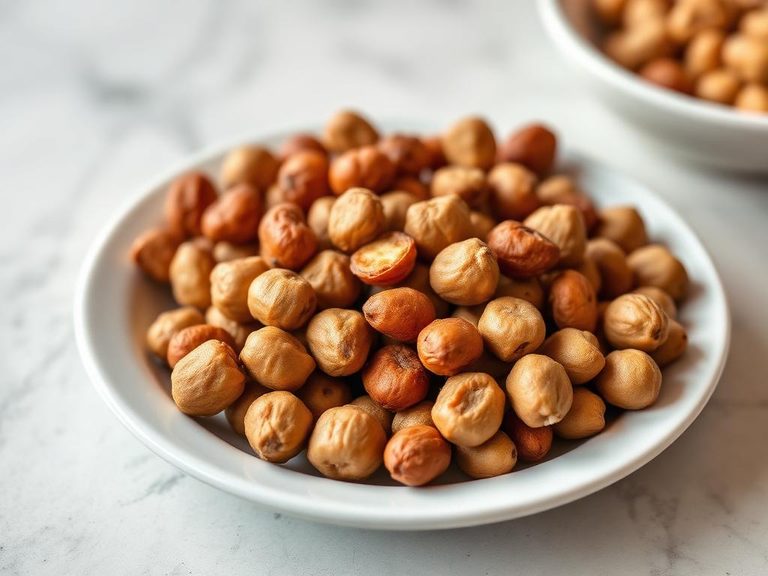
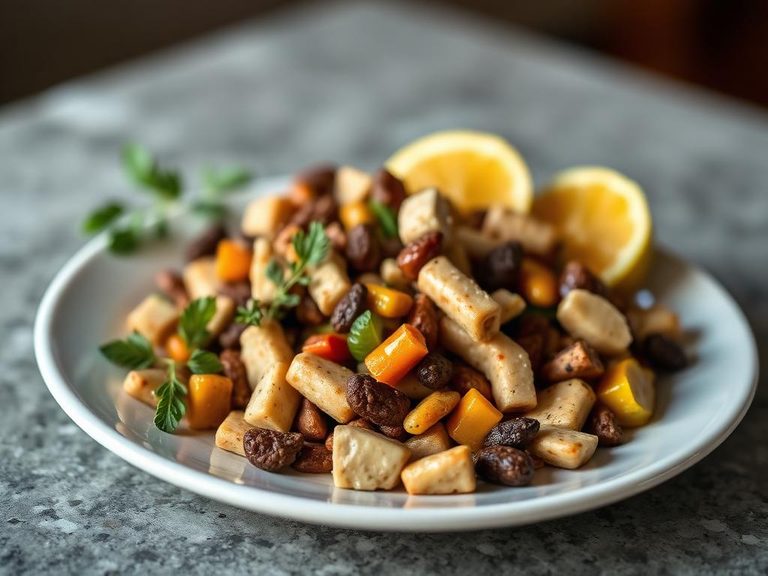
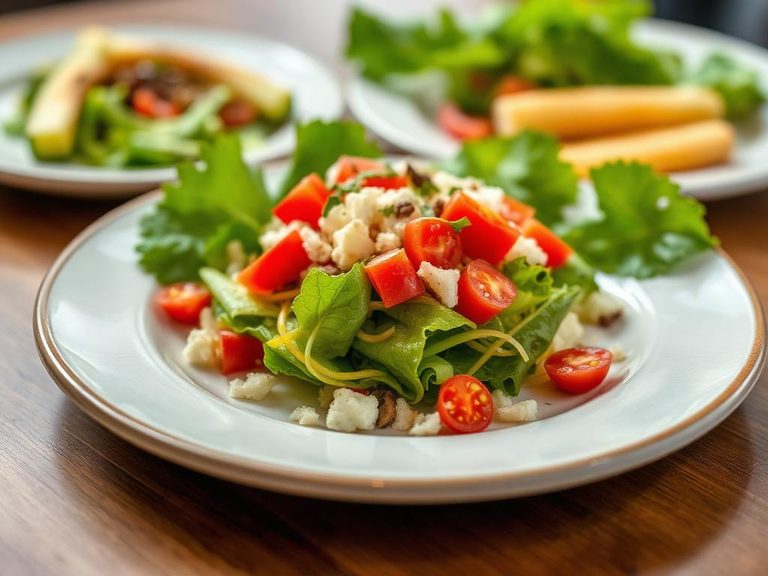
🌍 Where it's eaten
💡 Did you know?
The process of dry-roasting soybeans is a key step in making traditional Japanese kinako, a nutty-tasting flour made from ground roasted soybeans used in desserts and confections.
Full nutrition (USDA data · scales with serving)
| Water | 0.80 g |
| Energy | 449 kcal |
| Energy | 1880 kj |
| Protein | 43.3 g |
| Total lipid (fat) | 21.6 g |
| Ash | 5.3 g |
| Carbohydrate, by difference | 29.0 g |
| Fiber, total dietary | 8.1 g |
| Calcium, Ca | 140 mg |
| Iron, Fe | 4.0 mg |
| Magnesium, Mg | 228 mg |
| Phosphorus, P | 649 mg |
| Potassium, K | 1364 mg |
| Sodium, Na | 2.0 mg |
| Zinc, Zn | 4.8 mg |
| Copper, Cu | 1.1 mg |
| Manganese, Mn | 2.2 mg |
| Selenium, Se | 19.3 ug |
| Vitamin C, total ascorbic acid | 4.6 mg |
| Thiamin | 0.43 mg |
| Riboflavin | 0.76 mg |
| Niacin | 1.1 mg |
| Pantothenic acid | 0.47 mg |
| Vitamin B-6 | 0.23 mg |
| Folate, total | 205 ug |
| Folic acid | 0.00 ug |
| Folate, food | 205 ug |
| Folate, DFE | 205 ug |
| Vitamin B-12 | 0.00 ug |
| Vitamin A, RAE | 0.00 ug |
| Retinol | 0.00 ug |
| Vitamin A, IU | 0.00 iu |
| Vitamin D (D2 + D3), International Units | 0.00 iu |
| Vitamin D (D2 + D3) | 0.00 ug |
| Vitamin K (phylloquinone) | 37.0 ug |
Fat & fatty acid profile (per 100g)
| Fatty acids, total saturated | 3.1 g |
| SFA 14:0 | 0.06 g |
| SFA 16:0 | 2.3 g |
| SFA 18:0 | 0.77 g |
| Fatty acids, total monounsaturated | 4.8 g |
| MUFA 16:1 | 0.06 g |
| MUFA 18:1 | 4.7 g |
| Fatty acids, total polyunsaturated | 12.2 g |
| PUFA 18:2 | 10.8 g |
| PUFA 18:3 | 1.4 g |
| Fatty acids, total trans | 0.00 g |
| Cholesterol | 0.00 mg |
Amino acid profile (per 100g)
| Tryptophan | 0.57 g |
| Threonine | 1.7 g |
| Isoleucine | 1.9 g |
| Leucine | 3.2 g |
| Lysine | 2.6 g |
| Methionine | 0.53 g |
| Cystine | 0.64 g |
| Phenylalanine | 2.1 g |
| Tyrosine | 1.5 g |
| Valine | 2.0 g |
| Arginine | 3.1 g |
| Histidine | 1.1 g |
| Alanine | 1.9 g |
| Aspartic acid | 5.0 g |
| Glutamic acid | 7.7 g |
| Glycine | 1.8 g |
| Proline | 2.3 g |
| Serine | 2.3 g |
FAQ
What's the difference between dry-roasted soybeans and edamame?
Edamame are young, green soybeans boiled or steamed in the pod, with a soft texture. Dry-roasted soybeans are mature, dried, and roasted until crunchy, resulting in a very different texture and more concentrated flavor.
Are dry-roasted soybeans a complete protein?
Yes. Soybeans are one of the few plant foods that contain all nine essential amino acids, making them a complete protein source.
Can I use them in baking?
While not common in traditional baking, ground dry-roasted soybeans (soy flour) can be used to boost protein in some recipes. However, their strong flavor is best suited for savory applications.
Nutrient density (calculated · NRF9.3)
Nutrient Rich Foods index: beneficial nutrients (protein, fiber, vitamins, minerals) minus saturated fat, added sugar & sodium, per 100 kcal.
NRF9.3 index — Fulgoni, Keast & Drewnowski, 2009. Computed from USDA nutrients.
Weight-loss friendliness (composite index)
Energy density 4.49 kcal/g · 39% calories from protein · 8.1 g fiber · 0.0 g sugar per 100 g.
Composite of energy density (Rolls et al., 1999), protein & fiber satiety, minus sugar. A calculated heuristic — ranks satiety-per-calorie, not a clinical measure.
Dietary load (calculated from USDA values)
Potential renal acid load. Positive = acid-forming, negative = alkaline-forming.
Sodium-to-potassium ratio: 0.00 (lower is better — aim for ≤ 1)
Sodium:potassium per WHO potassium guidance. Computed from USDA nutrients.