

Shrimp teriyaki
Common food

Photo: Wikipedia
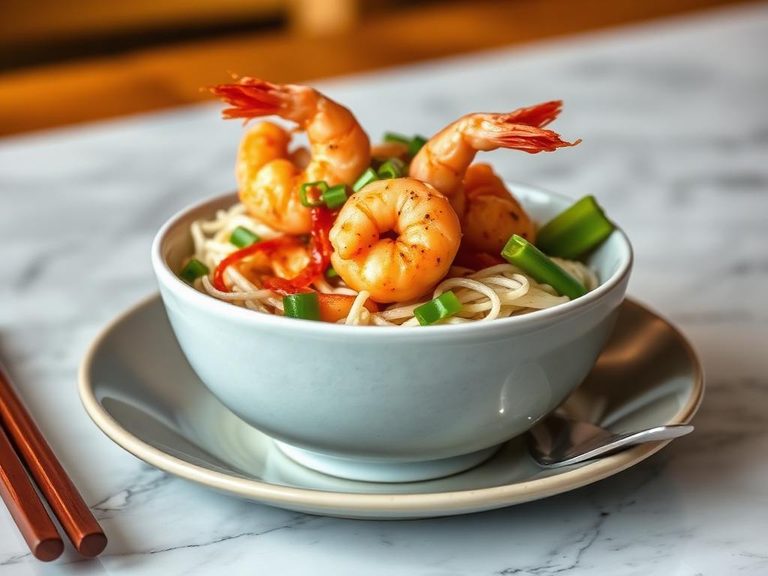
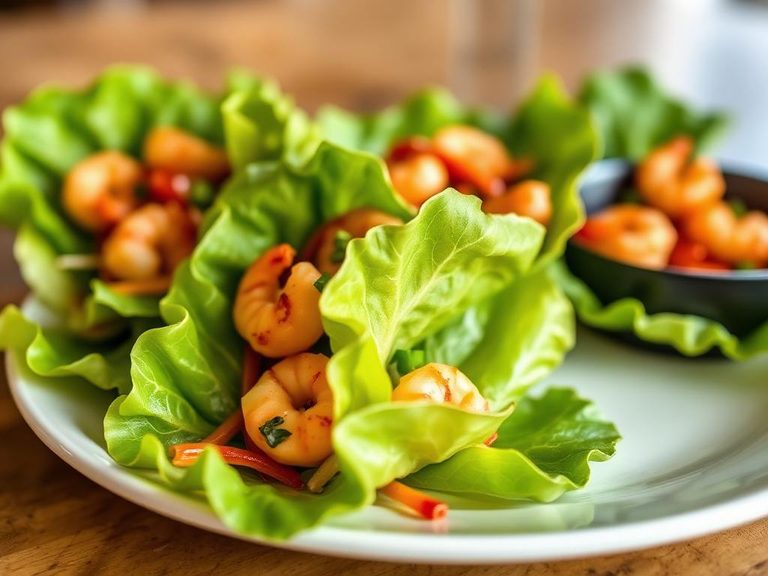
Shrimp teriyaki features tender, succulent shrimp glazed in a sweet and savory sauce, creating a delightful contrast of textures. With a remarkably lean profile, it delivers a significant protein punch while keeping calories and fat minimal. This dish is a staple of Japanese-inspired cuisine, offering a quick and flavorful way to enjoy seafood.
Calorie split: 76% protein · 12% carbs · 12% fat
↓ Full nutrition💚 Why it's loved
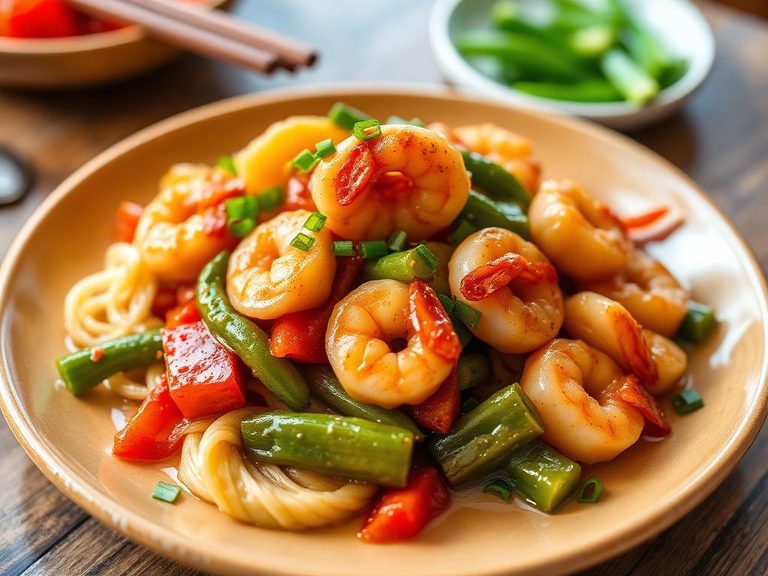
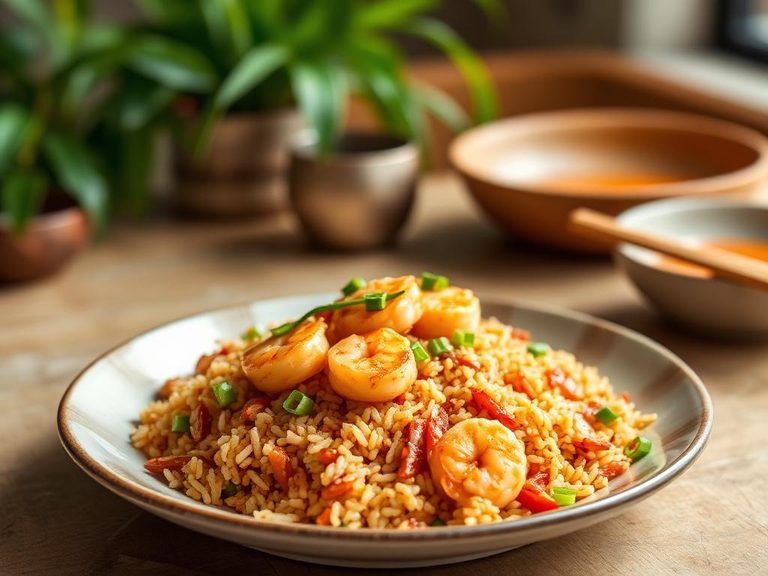
People love shrimp teriyaki for its perfect balance of sweet and umami flavors, which cling beautifully to the tender shrimp. Its versatility allows it to be served over rice, noodles, or vegetables, making it a beloved choice in both casual and formal settings.
⚠️ Watch-outs & how to enjoy it better
The teriyaki sauce can be high in sodium and added sugars, which may be a concern for those monitoring blood pressure or blood sugar. To mitigate this, use low-sodium soy sauce, reduce sugar in the glaze, and pair the dish with fiber-rich vegetables like broccoli or bok choy to slow sugar absorption.
Key benefits
- High in protein for muscle maintenance and satiety
- Low in calories and fat, supporting weight management
- Rich in selenium and vitamin B12
- Quick to prepare, making it ideal for busy weeknights
- Naturally gluten-free if using tamari instead of soy sauce
🍽️ Popular dishes
🌍 Where it's eaten
💡 Did you know?
The word 'teriyaki' comes from the Japanese words 'teri' (luster) and 'yaki' (grilled or broiled), referring to the glossy sheen the sauce gives the food.
Full nutrition (USDA data · scales with serving)
| Water | 69.9 g |
| Energy | 120 kcal |
| Protein | 21.6 g |
| Total lipid (fat) | 1.6 g |
| Carbohydrate, by difference | 3.3 g |
| Fiber, total dietary | 0.00 g |
| Total Sugars | 1.8 g |
| Calcium, Ca | 87.0 mg |
| Iron, Fe | 0.51 mg |
| Magnesium, Mg | 42.0 mg |
| Phosphorus, P | 300 mg |
| Potassium, K | 184 mg |
| Sodium, Na | 581 mg |
| Zinc, Zn | 1.5 mg |
| Copper, Cu | 0.25 mg |
| Selenium, Se | 45.5 ug |
| Vitamin C, total ascorbic acid | 0.00 mg |
| Thiamin | 0.03 mg |
| Riboflavin | 0.03 mg |
| Niacin | 2.6 mg |
| Vitamin B-6 | 0.23 mg |
| Folate, total | 23.0 ug |
| Folic acid | 0.00 ug |
| Folate, food | 23.0 ug |
| Folate, DFE | 23.0 ug |
| Choline, total | 127 mg |
| Vitamin B-12 | 1.5 ug |
| Vitamin B-12, added | 0.00 ug |
| Vitamin A, RAE | 82.0 ug |
| Retinol | 82.0 ug |
| Carotene, beta | 0.00 ug |
| Carotene, alpha | 0.00 ug |
| Cryptoxanthin, beta | 0.00 ug |
| Lycopene | 0.00 ug |
| Lutein + zeaxanthin | 0.00 ug |
| Vitamin E (alpha-tocopherol) | 2.0 mg |
| Vitamin E, added | 0.00 mg |
| Vitamin D (D2 + D3) | 0.10 ug |
| Vitamin K (phylloquinone) | 0.40 ug |
| Alcohol, ethyl | 0.00 g |
| Caffeine | 0.00 mg |
| Theobromine | 0.00 mg |
Fat & fatty acid profile (per 100g)
| Fatty acids, total saturated | 0.48 g |
| SFA 4:0 | 0.00 g |
| SFA 6:0 | 0.00 g |
| SFA 8:0 | 0.00 g |
| SFA 10:0 | 0.00 g |
| SFA 12:0 | 0.01 g |
| SFA 14:0 | 0.02 g |
| SFA 16:0 | 0.26 g |
| SFA 18:0 | 0.14 g |
| Fatty acids, total monounsaturated | 0.33 g |
| MUFA 16:1 | 0.04 g |
| MUFA 18:1 | 0.20 g |
| MUFA 20:1 | 0.01 g |
| MUFA 22:1 | 0.00 g |
| Fatty acids, total polyunsaturated | 0.54 g |
| PUFA 18:2 | 0.17 g |
| PUFA 18:3 | 0.01 g |
| PUFA 18:4 | 0.00 g |
| PUFA 20:4 | 0.06 g |
| PUFA 20:5 n-3 (EPA) | 0.12 g |
| PUFA 22:5 n-3 (DPA) | 0.01 g |
| PUFA 22:6 n-3 (DHA) | 0.13 g |
| Cholesterol | 193 mg |
FAQ
Is shrimp teriyaki healthy?
Yes, it is a healthy option due to its high protein and low fat content, but be mindful of the sugar and sodium in the sauce.
Can I make shrimp teriyaki at home?
Absolutely! You can easily make it by marinating shrimp in a mixture of soy sauce, mirin, sugar, and ginger, then cooking them quickly in a pan.
What is the best way to cook shrimp for teriyaki?
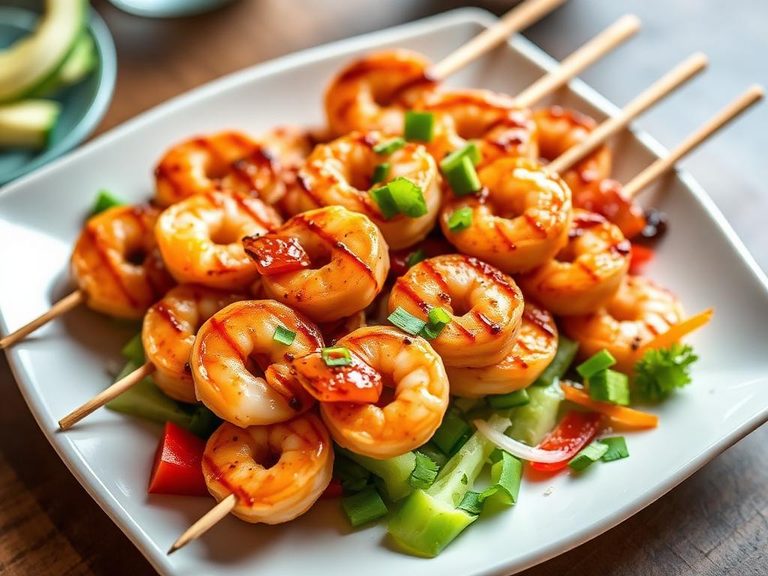
Grilling or pan-searing shrimp briefly over high heat works best to keep them tender and juicy while allowing the sauce to caramelize.
Nutrient density (calculated · NRF9.3)
Nutrient Rich Foods index: beneficial nutrients (protein, fiber, vitamins, minerals) minus saturated fat, added sugar & sodium, per 100 kcal.
NRF9.3 index — Fulgoni, Keast & Drewnowski, 2009. Computed from USDA nutrients.
Weight-loss friendliness (composite index)
Energy density 1.20 kcal/g · 72% calories from protein · 0.0 g fiber · 1.8 g sugar per 100 g.
Composite of energy density (Rolls et al., 1999), protein & fiber satiety, minus sugar. A calculated heuristic — ranks satiety-per-calorie, not a clinical measure.
Dietary load (calculated from USDA values)
Potential renal acid load. Positive = acid-forming, negative = alkaline-forming.
Sodium-to-potassium ratio: 3.16 (lower is better — aim for ≤ 1)
Sodium:potassium per WHO potassium guidance. Computed from USDA nutrients.