

Shrimp garden salad, shrimp, lettuce, eggs, tomato and/or carrots, other vegetables, no dressing
Common food

Photo: Wikipedia
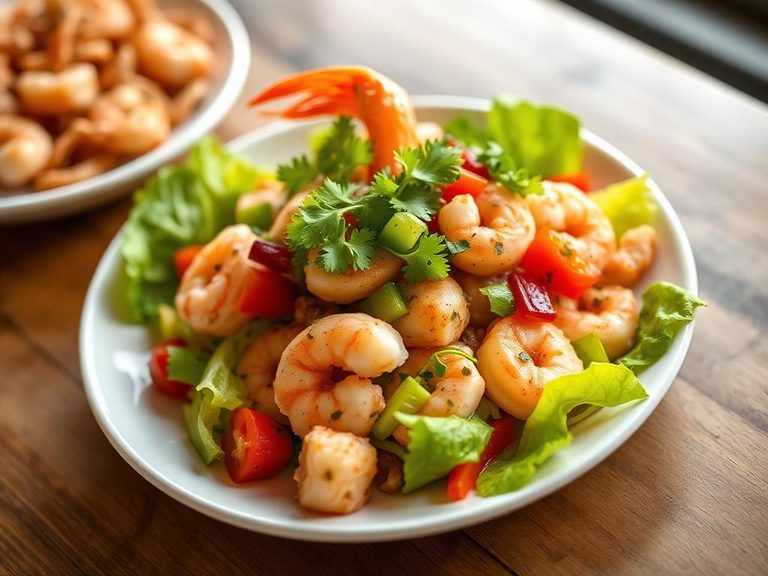
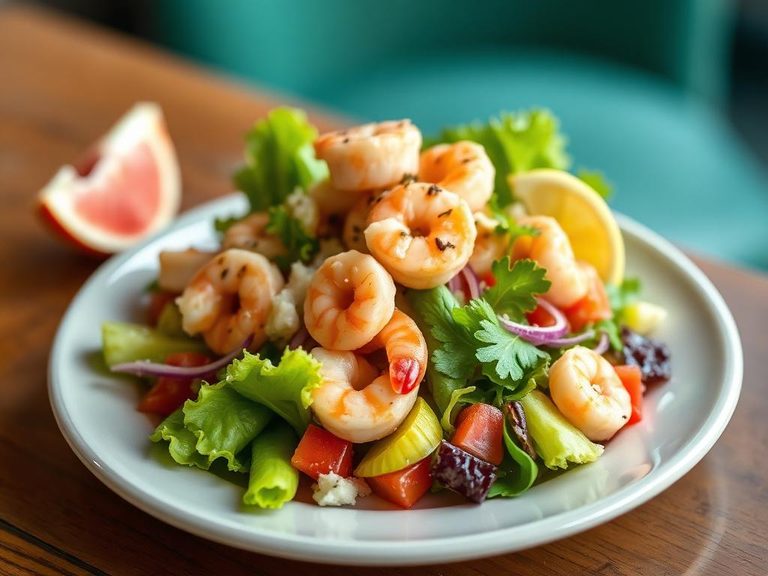
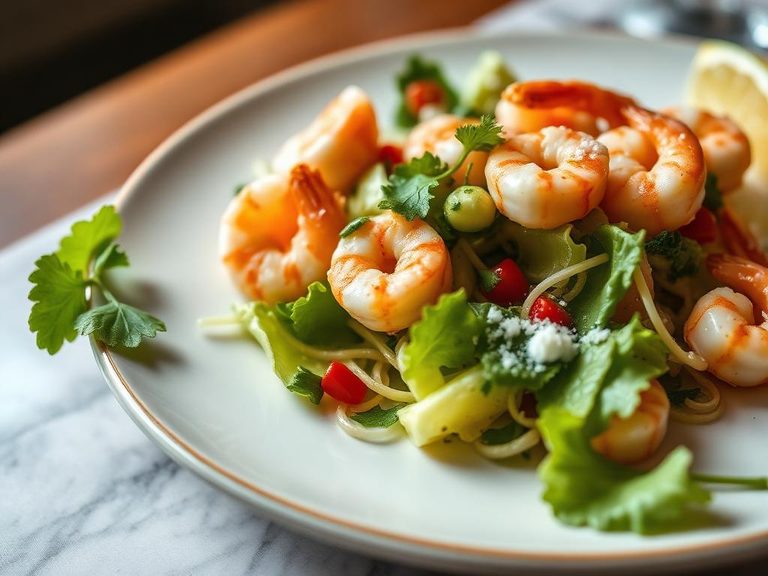
A crisp, refreshing salad featuring tender shrimp nestled on a bed of fresh lettuce, often accented with hard-boiled egg, juicy tomatoes, and crunchy carrots. The flavor is clean and light, with a satisfying contrast between the succulent seafood and the crisp, raw vegetables. At just 65 calories per 100g, it's a nutrient-dense, high-protein option that delivers significant satiety for very few calories.
Calorie split: 53% protein · 18% carbs · 29% fat
↓ Full nutrition💚 Why it's loved
People love it for its satisfying combination of textures—the snap of fresh vegetables against the soft, sweet shrimp—and its incredible versatility as a light lunch or dinner. It's a staple in health-conscious and coastal cuisines worldwide, prized for being both nourishing and flavorful without heaviness.
⚠️ Watch-outs & how to enjoy it better
The main downside is its potential as a common allergen, containing both shellfish (shrimp) and eggs, which are among the top food allergens. To mitigate risk, those with known allergies must avoid it entirely. For others, the lack of dressing can make it seem bland; adding a small amount of olive oil or avocado can enhance flavor and help absorb fat-soluble vitamins without excessive calories.
Key benefits
- Excellent source of lean protein from shrimp and eggs
- Very low in calories, ideal for weight management
- Rich in vitamins A and C from fresh vegetables
- Provides healthy fats and choline from egg yolks
- High in water content for hydration
🍽️ Popular dishes
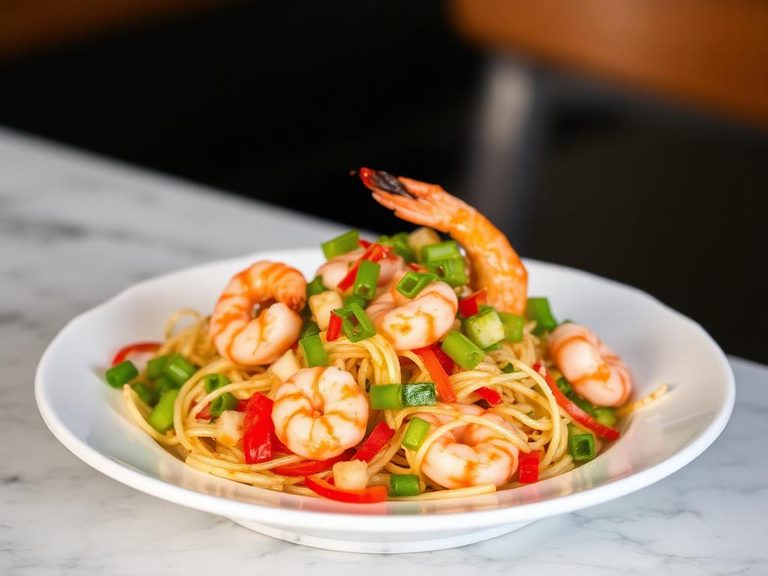
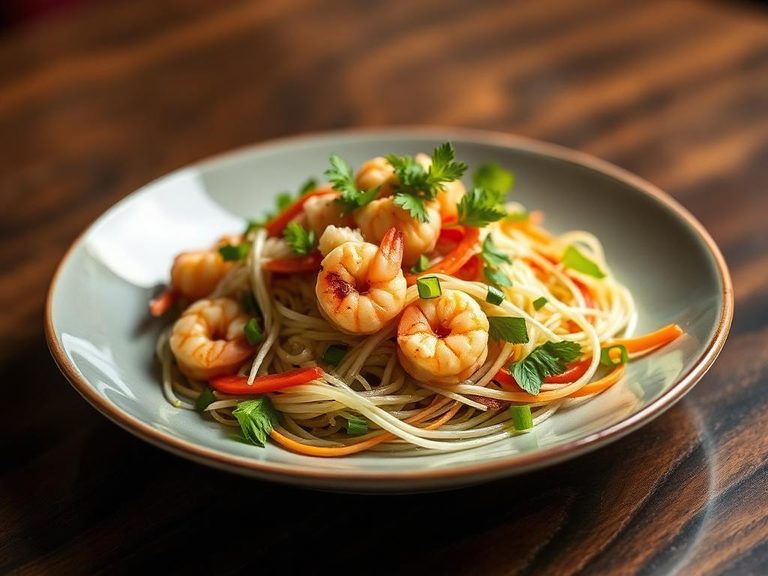
🌍 Where it's eaten
💡 Did you know?
Shrimp are a rare dietary source of the antioxidant astaxanthin, which gives them their pink color and may help reduce inflammation and support skin health.
Full nutrition (USDA data · scales with serving)
| Water | 85.7 g |
| Energy | 65.0 kcal |
| Protein | 8.3 g |
| Total lipid (fat) | 2.0 g |
| Carbohydrate, by difference | 2.8 g |
| Fiber, total dietary | 0.80 g |
| Total Sugars | 1.3 g |
| Calcium, Ca | 67.0 mg |
| Iron, Fe | 0.96 mg |
| Magnesium, Mg | 22.0 mg |
| Phosphorus, P | 96.0 mg |
| Potassium, K | 196 mg |
| Sodium, Na | 289 mg |
| Zinc, Zn | 0.85 mg |
| Copper, Cu | 0.10 mg |
| Selenium, Se | 18.2 ug |
| Vitamin C, total ascorbic acid | 6.6 mg |
| Thiamin | 0.04 mg |
| Riboflavin | 0.12 mg |
| Niacin | 0.42 mg |
| Vitamin B-6 | 0.07 mg |
| Folate, total | 31.0 ug |
| Folic acid | 0.00 ug |
| Folate, food | 31.0 ug |
| Folate, DFE | 31.0 ug |
| Choline, total | 71.1 mg |
| Vitamin B-12 | 0.37 ug |
| Vitamin B-12, added | 0.00 ug |
| Vitamin A, RAE | 158 ug |
| Retinol | 21.0 ug |
| Carotene, beta | 1542 ug |
| Carotene, alpha | 188 ug |
| Cryptoxanthin, beta | 3.0 ug |
| Lycopene | 197 ug |
| Lutein + zeaxanthin | 806 ug |
| Vitamin E (alpha-tocopherol) | 0.72 mg |
| Vitamin E, added | 0.00 mg |
| Vitamin D (D2 + D3) | 0.30 ug |
| Vitamin K (phylloquinone) | 50.2 ug |
| Alcohol, ethyl | 0.00 g |
| Caffeine | 0.00 mg |
| Theobromine | 0.00 mg |
Fat & fatty acid profile (per 100g)
| Fatty acids, total saturated | 0.55 g |
| SFA 4:0 | 0.00 g |
| SFA 6:0 | 0.00 g |
| SFA 8:0 | 0.00 g |
| SFA 10:0 | 0.00 g |
| SFA 12:0 | 0.00 g |
| SFA 14:0 | 0.01 g |
| SFA 16:0 | 0.38 g |
| SFA 18:0 | 0.14 g |
| Fatty acids, total monounsaturated | 0.63 g |
| MUFA 16:1 | 0.05 g |
| MUFA 18:1 | 0.56 g |
| MUFA 20:1 | 0.01 g |
| MUFA 22:1 | 0.00 g |
| Fatty acids, total polyunsaturated | 0.45 g |
| PUFA 18:2 | 0.20 g |
| PUFA 18:3 | 0.03 g |
| PUFA 18:4 | 0.00 g |
| PUFA 20:4 | 0.03 g |
| PUFA 20:5 n-3 (EPA) | 0.09 g |
| PUFA 22:5 n-3 (DPA) | 0.01 g |
| PUFA 22:6 n-3 (DHA) | 0.08 g |
| Cholesterol | 126 mg |
FAQ
Is this salad keto-friendly?
Yes, it's very low in carbohydrates (under 3g net carbs per 100g), making it an excellent choice for ketogenic and low-carb diets, especially when avoiding sugary dressings.
Can I meal-prep this salad?
You can prep the vegetables and shrimp separately in airtight containers for up to 2 days. Assemble just before eating to maintain the lettuce's crispness and prevent sogginess.
What's a good dressing alternative if I want to keep it low-calorie?
A simple squeeze of lemon or lime juice with a pinch of salt and pepper adds bright flavor. A teaspoon of olive oil or a dollop of Greek yogurt can also add creaminess and help nutrient absorption without excessive calories.
Nutrient density (calculated · NRF9.3)
Nutrient Rich Foods index: beneficial nutrients (protein, fiber, vitamins, minerals) minus saturated fat, added sugar & sodium, per 100 kcal.
NRF9.3 index — Fulgoni, Keast & Drewnowski, 2009. Computed from USDA nutrients.
Weight-loss friendliness (composite index)
Energy density 0.65 kcal/g · 51% calories from protein · 0.8 g fiber · 1.3 g sugar per 100 g.
Composite of energy density (Rolls et al., 1999), protein & fiber satiety, minus sugar. A calculated heuristic — ranks satiety-per-calorie, not a clinical measure.
Dietary load (calculated from USDA values)
Potential renal acid load. Positive = acid-forming, negative = alkaline-forming.
Sodium-to-potassium ratio: 1.47 (lower is better — aim for ≤ 1)
Sodium:potassium per WHO potassium guidance. Computed from USDA nutrients.