

Salsa, red, homemade
Common food

Photo: Wikipedia
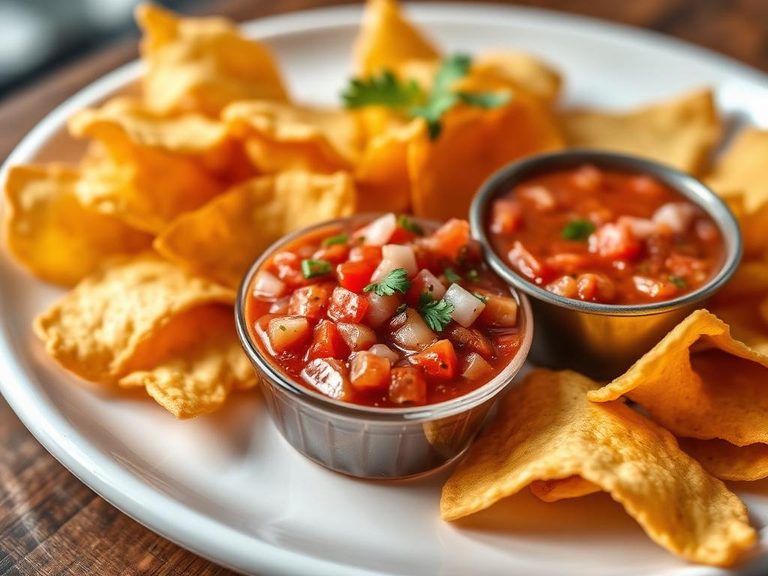
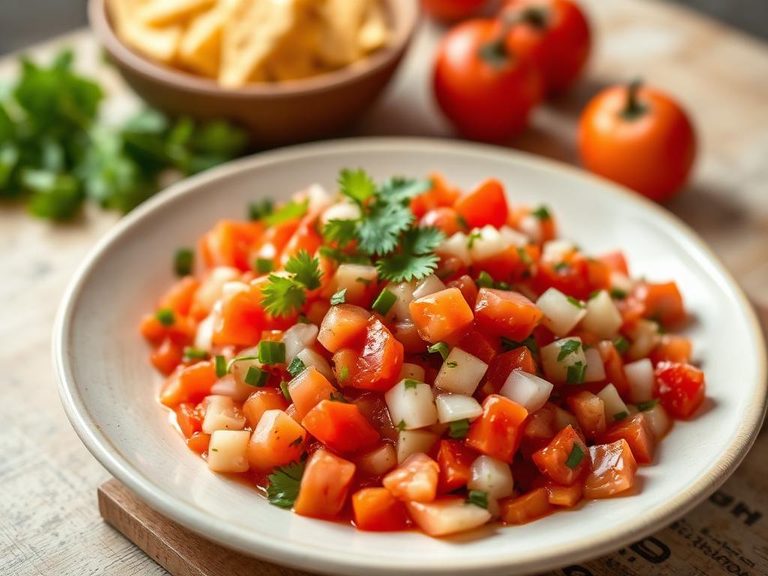
A vibrant, chunky blend of ripe tomatoes, onions, chilies, and cilantro, homemade red salsa delivers a bright, acidic punch with a satisfying, fresh texture. At just 34 kcal per 100g, it's a nutrient-dense, low-calorie condiment that adds significant flavor without heavy fats. Its natural sweetness is balanced by a gentle, earthy heat, making it a staple for enhancing a wide variety of dishes.
Calorie split: 17% protein · 78% carbs · 5% fat
↓ Full nutrition💚 Why it's loved
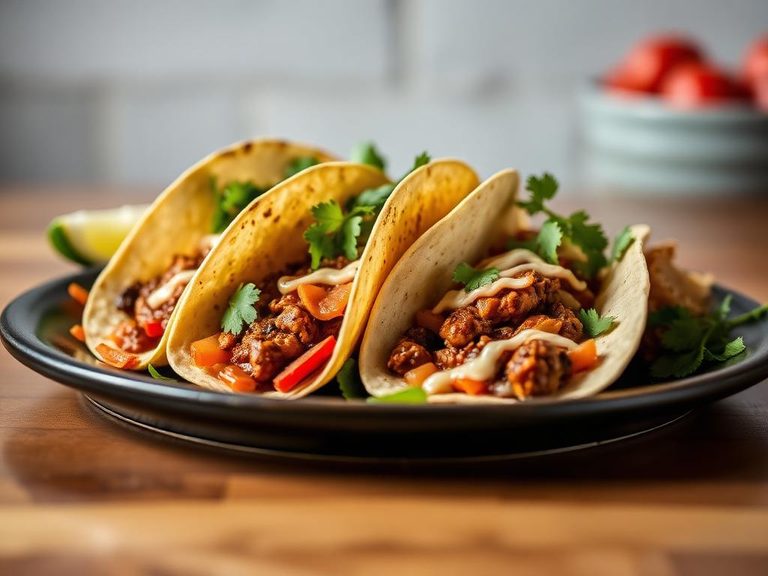
People love homemade red salsa for its fresh, bright flavor and the customizable heat level that store-bought versions often lack. Its incredible versatility makes it a beloved companion to everything from chips and tacos to grilled meats and eggs.
⚠️ Watch-outs & how to enjoy it better
The natural sugars (3.81g/100g) and acidic tomatoes can be a concern for those monitoring blood sugar or with acid reflux. To mitigate this, pair it with a protein or healthy fat (like avocado or cheese) to slow sugar absorption, and use portion control if sensitive to acidity.
Key benefits
- Low-calorie flavor enhancer (34 kcal/100g)
- Good source of dietary fiber (1.8g/100g)
- Rich in vitamin C and lycopene from fresh tomatoes
- Contains capsaicin from chilies, which may support metabolism
- Naturally low in fat (0.19g/100g)
🍽️ Popular dishes
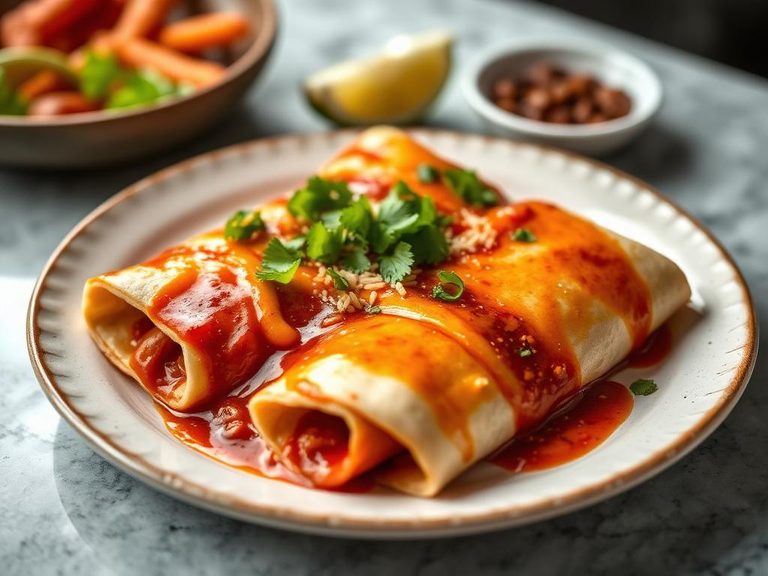

🌍 Where it's eaten
💡 Did you know?
The word 'salsa' comes from the Latin word for 'sauce,' and the Aztecs were blending tomatoes, chilies, and squash seeds into similar condiments centuries before Spanish colonizers arrived in the Americas.
Full nutrition (USDA data · scales with serving)
| Water | 89.3 g |
| Energy | 34.0 kcal |
| Protein | 1.4 g |
| Total lipid (fat) | 0.19 g |
| Carbohydrate, by difference | 6.7 g |
| Fiber, total dietary | 1.8 g |
| Total Sugars | 3.8 g |
| Calcium, Ca | 28.0 mg |
| Iron, Fe | 0.42 mg |
| Magnesium, Mg | 15.0 mg |
| Phosphorus, P | 32.0 mg |
| Potassium, K | 258 mg |
| Sodium, Na | 656 mg |
| Zinc, Zn | 0.20 mg |
| Copper, Cu | 0.07 mg |
| Selenium, Se | 0.90 ug |
| Vitamin C, total ascorbic acid | 1.9 mg |
| Thiamin | 0.04 mg |
| Riboflavin | 0.03 mg |
| Niacin | 1.1 mg |
| Vitamin B-6 | 0.18 mg |
| Folate, total | 4.0 ug |
| Folic acid | 0.00 ug |
| Folate, food | 4.0 ug |
| Folate, DFE | 4.0 ug |
| Choline, total | 12.8 mg |
| Vitamin B-12 | 0.00 ug |
| Vitamin B-12, added | 0.00 ug |
| Vitamin A, RAE | 24.0 ug |
| Retinol | 0.00 ug |
| Carotene, beta | 288 ug |
| Carotene, alpha | 0.00 ug |
| Cryptoxanthin, beta | 0.00 ug |
| Lycopene | 6310 ug |
| Lutein + zeaxanthin | 211 ug |
| Vitamin E (alpha-tocopherol) | 1.2 mg |
| Vitamin E, added | 0.00 mg |
| Vitamin D (D2 + D3) | 0.00 ug |
| Vitamin K (phylloquinone) | 4.2 ug |
| Alcohol, ethyl | 0.00 g |
| Caffeine | 0.00 mg |
| Theobromine | 0.00 mg |
Fat & fatty acid profile (per 100g)
| Fatty acids, total saturated | 0.02 g |
| SFA 4:0 | 0.00 g |
| SFA 6:0 | 0.00 g |
| SFA 8:0 | 0.00 g |
| SFA 10:0 | 0.00 g |
| SFA 12:0 | 0.00 g |
| SFA 14:0 | 0.00 g |
| SFA 16:0 | 0.02 g |
| SFA 18:0 | 0.00 g |
| Fatty acids, total monounsaturated | 0.02 g |
| MUFA 16:1 | 0.00 g |
| MUFA 18:1 | 0.02 g |
| MUFA 20:1 | 0.00 g |
| MUFA 22:1 | 0.00 g |
| Fatty acids, total polyunsaturated | 0.08 g |
| PUFA 18:2 | 0.07 g |
| PUFA 18:3 | 0.00 g |
| PUFA 18:4 | 0.00 g |
| PUFA 20:4 | 0.00 g |
| PUFA 20:5 n-3 (EPA) | 0.00 g |
| PUFA 22:5 n-3 (DPA) | 0.00 g |
| PUFA 22:6 n-3 (DHA) | 0.00 g |
| Cholesterol | 0.00 mg |
FAQ
Is homemade red salsa healthy?
Yes, it's generally very healthy. It's low in calories and fat, and provides fiber, vitamin C, and antioxidants from fresh tomatoes and chilies. The main consideration is sodium if you add salt, and the natural sugars from the tomatoes.
How long does homemade red salsa last?
When stored in an airtight container in the refrigerator, homemade salsa typically lasts for 3 to 5 days. Freezing it can extend its life to several months, though the texture may become slightly watery upon thawing.
Can I make it less spicy?
Absolutely. You can control the heat by removing the seeds and white membranes from the chilies (like jalapeños or serranos), which hold most of the capsaicin. You can also use milder peppers like poblanos or simply reduce the quantity of chili.
Nutrient density (calculated · NRF9.3)
Nutrient Rich Foods index: beneficial nutrients (protein, fiber, vitamins, minerals) minus saturated fat, added sugar & sodium, per 100 kcal.
NRF9.3 index — Fulgoni, Keast & Drewnowski, 2009. Computed from USDA nutrients.
Weight-loss friendliness (composite index)
Energy density 0.34 kcal/g · 17% calories from protein · 1.8 g fiber · 3.8 g sugar per 100 g.
Composite of energy density (Rolls et al., 1999), protein & fiber satiety, minus sugar. A calculated heuristic — ranks satiety-per-calorie, not a clinical measure.
Dietary load (calculated from USDA values)
Potential renal acid load. Positive = acid-forming, negative = alkaline-forming.
Sodium-to-potassium ratio: 2.54 (lower is better — aim for ≤ 1)
Sodium:potassium per WHO potassium guidance. Computed from USDA nutrients.