

Salsa verde or salsa, green
Common food

Photo: Wikipedia
Salsa verde is a vibrant, herbaceous sauce, typically bright green and slightly chunky, made from tomatillos, green chiles, cilantro, and lime. It delivers a tangy, zesty, and mildly spicy flavor with a refreshing, juicy texture. Nutritionally, it's a low-calorie, high-fiber condiment that adds significant flavor without much fat or sugar.
Calorie split: 12% protein · 67% carbs · 21% fat
↓ Full nutrition💚 Why it's loved
People love salsa verde for its bright, tangy kick that cuts through rich foods like tacos and grilled meats. Its versatility makes it a staple in Mexican cuisine, used as a dip, marinade, or finishing sauce.
⚠️ Watch-outs & how to enjoy it better
Some may find it too acidic or spicy, potentially triggering heartburn or digestive discomfort. To counteract this, pair it with protein or healthy fats (like avocado or cheese) to slow sugar absorption and reduce acidity, and practice portion control if sensitive to heat.
Key benefits
- Low in calories and fat, ideal for weight management.
- High in dietary fiber, supporting digestive health.
- Rich in vitamin C and antioxidants from tomatillos and chiles.
- Adds complex flavor without added sugars or heavy fats.
- Contains capsaicin, which may have metabolism-boosting properties.
🍽️ Popular dishes
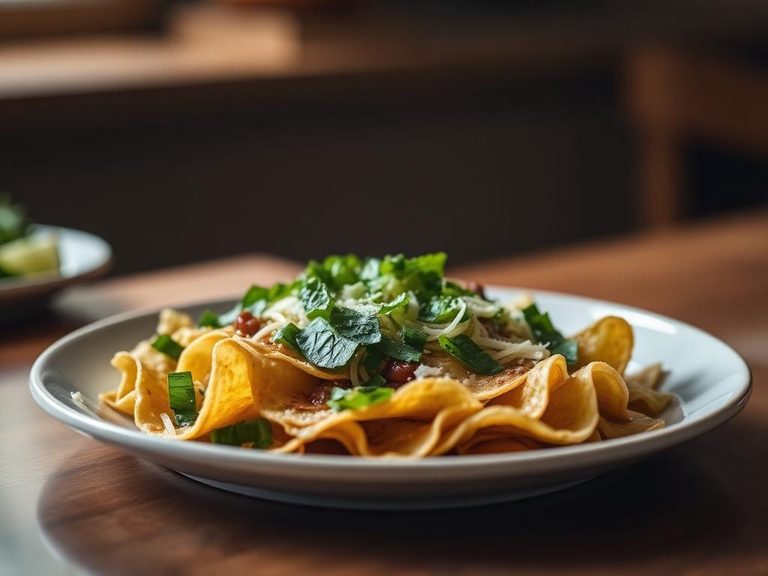
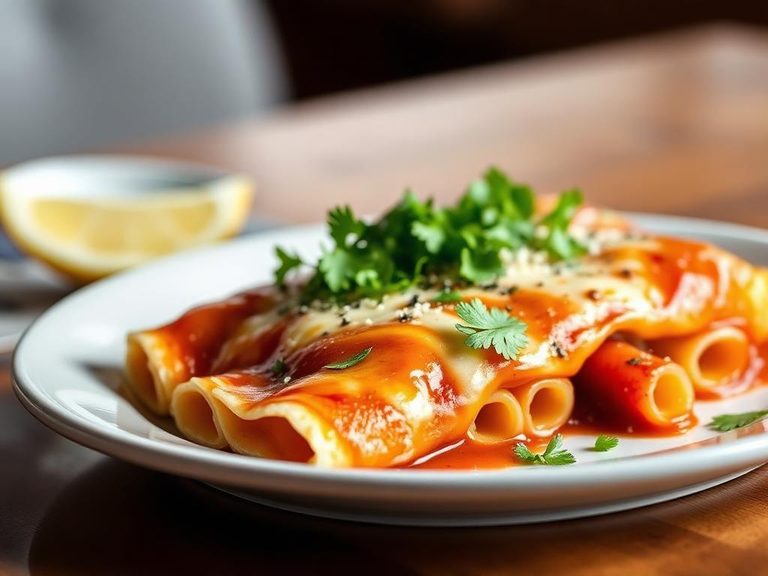
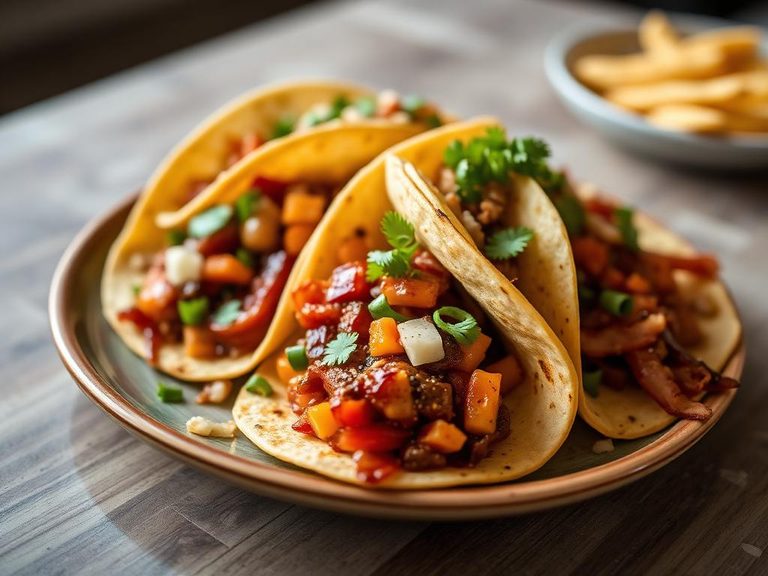

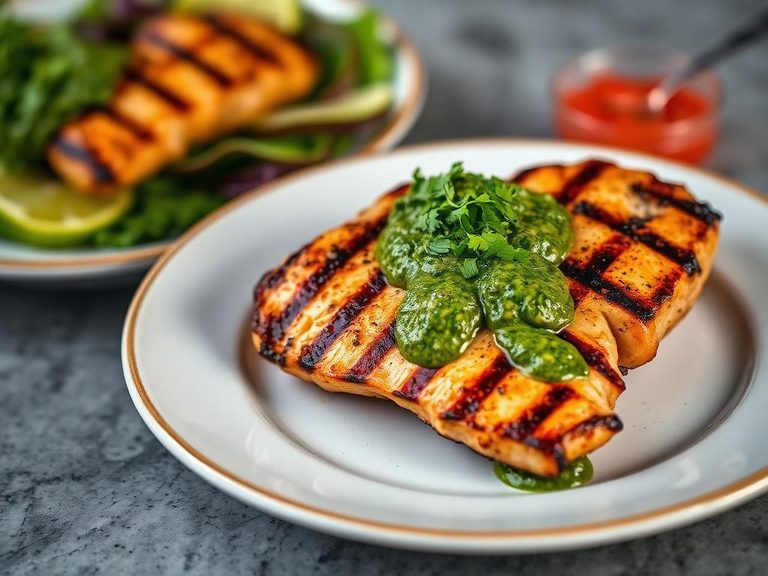
🌍 Where it's eaten
💡 Did you know?
The traditional Mexican salsa verde gets its green color from tomatillos, which are not green tomatoes but a distinct fruit in the nightshade family, related to the cape gooseberry.
Full nutrition (USDA data · scales with serving)
| Water | 89.5 g |
| Energy | 38.0 kcal |
| Protein | 1.1 g |
| Total lipid (fat) | 0.89 g |
| Carbohydrate, by difference | 6.4 g |
| Fiber, total dietary | 1.9 g |
| Total Sugars | 3.5 g |
| Calcium, Ca | 9.0 mg |
| Iron, Fe | 0.65 mg |
| Magnesium, Mg | 19.0 mg |
| Phosphorus, P | 41.0 mg |
| Potassium, K | 259 mg |
| Sodium, Na | 906 mg |
| Zinc, Zn | 0.25 mg |
| Copper, Cu | 0.08 mg |
| Selenium, Se | 0.80 ug |
| Vitamin C, total ascorbic acid | 12.3 mg |
| Thiamin | 0.05 mg |
| Riboflavin | 0.04 mg |
| Niacin | 1.6 mg |
| Vitamin B-6 | 0.08 mg |
| Folate, total | 8.0 ug |
| Folic acid | 0.00 ug |
| Folate, food | 8.0 ug |
| Folate, DFE | 8.0 ug |
| Choline, total | 7.9 mg |
| Vitamin B-12 | 0.00 ug |
| Vitamin B-12, added | 0.00 ug |
| Vitamin A, RAE | 11.0 ug |
| Retinol | 0.00 ug |
| Carotene, beta | 123 ug |
| Carotene, alpha | 10.0 ug |
| Cryptoxanthin, beta | 5.0 ug |
| Lycopene | 0.00 ug |
| Lutein + zeaxanthin | 422 ug |
| Vitamin E (alpha-tocopherol) | 0.43 mg |
| Vitamin E, added | 0.00 mg |
| Vitamin D (D2 + D3) | 0.00 ug |
| Vitamin K (phylloquinone) | 13.6 ug |
| Alcohol, ethyl | 0.00 g |
| Caffeine | 0.00 mg |
| Theobromine | 0.00 mg |
Fat & fatty acid profile (per 100g)
| Fatty acids, total saturated | 0.00 g |
| SFA 4:0 | 0.00 g |
| SFA 6:0 | 0.00 g |
| SFA 8:0 | 0.00 g |
| SFA 10:0 | 0.00 g |
| SFA 12:0 | 0.00 g |
| SFA 14:0 | 0.00 g |
| SFA 16:0 | 0.00 g |
| SFA 18:0 | 0.00 g |
| Fatty acids, total monounsaturated | 0.00 g |
| MUFA 16:1 | 0.00 g |
| MUFA 18:1 | 0.00 g |
| MUFA 20:1 | 0.00 g |
| MUFA 22:1 | 0.00 g |
| Fatty acids, total polyunsaturated | 0.00 g |
| PUFA 18:2 | 0.00 g |
| PUFA 18:3 | 0.00 g |
| PUFA 18:4 | 0.00 g |
| PUFA 20:4 | 0.00 g |
| PUFA 20:5 n-3 (EPA) | 0.00 g |
| PUFA 22:5 n-3 (DPA) | 0.00 g |
| PUFA 22:6 n-3 (DHA) | 0.00 g |
| Cholesterol | 0.00 mg |
FAQ
Is salsa verde healthier than red salsa?
Both are low in calories, but salsa verde often has more fiber and vitamin C from tomatillos, while red salsa may have more lycopene from tomatoes. The healthiest choice depends on the specific recipe and ingredients.
Can I use salsa verde as a marinade?
Yes, its acidity from lime and tomatillos makes it an excellent marinade for meats like chicken or pork, helping to tenderize and flavor the protein.
How long does homemade salsa verde last?
Stored in an airtight container in the refrigerator, homemade salsa verde typically lasts 5-7 days. Freezing it can extend its life to about 3 months.
Nutrient density (calculated · NRF9.3)
Nutrient Rich Foods index: beneficial nutrients (protein, fiber, vitamins, minerals) minus saturated fat, added sugar & sodium, per 100 kcal.
NRF9.3 index — Fulgoni, Keast & Drewnowski, 2009. Computed from USDA nutrients.
Weight-loss friendliness (composite index)
Energy density 0.38 kcal/g · 12% calories from protein · 1.9 g fiber · 3.5 g sugar per 100 g.
Composite of energy density (Rolls et al., 1999), protein & fiber satiety, minus sugar. A calculated heuristic — ranks satiety-per-calorie, not a clinical measure.
Dietary load (calculated from USDA values)
Potential renal acid load. Positive = acid-forming, negative = alkaline-forming.
Sodium-to-potassium ratio: 3.50 (lower is better — aim for ≤ 1)
Sodium:potassium per WHO potassium guidance. Computed from USDA nutrients.