

Salsa, red
Common food
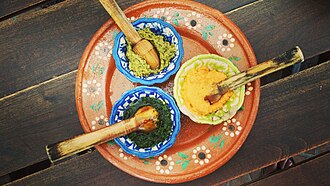
Photo: Wikipedia
A vibrant, chunky blend of ripe tomatoes, onions, peppers, and cilantro, red salsa delivers a bright, tangy punch with a refreshing, slightly crisp texture. It's a low-calorie powerhouse, offering a good source of fiber and a touch of natural sugar for a quick energy lift without the fat.
Calorie split: 17% protein · 78% carbs · 5% fat
↓ Full nutrition💚 Why it's loved
People adore it for its explosive, fresh flavor that instantly elevates simple dishes, and its incredible versatility as a dip, topping, or cooking ingredient. It's deeply woven into Mexican and Tex-Mex culinary culture, symbolizing communal meals and vibrant, shared experiences.
⚠️ Watch-outs & how to enjoy it better
Its high sodium content can be a concern for those monitoring blood pressure, and the natural sugars, while minimal, can contribute to blood-sugar spikes if consumed in large, isolated portions. To counteract this, pair it with protein and healthy fats (like chips with guacamole or alongside grilled chicken) to slow sugar absorption, and opt for low-sodium versions or homemade batches where you control the salt.
Key benefits
- Rich in lycopene from tomatoes, an antioxidant linked to heart health.
- Good source of dietary fiber, aiding digestion and promoting fullness.
- Very low in fat and calories, ideal for weight management.
- Contains capsaicin from chili peppers, which may boost metabolism.
- Provides vitamin C from tomatoes and peppers, supporting immunity.
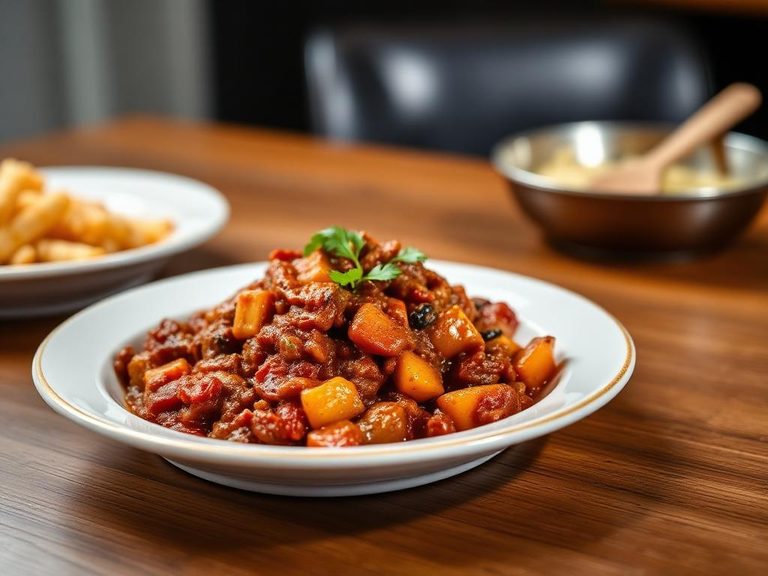
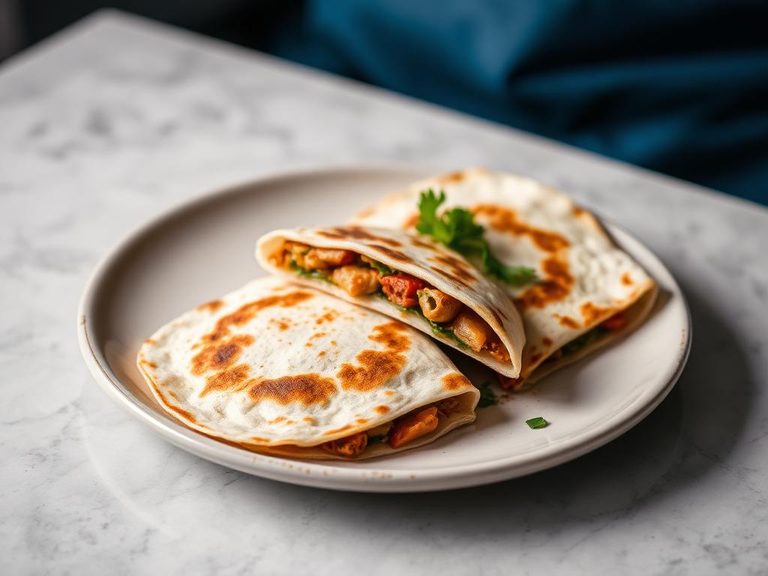
🍽️ Popular dishes
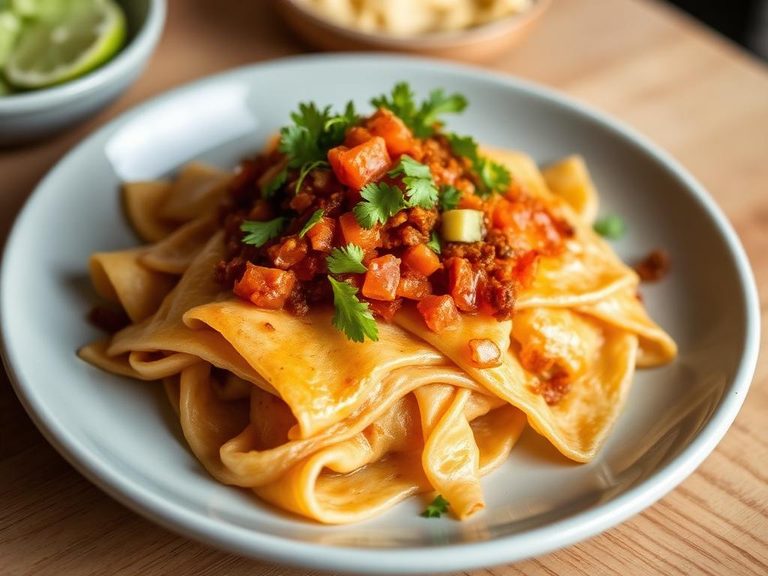

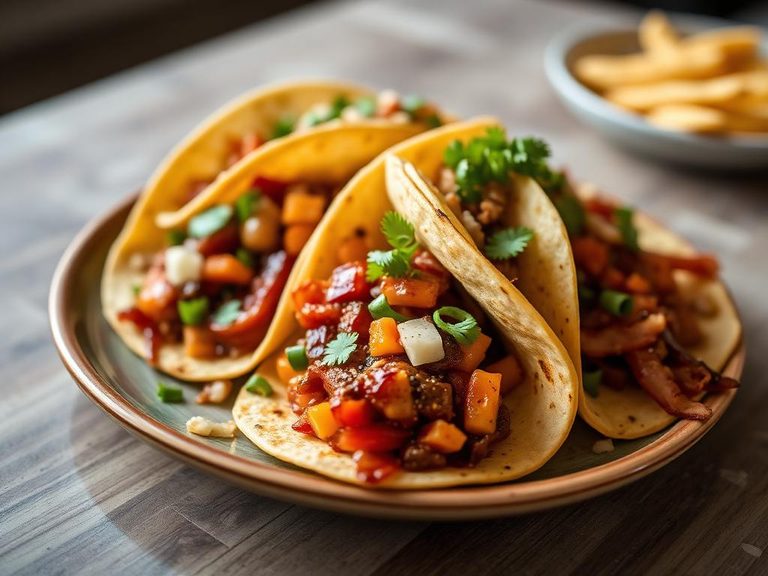
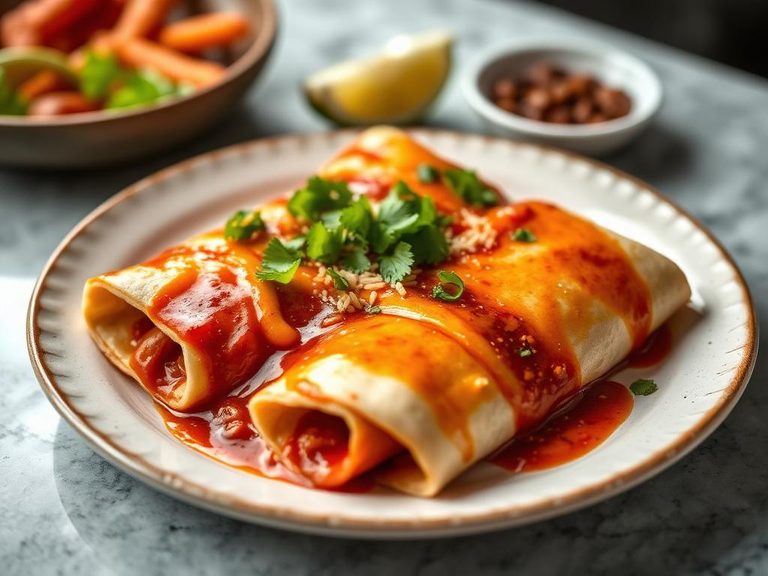
🌍 Where it's eaten
💡 Did you know?
The word 'salsa' simply means 'sauce' in Spanish, and the modern chunky tomato-based version we know today is a relatively recent evolution, popularized in the U.S. by commercial brands in the 1980s.
Full nutrition (USDA data · scales with serving)
| Water | 89.3 g |
| Energy | 34.0 kcal |
| Protein | 1.4 g |
| Total lipid (fat) | 0.19 g |
| Carbohydrate, by difference | 6.7 g |
| Fiber, total dietary | 1.8 g |
| Total Sugars | 3.8 g |
| Calcium, Ca | 28.0 mg |
| Iron, Fe | 0.42 mg |
| Magnesium, Mg | 15.0 mg |
| Phosphorus, P | 32.0 mg |
| Potassium, K | 258 mg |
| Sodium, Na | 656 mg |
| Zinc, Zn | 0.20 mg |
| Copper, Cu | 0.07 mg |
| Selenium, Se | 0.90 ug |
| Vitamin C, total ascorbic acid | 1.9 mg |
| Thiamin | 0.04 mg |
| Riboflavin | 0.03 mg |
| Niacin | 1.1 mg |
| Vitamin B-6 | 0.18 mg |
| Folate, total | 4.0 ug |
| Folic acid | 0.00 ug |
| Folate, food | 4.0 ug |
| Folate, DFE | 4.0 ug |
| Choline, total | 12.8 mg |
| Vitamin B-12 | 0.00 ug |
| Vitamin B-12, added | 0.00 ug |
| Vitamin A, RAE | 24.0 ug |
| Retinol | 0.00 ug |
| Carotene, beta | 288 ug |
| Carotene, alpha | 0.00 ug |
| Cryptoxanthin, beta | 0.00 ug |
| Lycopene | 6310 ug |
| Lutein + zeaxanthin | 211 ug |
| Vitamin E (alpha-tocopherol) | 1.2 mg |
| Vitamin E, added | 0.00 mg |
| Vitamin D (D2 + D3) | 0.00 ug |
| Vitamin K (phylloquinone) | 4.2 ug |
| Alcohol, ethyl | 0.00 g |
| Caffeine | 0.00 mg |
| Theobromine | 0.00 mg |
Fat & fatty acid profile (per 100g)
| Fatty acids, total saturated | 0.02 g |
| SFA 4:0 | 0.00 g |
| SFA 6:0 | 0.00 g |
| SFA 8:0 | 0.00 g |
| SFA 10:0 | 0.00 g |
| SFA 12:0 | 0.00 g |
| SFA 14:0 | 0.00 g |
| SFA 16:0 | 0.02 g |
| SFA 18:0 | 0.00 g |
| Fatty acids, total monounsaturated | 0.02 g |
| MUFA 16:1 | 0.00 g |
| MUFA 18:1 | 0.02 g |
| MUFA 20:1 | 0.00 g |
| MUFA 22:1 | 0.00 g |
| Fatty acids, total polyunsaturated | 0.08 g |
| PUFA 18:2 | 0.07 g |
| PUFA 18:3 | 0.00 g |
| PUFA 18:4 | 0.00 g |
| PUFA 20:4 | 0.00 g |
| PUFA 20:5 n-3 (EPA) | 0.00 g |
| PUFA 22:5 n-3 (DPA) | 0.00 g |
| PUFA 22:6 n-3 (DHA) | 0.00 g |
| Cholesterol | 0.00 mg |
FAQ
Is red salsa spicy?
Spiciness varies widely. Mild versions use little to no chili peppers, while hot salsas feature jalapeños, serranos, or habaneros. Always check the heat level or taste a small amount first.
How long does opened salsa last?
Commercially bottled salsa typically lasts 1-2 weeks in the refrigerator after opening. Fresh, homemade salsa should be consumed within 3-5 days for best quality and safety.
Can I freeze red salsa?
Yes, but the texture may become slightly watery upon thawing due to the high water content in tomatoes. It's best used in cooked dishes like soups or stews after freezing, rather than as a fresh dip.
Nutrient density (calculated · NRF9.3)
Nutrient Rich Foods index: beneficial nutrients (protein, fiber, vitamins, minerals) minus saturated fat, added sugar & sodium, per 100 kcal.
NRF9.3 index — Fulgoni, Keast & Drewnowski, 2009. Computed from USDA nutrients.
Weight-loss friendliness (composite index)
Energy density 0.34 kcal/g · 17% calories from protein · 1.8 g fiber · 3.8 g sugar per 100 g.
Composite of energy density (Rolls et al., 1999), protein & fiber satiety, minus sugar. A calculated heuristic — ranks satiety-per-calorie, not a clinical measure.
Dietary load (calculated from USDA values)
Potential renal acid load. Positive = acid-forming, negative = alkaline-forming.
Sodium-to-potassium ratio: 2.54 (lower is better — aim for ≤ 1)
Sodium:potassium per WHO potassium guidance. Computed from USDA nutrients.