

Rice, brown, medium-grain, cooked (Includes foods for USDA's Food Distribution Program)
Whole food · Cereal Grains and Pasta
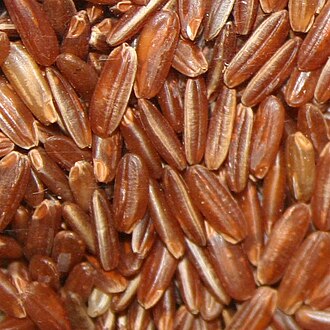
Photo: Wikipedia
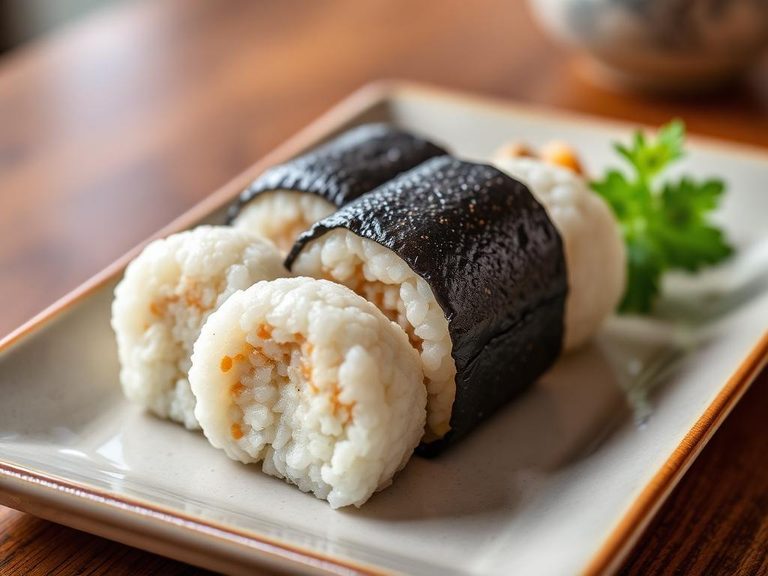
Medium-grain brown rice, once cooked, transforms into a tender, slightly chewy grain with a subtle, nutty sweetness and a satisfyingly sticky texture. It's a whole-grain powerhouse, offering a substantial 1.8g of fiber and 2.32g of protein per 100g, making it a more nutritious and filling base than its white counterpart. Its characteristic stickiness comes from a higher amylopectin starch content, which helps it hold together beautifully in dishes like risottos and sushi.
Calorie split: 8% protein · 85% carbs · 7% fat
↓ Full nutrition💚 Why it's loved
People love its comforting, earthy flavor and pleasantly chewy texture that provides a satisfying mouthfeel. Its natural stickiness makes it incredibly versatile, perfect for forming into balls, patties, or as a cohesive base for stews and stir-fries.
⚠️ Watch-outs & how to enjoy it better
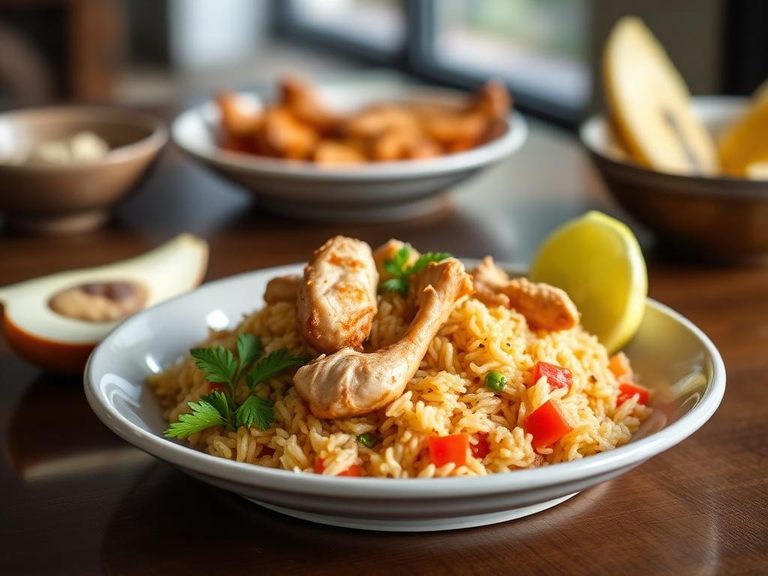
Its higher carbohydrate content can cause blood-sugar spikes if eaten alone, especially for those managing diabetes. To counteract this, pair it with a source of protein (like beans or chicken) and healthy fat (like avocado or olive oil) to slow digestion and stabilize blood sugar. Also, its longer cooking time compared to white rice can be a drawback for quick meals.
Key benefits
- High in magnesium, which supports muscle and nerve function.
- Contains manganese, essential for bone health and metabolism.
- Provides selenium, an antioxidant that helps protect cells.
- Rich in B vitamins like thiamine and niacin for energy production.
🍽️ Popular dishes
🌍 Where it's eaten
💡 Did you know?
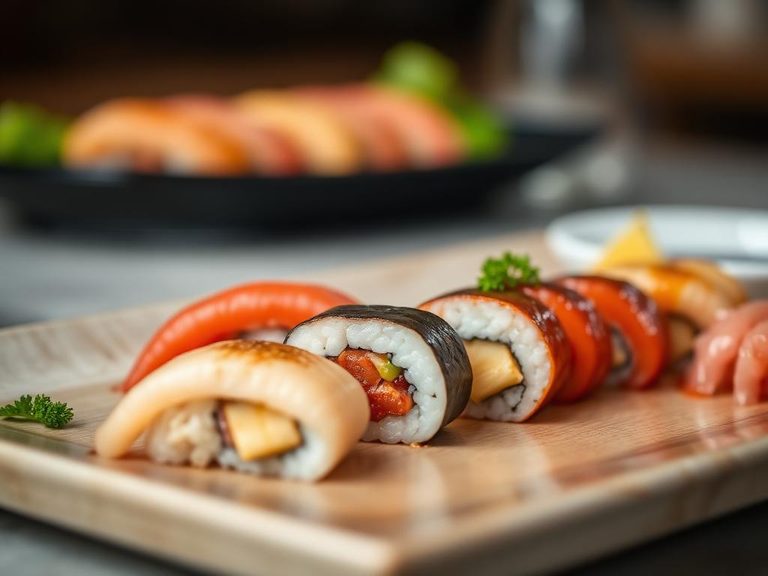
The stickiness of medium-grain rice is due to its high amylopectin starch content, which is why it's the preferred rice for making sushi, where grains need to adhere to each other and to the nori seaweed.
Full nutrition (USDA data · scales with serving)
| Water | 73.0 g |
| Energy | 112 kcal |
| Energy | 469 kj |
| Protein | 2.3 g |
| Total lipid (fat) | 0.83 g |
| Ash | 0.39 g |
| Carbohydrate, by difference | 23.5 g |
| Fiber, total dietary | 1.8 g |
| Calcium, Ca | 10.0 mg |
| Iron, Fe | 0.53 mg |
| Magnesium, Mg | 44.0 mg |
| Phosphorus, P | 77.0 mg |
| Potassium, K | 79.0 mg |
| Sodium, Na | 1.0 mg |
| Zinc, Zn | 0.62 mg |
| Copper, Cu | 0.08 mg |
| Manganese, Mn | 1.1 mg |
| Vitamin C, total ascorbic acid | 0.00 mg |
| Thiamin | 0.10 mg |
| Riboflavin | 0.01 mg |
| Niacin | 1.3 mg |
| Pantothenic acid | 0.39 mg |
| Vitamin B-6 | 0.15 mg |
| Folate, total | 4.0 ug |
| Folic acid | 0.00 ug |
| Folate, food | 4.0 ug |
| Folate, DFE | 4.0 ug |
| Vitamin B-12 | 0.00 ug |
| Vitamin A, RAE | 0.00 ug |
| Retinol | 0.00 ug |
| Vitamin A, IU | 0.00 iu |
| Vitamin D (D2 + D3), International Units | 0.00 iu |
| Vitamin D (D2 + D3) | 0.00 ug |
Fat & fatty acid profile (per 100g)
| Fatty acids, total saturated | 0.17 g |
| SFA 12:0 | 0.00 g |
| SFA 14:0 | 0.00 g |
| SFA 16:0 | 0.14 g |
| SFA 18:0 | 0.01 g |
| Fatty acids, total monounsaturated | 0.30 g |
| MUFA 16:1 | 0.00 g |
| MUFA 18:1 | 0.30 g |
| Fatty acids, total polyunsaturated | 0.30 g |
| PUFA 18:2 | 0.28 g |
| PUFA 18:3 | 0.01 g |
| Cholesterol | 0.00 mg |
Amino acid profile (per 100g)
| Tryptophan | 0.03 g |
| Threonine | 0.09 g |
| Isoleucine | 0.10 g |
| Leucine | 0.19 g |
| Lysine | 0.09 g |
| Methionine | 0.05 g |
| Cystine | 0.03 g |
| Phenylalanine | 0.12 g |
| Tyrosine | 0.09 g |
| Valine | 0.14 g |
| Arginine | 0.17 g |
| Histidine | 0.06 g |
| Alanine | 0.14 g |
| Aspartic acid | 0.22 g |
| Glutamic acid | 0.47 g |
| Glycine | 0.11 g |
| Proline | 0.11 g |
| Serine | 0.12 g |
FAQ
How does medium-grain brown rice differ from long-grain brown rice?
Medium-grain rice is shorter and plumper, with a higher starch content that makes it stickier and more tender when cooked. Long-grain rice is more slender and cooks up fluffier and more separate.
Is brown rice a good source of protein?
While it contains a decent amount of plant-based protein (about 2.32g per 100g cooked), it's not a complete protein on its own. It's best paired with legumes, nuts, or animal proteins to form a complete amino acid profile.
Why is brown rice considered healthier than white rice?
Brown rice is a whole grain, meaning it retains its bran and germ layers, which are rich in fiber, vitamins, and minerals. White rice has these nutritious layers removed, leaving mostly the starchy endosperm.
Nutrient density (calculated · NRF9.3)
Nutrient Rich Foods index: beneficial nutrients (protein, fiber, vitamins, minerals) minus saturated fat, added sugar & sodium, per 100 kcal.
NRF9.3 index — Fulgoni, Keast & Drewnowski, 2009. Computed from USDA nutrients.
Weight-loss friendliness (composite index)
Energy density 1.12 kcal/g · 8% calories from protein · 1.8 g fiber · 0.0 g sugar per 100 g.
Composite of energy density (Rolls et al., 1999), protein & fiber satiety, minus sugar. A calculated heuristic — ranks satiety-per-calorie, not a clinical measure.
Dietary load (calculated from USDA values)
Potential renal acid load. Positive = acid-forming, negative = alkaline-forming.
Sodium-to-potassium ratio: 0.01 (lower is better — aim for ≤ 1)
Sodium:potassium per WHO potassium guidance. Computed from USDA nutrients.