

Potatoes, frozen, french fried, par fried, extruded, prepared, heated in oven, without salt
Whole food · Vegetables and Vegetable Products

Photo: Wikipedia
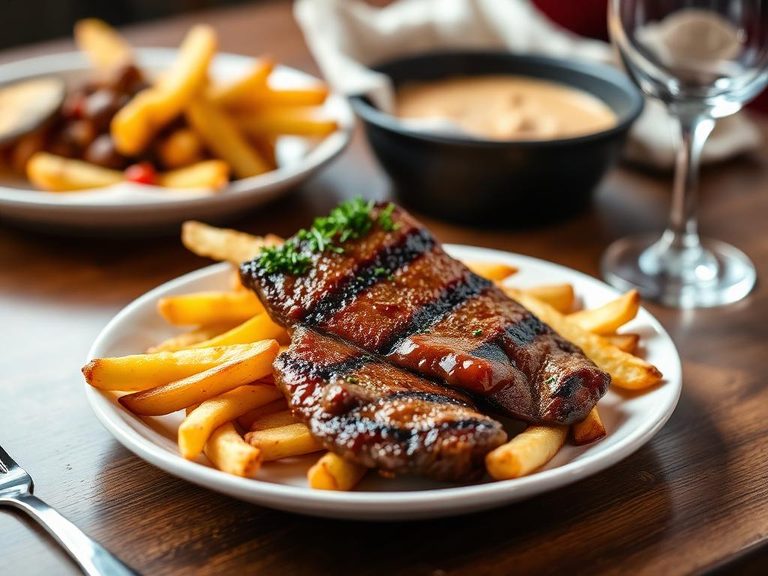
These are extruded potato fries, par-fried and then oven-heated to achieve a crisp exterior and fluffy interior. They offer a satisfying crunch with a mild, earthy potato flavor, delivering a moderate calorie density with a notable fat content from the pre-frying step.
Calorie split: 4% protein · 47% carbs · 49% fat
↓ Full nutrition💚 Why it's loved
People adore them for their reliable crunch and comforting, savory taste that pairs perfectly with a wide range of meals. They are a beloved, easy-to-prepare staple in home kitchens and casual dining.
⚠️ Watch-outs & how to enjoy it better
The par-frying process adds significant fat, and the high glycemic index can cause rapid blood sugar spikes. To mitigate this, pair them with a source of protein or healthy fat (like grilled chicken or avocado) and practice portion control by measuring a single serving.
Key benefits
- Provides quick energy from complex carbohydrates
- Contains dietary fiber for digestive health
- Source of potassium, an essential electrolyte
- Offers a convenient, portion-controlled side dish
🍽️ Popular dishes
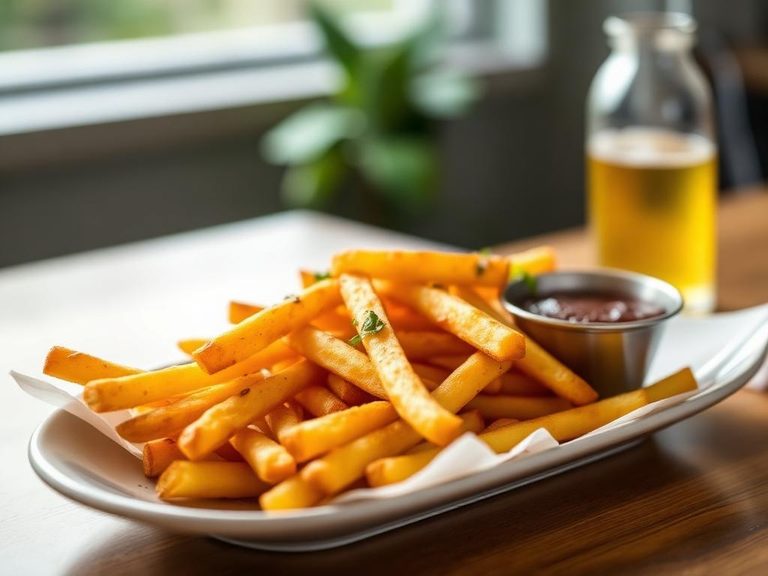
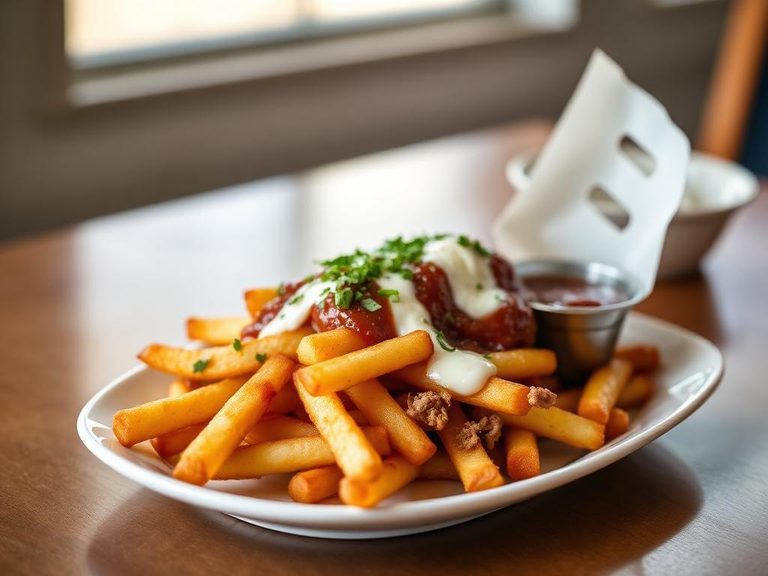
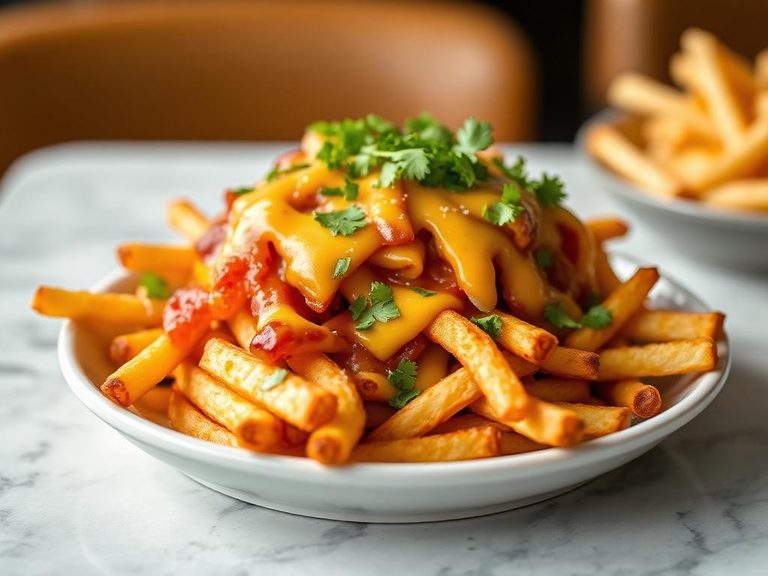
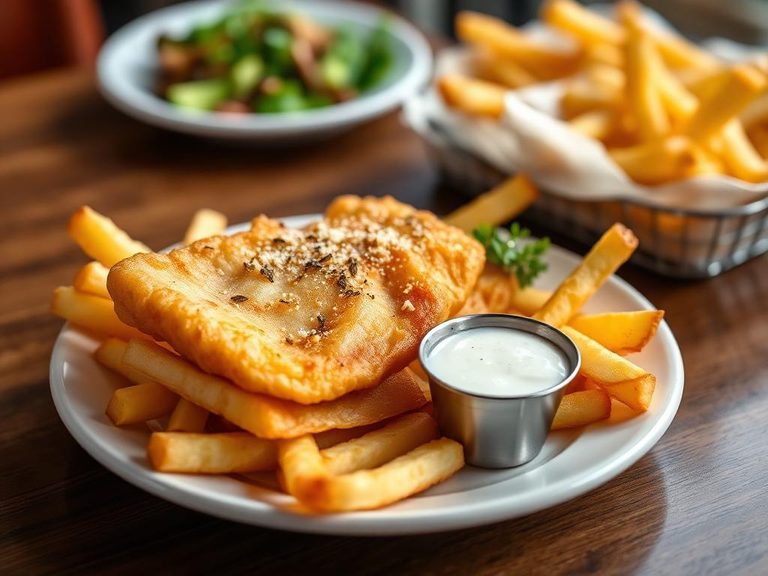
🌍 Where it's eaten
💡 Did you know?
The 'extruded' method involves mashing potatoes and forcing the paste through a die to create a uniform shape, which is then fried—a process that ensures consistency but differs from traditional cut fries.
Full nutrition (USDA data · scales with serving)
| Water | 35.4 g |
| Energy | 333 kcal |
| Energy | 1393 kj |
| Protein | 3.5 g |
| Total lipid (fat) | 18.7 g |
| Ash | 2.7 g |
| Carbohydrate, by difference | 39.7 g |
| Fiber, total dietary | 3.2 g |
| Calcium, Ca | 12.0 mg |
| Iron, Fe | 1.7 mg |
| Magnesium, Mg | 23.0 mg |
| Phosphorus, P | 96.0 mg |
| Potassium, K | 539 mg |
| Sodium, Na | 613 mg |
| Zinc, Zn | 0.41 mg |
| Copper, Cu | 0.04 mg |
| Manganese, Mn | 0.28 mg |
| Selenium, Se | 0.60 ug |
| Vitamin C, total ascorbic acid | 6.2 mg |
| Thiamin | 0.08 mg |
| Riboflavin | 0.04 mg |
| Niacin | 2.7 mg |
| Pantothenic acid | 0.61 mg |
| Vitamin B-6 | 0.21 mg |
| Folate, total | 22.0 ug |
| Folic acid | 0.00 ug |
| Folate, food | 22.0 ug |
| Folate, DFE | 22.0 ug |
| Vitamin B-12 | 0.00 ug |
| Vitamin A, RAE | 0.00 ug |
| Retinol | 0.00 ug |
| Vitamin A, IU | 0.00 iu |
| Vitamin D (D2 + D3), International Units | 0.00 iu |
| Vitamin D (D2 + D3) | 0.00 ug |
Fat & fatty acid profile (per 100g)
| Fatty acids, total saturated | 6.0 g |
| SFA 14:0 | 0.08 g |
| SFA 16:0 | 3.8 g |
| SFA 18:0 | 1.3 g |
| Fatty acids, total monounsaturated | 11.3 g |
| MUFA 16:1 | 0.04 g |
| MUFA 18:1 | 11.3 g |
| Fatty acids, total polyunsaturated | 1.4 g |
| PUFA 18:2 | 1.4 g |
| Cholesterol | 0.00 mg |
Amino acid profile (per 100g)
| Tryptophan | 0.05 g |
| Threonine | 0.16 g |
| Isoleucine | 0.15 g |
| Leucine | 0.21 g |
| Lysine | 0.19 g |
| Methionine | 0.04 g |
| Cystine | 0.02 g |
| Phenylalanine | 0.15 g |
| Tyrosine | 0.09 g |
| Valine | 0.18 g |
| Arginine | 0.17 g |
| Histidine | 0.06 g |
| Alanine | 0.12 g |
| Aspartic acid | 0.82 g |
| Glutamic acid | 0.55 g |
| Glycine | 0.13 g |
| Proline | 0.11 g |
| Serine | 0.13 g |
FAQ
How do these differ from regular frozen french fries?
They are made from a potato mash or dough that is extruded into shape, rather than being cut from whole potatoes. This results in a more uniform texture and shape.
Why are they 'par fried'?
Par-frying (partial frying) cooks the fry partially, sets the structure, and develops a preliminary crust. This ensures the final oven heating results in a crispier texture faster.
Are they a good source of any vitamins?
While processing reduces some nutrients, they still retain some of the potato's original vitamin C and B6, though not in significant daily-value amounts per serving.
Nutrient density (calculated · NRF9.3)
Nutrient Rich Foods index: beneficial nutrients (protein, fiber, vitamins, minerals) minus saturated fat, added sugar & sodium, per 100 kcal.
NRF9.3 index — Fulgoni, Keast & Drewnowski, 2009. Computed from USDA nutrients.
Weight-loss friendliness (composite index)
Energy density 3.33 kcal/g · 4% calories from protein · 3.2 g fiber · 0.0 g sugar per 100 g.
Composite of energy density (Rolls et al., 1999), protein & fiber satiety, minus sugar. A calculated heuristic — ranks satiety-per-calorie, not a clinical measure.
Dietary load (calculated from USDA values)
Potential renal acid load. Positive = acid-forming, negative = alkaline-forming.
Sodium-to-potassium ratio: 1.14 (lower is better — aim for ≤ 1)
Sodium:potassium per WHO potassium guidance. Computed from USDA nutrients.