

Oysters, canned
Common food

Photo: Wikipedia
Canned oysters are shucked mollusks preserved in their own brine or a light saline solution, offering a concentrated, briny flavor with a soft, slightly chewy texture. They are a nutritional powerhouse, exceptionally high in protein (7.67g per 100g) and a standout source of essential minerals like zinc and selenium, all for a modest 74 calories.
Calorie split: 43% protein · 24% carbs · 34% fat
↓ Full nutrition💚 Why it's loved
People love canned oysters for their intense, savory oceanic flavor that can elevate simple dishes like stews, pastas, and omelets. Their long shelf life and ready-to-eat convenience make them a beloved pantry staple for quick, protein-rich meals.
⚠️ Watch-outs & how to enjoy it better
Canned oysters are often high in sodium, which can be a concern for those managing blood pressure. They are also a common shellfish allergen and contain purines, which may require moderation for individuals with gout. To counteract, rinse them briefly before use to reduce sodium, and always ensure they are part of a balanced meal rather than consumed in large, isolated portions.
Key benefits
- Excellent source of high-quality protein for muscle maintenance.
- Rich in zinc, crucial for immune function and wound healing.
- Provides significant selenium, an important antioxidant mineral.
- Low in calories while being nutrient-dense.
- Convenient and shelf-stable source of marine nutrition.
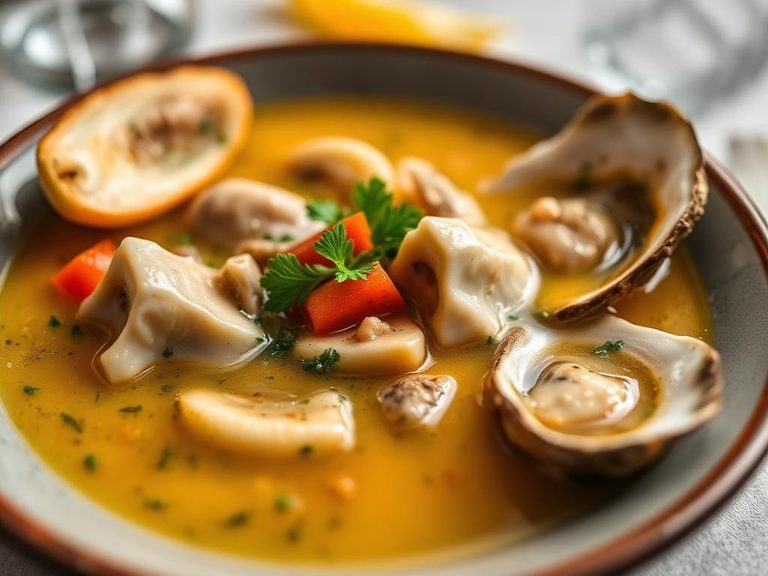
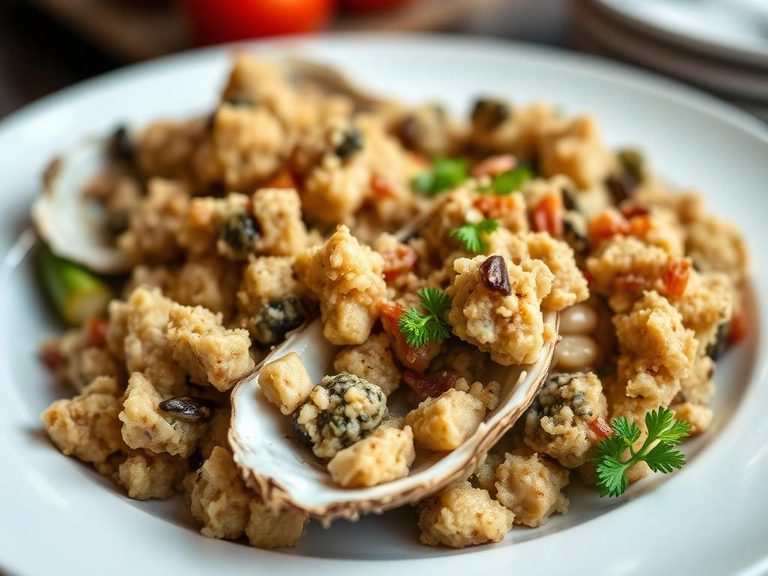
🍽️ Popular dishes




🌍 Where it's eaten
💡 Did you know?
A single serving of canned oysters can provide over 100% of the daily recommended intake of vitamin B12, a nutrient vital for nerve function that is naturally abundant in shellfish.
Full nutrition (USDA data · scales with serving)
| Water | 83.8 g |
| Energy | 74.0 kcal |
| Protein | 7.7 g |
| Total lipid (fat) | 2.7 g |
| Carbohydrate, by difference | 4.3 g |
| Fiber, total dietary | 0.00 g |
| Total Sugars | 0.00 g |
| Calcium, Ca | 49.0 mg |
| Iron, Fe | 7.3 mg |
| Magnesium, Mg | 59.0 mg |
| Phosphorus, P | 151 mg |
| Potassium, K | 249 mg |
| Sodium, Na | 122 mg |
| Zinc, Zn | 98.9 mg |
| Copper, Cu | 4.8 mg |
| Selenium, Se | 38.9 ug |
| Vitamin C, total ascorbic acid | 5.4 mg |
| Thiamin | 0.16 mg |
| Riboflavin | 0.18 mg |
| Niacin | 1.4 mg |
| Vitamin B-6 | 0.10 mg |
| Folate, total | 10.0 ug |
| Folic acid | 0.00 ug |
| Folate, food | 10.0 ug |
| Folate, DFE | 10.0 ug |
| Choline, total | 88.0 mg |
| Vitamin B-12 | 20.8 ug |
| Vitamin B-12, added | 0.00 ug |
| Vitamin A, RAE | 98.0 ug |
| Retinol | 98.0 ug |
| Carotene, beta | 0.00 ug |
| Carotene, alpha | 0.00 ug |
| Cryptoxanthin, beta | 0.00 ug |
| Lycopene | 0.00 ug |
| Lutein + zeaxanthin | 0.00 ug |
| Vitamin E (alpha-tocopherol) | 0.92 mg |
| Vitamin E, added | 0.00 mg |
| Vitamin D (D2 + D3) | 0.00 ug |
| Vitamin K (phylloquinone) | 0.10 ug |
| Alcohol, ethyl | 0.00 g |
| Caffeine | 0.00 mg |
| Theobromine | 0.00 mg |
Fat & fatty acid profile (per 100g)
| Fatty acids, total saturated | 0.69 g |
| SFA 4:0 | 0.00 g |
| SFA 6:0 | 0.00 g |
| SFA 8:0 | 0.00 g |
| SFA 10:0 | 0.00 g |
| SFA 12:0 | 0.00 g |
| SFA 14:0 | 0.12 g |
| SFA 16:0 | 0.47 g |
| SFA 18:0 | 0.07 g |
| Fatty acids, total monounsaturated | 0.27 g |
| MUFA 16:1 | 0.08 g |
| MUFA 18:1 | 0.10 g |
| MUFA 20:1 | 0.07 g |
| MUFA 22:1 | 0.01 g |
| Fatty acids, total polyunsaturated | 0.80 g |
| PUFA 18:2 | 0.05 g |
| PUFA 18:3 | 0.04 g |
| PUFA 18:4 | 0.10 g |
| PUFA 20:4 | 0.07 g |
| PUFA 20:5 n-3 (EPA) | 0.23 g |
| PUFA 22:5 n-3 (DPA) | 0.05 g |
| PUFA 22:6 n-3 (DHA) | 0.25 g |
| Cholesterol | 60.0 mg |
FAQ
Are canned oysters as nutritious as fresh ones?
Yes, the canning process preserves most of the key nutrients like protein, zinc, and B12. The primary difference is often a higher sodium content in the canning liquid and a softer texture.
How should I store and use an opened can of oysters?
Transfer any unused oysters and their liquid to a covered container in the refrigerator and use within 2-3 days. They are fully cooked and ready to eat, but are best heated through in soups, stews, or sauces.
What's the best way to reduce the 'canned' taste?
A quick rinse under cold water and a pat dry can help. Incorporating them into flavorful dishes with aromatics like onions, garlic, herbs, and a splash of wine or lemon juice also beautifully complements their natural brininess.
Nutrient density (calculated · NRF9.3)
Nutrient Rich Foods index: beneficial nutrients (protein, fiber, vitamins, minerals) minus saturated fat, added sugar & sodium, per 100 kcal.
NRF9.3 index — Fulgoni, Keast & Drewnowski, 2009. Computed from USDA nutrients.
Weight-loss friendliness (composite index)
Energy density 0.74 kcal/g · 41% calories from protein · 0.0 g fiber · 0.0 g sugar per 100 g.
Composite of energy density (Rolls et al., 1999), protein & fiber satiety, minus sugar. A calculated heuristic — ranks satiety-per-calorie, not a clinical measure.
Dietary load (calculated from USDA values)
Potential renal acid load. Positive = acid-forming, negative = alkaline-forming.
Sodium-to-potassium ratio: 0.49 (lower is better — aim for ≤ 1)
Sodium:potassium per WHO potassium guidance. Computed from USDA nutrients.