

Oysters, raw
Common food

Photo: Wikipedia
Raw oysters are briny, plump mollusks prized for their clean, oceanic flavor and slippery, custard-like texture that dissolves on the tongue. Nutritionally, they are a lean, high-protein food with minimal fat and carbohydrates. Their standout feature is an exceptionally high concentration of zinc, a mineral vital for immune function and cell repair.
Calorie split: 47% protein · 22% carbs · 31% fat
↓ Full nutrition💚 Why it's loved
People love the pure, mineral-driven taste of the sea and the unique, luxurious ritual of eating them on the half shell. They are a centerpiece of social gatherings, from French wine bars to American seafood shacks, symbolizing celebration and indulgence.
⚠️ Watch-outs & how to enjoy it better
Raw oysters carry a risk of foodborne illness from bacteria like Vibrio, especially for those with compromised immune systems, liver disease, or who are pregnant. To mitigate this, purchase from reputable, well-chilled sources and consume them as fresh as possible; avoid them during months without an 'R' in the Northern Hemisphere (May-August) when water is warmer. They are also high in sodium and a common allergen.
Key benefits
- Excellent source of zinc for immune health
- Rich in vitamin B12 for nerve function
- High in selenium, a powerful antioxidant
- Good source of iron and copper
- Low in calories and carbohydrates
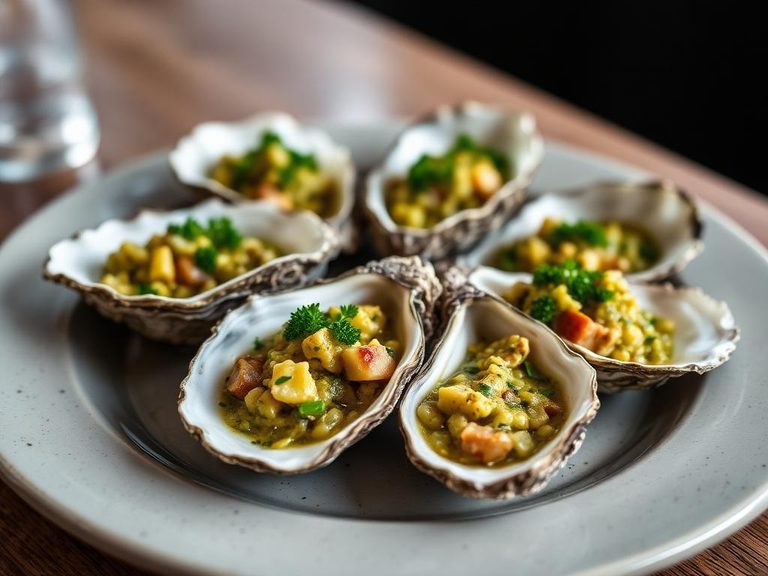
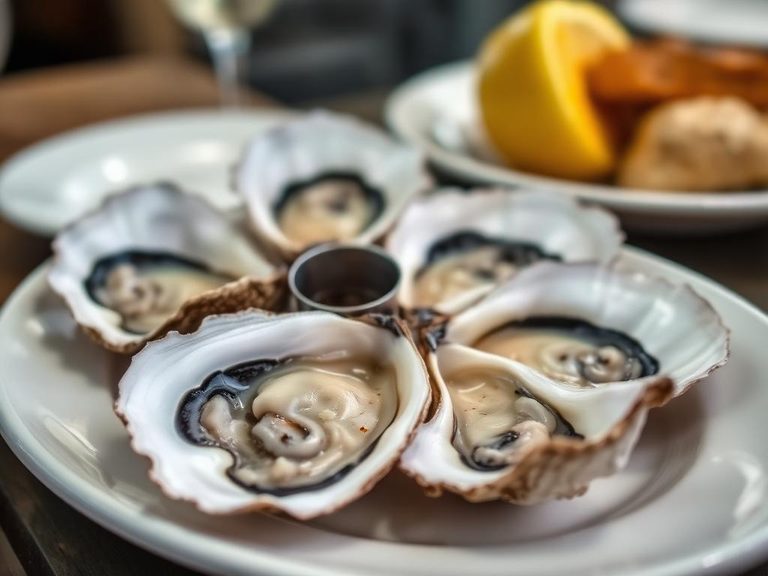
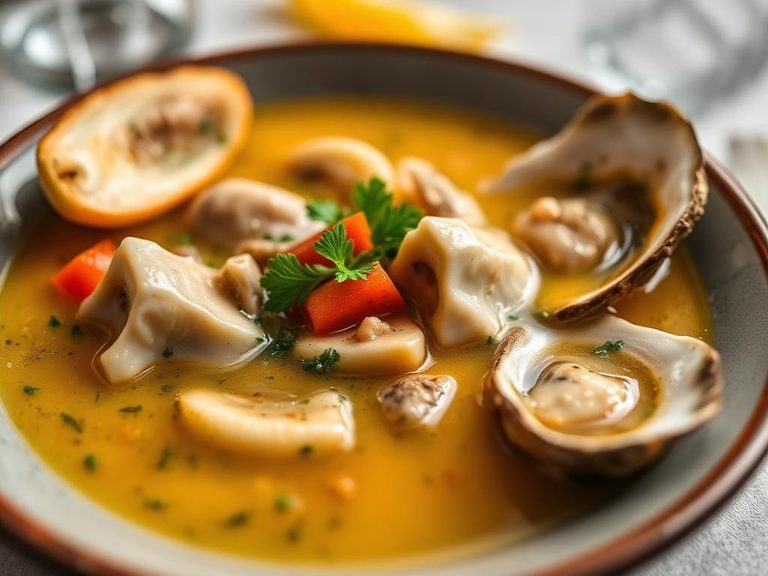
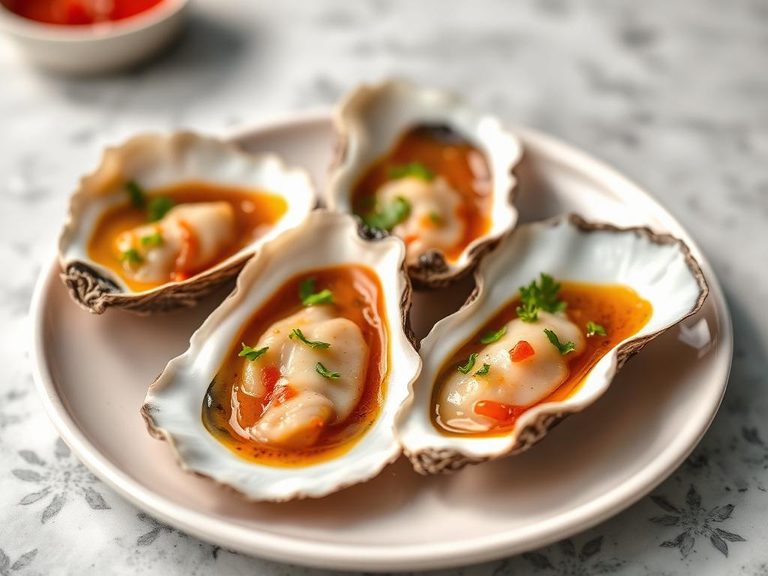
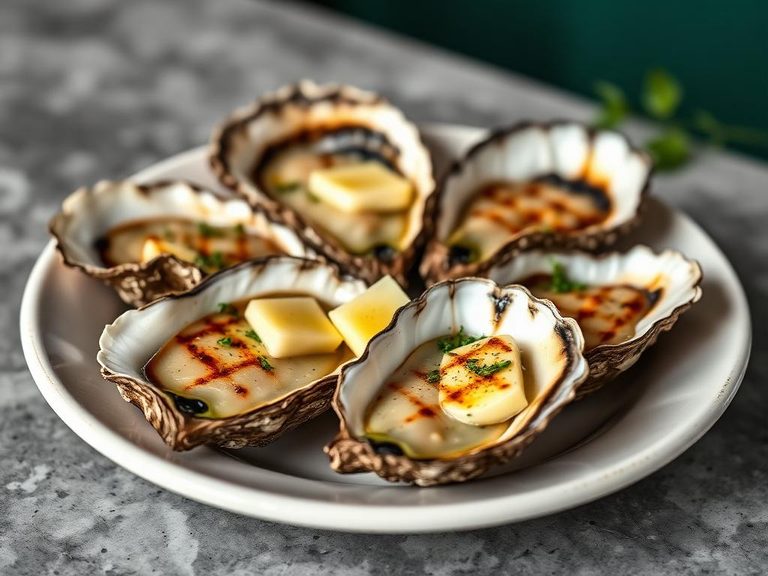
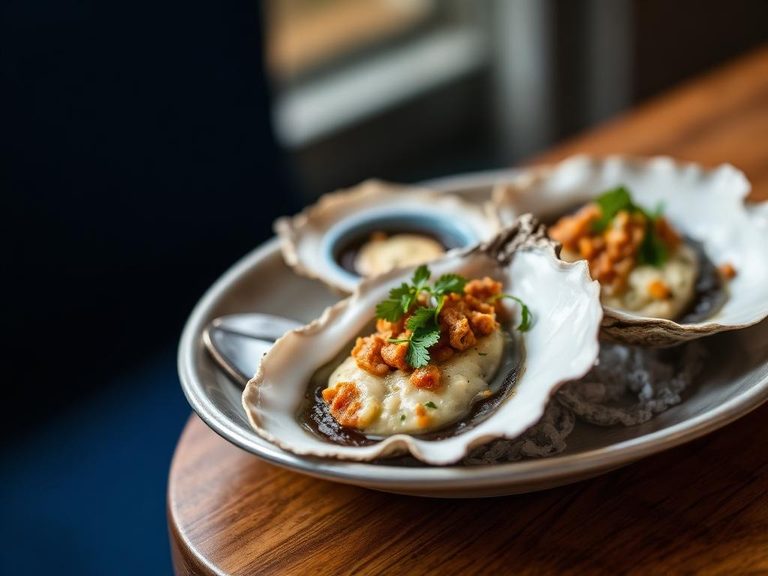
🍽️ Popular dishes
🌍 Where it's eaten
💡 Did you know?
The world's largest oyster, found in Denmark in 2017, measured over 35 cm (14 inches) long and is estimated to be several hundred years old.
Full nutrition (USDA data · scales with serving)
| Water | 89.0 g |
| Energy | 51.0 kcal |
| Protein | 5.7 g |
| Total lipid (fat) | 1.7 g |
| Carbohydrate, by difference | 2.7 g |
| Fiber, total dietary | 0.00 g |
| Total Sugars | 0.62 g |
| Calcium, Ca | 59.0 mg |
| Iron, Fe | 4.6 mg |
| Magnesium, Mg | 18.0 mg |
| Phosphorus, P | 97.0 mg |
| Potassium, K | 156 mg |
| Sodium, Na | 85.0 mg |
| Zinc, Zn | 39.3 mg |
| Copper, Cu | 2.9 mg |
| Selenium, Se | 19.7 ug |
| Vitamin C, total ascorbic acid | 0.00 mg |
| Thiamin | 0.02 mg |
| Riboflavin | 0.09 mg |
| Niacin | 0.93 mg |
| Vitamin B-6 | 0.03 mg |
| Folate, total | 7.0 ug |
| Folic acid | 0.00 ug |
| Folate, food | 7.0 ug |
| Folate, DFE | 7.0 ug |
| Choline, total | 65.0 mg |
| Vitamin B-12 | 8.8 ug |
| Vitamin B-12, added | 0.00 ug |
| Vitamin A, RAE | 13.0 ug |
| Retinol | 13.0 ug |
| Carotene, beta | 0.00 ug |
| Carotene, alpha | 0.00 ug |
| Cryptoxanthin, beta | 0.00 ug |
| Lycopene | 0.00 ug |
| Lutein + zeaxanthin | 0.00 ug |
| Vitamin E (alpha-tocopherol) | 0.85 mg |
| Vitamin E, added | 0.00 mg |
| Vitamin D (D2 + D3) | 0.00 ug |
| Vitamin K (phylloquinone) | 1.0 ug |
| Alcohol, ethyl | 0.00 g |
| Caffeine | 0.00 mg |
| Theobromine | 0.00 mg |
Fat & fatty acid profile (per 100g)
| Fatty acids, total saturated | 0.47 g |
| SFA 4:0 | 0.00 g |
| SFA 6:0 | 0.00 g |
| SFA 8:0 | 0.00 g |
| SFA 10:0 | 0.00 g |
| SFA 12:0 | 0.00 g |
| SFA 14:0 | 0.05 g |
| SFA 16:0 | 0.32 g |
| SFA 18:0 | 0.07 g |
| Fatty acids, total monounsaturated | 0.25 g |
| MUFA 16:1 | 0.05 g |
| MUFA 18:1 | 0.17 g |
| MUFA 20:1 | 0.03 g |
| MUFA 22:1 | 0.00 g |
| Fatty acids, total polyunsaturated | 0.53 g |
| PUFA 18:2 | 0.04 g |
| PUFA 18:3 | 0.08 g |
| PUFA 18:4 | 0.05 g |
| PUFA 20:4 | 0.02 g |
| PUFA 20:5 n-3 (EPA) | 0.18 g |
| PUFA 22:5 n-3 (DPA) | 0.01 g |
| PUFA 22:6 n-3 (DHA) | 0.14 g |
| Cholesterol | 40.0 mg |
FAQ
What does 'R' month' mean for eating oysters?
It's an old rule suggesting oysters are safer and tastier in cooler months (September through April). Warmer water in summer can promote bacterial growth and spawning, which can affect flavor and safety.
How can I tell if a raw oyster is bad?
A fresh oyster should smell like the ocean, not fishy or ammonia-like. Its shell should be tightly closed or close when tapped. If open and doesn't close, discard it. The meat should be plump and moist, not dry or shriveled.
What's the difference between East and West Coast oysters?
East Coast oysters (like Bluepoint) tend to be smaller, saltier, and have a firm texture. West Coast oysters (like Kumamoto) are often larger, with a sweeter, more melon-like flavor and a creamier, more delicate texture.
Nutrient density (calculated · NRF9.3)
Nutrient Rich Foods index: beneficial nutrients (protein, fiber, vitamins, minerals) minus saturated fat, added sugar & sodium, per 100 kcal.
NRF9.3 index — Fulgoni, Keast & Drewnowski, 2009. Computed from USDA nutrients.
Weight-loss friendliness (composite index)
Energy density 0.51 kcal/g · 45% calories from protein · 0.0 g fiber · 0.6 g sugar per 100 g.
Composite of energy density (Rolls et al., 1999), protein & fiber satiety, minus sugar. A calculated heuristic — ranks satiety-per-calorie, not a clinical measure.
Dietary load (calculated from USDA values)
Potential renal acid load. Positive = acid-forming, negative = alkaline-forming.
Sodium-to-potassium ratio: 0.54 (lower is better — aim for ≤ 1)
Sodium:potassium per WHO potassium guidance. Computed from USDA nutrients.