

Oysters, steamed
Common food

Photo: Wikipedia
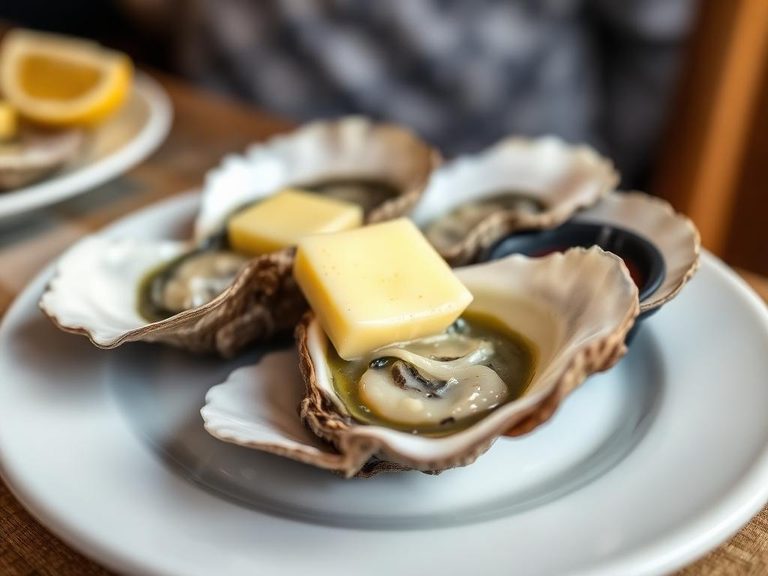
Steamed oysters are tender, briny bivalves with a soft, slightly chewy texture and a clean, oceanic sweetness. This gentle cooking method preserves their delicate flavor and impressive nutritional profile, particularly their high protein content relative to calories. Each 100g serving provides a substantial 7.23g of protein, making them a lean, nutrient-dense choice.
Calorie split: 47% protein · 22% carbs · 31% fat
↓ Full nutrition💚 Why it's loved
People adore steamed oysters for their pure, unadulterated taste of the sea—a burst of briny sweetness that feels both luxurious and primal. Their versatility allows them to be enjoyed simply with a squeeze of lemon or as the star in more complex preparations.
⚠️ Watch-outs & how to enjoy it better
The primary caution is for individuals with shellfish allergies, which can be severe. Oysters are also high in sodium, which may concern those monitoring salt intake. To counteract, pair with potassium-rich foods like steamed vegetables, control portion size, and ensure they are sourced from safe, clean waters.
Key benefits
- Excellent source of high-quality, complete protein
- Very low in calories (65 kcal per 100g)
- Naturally low in fat and carbohydrates
- Rich in essential minerals like zinc and selenium
- Contains omega-3 fatty acids
🍽️ Popular dishes
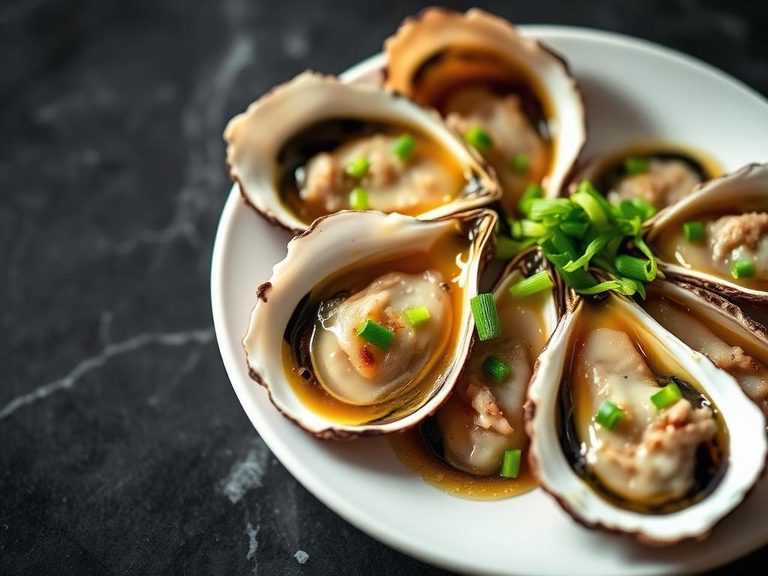
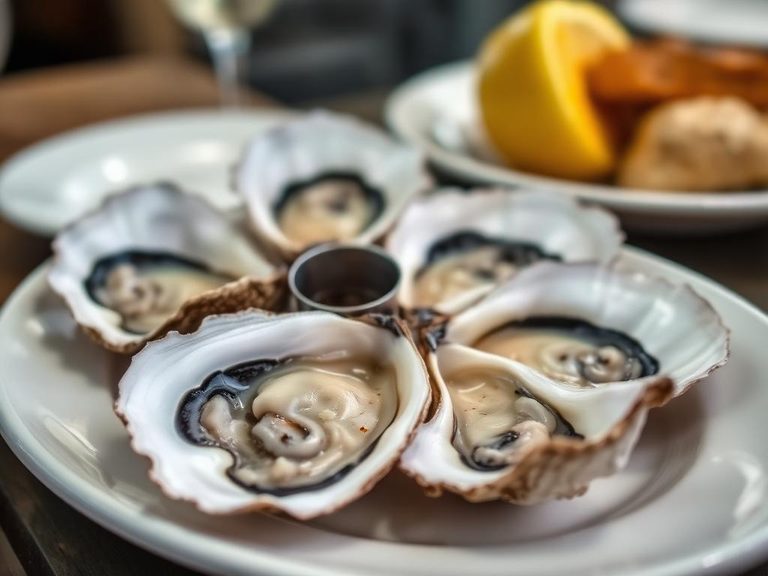
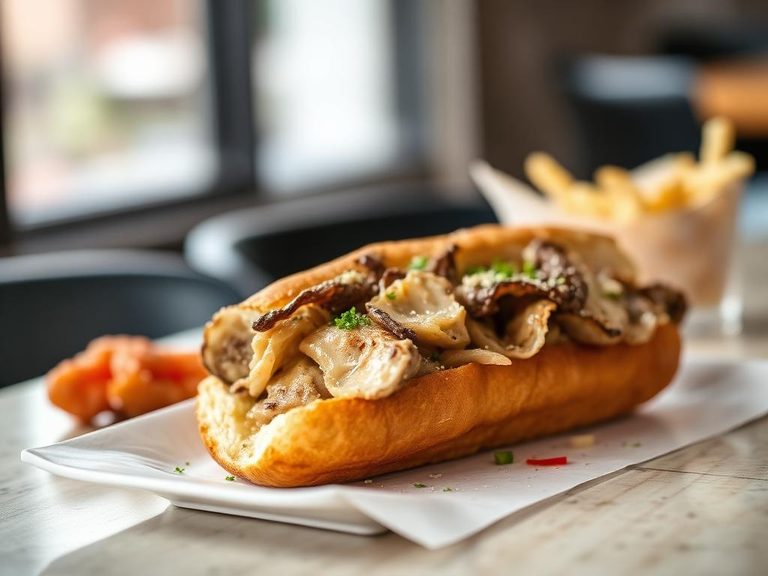
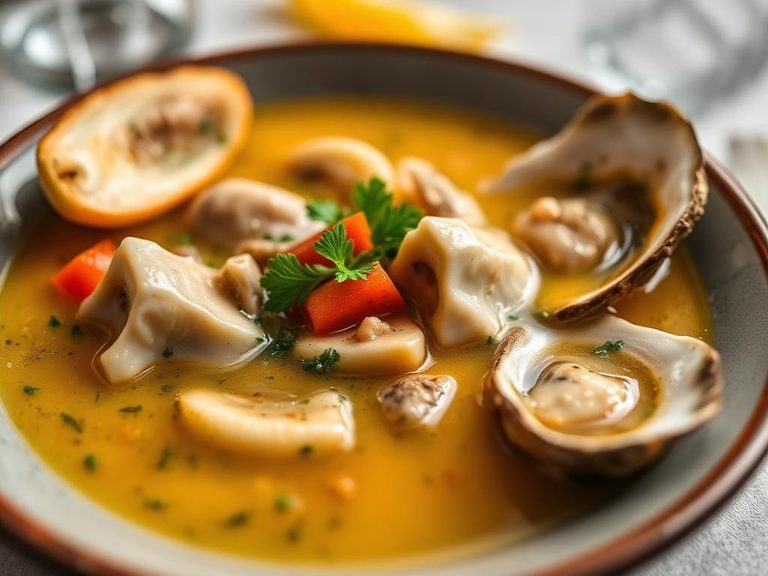

🌍 Where it's eaten
💡 Did you know?
A single oyster can filter up to 190 liters (50 gallons) of water per day, acting as a natural water purifier for its ecosystem.
Full nutrition (USDA data · scales with serving)
| Water | 86.1 g |
| Energy | 65.0 kcal |
| Protein | 7.2 g |
| Total lipid (fat) | 2.2 g |
| Carbohydrate, by difference | 3.4 g |
| Fiber, total dietary | 0.00 g |
| Total Sugars | 0.78 g |
| Calcium, Ca | 75.0 mg |
| Iron, Fe | 5.8 mg |
| Magnesium, Mg | 23.0 mg |
| Phosphorus, P | 123 mg |
| Potassium, K | 197 mg |
| Sodium, Na | 108 mg |
| Zinc, Zn | 49.8 mg |
| Copper, Cu | 3.6 mg |
| Selenium, Se | 24.9 ug |
| Vitamin C, total ascorbic acid | 0.00 mg |
| Thiamin | 0.02 mg |
| Riboflavin | 0.11 mg |
| Niacin | 1.1 mg |
| Vitamin B-6 | 0.04 mg |
| Folate, total | 7.0 ug |
| Folic acid | 0.00 ug |
| Folate, food | 7.0 ug |
| Folate, DFE | 7.0 ug |
| Choline, total | 82.3 mg |
| Vitamin B-12 | 9.4 ug |
| Vitamin B-12, added | 0.00 ug |
| Vitamin A, RAE | 16.0 ug |
| Retinol | 16.0 ug |
| Carotene, beta | 0.00 ug |
| Carotene, alpha | 0.00 ug |
| Cryptoxanthin, beta | 0.00 ug |
| Lycopene | 0.00 ug |
| Lutein + zeaxanthin | 0.00 ug |
| Vitamin E (alpha-tocopherol) | 1.1 mg |
| Vitamin E, added | 0.00 mg |
| Vitamin D (D2 + D3) | 0.00 ug |
| Vitamin K (phylloquinone) | 1.3 ug |
| Alcohol, ethyl | 0.00 g |
| Caffeine | 0.00 mg |
| Theobromine | 0.00 mg |
Fat & fatty acid profile (per 100g)
| Fatty acids, total saturated | 0.60 g |
| SFA 4:0 | 0.00 g |
| SFA 6:0 | 0.00 g |
| SFA 8:0 | 0.00 g |
| SFA 10:0 | 0.00 g |
| SFA 12:0 | 0.00 g |
| SFA 14:0 | 0.06 g |
| SFA 16:0 | 0.40 g |
| SFA 18:0 | 0.08 g |
| Fatty acids, total monounsaturated | 0.32 g |
| MUFA 16:1 | 0.07 g |
| MUFA 18:1 | 0.21 g |
| MUFA 20:1 | 0.04 g |
| MUFA 22:1 | 0.00 g |
| Fatty acids, total polyunsaturated | 0.67 g |
| PUFA 18:2 | 0.05 g |
| PUFA 18:3 | 0.11 g |
| PUFA 18:4 | 0.06 g |
| PUFA 20:4 | 0.03 g |
| PUFA 20:5 n-3 (EPA) | 0.22 g |
| PUFA 22:5 n-3 (DPA) | 0.01 g |
| PUFA 22:6 n-3 (DHA) | 0.17 g |
| Cholesterol | 51.0 mg |
FAQ
Are steamed oysters safe to eat?
Yes, when sourced from reputable suppliers and cooked to an internal temperature of 63°C (145°F). Steaming is a safe cooking method that kills potential pathogens.
How do I know if an oyster is bad before cooking?
Live oysters should have tightly closed shells or close when tapped. Discard any with open, broken, or damaged shells, or that have a strong, unpleasant odor.
What's the best way to steam oysters at home?
Place oysters on a steamer rack over boiling water, cover, and steam for 5-10 minutes until shells open. Discard any that do not open after cooking.
Nutrient density (calculated · NRF9.3)
Nutrient Rich Foods index: beneficial nutrients (protein, fiber, vitamins, minerals) minus saturated fat, added sugar & sodium, per 100 kcal.
NRF9.3 index — Fulgoni, Keast & Drewnowski, 2009. Computed from USDA nutrients.
Weight-loss friendliness (composite index)
Energy density 0.65 kcal/g · 44% calories from protein · 0.0 g fiber · 0.8 g sugar per 100 g.
Composite of energy density (Rolls et al., 1999), protein & fiber satiety, minus sugar. A calculated heuristic — ranks satiety-per-calorie, not a clinical measure.
Dietary load (calculated from USDA values)
Potential renal acid load. Positive = acid-forming, negative = alkaline-forming.
Sodium-to-potassium ratio: 0.55 (lower is better — aim for ≤ 1)
Sodium:potassium per WHO potassium guidance. Computed from USDA nutrients.