

Oysters, fried
Common food

Photo: Wikipedia
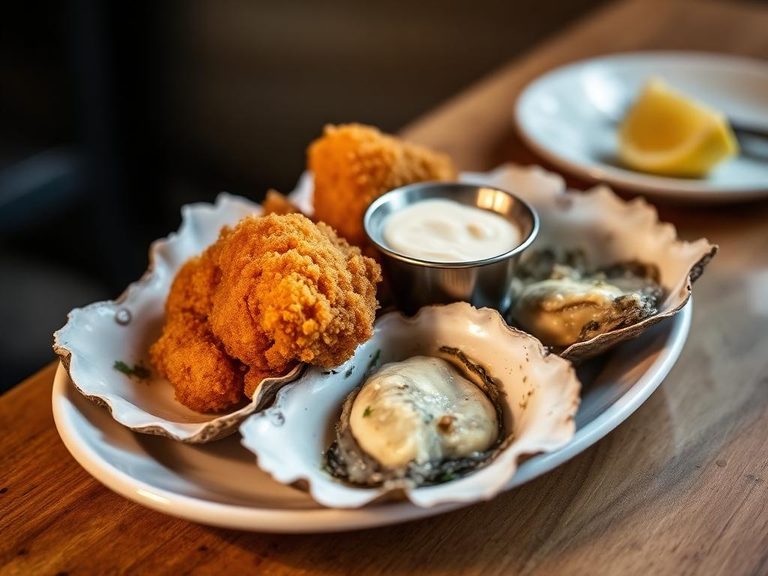
Fried oysters are plump, briny morsels coated in a crisp, golden batter or breading and deep-fried to a satisfying crunch. The exterior shatters to reveal a tender, creamy interior with a distinct oceanic flavor. Nutritionally, they provide a good source of protein and healthy fats, but the frying process significantly increases the calorie and fat content compared to raw or steamed preparations.
Calorie split: 12% protein · 27% carbs · 60% fat
↓ Full nutrition💚 Why it's loved
People adore fried oysters for the irresistible contrast between the hot, crunchy coating and the cool, briny, custard-like interior. They are a beloved coastal comfort food and a highlight of many seafood festivals and casual dining menus.
⚠️ Watch-outs & how to enjoy it better
The deep-frying process adds substantial calories and unhealthy fats, and the batter can be high in sodium and refined carbs. Those watching their blood sugar or fat intake should enjoy them in moderation. To counteract this, pair them with a non-starchy vegetable side like a vinegar-based slaw or a fresh salad to add fiber and balance the meal.
Key benefits
- Good source of complete protein
- Contains omega-3 fatty acids
- Provides essential minerals like zinc and selenium
- Offers a satisfying, savory flavor profile
🍽️ Popular dishes
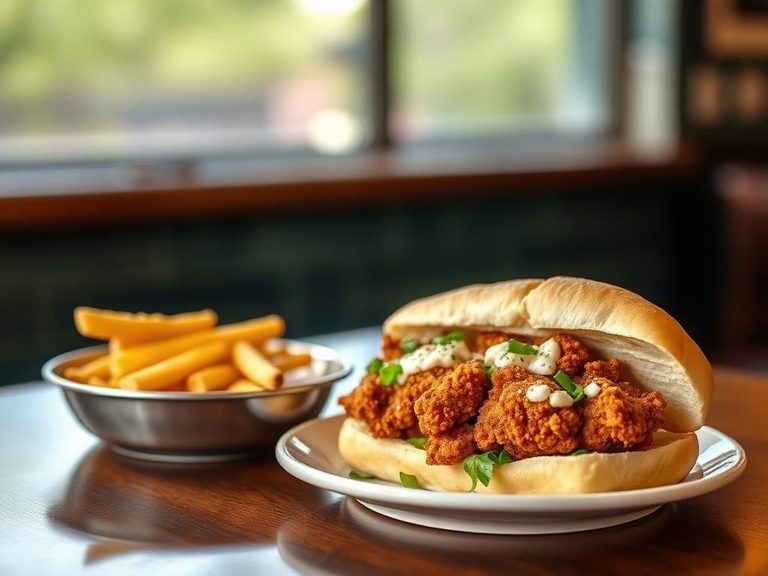
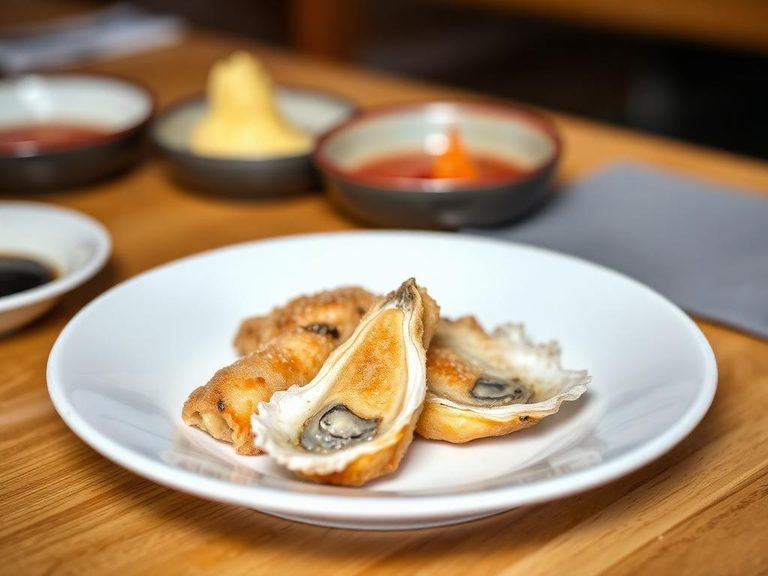
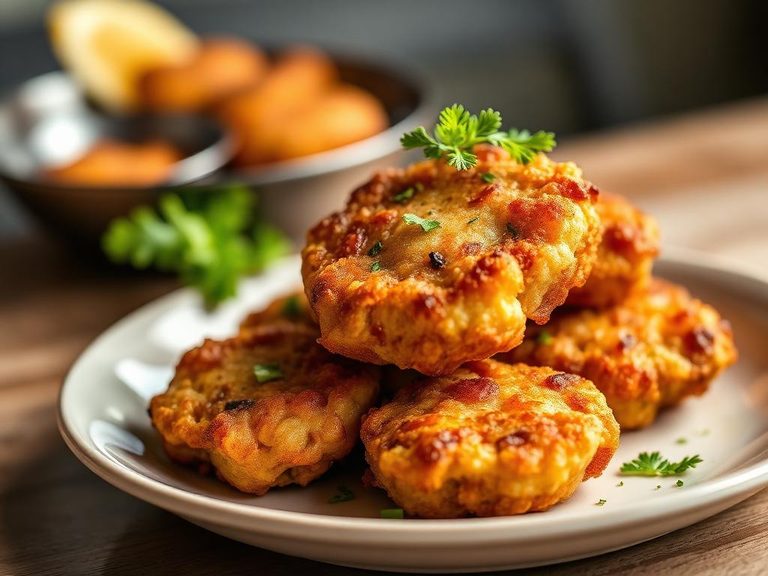
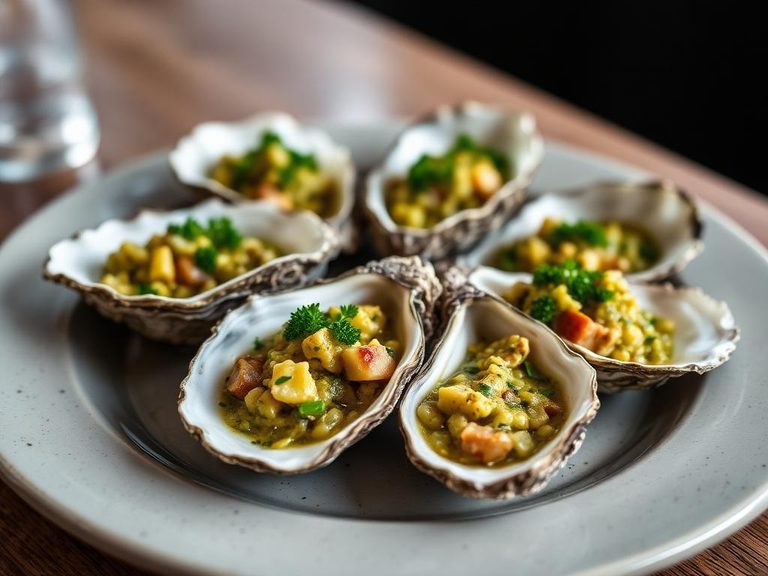
🌍 Where it's eaten
💡 Did you know?
The record for the largest oyster ever found was set in 2013 in Denmark, measuring over 13.8 inches (35 cm) long—far bigger than the average fried oyster, which is typically bite-sized.
Full nutrition (USDA data · scales with serving)
| Water | 64.8 g |
| Energy | 203 kcal |
| Protein | 6.3 g |
| Total lipid (fat) | 13.5 g |
| Carbohydrate, by difference | 13.8 g |
| Fiber, total dietary | 0.50 g |
| Total Sugars | 0.67 g |
| Calcium, Ca | 59.0 mg |
| Iron, Fe | 4.4 mg |
| Magnesium, Mg | 19.0 mg |
| Phosphorus, P | 97.0 mg |
| Potassium, K | 143 mg |
| Sodium, Na | 408 mg |
| Zinc, Zn | 30.0 mg |
| Copper, Cu | 2.2 mg |
| Selenium, Se | 18.1 ug |
| Vitamin C, total ascorbic acid | 0.00 mg |
| Thiamin | 0.16 mg |
| Riboflavin | 0.14 mg |
| Niacin | 1.7 mg |
| Vitamin B-6 | 0.03 mg |
| Folate, total | 28.0 ug |
| Folic acid | 20.0 ug |
| Folate, food | 9.0 ug |
| Folate, DFE | 42.0 ug |
| Choline, total | 56.3 mg |
| Vitamin B-12 | 5.7 ug |
| Vitamin B-12, added | 0.00 ug |
| Vitamin A, RAE | 12.0 ug |
| Retinol | 12.0 ug |
| Carotene, beta | 0.00 ug |
| Carotene, alpha | 0.00 ug |
| Cryptoxanthin, beta | 0.00 ug |
| Lycopene | 0.00 ug |
| Lutein + zeaxanthin | 10.0 ug |
| Vitamin E (alpha-tocopherol) | 2.9 mg |
| Vitamin E, added | 0.00 mg |
| Vitamin D (D2 + D3) | 0.00 ug |
| Vitamin K (phylloquinone) | 12.7 ug |
| Alcohol, ethyl | 0.00 g |
| Caffeine | 0.00 mg |
| Theobromine | 0.00 mg |
Fat & fatty acid profile (per 100g)
| Fatty acids, total saturated | 2.0 g |
| SFA 4:0 | 0.00 g |
| SFA 6:0 | 0.00 g |
| SFA 8:0 | 0.00 g |
| SFA 10:0 | 0.00 g |
| SFA 12:0 | 0.00 g |
| SFA 14:0 | 0.04 g |
| SFA 16:0 | 1.4 g |
| SFA 18:0 | 0.41 g |
| Fatty acids, total monounsaturated | 5.2 g |
| MUFA 16:1 | 0.08 g |
| MUFA 18:1 | 5.0 g |
| MUFA 20:1 | 0.10 g |
| MUFA 22:1 | 0.00 g |
| Fatty acids, total polyunsaturated | 5.0 g |
| PUFA 18:2 | 4.1 g |
| PUFA 18:3 | 0.58 g |
| PUFA 18:4 | 0.04 g |
| PUFA 20:4 | 0.02 g |
| PUFA 20:5 n-3 (EPA) | 0.14 g |
| PUFA 22:5 n-3 (DPA) | 0.01 g |
| PUFA 22:6 n-3 (DHA) | 0.10 g |
| Cholesterol | 37.0 mg |
FAQ
Are fried oysters healthy?
Fried oysters retain some of the oyster's natural nutrients like protein and minerals, but the frying process adds significant calories and fat. They are best enjoyed as an occasional treat rather than a daily health food.
How do I get a crispy coating that doesn't get soggy?
Use a dry coating like cornmeal or panko, ensure the oysters are patted completely dry, and fry in oil at the correct temperature (around 375°F or 190°C). Drain on a wire rack, not paper towels, to prevent steam from softening the crust.
Can I air-fry oysters instead of deep-frying?
Yes, you can achieve a reasonably crispy result in an air fryer. Lightly spray the coated oysters with oil and cook at 400°F (200°C) for 5-8 minutes, flipping once, for a lower-fat alternative.
Nutrient density (calculated · NRF9.3)
Nutrient Rich Foods index: beneficial nutrients (protein, fiber, vitamins, minerals) minus saturated fat, added sugar & sodium, per 100 kcal.
NRF9.3 index — Fulgoni, Keast & Drewnowski, 2009. Computed from USDA nutrients.
Weight-loss friendliness (composite index)
Energy density 2.03 kcal/g · 12% calories from protein · 0.5 g fiber · 0.7 g sugar per 100 g.
Composite of energy density (Rolls et al., 1999), protein & fiber satiety, minus sugar. A calculated heuristic — ranks satiety-per-calorie, not a clinical measure.
Dietary load (calculated from USDA values)
Potential renal acid load. Positive = acid-forming, negative = alkaline-forming.
Sodium-to-potassium ratio: 2.85 (lower is better — aim for ≤ 1)
Sodium:potassium per WHO potassium guidance. Computed from USDA nutrients.