

Livers, chicken, chopped, with eggs and onion
Common food

Photo: Wikipedia
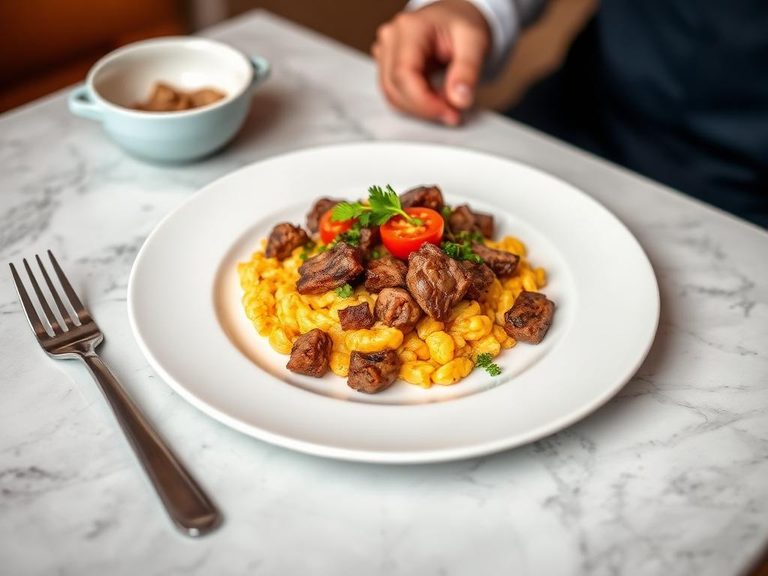
A savory, iron-rich dish of finely chopped chicken liver, scrambled with eggs and sweet onions, creating a soft, creamy, and deeply savory mixture. The texture is tender and slightly grainy, with the onions adding a caramelized sweetness that balances the liver's mineral richness. It's a protein-packed meal, offering over 12g of protein per 100g with a notable dose of vitamin A and B12.
Calorie split: 23% protein · 5% carbs · 72% fat
↓ Full nutrition💚 Why it's loved
People adore it for its intensely savory, umami-rich flavor and comforting, home-style simplicity. It's a beloved, quick-cooked staple in many cultures, often served on toast or with simple sides.
⚠️ Watch-outs & how to enjoy it better
The strong, mineral taste of liver can be off-putting to some, and its high cholesterol content means those with specific dietary restrictions should consume it in moderation. To counteract the strong flavor, ensure the liver is fresh, soaked briefly in milk or water, and cooked quickly with plenty of aromatic onions. Pair it with fiber-rich vegetables like steamed broccoli or a fresh salad to balance the meal.
Key benefits
- Excellent source of heme iron, which is highly absorbable.
- Very high in vitamin B12, crucial for nerve function and red blood cells.
- Provides a significant amount of preformed vitamin A (retinol).
- Offers complete, high-quality protein for muscle maintenance.
- Contains choline, important for brain health.
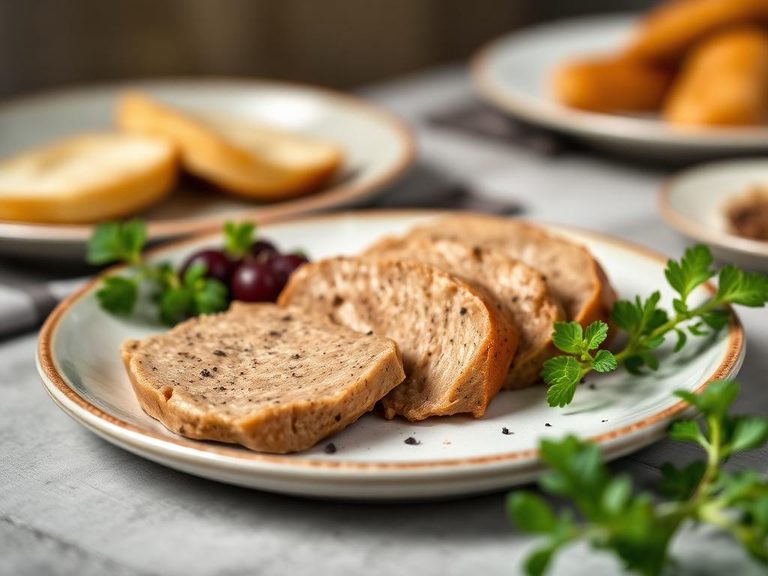
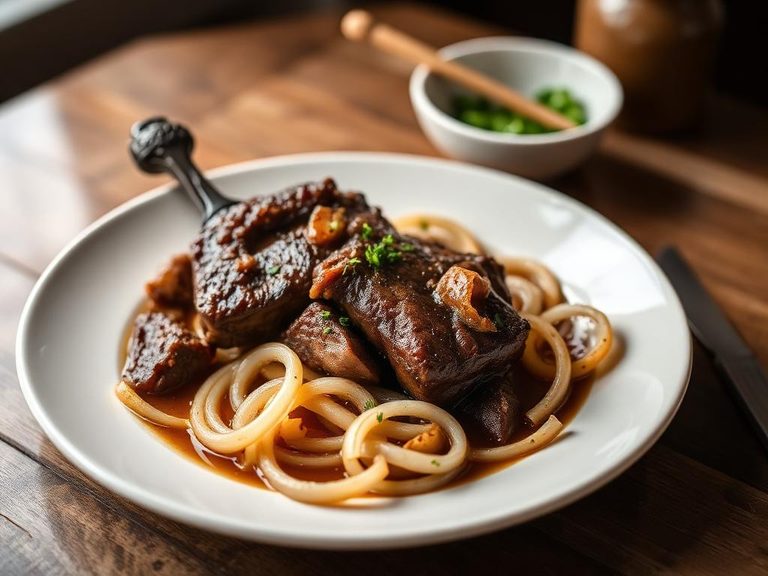
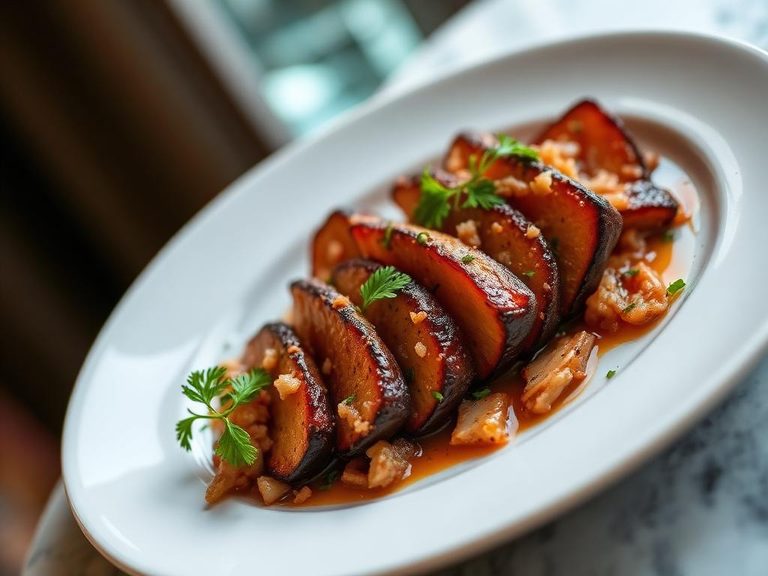
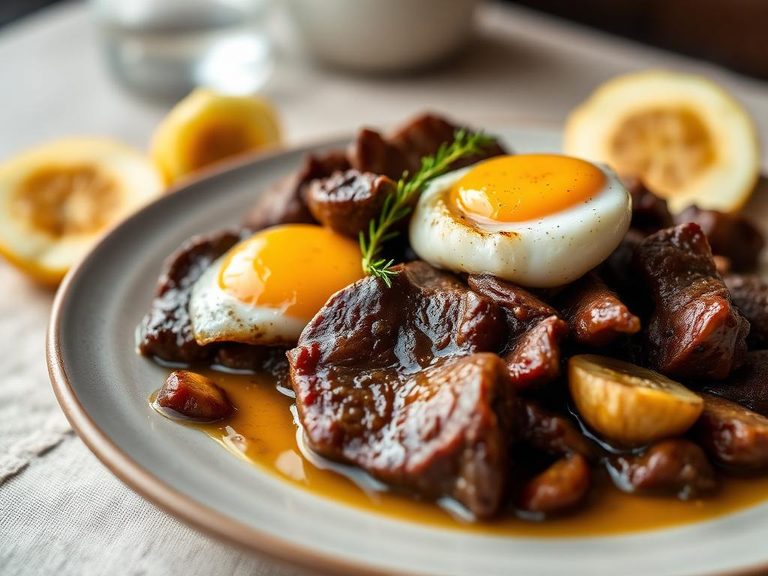
🍽️ Popular dishes
🌍 Where it's eaten
💡 Did you know?
Chicken liver is one of the richest dietary sources of the essential nutrient choline, providing over 50% of the recommended daily intake in just a 100g serving.
Full nutrition (USDA data · scales with serving)
| Water | 63.1 g |
| Energy | 226 kcal |
| Protein | 12.9 g |
| Total lipid (fat) | 17.7 g |
| Carbohydrate, by difference | 2.9 g |
| Fiber, total dietary | 0.40 g |
| Total Sugars | 1.2 g |
| Calcium, Ca | 20.0 mg |
| Iron, Fe | 5.3 mg |
| Magnesium, Mg | 15.0 mg |
| Phosphorus, P | 210 mg |
| Potassium, K | 170 mg |
| Sodium, Na | 1047 mg |
| Zinc, Zn | 1.9 mg |
| Copper, Cu | 0.23 mg |
| Selenium, Se | 40.7 ug |
| Vitamin C, total ascorbic acid | 13.9 mg |
| Thiamin | 0.15 mg |
| Riboflavin | 0.95 mg |
| Niacin | 4.8 mg |
| Vitamin B-6 | 0.38 mg |
| Folate, total | 261 ug |
| Folic acid | 0.00 ug |
| Folate, food | 261 ug |
| Folate, DFE | 261 ug |
| Choline, total | 191 mg |
| Vitamin B-12 | 7.5 ug |
| Vitamin B-12, added | 0.00 ug |
| Vitamin A, RAE | 1741 ug |
| Retinol | 1740 ug |
| Carotene, beta | 15.0 ug |
| Carotene, alpha | 5.0 ug |
| Cryptoxanthin, beta | 6.0 ug |
| Lycopene | 9.0 ug |
| Lutein + zeaxanthin | 95.0 ug |
| Vitamin E (alpha-tocopherol) | 0.88 mg |
| Vitamin E, added | 0.00 mg |
| Vitamin D (D2 + D3) | 1.0 ug |
| Vitamin K (phylloquinone) | 0.10 ug |
| Alcohol, ethyl | 0.00 g |
| Caffeine | 0.00 mg |
| Theobromine | 0.00 mg |
Fat & fatty acid profile (per 100g)
| Fatty acids, total saturated | 5.4 g |
| SFA 4:0 | 0.00 g |
| SFA 6:0 | 0.00 g |
| SFA 8:0 | 0.00 g |
| SFA 10:0 | 0.00 g |
| SFA 12:0 | 0.01 g |
| SFA 14:0 | 0.13 g |
| SFA 16:0 | 3.7 g |
| SFA 18:0 | 1.3 g |
| Fatty acids, total monounsaturated | 7.2 g |
| MUFA 16:1 | 0.85 g |
| MUFA 18:1 | 6.1 g |
| MUFA 20:1 | 0.16 g |
| MUFA 22:1 | 0.00 g |
| Fatty acids, total polyunsaturated | 3.8 g |
| PUFA 18:2 | 3.1 g |
| PUFA 18:3 | 0.14 g |
| PUFA 18:4 | 0.00 g |
| PUFA 20:4 | 0.26 g |
| PUFA 20:5 n-3 (EPA) | 0.00 g |
| PUFA 22:5 n-3 (DPA) | 0.00 g |
| PUFA 22:6 n-3 (DHA) | 0.01 g |
| Cholesterol | 315 mg |
FAQ
How do I remove the bitter taste from chicken liver?
Soak the cleaned livers in cold water, milk, or buttermilk for 30-60 minutes in the refrigerator. This helps draw out residual blood and mellow the flavor. Be sure to pat them completely dry before cooking.
Is this dish high in cholesterol?
Yes, liver is a high-cholesterol food. A 100g serving contains a significant portion of the daily recommended limit. For most healthy individuals, enjoying it occasionally as part of a balanced diet is fine, but those managing cholesterol should consult a doctor.
Can I freeze the cooked mixture?
You can freeze the cooked liver and egg mixture for up to 3 months. Cool it completely, portion it into airtight containers, and freeze. Thaw in the refrigerator before reheating gently in a skillet or microwave.
Nutrient density (calculated · NRF9.3)
Nutrient Rich Foods index: beneficial nutrients (protein, fiber, vitamins, minerals) minus saturated fat, added sugar & sodium, per 100 kcal.
NRF9.3 index — Fulgoni, Keast & Drewnowski, 2009. Computed from USDA nutrients.
Weight-loss friendliness (composite index)
Energy density 2.26 kcal/g · 23% calories from protein · 0.4 g fiber · 1.2 g sugar per 100 g.
Composite of energy density (Rolls et al., 1999), protein & fiber satiety, minus sugar. A calculated heuristic — ranks satiety-per-calorie, not a clinical measure.
Dietary load (calculated from USDA values)
Potential renal acid load. Positive = acid-forming, negative = alkaline-forming.
Sodium-to-potassium ratio: 6.16 (lower is better — aim for ≤ 1)
Sodium:potassium per WHO potassium guidance. Computed from USDA nutrients.