

Juice, prune, shelf-stable
Whole food · Fruits and Fruit Juices
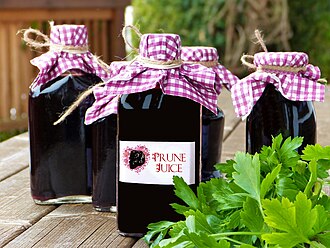
Photo: Wikipedia
Shelf-stable prune juice is a dark, viscous liquid with a deep, sweet-tart flavor profile reminiscent of dried plums and caramel. It is a concentrated source of sorbitol and fiber, making it a potent digestive aid. Despite its rich taste, it is naturally low in fat and protein, offering a straightforward, energy-dense liquid option.
Calorie split: 100% protein · 0% carbs · 0% fat
↓ Full nutrition💚 Why it's loved
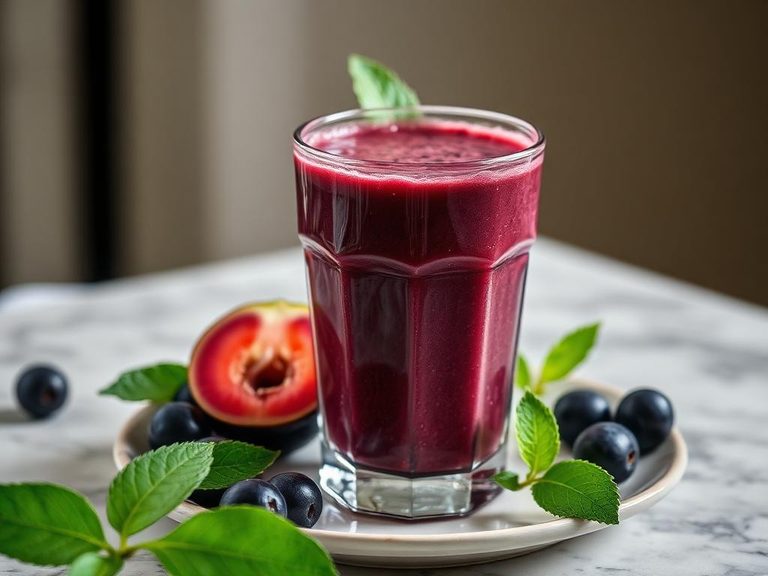
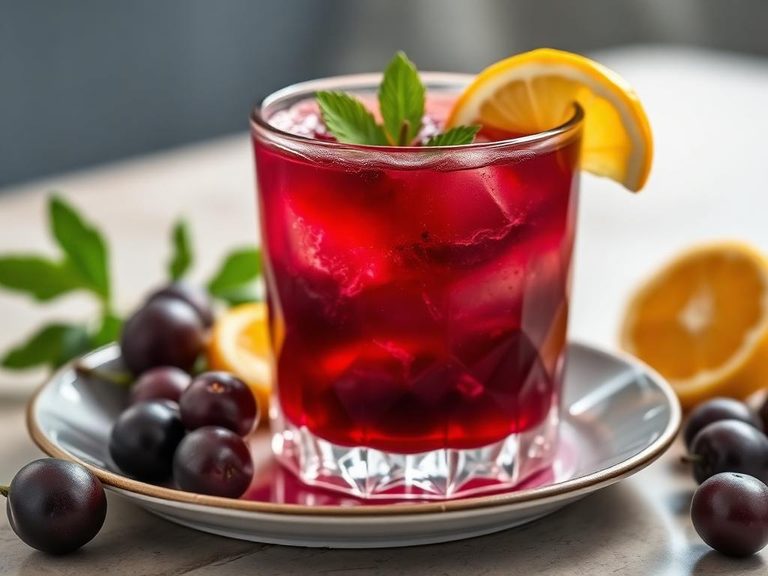
People love it for its distinct, robust sweetness that is more complex than typical fruit juices, often enjoyed as a morning ritual or a healthy cocktail mixer. Its reputation as a natural digestive remedy gives it a functional appeal that transcends simple refreshment.
⚠️ Watch-outs & how to enjoy it better
The high sorbitol content can cause bloating, gas, or diarrhea in sensitive individuals, especially if consumed in large quantities. To mitigate this, start with a small 4-ounce portion and gradually increase intake, or dilute it with water or sparkling water to reduce the sugar load.
Key benefits
- Rich in potassium for heart health
- Contains sorbitol for natural laxative effect
- High in antioxidants like phenolic compounds
- Supports bone density due to boron content
- Provides a quick source of natural energy
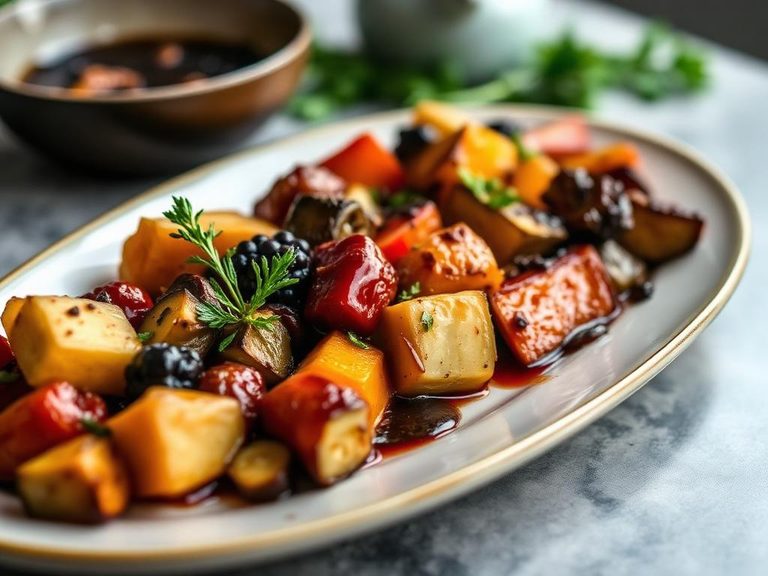
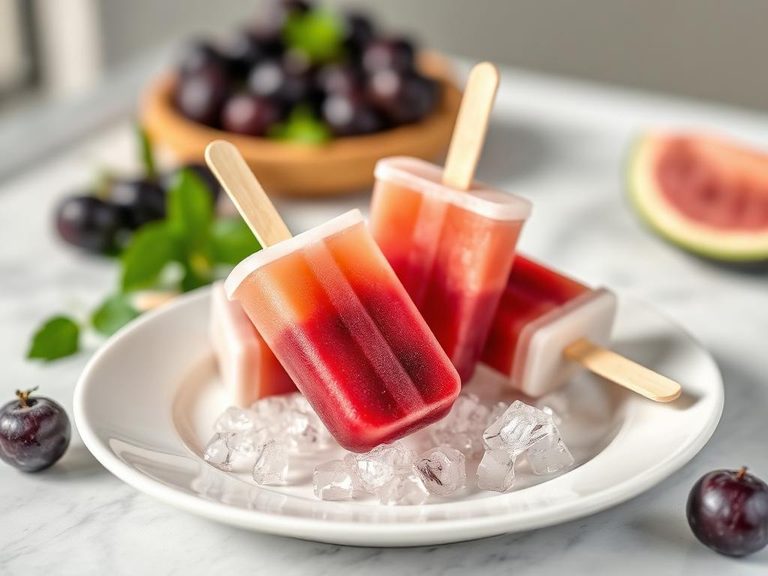
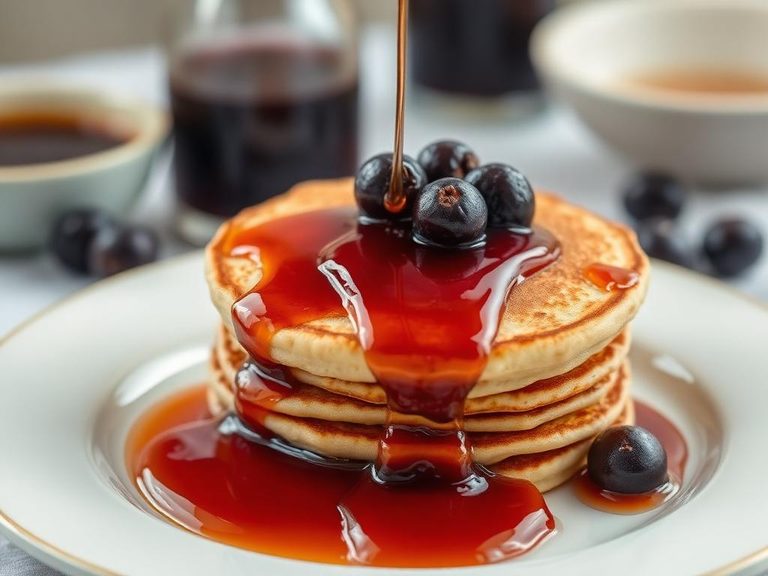
🍽️ Popular dishes
🌍 Where it's eaten
💡 Did you know?
Prune juice is often used in baking as a fat substitute because its high pectin content helps bind ingredients and retain moisture, similar to eggs or oil.
Full nutrition (USDA data · scales with serving)
| Water | 81.3 g |
| Nitrogen | 0.07 g |
| Protein | 0.42 g |
| Ash | 0.46 g |
| Sugars, Total | 14.8 g |
| Sucrose | 0.49 g |
| Glucose | 10.2 g |
| Fructose | 4.1 g |
| Lactose | 0.03 g |
| Maltose | 0.03 g |
| Calcium, Ca | 16.2 mg |
| Iron, Fe | 0.44 mg |
| Magnesium, Mg | 15.2 mg |
| Phosphorus, P | 19.1 mg |
| Potassium, K | 216 mg |
| Sodium, Na | 10.3 mg |
| Zinc, Zn | 0.12 mg |
| Copper, Cu | 0.02 mg |
| Manganese, Mn | 0.12 mg |
| Vitamin C, total ascorbic acid | 0.00 mg |
| Vitamin B-6 | 0.08 mg |
| Folate, total | 5.3 ug |
Fat & fatty acid profile (per 100g)
Estimated from Orange juice, chilled, includes from concentrate, with added calcium and vitamins A, D, E — USDA does not publish this profile for Juice.
| Fatty acids, total saturated | 0.01 g |
| SFA 4:0 | 0.00 g |
| SFA 6:0 | 0.00 g |
| SFA 8:0 | 0.00 g |
| SFA 10:0 | 0.00 g |
| SFA 12:0 | 0.00 g |
| SFA 14:0 | 0.00 g |
| SFA 16:0 | 0.01 g |
| SFA 18:0 | 0.00 g |
| Fatty acids, total monounsaturated | 0.02 g |
| MUFA 16:1 | 0.00 g |
| MUFA 18:1 | 0.02 g |
| MUFA 20:1 | 0.00 g |
| MUFA 22:1 | 0.00 g |
| Fatty acids, total polyunsaturated | 0.03 g |
| PUFA 18:2 | 0.02 g |
| PUFA 18:3 | 0.01 g |
| PUFA 18:4 | 0.00 g |
| PUFA 20:4 | 0.00 g |
| PUFA 20:5 n-3 (EPA) | 0.00 g |
| PUFA 22:5 n-3 (DPA) | 0.00 g |
| PUFA 22:6 n-3 (DHA) | 0.00 g |
| Fatty acids, total trans | 0.00 g |
| Cholesterol | 0.00 mg |
Amino acid profile (per 100g)
Estimated from Orange juice, chilled, includes from concentrate, with added calcium and vitamins A, D, E — USDA does not publish this profile for Juice.
| Tryptophan | 0.00 g |
| Threonine | 0.01 g |
| Isoleucine | 0.00 g |
| Leucine | 0.01 g |
| Lysine | 0.02 g |
| Methionine | 0.00 g |
| Cystine | 0.00 g |
| Phenylalanine | 0.01 g |
| Tyrosine | 0.00 g |
| Valine | 0.01 g |
| Arginine | 0.08 g |
| Histidine | 0.00 g |
| Alanine | 0.02 g |
| Aspartic acid | 0.11 g |
| Glutamic acid | 0.04 g |
| Glycine | 0.01 g |
| Proline | 0.08 g |
| Serine | 0.02 g |
FAQ
Is prune juice high in sugar?
Yes, it contains natural sugars, but it also has sorbitol and fiber which can moderate blood sugar response compared to other sweet juices.
Can I use prune juice in cooking?
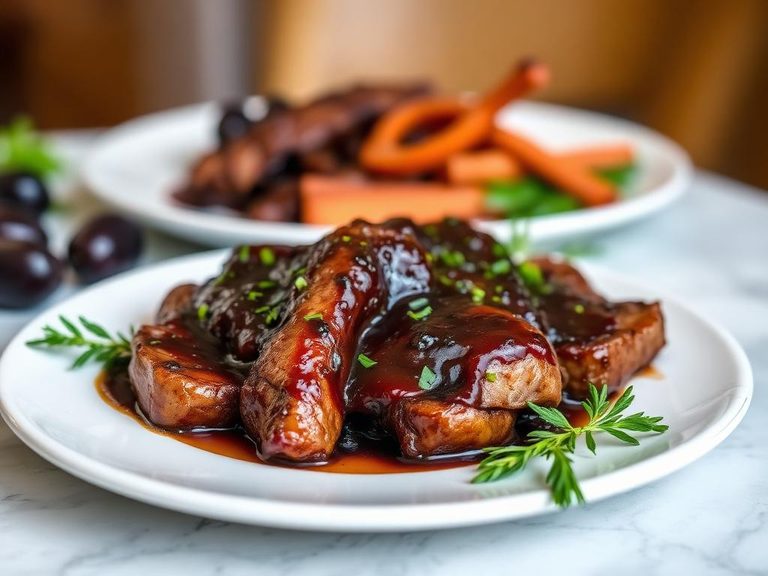
Absolutely, it works well in marinades, glazes, and as a natural sweetener in baked goods.
How does prune juice differ from other fruit juices?
It is more viscous and has a unique sweet-tart flavor with a higher sorbitol content, making it particularly effective for digestive health.
Dietary load (calculated from USDA values)
Potential renal acid load. Positive = acid-forming, negative = alkaline-forming.
Sodium-to-potassium ratio: 0.05 (lower is better — aim for ≤ 1)
Sodium:potassium per WHO potassium guidance. Computed from USDA nutrients.