

Infant formula, ABBOTT NUTRITION, SIMILAC, SENSITIVE (LACTOSE FREE) ready-to-feed, with ARA and DHA
Whole food · Baby Foods

Photo: Wikipedia
This is a specialized, ready-to-feed infant formula designed for babies with lactose sensitivity, offering a complete nutritional foundation without the lactose sugar. It has a smooth, milky texture and a mild, slightly sweet taste that is carefully formulated to be palatable for infants. Nutritionally, it provides a balanced mix of fats, proteins, and carbohydrates, with added ARA and DHA to support brain and eye development.
Calorie split: 9% protein · 43% carbs · 49% fat
↓ Full nutrition💚 Why it's loved
Parents love it for the peace of mind it provides, knowing their baby can get essential nutrition without digestive discomfort from lactose. Its no-mix, ready-to-use format is a lifesaver for nighttime feeds and busy schedules.
⚠️ Watch-outs & how to enjoy it better
The specialized formulation makes it significantly more expensive than standard formulas. Some babies may still have sensitivities to the protein source (often casein or whey), so it's not a universal solution. Tip: Always consult a pediatrician before switching formulas, and introduce any new formula slowly to monitor for reactions.
Key benefits
- Lactose-free for sensitive tummies
- Complete nutrition for infant growth
- Contains ARA & DHA for brain development
- Ready-to-feed convenience
- Hypoallergenic protein source
🍽️ Popular dishes
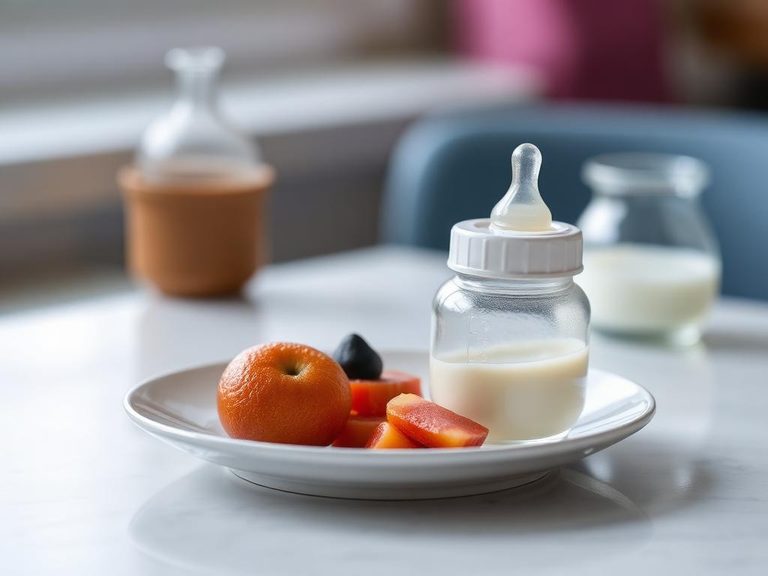
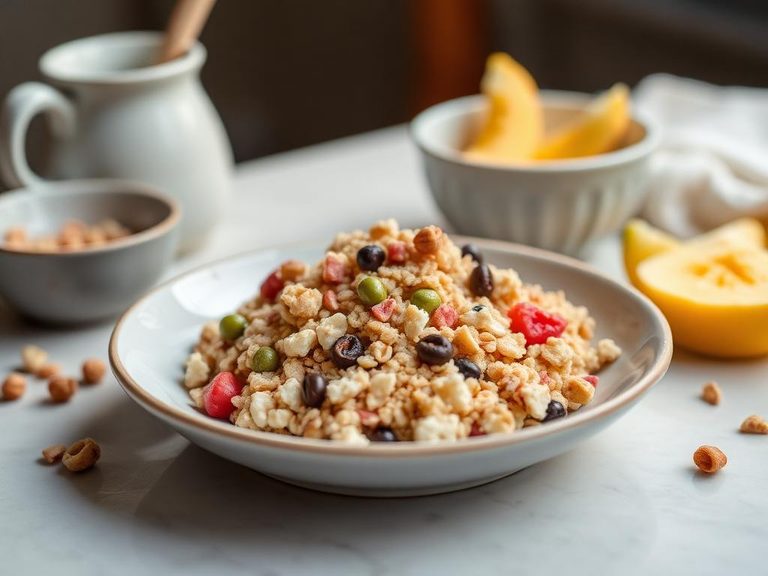
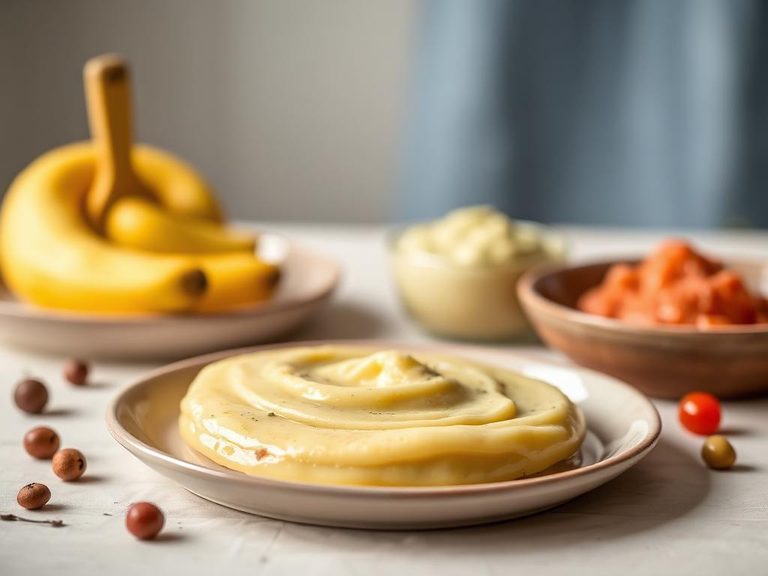
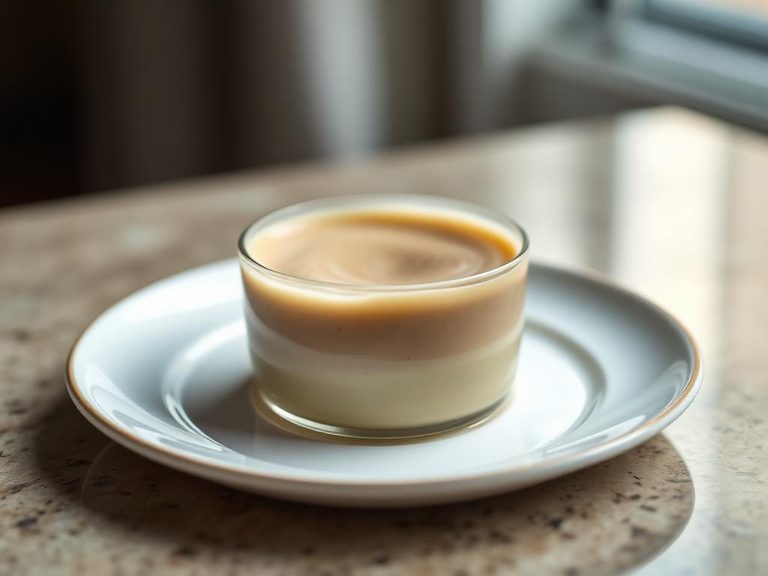
🌍 Where it's eaten
💡 Did you know?
The specific blend of ARA (arachidonic acid) and DHA (docosahexaenoic acid) in this formula is designed to mimic the fatty acid profile found in human breast milk, which is crucial for early neurological development.
Full nutrition (USDA data · scales with serving)
| Water | 87.0 g |
| Energy | 68.0 kcal |
| Energy | 283 kj |
| Protein | 1.5 g |
| Total lipid (fat) | 3.7 g |
| Ash | 0.75 g |
| Carbohydrate, by difference | 7.4 g |
| Fiber, total dietary | 0.00 g |
| Total Sugars | 7.4 g |
| Calcium, Ca | 58.0 mg |
| Iron, Fe | 1.2 mg |
| Magnesium, Mg | 3.0 mg |
| Phosphorus, P | 39.0 mg |
| Potassium, K | 74.0 mg |
| Sodium, Na | 21.0 mg |
| Zinc, Zn | 0.52 mg |
| Copper, Cu | 0.06 mg |
| Manganese, Mn | 0.00 mg |
| Selenium, Se | 1.2 ug |
| Vitamin C, total ascorbic acid | 6.0 mg |
| Thiamin | 0.07 mg |
| Riboflavin | 0.10 mg |
| Niacin | 0.73 mg |
| Pantothenic acid | 0.31 mg |
| Vitamin B-6 | 0.04 mg |
| Folate, total | 10.0 ug |
| Folic acid | 10.0 ug |
| Folate, food | 0.00 ug |
| Folate, DFE | 18.0 ug |
| Choline, total | 11.1 mg |
| Vitamin B-12 | 0.17 ug |
| Vitamin B-12, added | 0.17 ug |
| Vitamin A, RAE | 62.0 ug |
| Retinol | 62.0 ug |
| Carotene, beta | 0.00 ug |
| Carotene, alpha | 0.00 ug |
| Cryptoxanthin, beta | 0.00 ug |
| Vitamin A, IU | 208 iu |
| Lycopene | 0.00 ug |
| Lutein + zeaxanthin | 0.00 ug |
| Vitamin E (alpha-tocopherol) | 0.93 mg |
| Vitamin E, added | 0.93 mg |
| Vitamin D (D2 + D3), International Units | 40.0 iu |
| Vitamin D (D2 + D3) | 1.0 ug |
| Vitamin K (phylloquinone) | 5.5 ug |
| Alcohol, ethyl | 0.00 g |
| Caffeine | 0.00 mg |
| Theobromine | 0.00 mg |
Fat & fatty acid profile (per 100g)
| Fatty acids, total saturated | 2.4 g |
| SFA 4:0 | 0.00 g |
| SFA 6:0 | 0.01 g |
| SFA 8:0 | 1.0 g |
| SFA 10:0 | 0.57 g |
| SFA 12:0 | 0.33 g |
| SFA 14:0 | 0.14 g |
| SFA 16:0 | 0.23 g |
| SFA 18:0 | 0.11 g |
| Fatty acids, total monounsaturated | 0.38 g |
| MUFA 16:1 | 0.00 g |
| MUFA 18:1 | 0.38 g |
| MUFA 20:1 | 0.00 g |
| MUFA 22:1 | 0.00 g |
| Fatty acids, total polyunsaturated | 0.83 g |
| PUFA 18:2 | 0.72 g |
| PUFA 18:3 | 0.08 g |
| PUFA 18:4 | 0.00 g |
| PUFA 20:4 | 0.02 g |
| PUFA 20:5 n-3 (EPA) | 0.00 g |
| PUFA 22:5 n-3 (DPA) | 0.00 g |
| PUFA 22:6 n-3 (DHA) | 0.01 g |
| Cholesterol | 2.0 mg |
FAQ
What does 'lactose-free' mean in this formula?
It means the formula does not contain lactose, the natural sugar found in milk. Instead, it uses other carbohydrates like corn syrup solids or sucrose as an energy source for babies who have difficulty digesting lactose.
Is this formula suitable for a baby with a cow's milk protein allergy?
Not necessarily. 'Lactose-free' addresses sugar sensitivity, not protein allergy. This formula still contains cow's milk proteins (like casein or whey). For a true cow's milk protein allergy, a specialized hypoallergenic or amino-acid-based formula is required.
How does the 'ready-to-feed' benefit compare to powdered formula?
Ready-to-feed is sterile and requires no mixing, reducing the risk of preparation errors or contamination. It's ideal for travel, convenience, or for infants with compromised immune systems. The trade-off is a higher cost and larger packaging footprint.
Nutrient density (calculated · NRF9.3)
Nutrient Rich Foods index: beneficial nutrients (protein, fiber, vitamins, minerals) minus saturated fat, added sugar & sodium, per 100 kcal.
NRF9.3 index — Fulgoni, Keast & Drewnowski, 2009. Computed from USDA nutrients.
Weight-loss friendliness (composite index)
Energy density 0.68 kcal/g · 9% calories from protein · 0.0 g fiber · 7.4 g sugar per 100 g.
Composite of energy density (Rolls et al., 1999), protein & fiber satiety, minus sugar. A calculated heuristic — ranks satiety-per-calorie, not a clinical measure.
Dietary load (calculated from USDA values)
Potential renal acid load. Positive = acid-forming, negative = alkaline-forming.
Sodium-to-potassium ratio: 0.28 (lower is better — aim for ≤ 1)
Sodium:potassium per WHO potassium guidance. Computed from USDA nutrients.